

Item # 722273
December 10, 1950
THE NEW YORK TIMES, Dec. 10, 1950
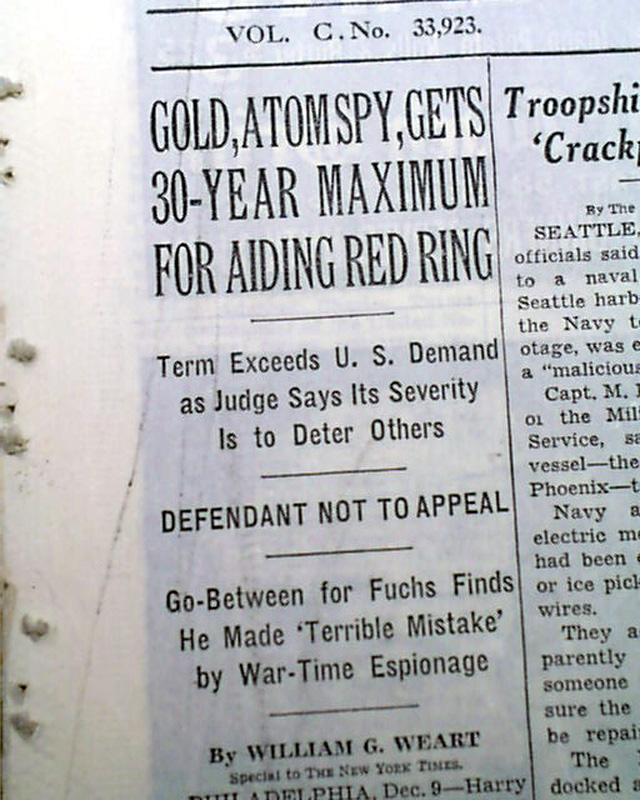
* Chemist & spy Harry Gold sentenced
* Atomic secrets to Soviet Union (Russia)
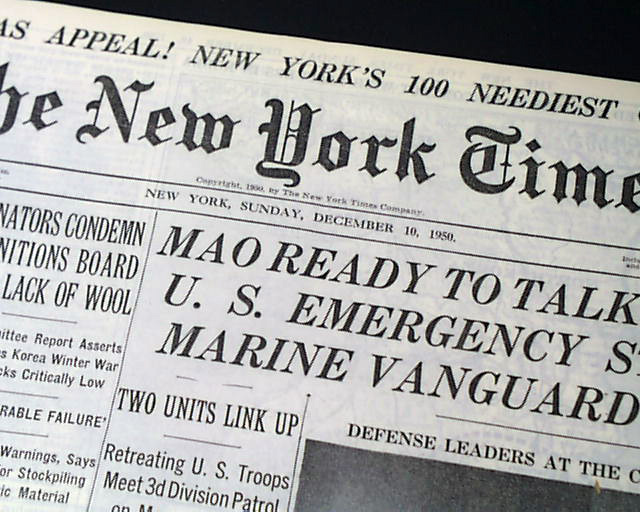
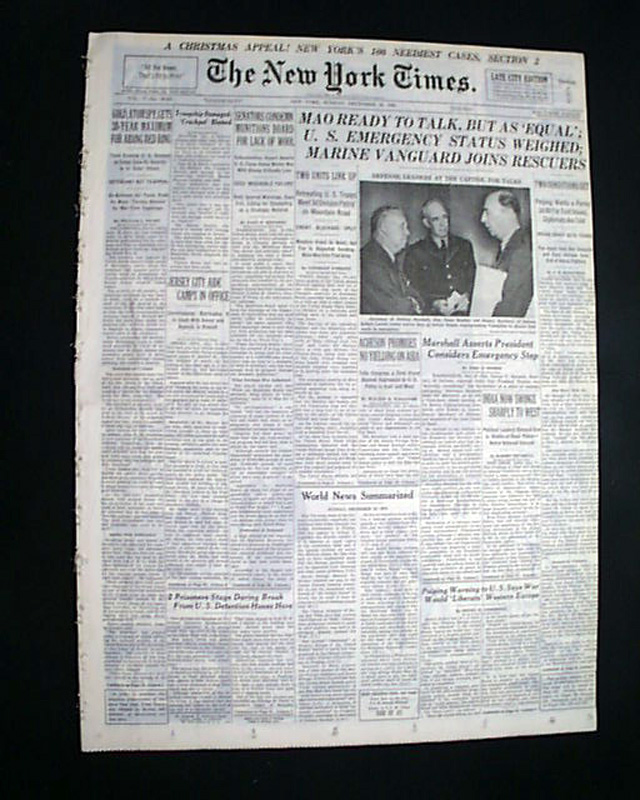
The top of the front page has a one column heading: "GOLD, ATOM SPY, GETS 30-YEAR MAXIMUM FOR AIDING RED WING" with subheads. (see images)
Complete Sunday edition with 100+ pages, rag edition in nice condition.
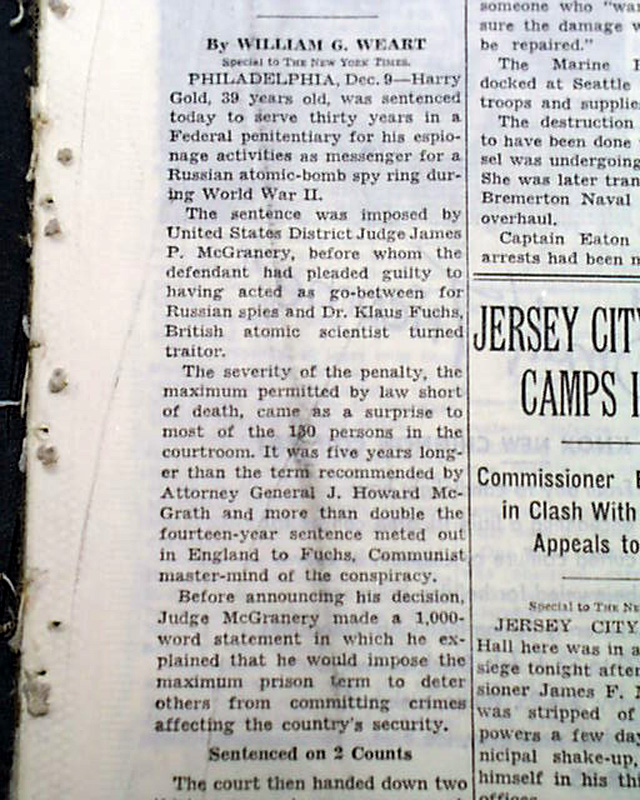
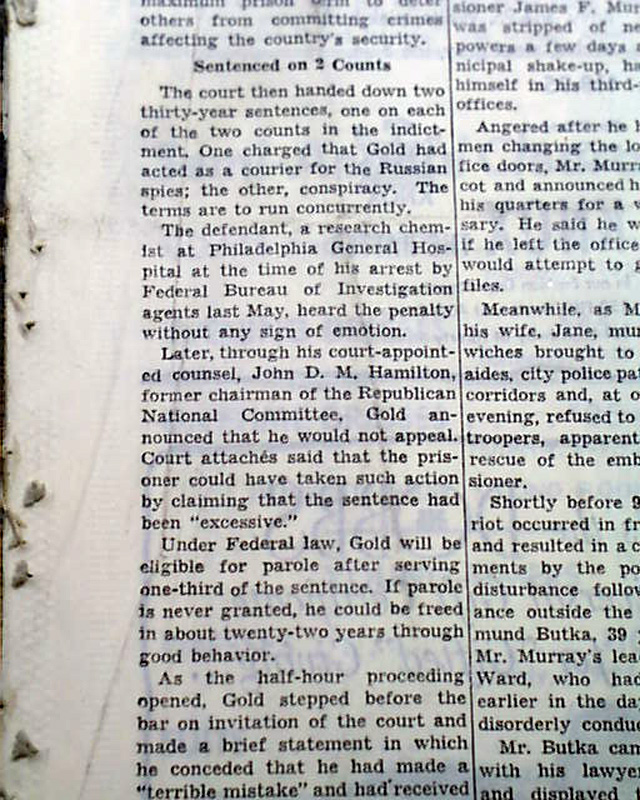
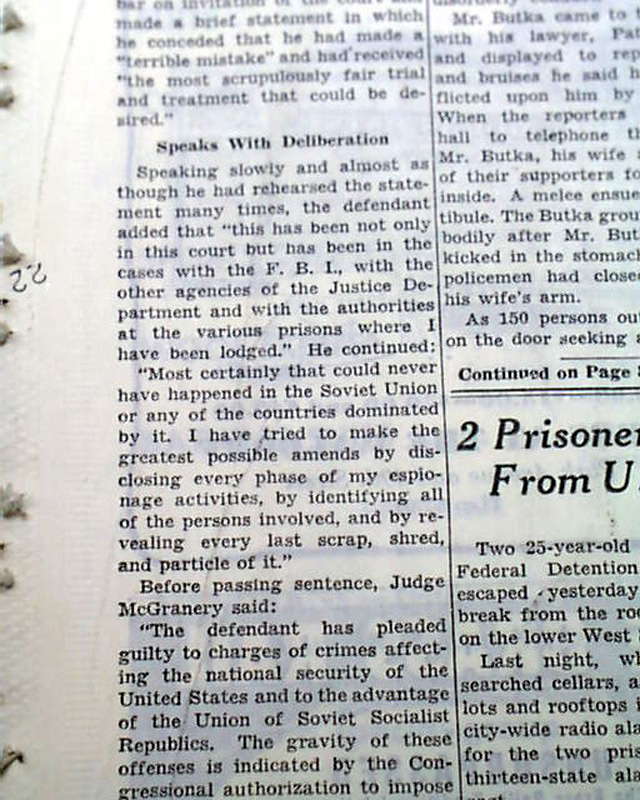
AI notes: On December 9, 1950, Harry Gold, a chemist who had acted as a courier for Soviet espionage, was sentenced to 30 years in federal prison for transmitting atomic secrets to the Soviet Union. Gold had pleaded guilty earlier that year to charges under the Espionage Act of 1917, admitting that he had passed highly classified information from other spies, including material connected to the Manhattan Project, to Soviet agents. The sentencing reflected the gravity of his betrayal during the early Cold War, as the United States sought to secure its nuclear secrets. Despite some cooperation with prosecutors, the court imposed the maximum sentence, and Gold was sent to Lewisburg Federal Penitentiary. His confession and testimony later became crucial evidence in the prosecution of other espionage cases, most notably the trial of Julius and Ethel Rosenberg. He ultimately served just over sixteen years before being paroled in 1966, after which he returned to civilian work as a clinical chemist.
* Chemist & spy Harry Gold sentenced
* Atomic secrets to Soviet Union (Russia)
The top of the front page has a one column heading: "GOLD, ATOM SPY, GETS 30-YEAR MAXIMUM FOR AIDING RED WING" with subheads. (see images)
Complete Sunday edition with 100+ pages, rag edition in nice condition.
AI notes: On December 9, 1950, Harry Gold, a chemist who had acted as a courier for Soviet espionage, was sentenced to 30 years in federal prison for transmitting atomic secrets to the Soviet Union. Gold had pleaded guilty earlier that year to charges under the Espionage Act of 1917, admitting that he had passed highly classified information from other spies, including material connected to the Manhattan Project, to Soviet agents. The sentencing reflected the gravity of his betrayal during the early Cold War, as the United States sought to secure its nuclear secrets. Despite some cooperation with prosecutors, the court imposed the maximum sentence, and Gold was sent to Lewisburg Federal Penitentiary. His confession and testimony later became crucial evidence in the prosecution of other espionage cases, most notably the trial of Julius and Ethel Rosenberg. He ultimately served just over sixteen years before being paroled in 1966, after which he returned to civilian work as a clinical chemist.
Category: The 20th Century


