Home > Back to Search Results >
On the Confederates establishing a navy...
On the Confederates establishing a navy...
Item # 707366
May 27, 1863
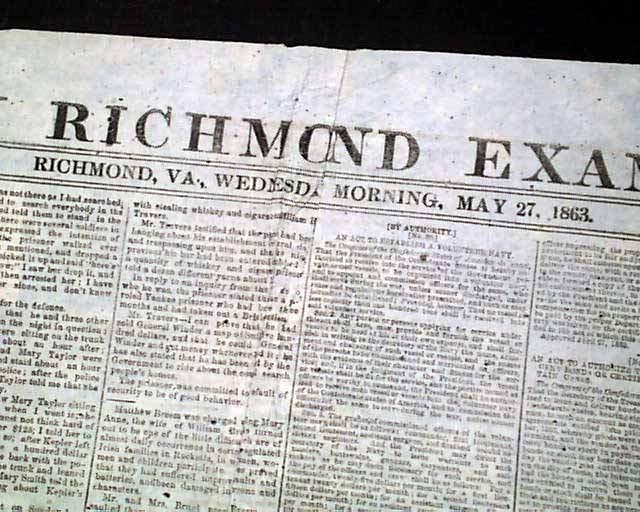
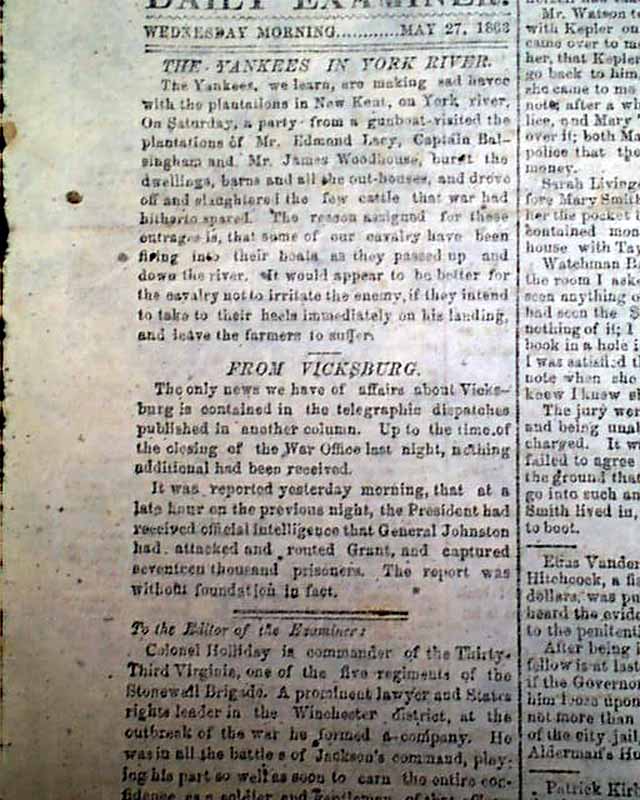
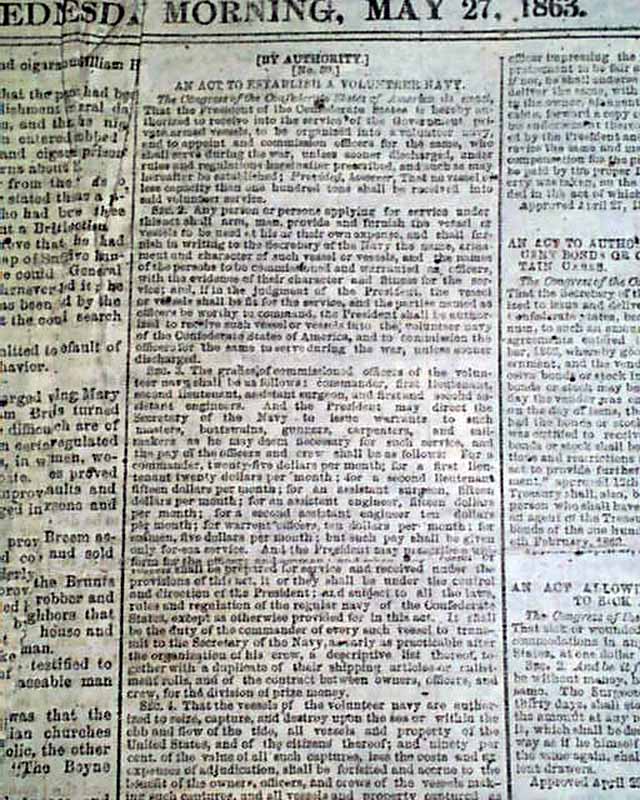
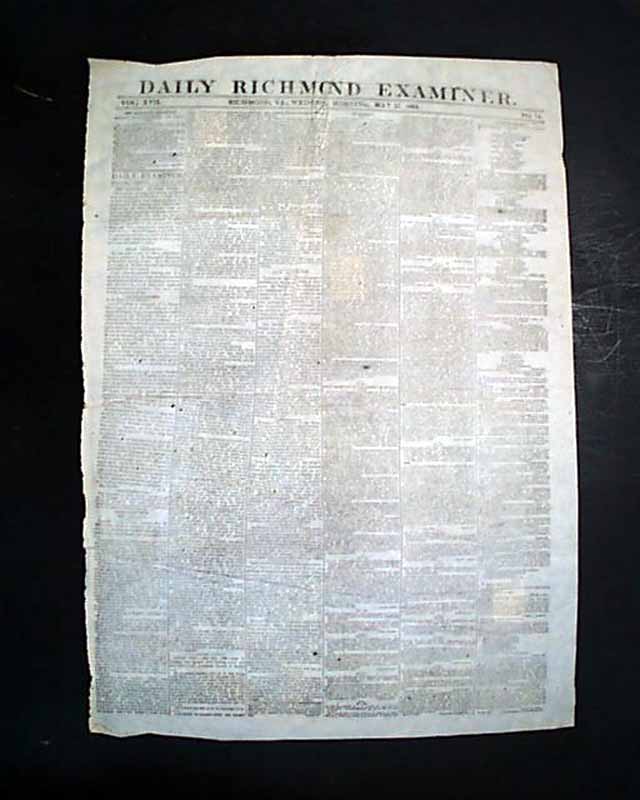
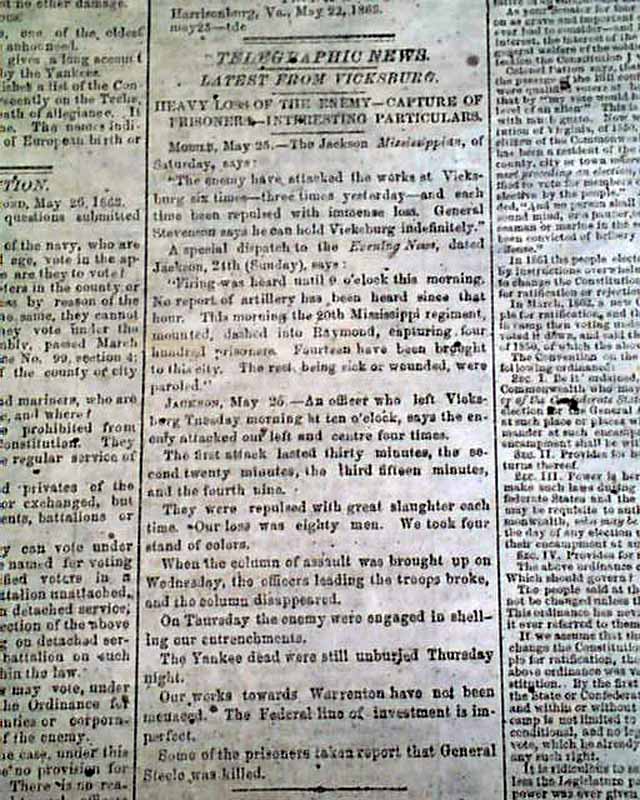
DAILY RICHMOND EXAMINER, Virginia, May 27, 1863 The front page includes: "The Yankees In York River" "From Vicksburg" "An Act to Establish A Volunteer Navy" "Hostage Retained" & other items including many more Acts from the Confederate Congress.
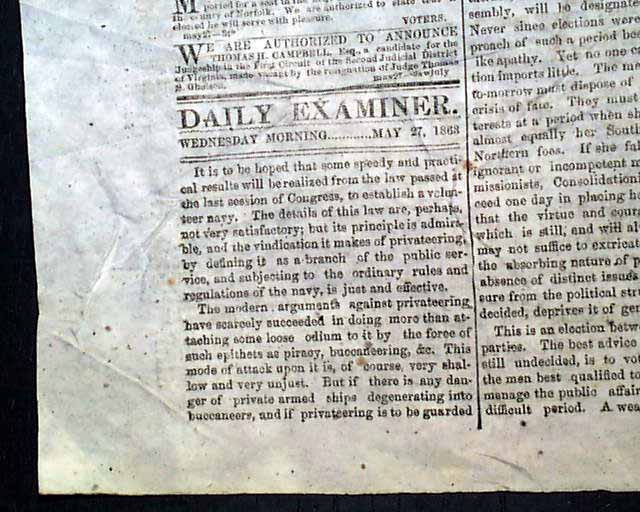
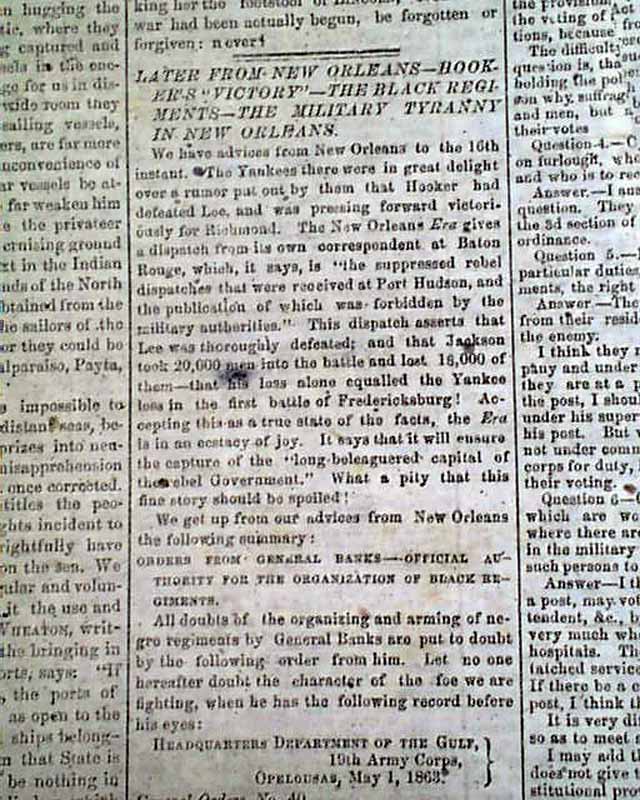
The back page has a lengthy editorial concerning the war, focused on the Act noted: "It is to be hoped that some speedy & practical results will be realized from the law passed at the last session of Congress, to establish a volunteer navy...". Also: "Later From New Orleans--Hooker's 'Victory'--The Black Regiments--The Military Tyranny in New Orleans" "Latest From Vicksburg--Heavy Loss of the enemy--Capture of Prisoners..." and more.
A single sheet issue with a full banner masthead, various creases & wrinkles, otherwise rather good.
AI notes: By 1863, the Confederate States Navy (CSN) had pivoted from a traditional naval strategy to one of asymmetric desperation, led by the innovative Secretary Stephen Mallory. Lacking the industrial infrastructure to match the Union’s massive fleet, the CSN focused its limited resources on commerce raiding and technical "surprises" to break the tightening blockade. This year marked the height of the CSS Alabama's global campaign, which crippled Union merchant shipping and forced the North to divert warships for protection. Simultaneously, the Confederacy became a pioneer of modern naval warfare by deploying "infernal machines"—stationary naval mines (then called torpedoes) and the experimental submarine H.L. Hunley—which aimed to sink ironclads from below the waterline. However, 1863 also brought a crushing diplomatic defeat with the "Laird Rams" incident, wherein British authorities, under heavy Union pressure, seized two high-tech ironclads destined for the South. This effectively ended the Confederacy's hopes of building a powerhouse navy abroad, leaving them to defend their dwindling ports with "cornfield ironclads" built from recycled railroad iron and sheer grit.
Category: Confederate
Available Now
$66.00