Home >
The ship Constellation, and more...
The ship Constellation, and more...
Item # 704004
September 04, 1799
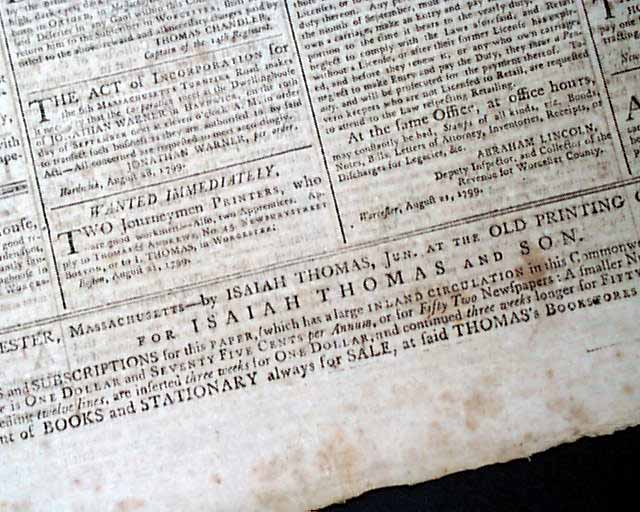
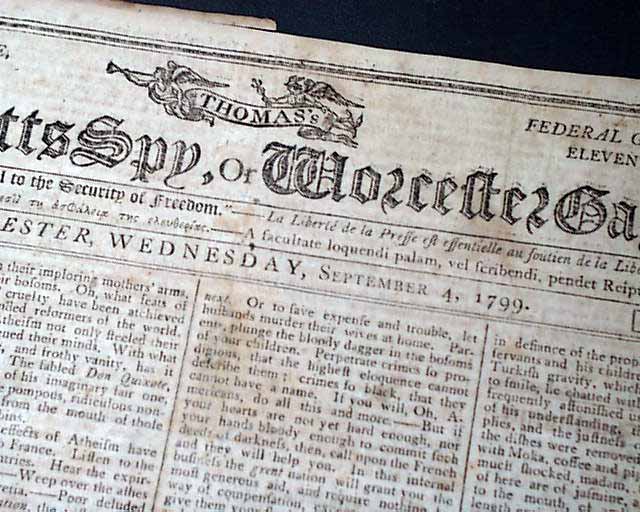
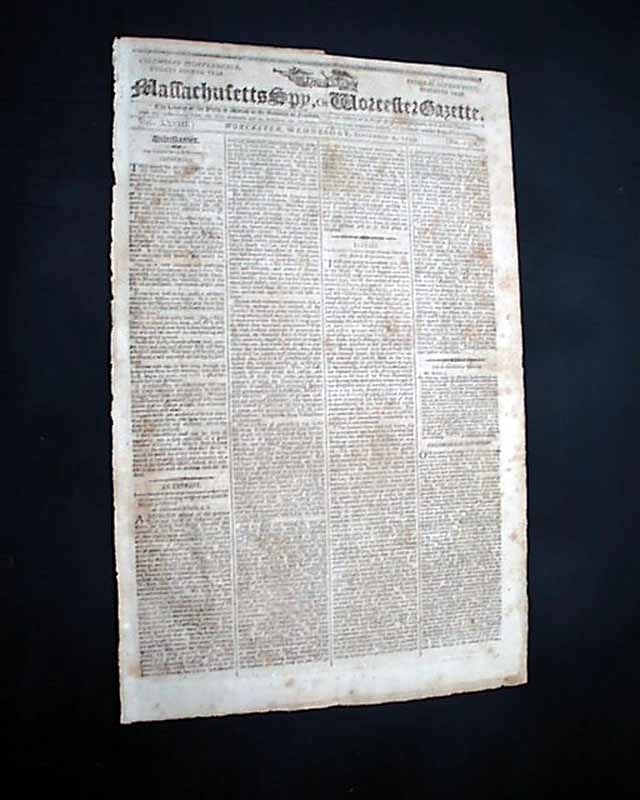
THOMAS'S MASSACHUSETTS SPY OR WORCESTER GAZETTE, Sept. 4, 1799
* Frigate USS Constellation
* Captain Thomas Truxton
A very ornate masthead. Page 2 has much news from Europe including: "Official - Operations of Buonaparte" at Tripoli in Syria.
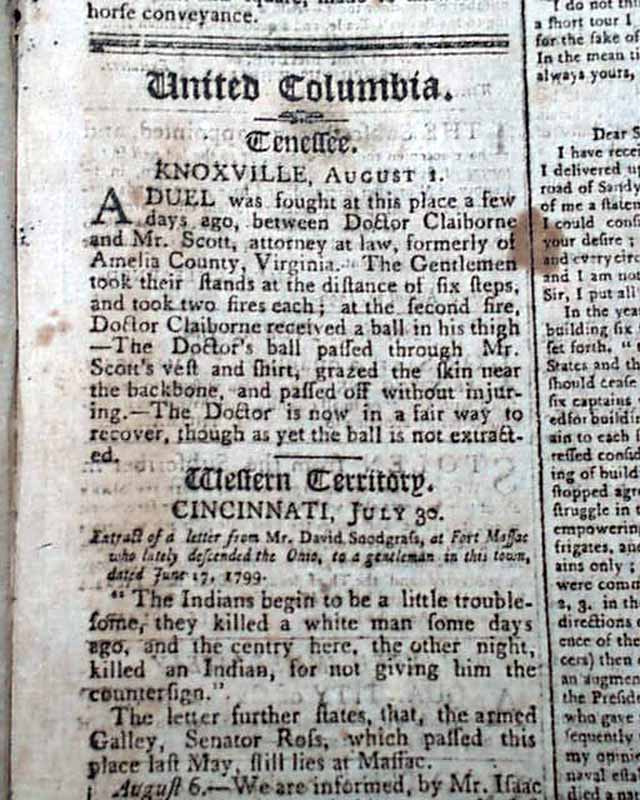
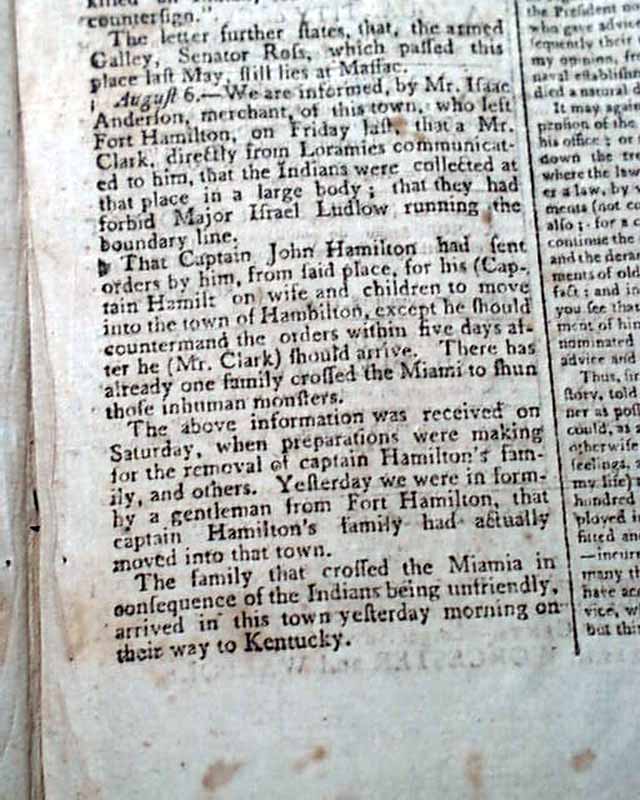
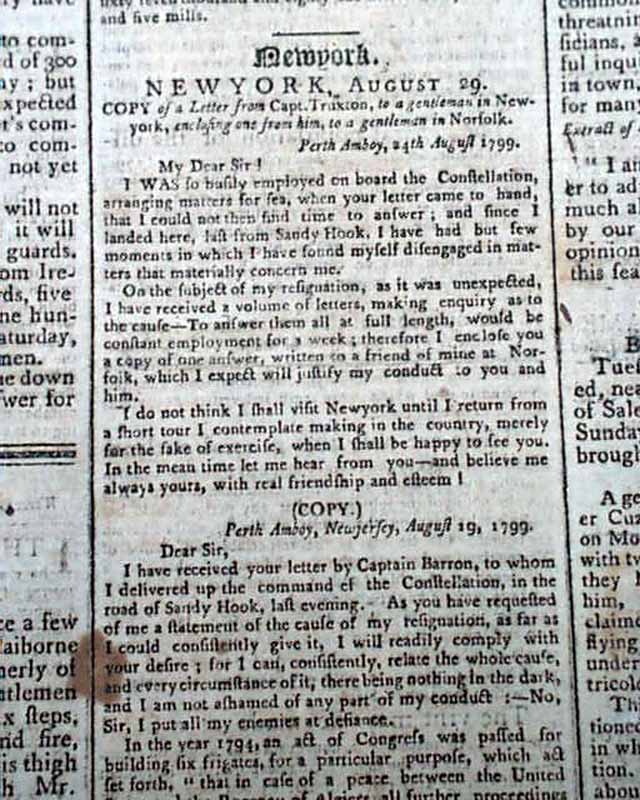
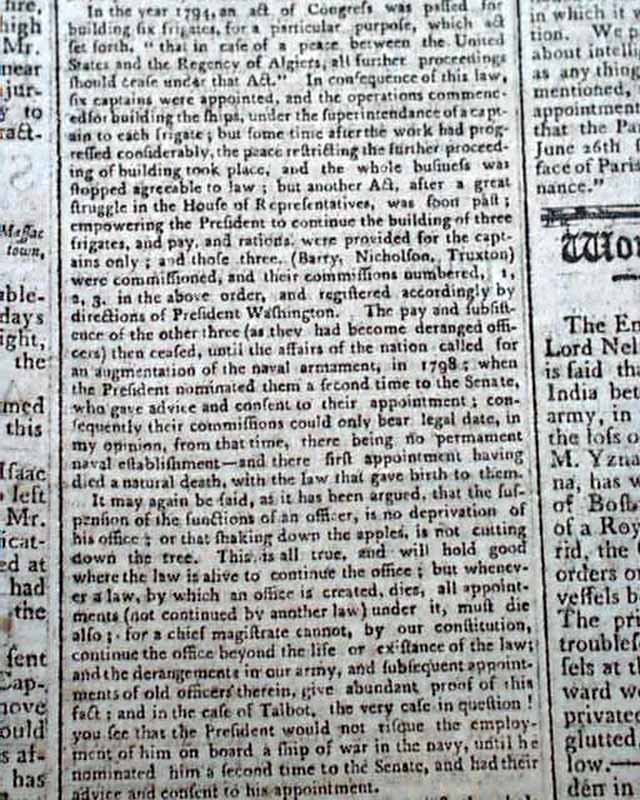
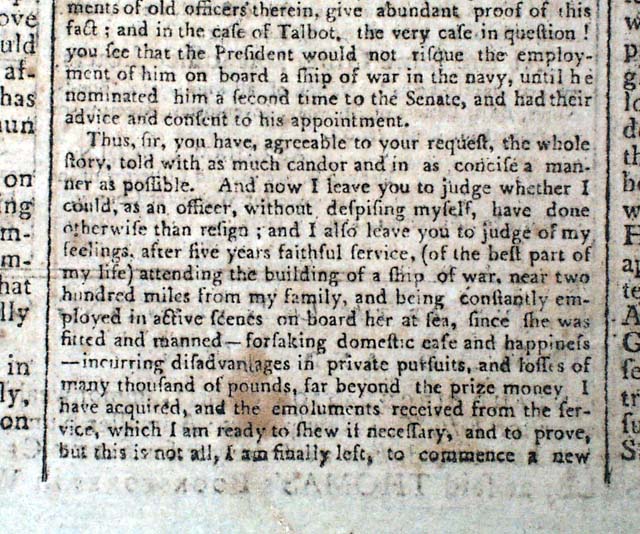
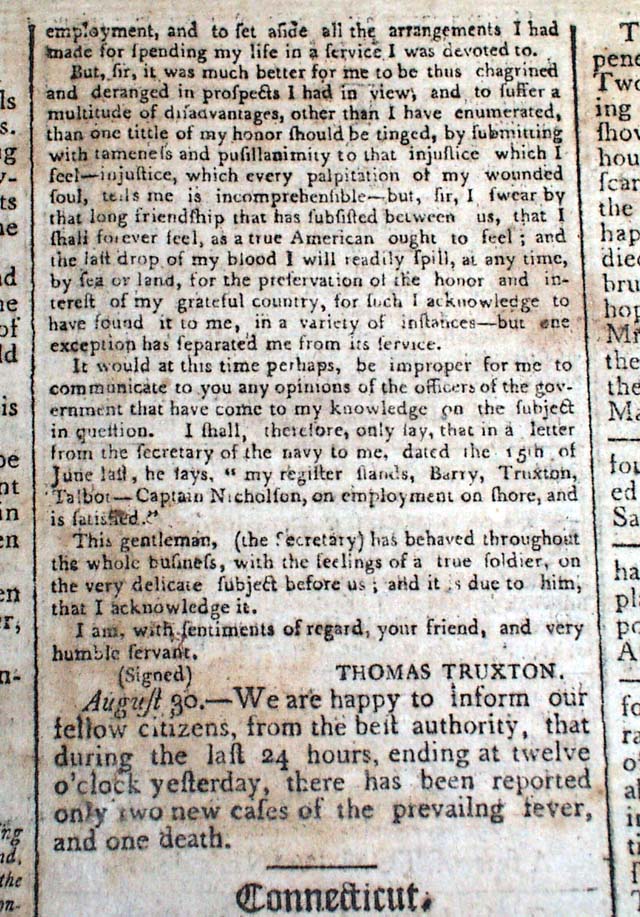
Page 3 includes news headed: "Tennessee" with the report of a duel; "Western Territory--Cincinnati" concerning trouble with Indians; a letter from Capt. Truxton which begins: "I was so busily employed on board the Constellation arranging matters for sea...", followed by a letter from him dated at Perth Amboy, Aug. 19, 1799 in which is noted in part: "I have received your letter by Capt. Baron to whom I delivered up the command of the Constellation in the road of Sandy Hook last evening...In the year 1794 an act of Congress was passed for building six frigates for a particular purpose...In consequence of this law six captains were appointed & the operations commenced for building the ships..." with much more on what would soon be just 3 ships.
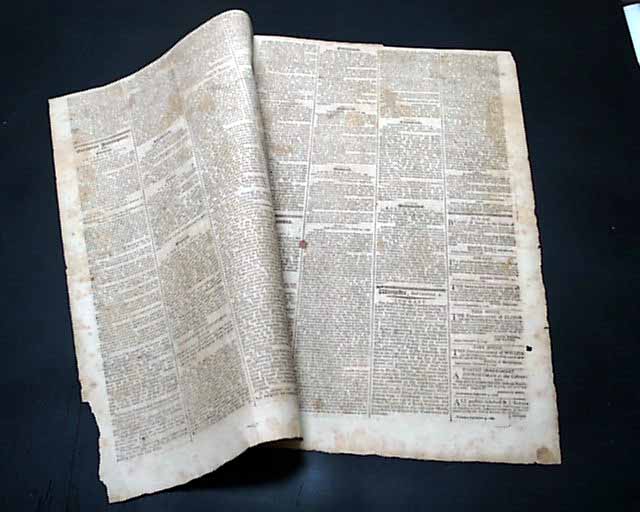
Four pages, nice condition.
background: In 1799, the USS Constellation, a 38-gun frigate and one of the first ships of the fledgling United States Navy, was under the command of Captain Thomas Truxton, a veteran of the Continental Navy. Tasked with protecting American commerce during the Quasi-War with France, Truxton led the Constellation on a cruise in the Caribbean, where her crew demonstrated exceptional discipline and seamanship. On February 9, 1799, the ship engaged and captured the French frigate L’Insurgente, a larger and more heavily armed opponent, in a dramatic naval action that became a celebrated American victory. This encounter not only showcased Truxton’s skillful command and innovative tactics but also proved the effectiveness of the new U.S. Navy in asserting American maritime rights. The triumph bolstered national pride, strengthened American naval prestige abroad, and established the Constellation and Truxton as enduring symbols of the young nation’s determination to defend its shipping against European powers.
Category: The 1600's and 1700's
Available Now
$52.00