Home >
The affair of "Citizen Genet"...
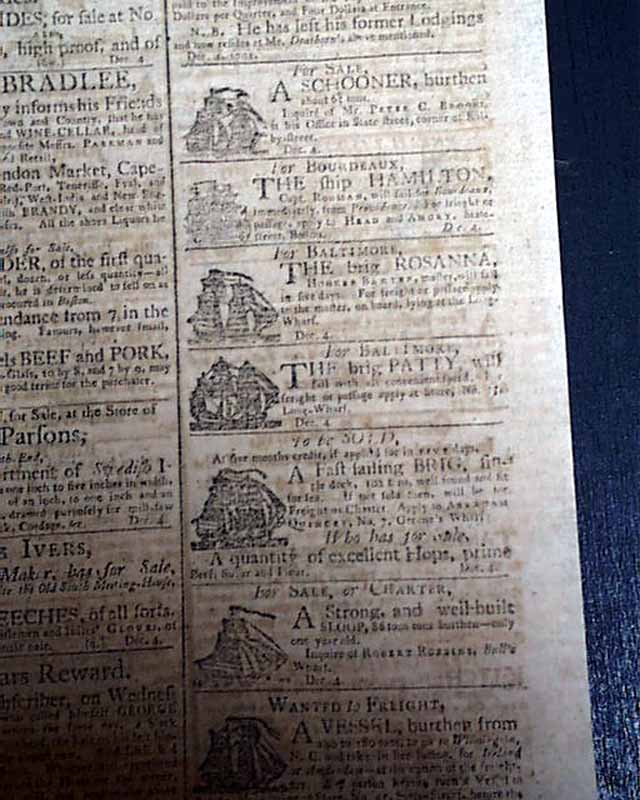
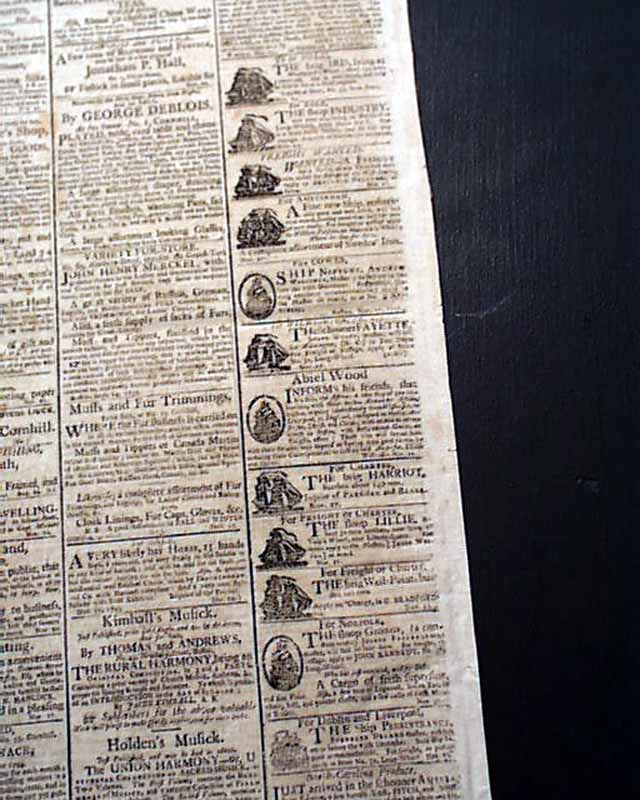
The affair of "Citizen Genet"...
Item # 719847
December 04, 1793
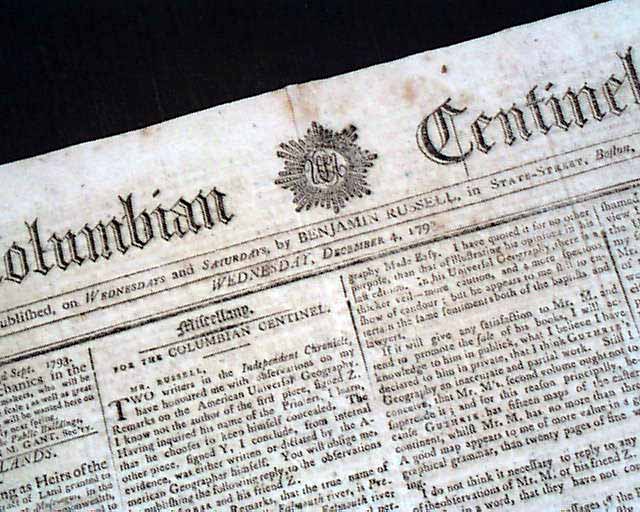
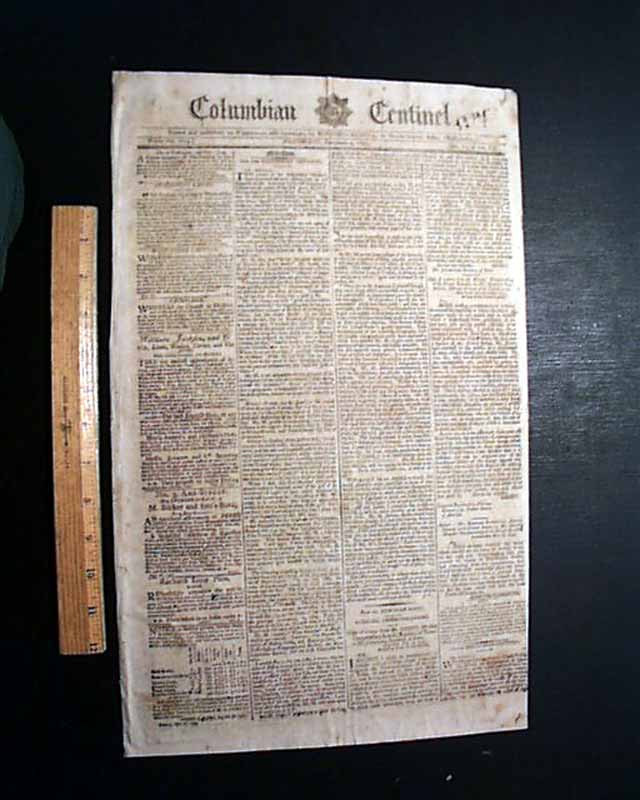
COLUMBIAN CENTINEL, Boston, Dec. 4, 1793
* Citizen Genet Affair
* Edmond Charles Genet
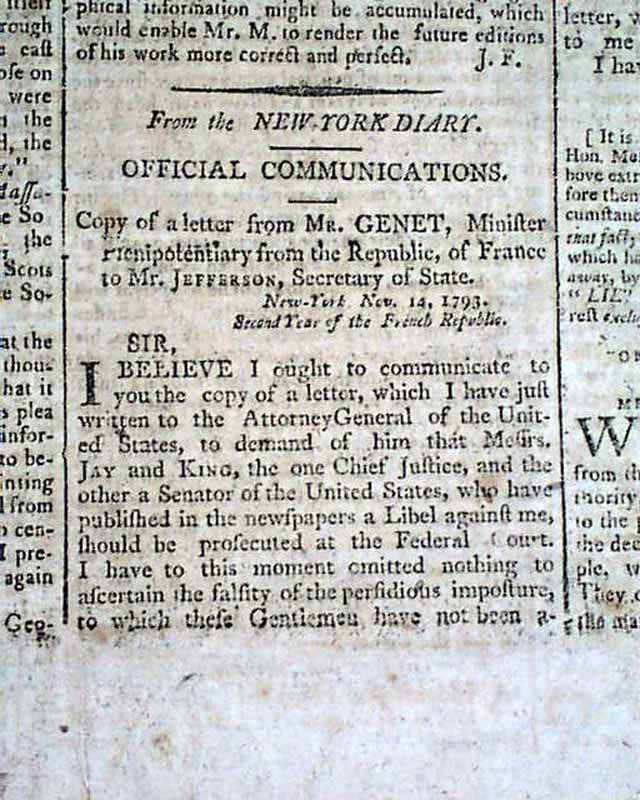
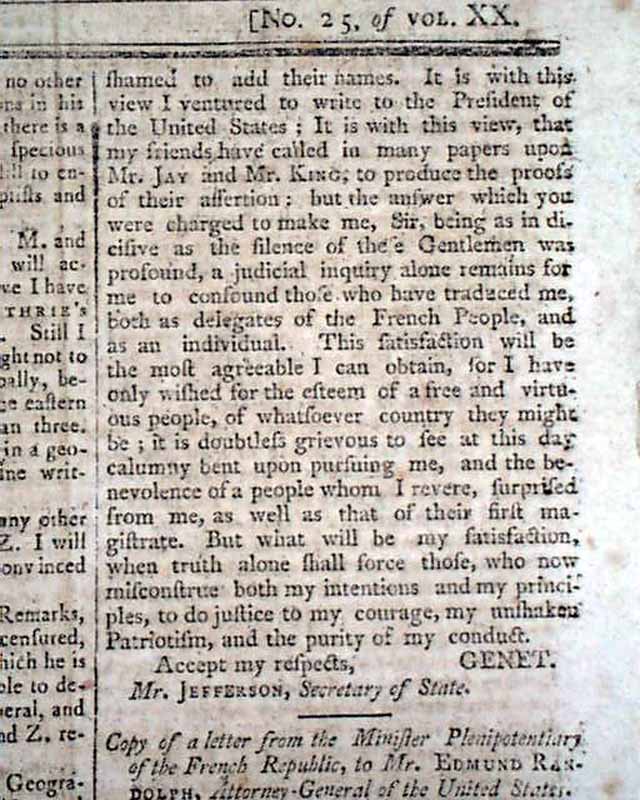
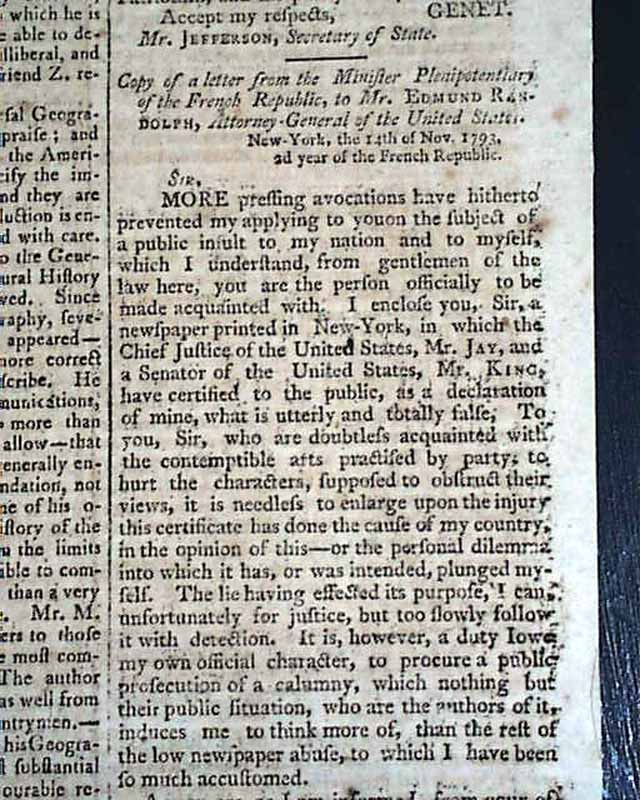
The front page contains nearly a full column headed: "Official Communications" which has two letters signed by Genet, the French ambassador to the United States, concerning what is known as the "Citizen Genet Affair" relating to his plans to get America to support the French in capturing British ships, which it would not do. Ultimately to avoid an appointment with the guillotine Genet was given asylum in the United States where he lived out his life.
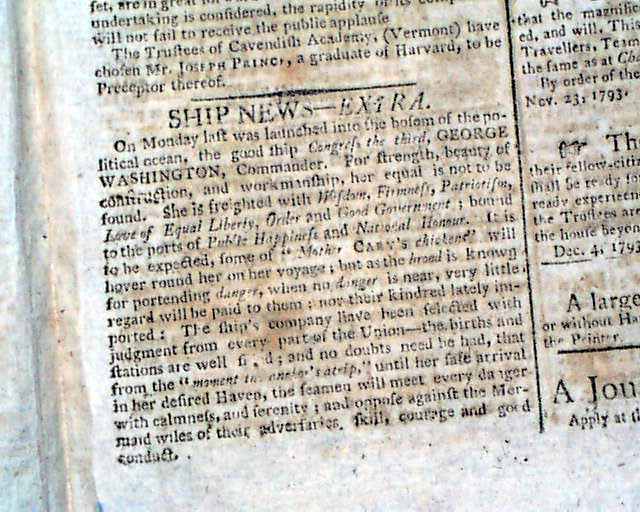
Page 3 has an interesting item announcing the beginning of the third Congress in metaphorical terms, including: "...launched into the bosom of the political ocean, the good ship Congress the third, George Washington, Commander..." with more.
Four pages, very nice condition.
AI notes: The Citizen Genêt Affair (1793–1794) was an early diplomatic crisis that tested the neutrality, sovereignty, and constitutional authority of the young United States during the French Revolutionary Wars. Edmond-Charles Genêt, known as “Citizen Genêt,” was sent by revolutionary France as minister to the U.S. to rally American support against Britain and Spain. Upon arriving in Charleston in April 1793, Genêt openly commissioned American privateers, authorized the seizure of British ships, and attempted to organize U.S. citizens for French military expeditions—actions that violated President George Washington’s Proclamation of Neutrality issued that same month. Genêt bypassed federal authority by appealing directly to the American public and Democratic-Republican societies, challenging executive power and inflaming partisan divisions between Jeffersonian Republicans (more sympathetic to France) and Federalists led by Alexander Hamilton, who favored strict neutrality and stronger ties with Britain. Washington’s administration ultimately demanded Genêt’s recall; by the time France agreed, the Jacobins had taken power and Genêt feared execution if he returned, so Washington allowed him to remain in America as a private citizen. The affair firmly established the president’s authority over foreign policy, reinforced U.S. neutrality in European conflicts, and marked a defining moment in the emergence of America’s first party system.
Category: The 1600's and 1700's
Available Now
$98.00