Pirates in the Caribbean... The Carnival of Venice...
Item # 705706
·
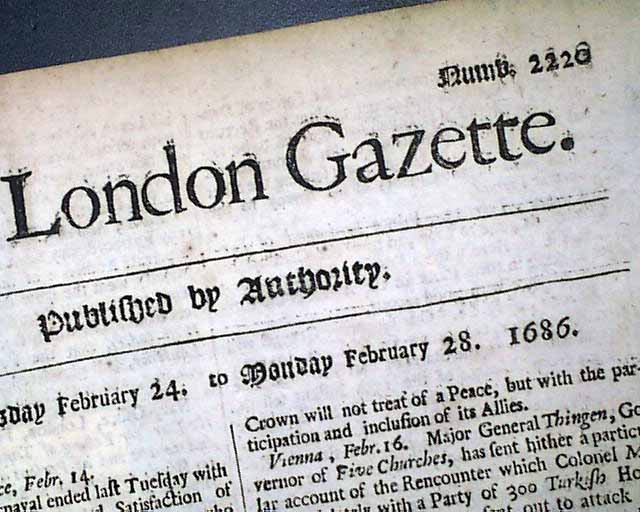
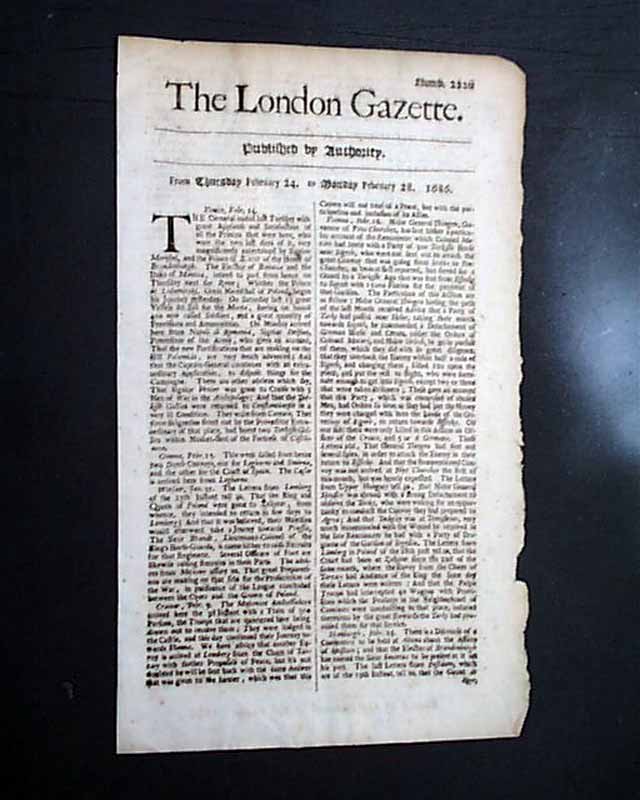
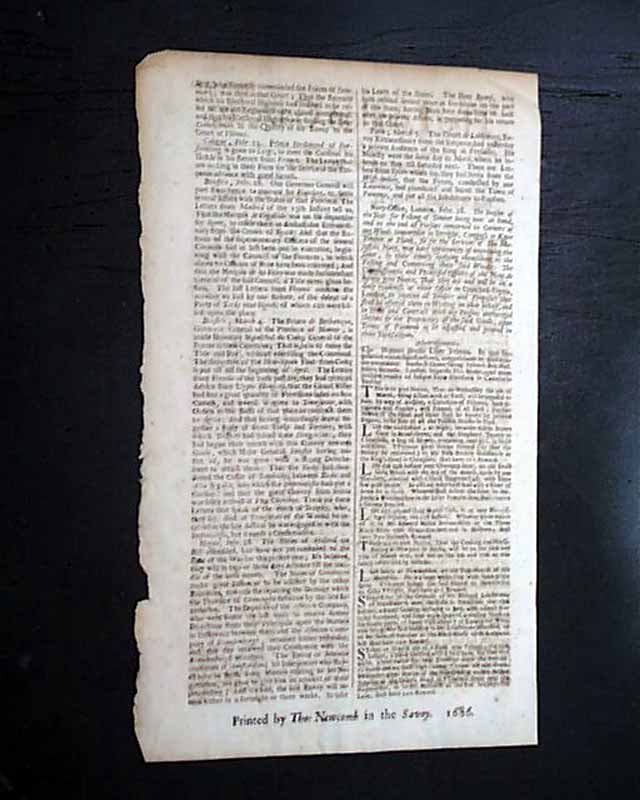
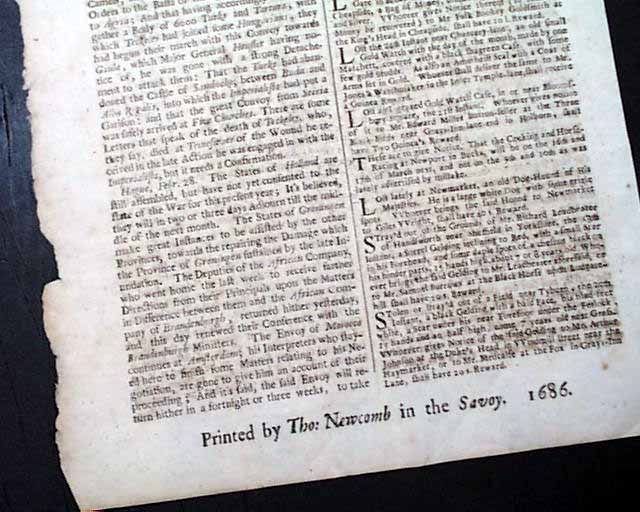
THE LONDON GAZETTE, England, Feb. 28, 1686
* Real Pirates of the Caribbean - buccaneers
* Laurens Cornelis Boudewijn de Graaf (Laurence)
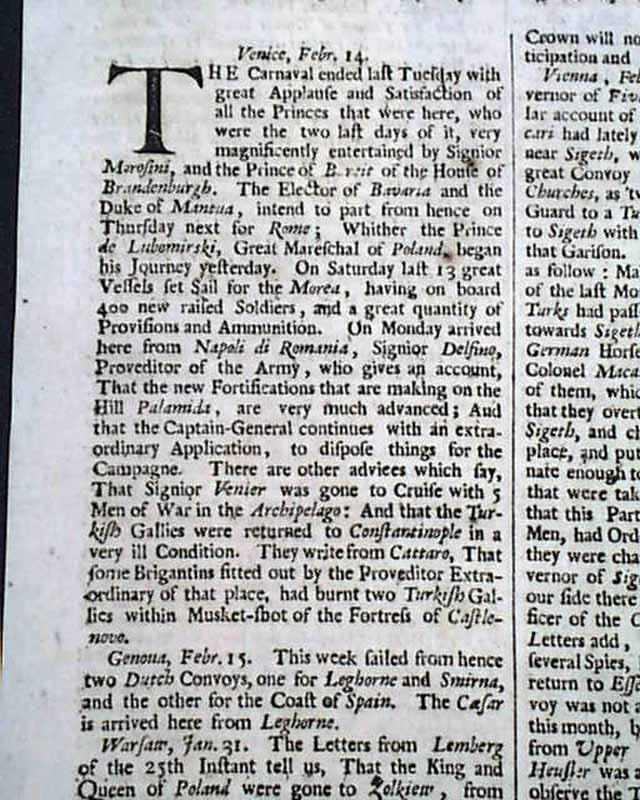
The front page has a report datelined at Venice concerning the ending of the famous carnival there.
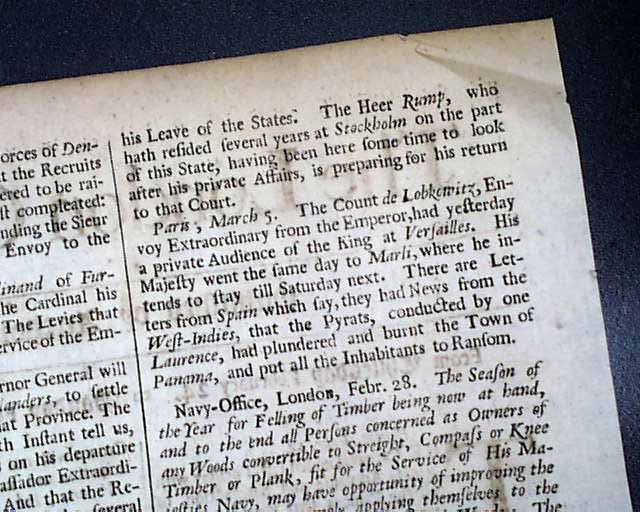
The back page has a report noting: "...There are letters from Spain which says they had news from the West Indies that the Pyrats, conducted by one Laurence, had plundered and burnt the town of Panama, and put all the inhabitants to ransom."
Complete as a single sheet issue, 6 1/2 by 11 1/2 inches, nice condition.
Background: The geopolitical significance of Laurens de Graaf’s devastating raids, and the sensationalized European reporting that followed, lies in how they exposed the crumbling defensive architecture of the Spanish Empire while signaling the peak of the buccaneering era. By successfully organizing massive, multi-national coalitions of pirates to breach heavily fortified Spanish strongholds like Campeche, de Graaf proved that Spain's vast New World wealth was utterly vulnerable to non-state actors, who frequently operated with the tacit approval or legal cover of rival crowns like France and England. Furthermore, the panic reflected in The London Gazette’s conflated report underscores how deeply intertwined colonial security was with European financial markets and public imagination; a single rumor of a burnt treasure port could disrupt transatlantic trade and force urgent diplomatic recalibrations in London, Paris, and Madrid. Ultimately, these unchecked, high-stakes depredations forced a crucial pivot in global politics: they demonstrated to European monarchs that pirate fleets had grown too powerful and chaotic to control, directly paving the way for late-17th-century international treaties where nations finally agreed to suppress outlaw buccaneers in favor of structured, state-regulated global commerce.
* Real Pirates of the Caribbean - buccaneers
* Laurens Cornelis Boudewijn de Graaf (Laurence)
The front page has a report datelined at Venice concerning the ending of the famous carnival there.
The back page has a report noting: "...There are letters from Spain which says they had news from the West Indies that the Pyrats, conducted by one Laurence, had plundered and burnt the town of Panama, and put all the inhabitants to ransom."
Complete as a single sheet issue, 6 1/2 by 11 1/2 inches, nice condition.
Background: The geopolitical significance of Laurens de Graaf’s devastating raids, and the sensationalized European reporting that followed, lies in how they exposed the crumbling defensive architecture of the Spanish Empire while signaling the peak of the buccaneering era. By successfully organizing massive, multi-national coalitions of pirates to breach heavily fortified Spanish strongholds like Campeche, de Graaf proved that Spain's vast New World wealth was utterly vulnerable to non-state actors, who frequently operated with the tacit approval or legal cover of rival crowns like France and England. Furthermore, the panic reflected in The London Gazette’s conflated report underscores how deeply intertwined colonial security was with European financial markets and public imagination; a single rumor of a burnt treasure port could disrupt transatlantic trade and force urgent diplomatic recalibrations in London, Paris, and Madrid. Ultimately, these unchecked, high-stakes depredations forced a crucial pivot in global politics: they demonstrated to European monarchs that pirate fleets had grown too powerful and chaotic to control, directly paving the way for late-17th-century international treaties where nations finally agreed to suppress outlaw buccaneers in favor of structured, state-regulated global commerce.
Item from last month's catalog - #367 - released for June, 2026
Categories: The 1600's and 1700's, British
Price
$72
100% Authentic: Original printing, never a reproduction.
Other issues you may like
§ related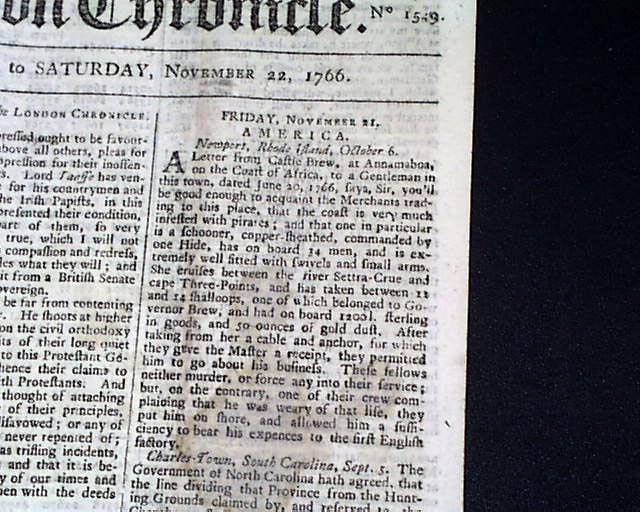
Encounters with a pirate & his crew on the Atlantic coast...
THE LONDON CHRONICLE, England, Nov. 22, 1766
* 18th century pirates - piracy
The front page has over half a column of news headed: "America" which...
* 18th century pirates - piracy
The front page has over half a column of news headed: "America" which...
Nov 1766
$60
Pirate troubles in the Caribbean...
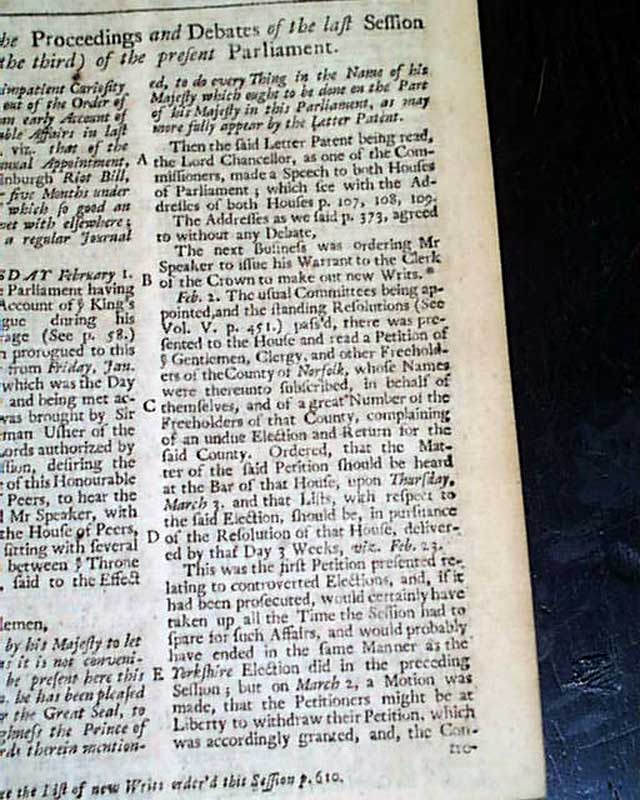
THE GENTLEMAN'S MAGAZINE, London, October, 1737 Among the articles noted in the table of contents are: "Some regular Troops necessary in a free Government...
$68
Dealing with a pirate ship...
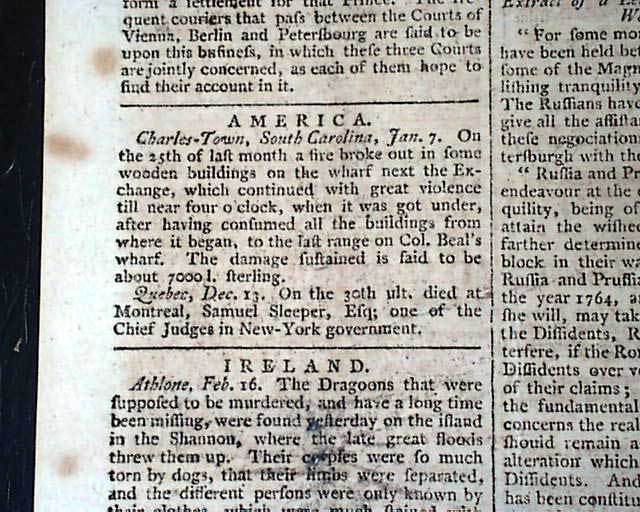
THE LONDON CHRONICLE, England, March 7, 1771 Page 2 has: "America" with a report from Charleston concerning a fire at the wharf. Another page has a report...
Mar 1771
$24
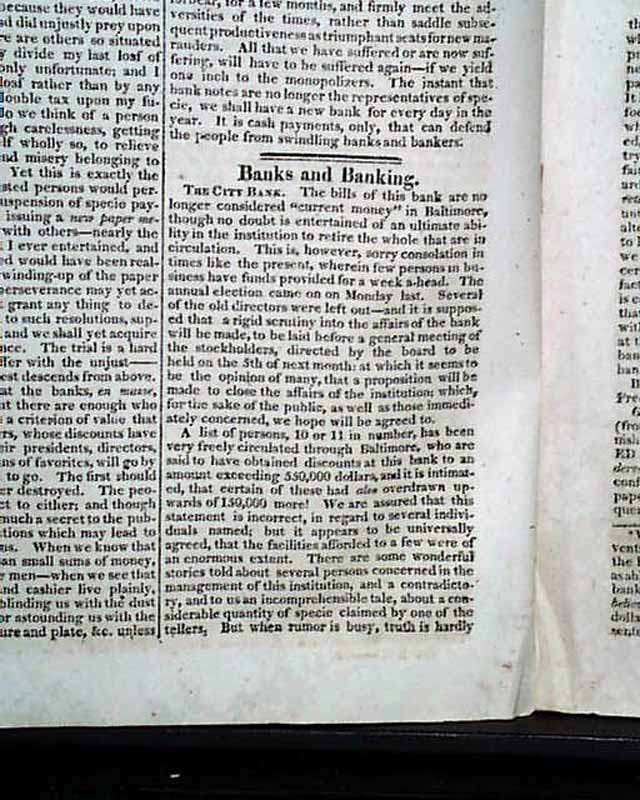
Pirates in the Caribbean... U.S. coins... Banking...
NILES' WEEKLY REGISTER, Baltimore, June 12, 1819 Much on "Banks and Banking" and over 4 pages on: "Regulation of Coins - Important Report".
The back page...
The back page...
Jun 1819
$32