


Mahatma Gandhi starts his 21-day fast...
Item # 563905Sorry, but this item is no longer available. Please be in touch at info@rarenewspapers.com if you would like to be placed on a want list or are interested in a potential alternate issue.
May 09, 1933
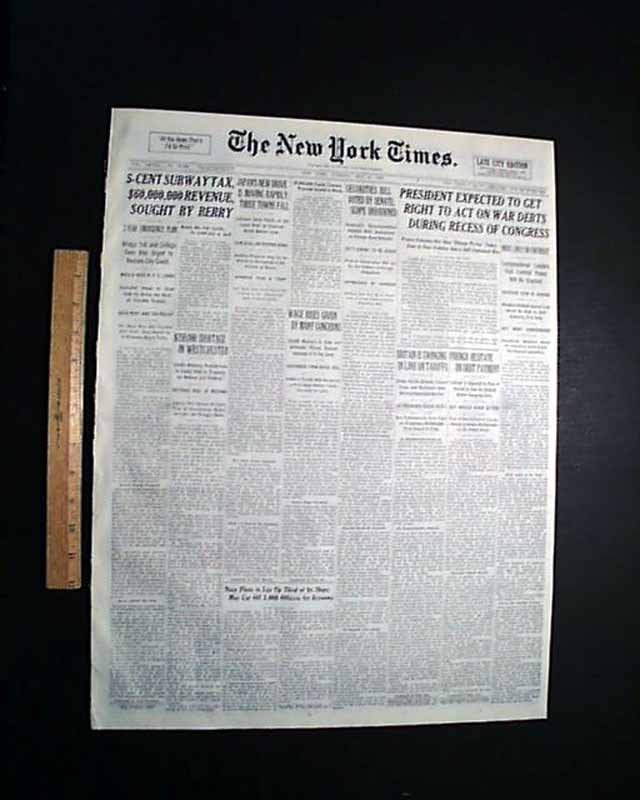
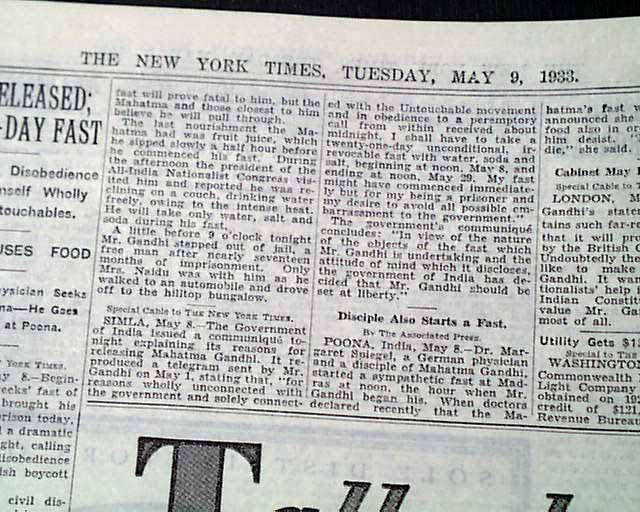
THE NEW YORK TIMES, New York, NY, May 9, 1933
* Mahatma Gandhi starts his 21-day fast
This 38 page newspaper has one column headlines on page 10:
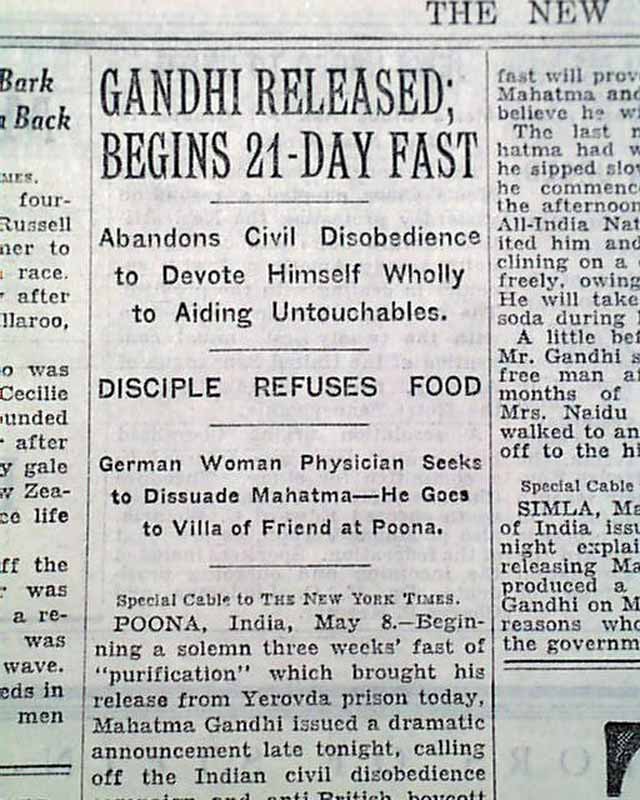
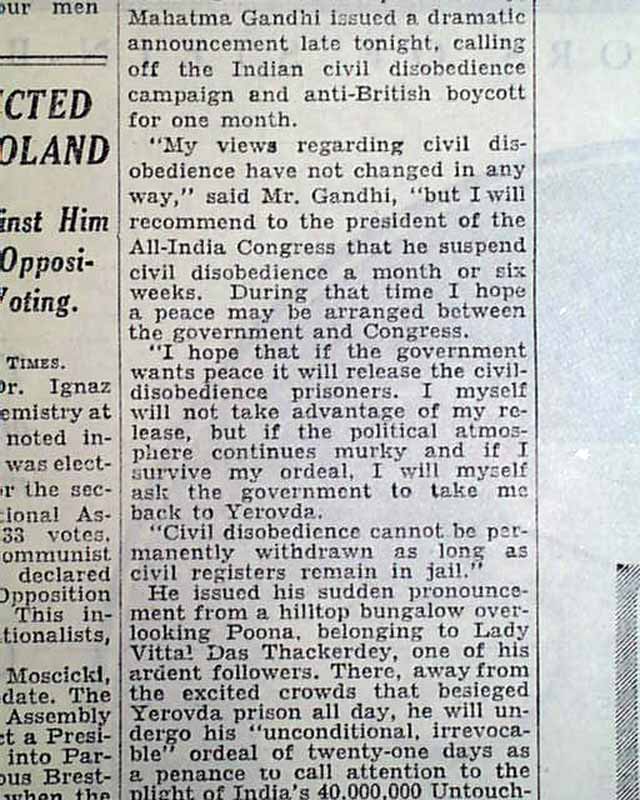
* GANDHI RELEASED; BEGINS 21-DAY FAST
* Abandons Civil Disobedience to Devote Himself Wholly to Aiding Untouchables
* Disciple Refuses Food
and more. Other news of the day throughout.
Rag edition in great condition.
wikipedia notes: On 8 May 1933 Gandhi began a 21-day fast of self-purification to help the Harijan movement.[14] This new campaign was not universally embraced within the Dalit community, however, as prominent leader B. R. Ambedkar condemned Gandhi's use of the term Harijans as saying that Dalits were socially immature, and that privileged caste Indians played a paternalistic role. Ambedkar and his allies also felt Gandhi was undermining Dalit political rights. Gandhi, although born into the Vaishya caste, insisted that he was able to speak on behalf of Dalits, despite the availability of Dalit activists such as Ambedkar.
* Mahatma Gandhi starts his 21-day fast
This 38 page newspaper has one column headlines on page 10:
* GANDHI RELEASED; BEGINS 21-DAY FAST
* Abandons Civil Disobedience to Devote Himself Wholly to Aiding Untouchables
* Disciple Refuses Food
and more. Other news of the day throughout.
Rag edition in great condition.
wikipedia notes: On 8 May 1933 Gandhi began a 21-day fast of self-purification to help the Harijan movement.[14] This new campaign was not universally embraced within the Dalit community, however, as prominent leader B. R. Ambedkar condemned Gandhi's use of the term Harijans as saying that Dalits were socially immature, and that privileged caste Indians played a paternalistic role. Ambedkar and his allies also felt Gandhi was undermining Dalit political rights. Gandhi, although born into the Vaishya caste, insisted that he was able to speak on behalf of Dalits, despite the availability of Dalit activists such as Ambedkar.
Category: The 20th Century


