The birth of Bob Dylan's extraordinary career in 1961...
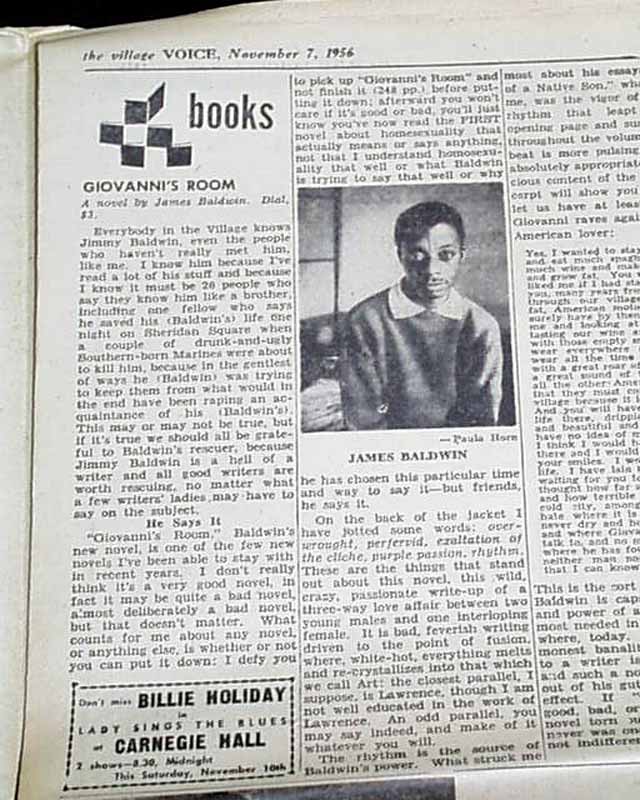
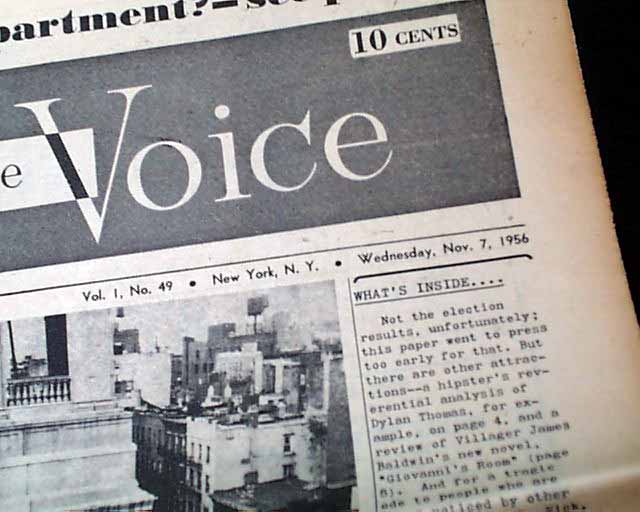
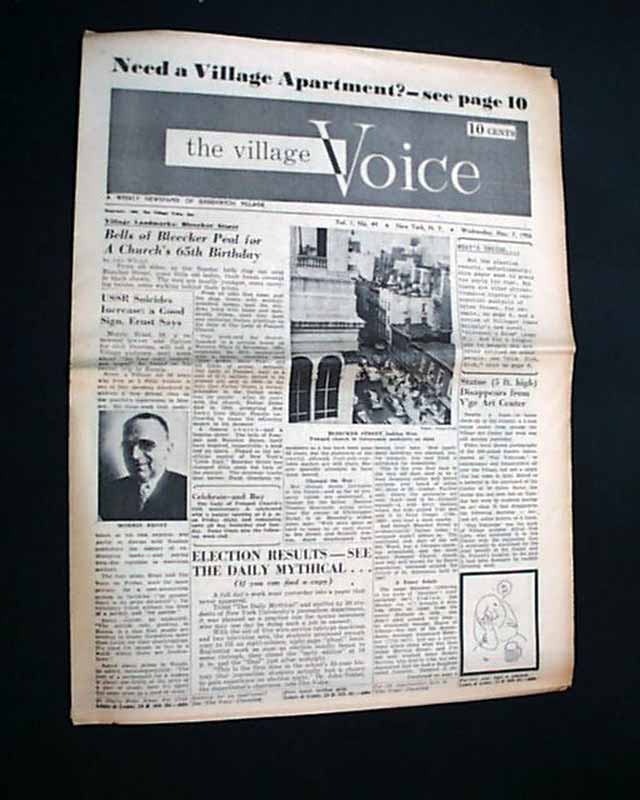
THE VILLAGE VOICE (weekly), Greenwich Village, New York, Nov. 7, 1956
- Underground press & the "Beat" generation
- Dylan Thomas - Welsh poet and writer
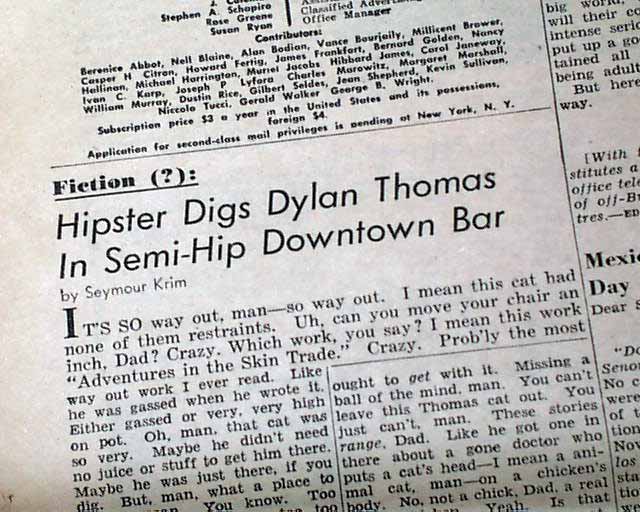
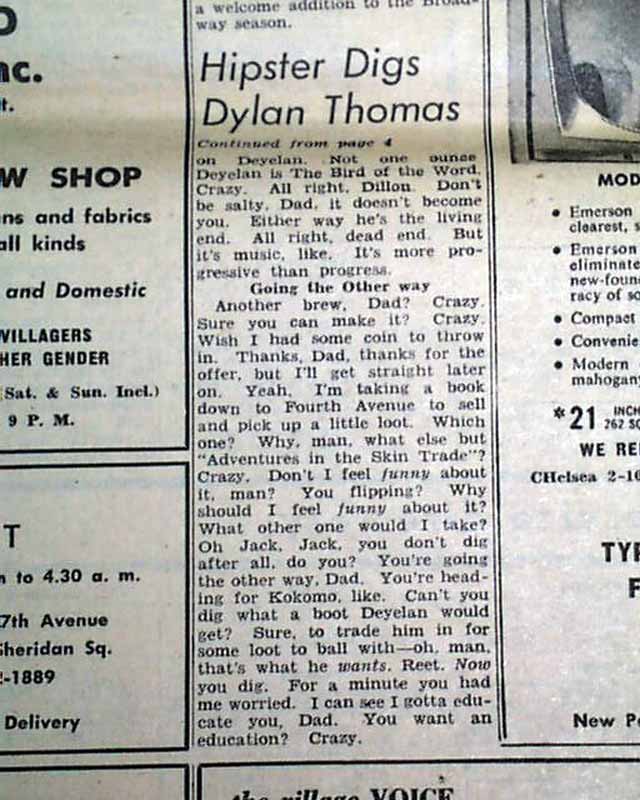
- Very early use of the word "Hipster"
- Bohemian satire - White Horse Tavern
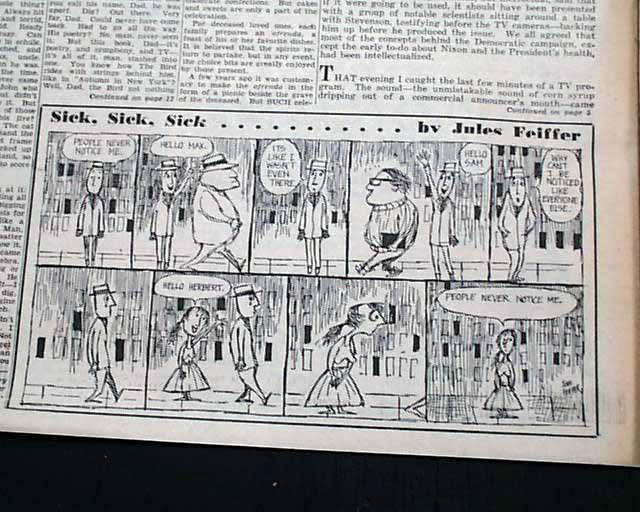
- Very early Jules Feiffer cartoon (3rd)
First, it is worth noting that "The Village Voice" was an American news and culture paper, known for being the country's first alternative newsweekly. Founded just 6 years previous in 1955, the Voice began as a platform for the creative community of New York City.
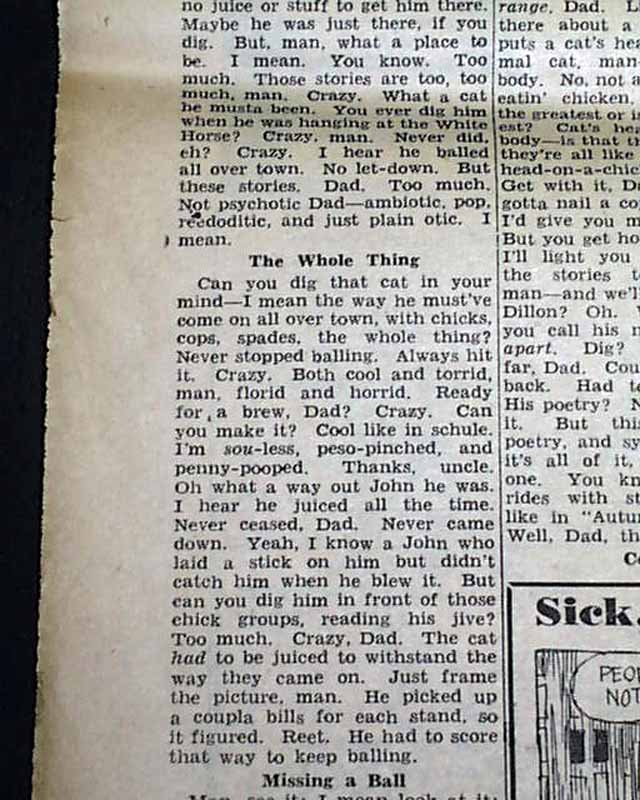
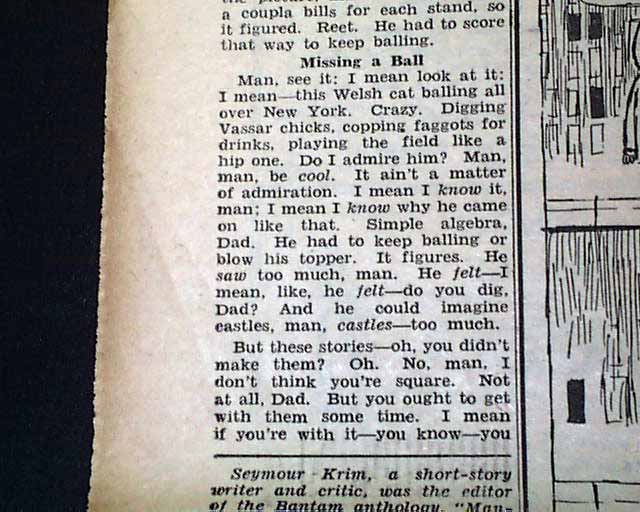
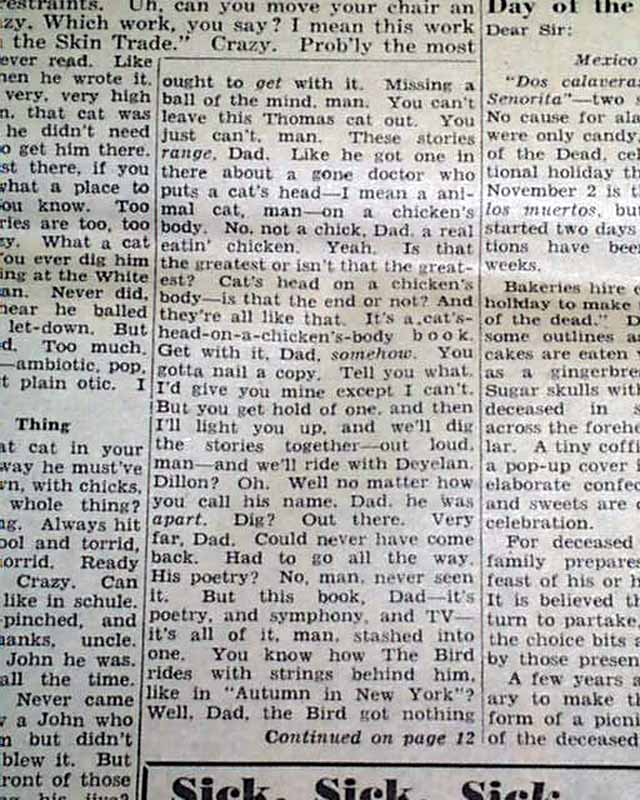
Beginning on page 4 is a editorial by Seymour Krim headed: "Hipster Digs Dylan Thomas In Semi-Hip Downtown Bar"
And also on the same page is a very early Jules Feiffer cartoon headed: "Sick, Sick, Sick" (see images)
background: The significance of the November 7, 1956, issue of the Village Voice lies in its role as a primary historical record of the precise moment the "Beat" movement transitioned from an underground subculture into a self-aware, media-defined phenomenon. By featuring Seymour Krim’s critique of hipsters at the White Horse Tavern, the issue captured the birth of "poseur" culture, where the intellectual weight of figures like Dylan Thomas was being traded for the aesthetic of "cool" in the post-war urban landscape. Simultaneously, the inclusion of Jules Feiffer’s early Sick, Sick, Sick cartoons marked a revolutionary shift in American satire; Feiffer moved away from slapstick or political caricature toward a "psychoanalytic" style that mirrored the anxiety and narcissism of the burgeoning New York intelligentsia. Together, these pieces established the Voice as the definitive arbiter of the downtown scene, proving that the paper would not just report on the counterculture, but would actively define its language, neuroses, and social hierarchies for decades to come.
I suspect this to be an extremely rare item because there was really no reason to save it at the time.
Complete in 12 pages, tabloid-size, one crease across the center, nice condition.
Provenance note: This issue comes from The Village Voice's own archives, part of their in-house collection used to create their digital archive.
Alert: Many issues of The Village Voice contain articles and/or photos which some consider offensive, and are certainly inappropriate for children. Please purchase with discretion.
background: The July 20, 1961 issue of The Village Voice front page shows a young Bob Dylan playing harmonica at the Cafe Wha? in Greenwich Village. The shot captures Dylan amid an informal afternoon folk “hootenanny,” flanked (left to right) by an unidentified conga drummer, singer Karen Dalton, folksinger-guitarist Fred Neil, and guitarist Mark Spoelstra. It was taken in early February 1961 by Voice staff photographer Gin Briggs (credited as “Gin Biggs”) and ran on that issue’s cover on July 20. The accompanying caption notes that “a folk hootenanny of sorts had been going on at the Cafe Wha? since early this year”. This photo is historically notable – widely cited as Dylan’s first newspaper image – capturing the then-unknown singer in the Village folk scene.
Other issues you may like
§ related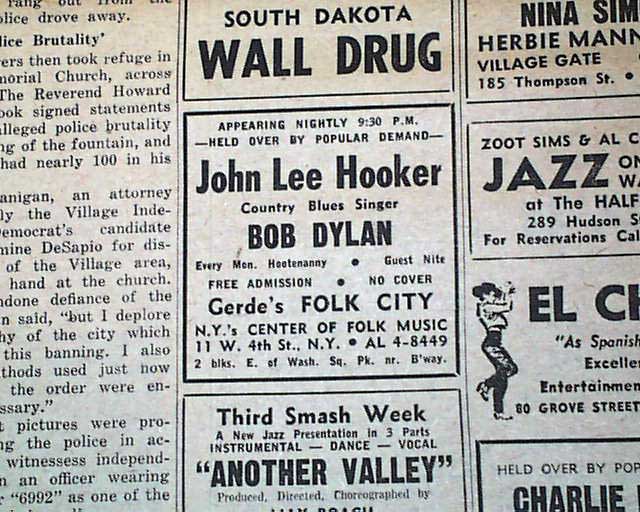
THE VILLAGE VOICE, New York, April 13, 1961
- Bob Dylan - Robert Allen Zimmerman
- Very 1st public performance advertisement
- Gerde's Folk City music venue in
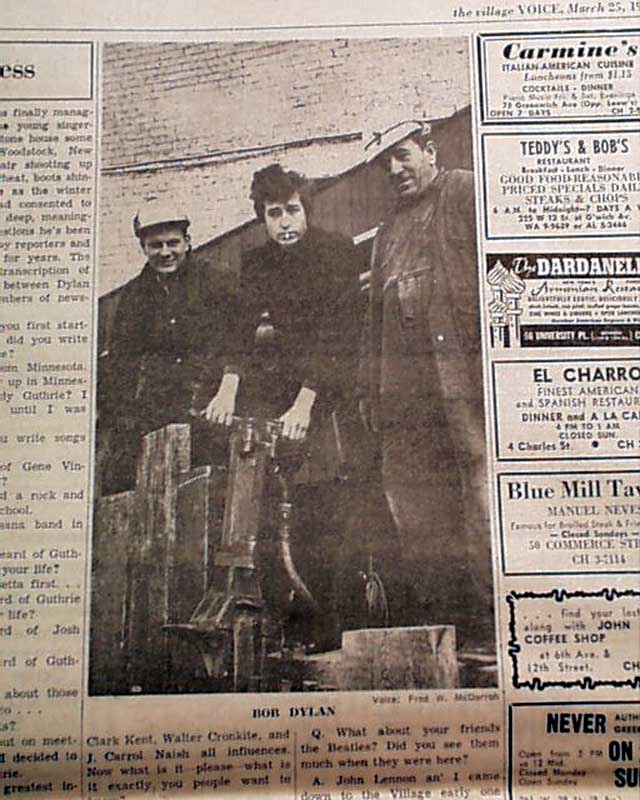
THE VILLAGE VOICE (weekly), Greenwich Village, New York, March 25, 1965
- Early and rare Bob Dylan interview
- American folk singer - songwriter
Page 24 has a
...
THE VILLAGE VOICE (weekly), Greenwich Village, New York, Sept. 13, 1962
- Early Bob Dylan concert advertisement
- Only his second year of public performances
- Hoote
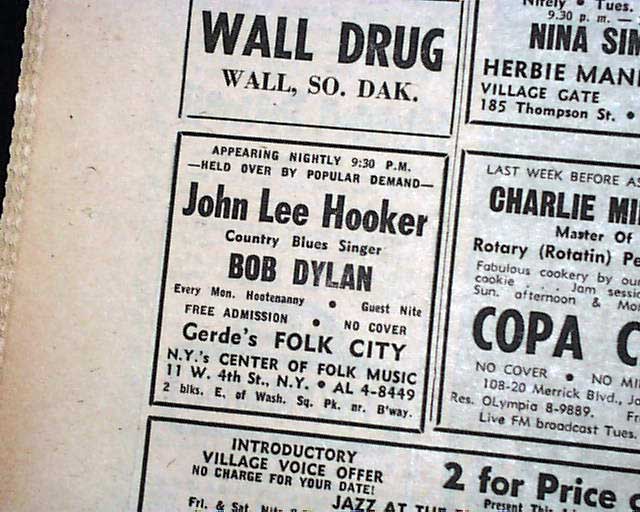
THE VILLAGE VOICE, New York, April 20, 1961
- Bob Dylan - Robert Allen Zimmerman
- Very 1st public performance advertisement
- Gerde's Folk City music venue in