Home >
1926 push to end prohibition...
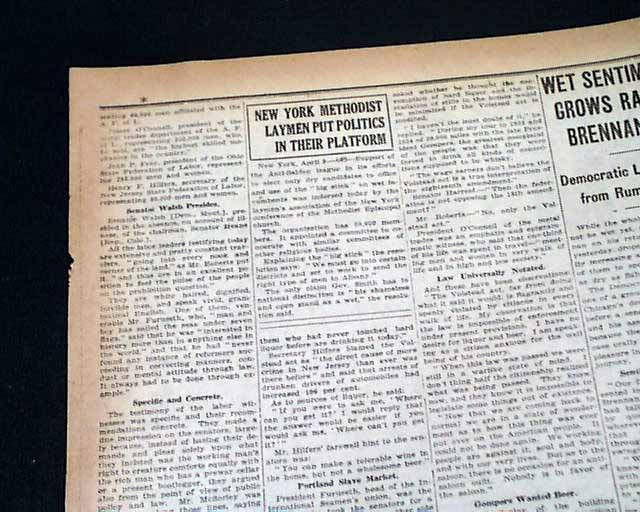
1926 push to end prohibition...
Item # 725285
April 10, 1926
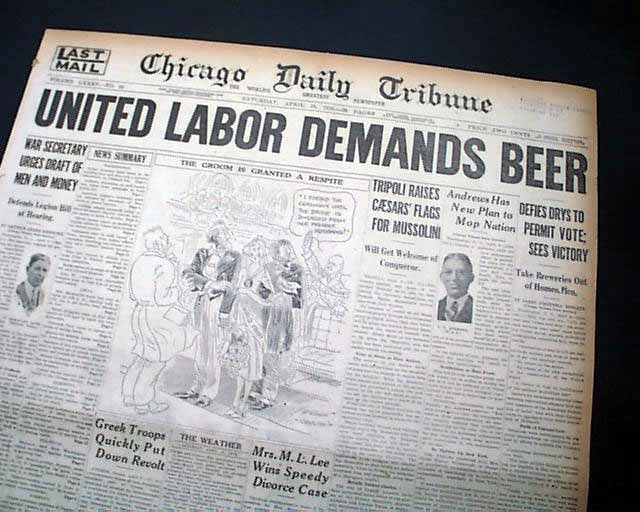
CHICAGO DAILY TRIBUNE, April 10, 1926
* Push to end U.S. Prohibition
* Re-legalize beer - alcohol
* American Federation of Labor
* U.S. Senate Judiciary Committee
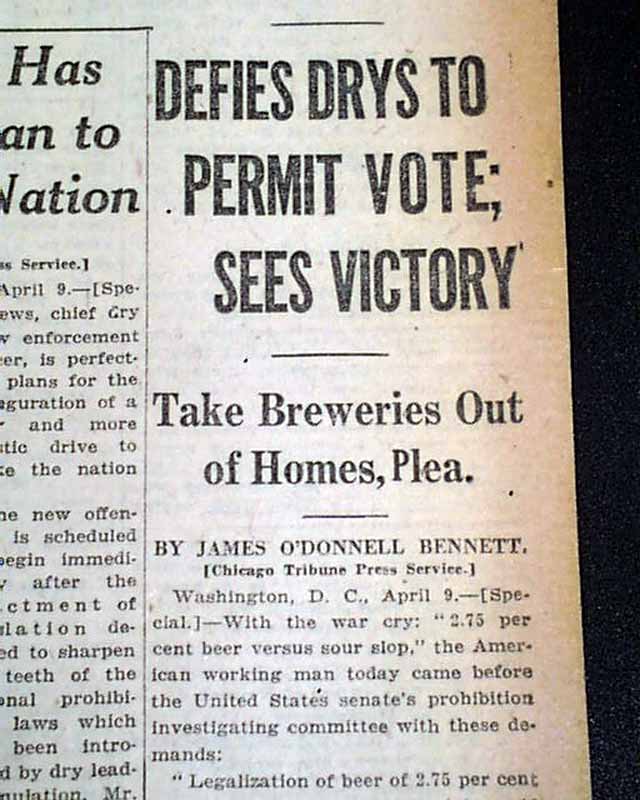
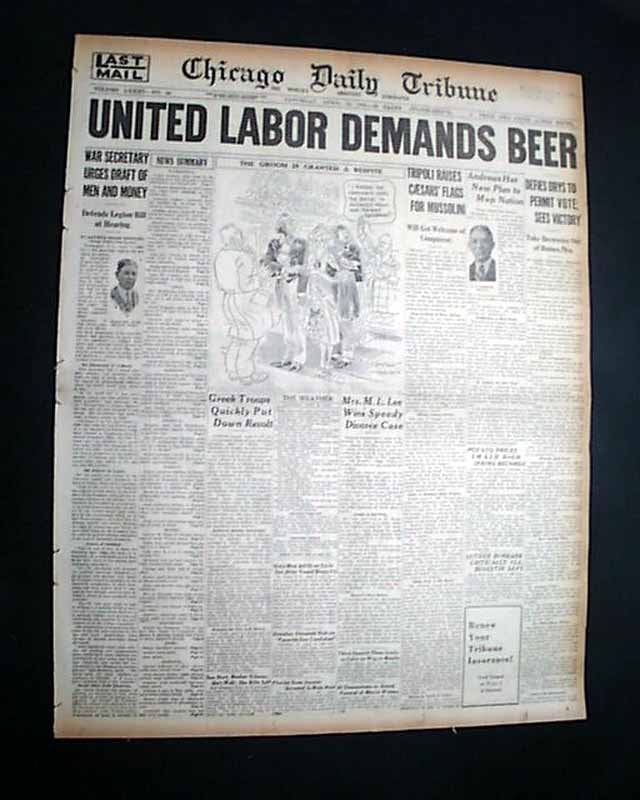
The front page has a nice banner headline: "UNITED LABOR DEMANDS BEER" with subheads. (see images) Nice for display for any tavern or home bar.
When it comes to gangsters, organized crime, and the nefarious activities born out of the Prohibition and Great Depression eras, no city is more in the forefront of our minds than Chicago - and what better newspaper can be found than the Chicago Tribune, self-proclaimed to be "The World's Greatest Newspaper" - attributed in part to its dramatic, banner headlines! Whether hanging on your wall or part of an ongoing collection, these events are sure to capture the flavor of this infamous period in American history.
Complete with 36 pages, light toning and a little wear at the margins, generally good.
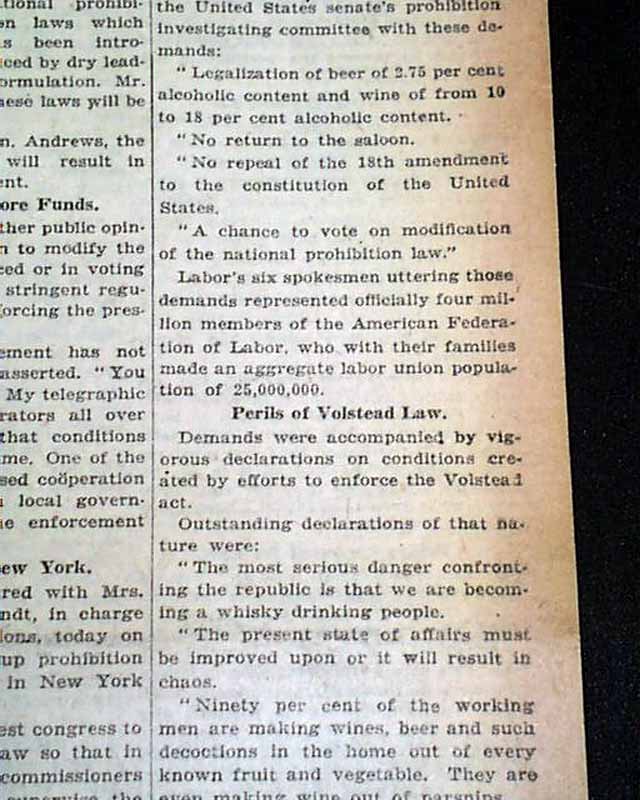
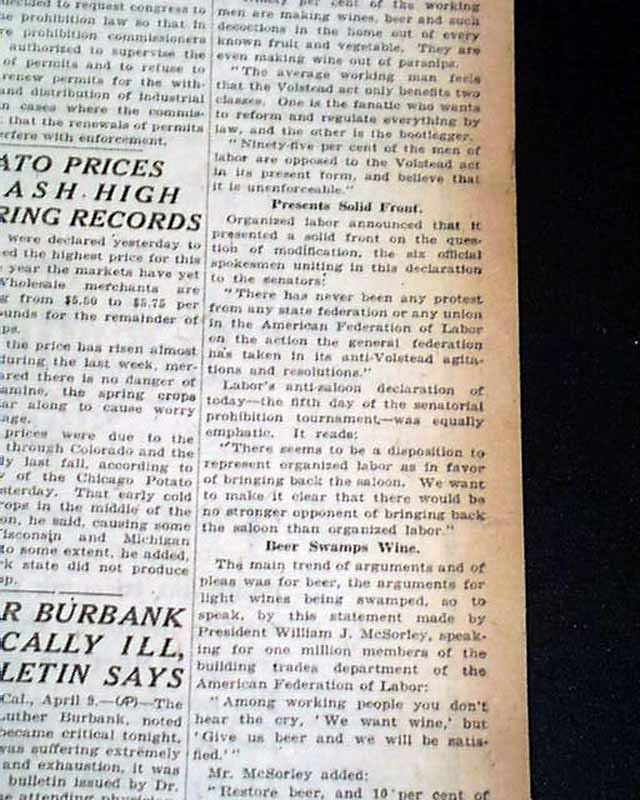
background: On April 9, 1926, the push to re-legalize alcohol reached a fever pitch as representatives from the American Federation of Labor and various "United Labor" organizations descended on Washington to testify before the Senate Judiciary Committee. Their testimony was a sharp class-based critique of Prohibition, arguing that the Volstead Act was a discriminatory law that robbed the "honest working man" of his affordable glass of beer while the wealthy elite continued to stock private cellars with bootlegged spirits. Labor leaders, such as Andrew Furuseth and William Roberts, contended that banning mild beverages like 2.75% beer had unintentionally forced workers toward dangerous, unregulated "rotgut" liquor, thereby damaging public health and industrial morale rather than improving it. By framing the "dry" laws as an assault on the social fabric of the working class and a cause of widespread labor unrest—famously encapsulated in the "No Beer, No Work" slogans of the era—these activists turned the 1926 hearings into a national platform that highlighted the growing impossibility of enforcing total temperance in an urban, industrial society.
Category: The 20th Century
Available Now
$52.00