Home >
Greeley's letter on the capabilities of African-Americans... Andersonville Prison Trial...
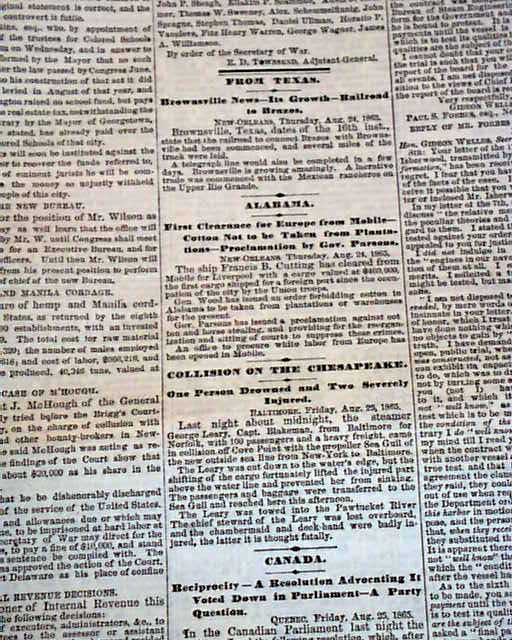
Greeley's letter on the capabilities of African-Americans... Andersonville Prison Trial...
Item # 724618
August 26, 1865
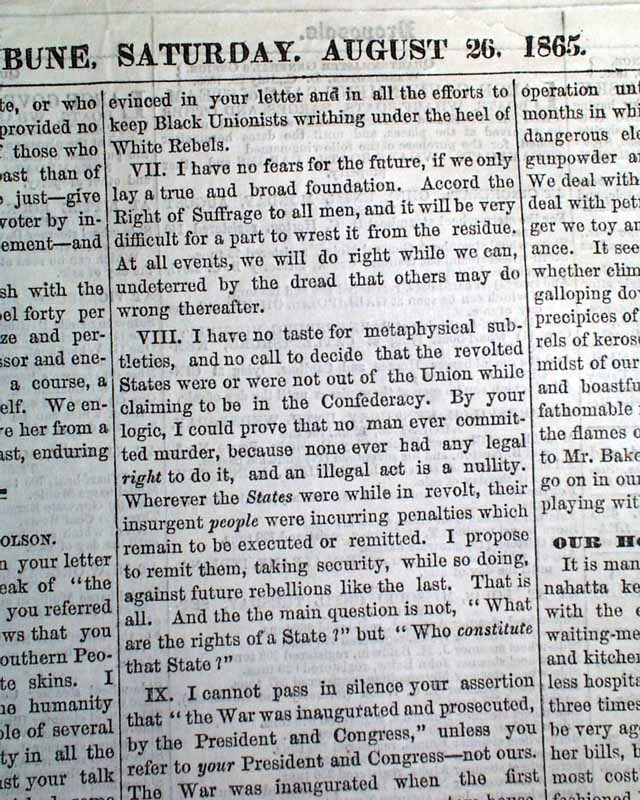
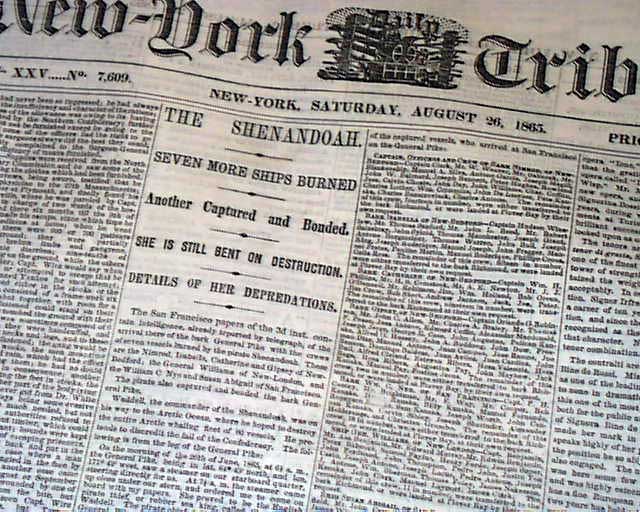
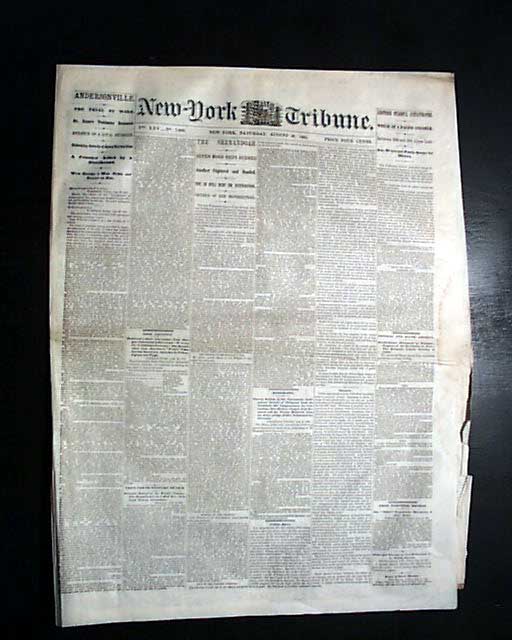
NEW YORK DAILY TRIBUNE, August 26, 1865
* Horace Greeley letter - his opinion of African Americans
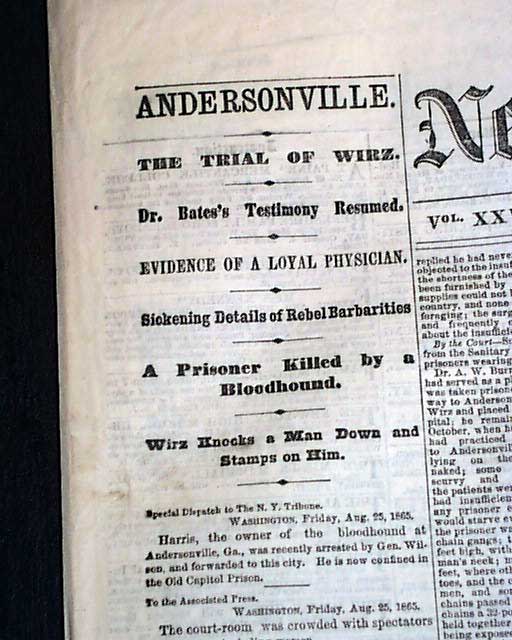
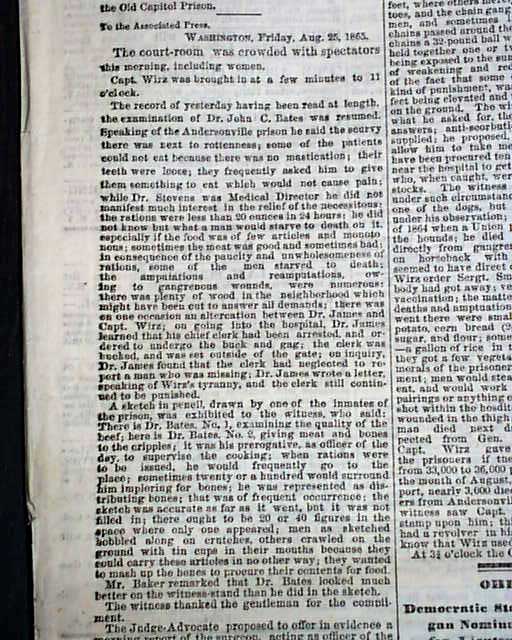
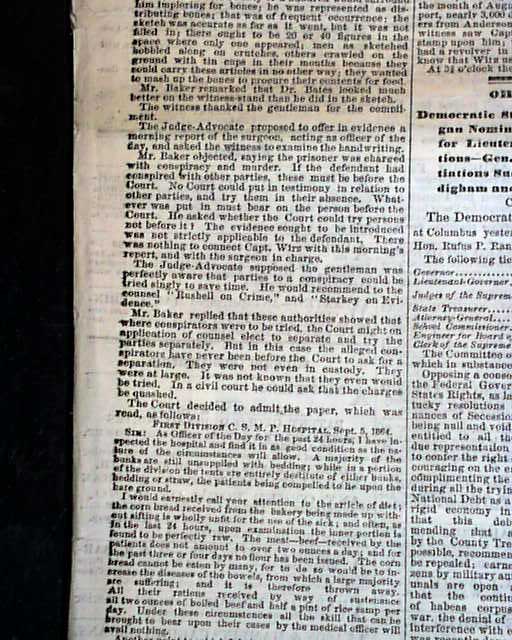
* Andersonville prison trial... Henry Wirz
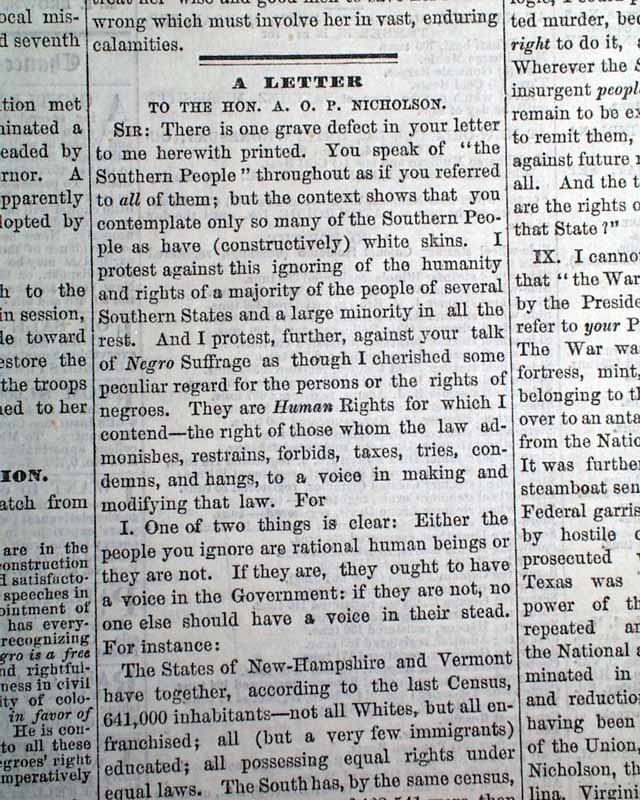
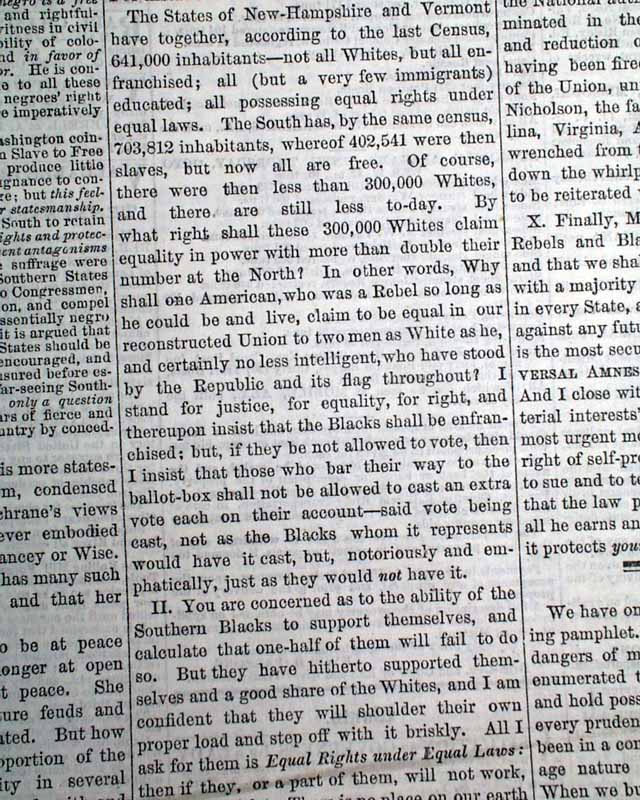
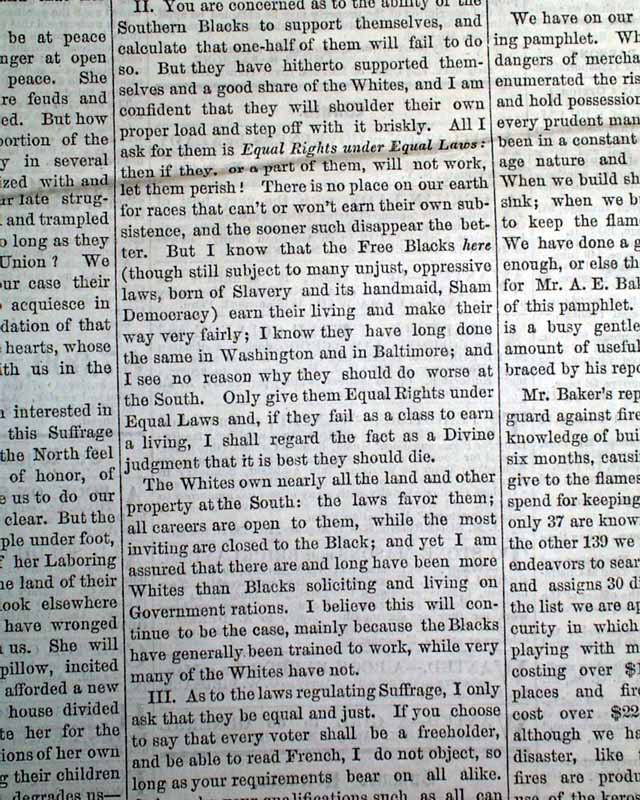
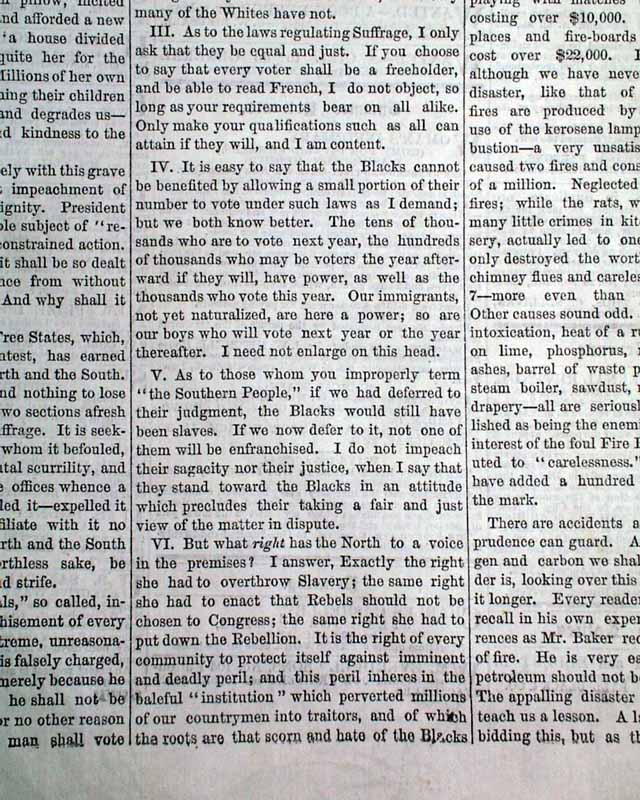
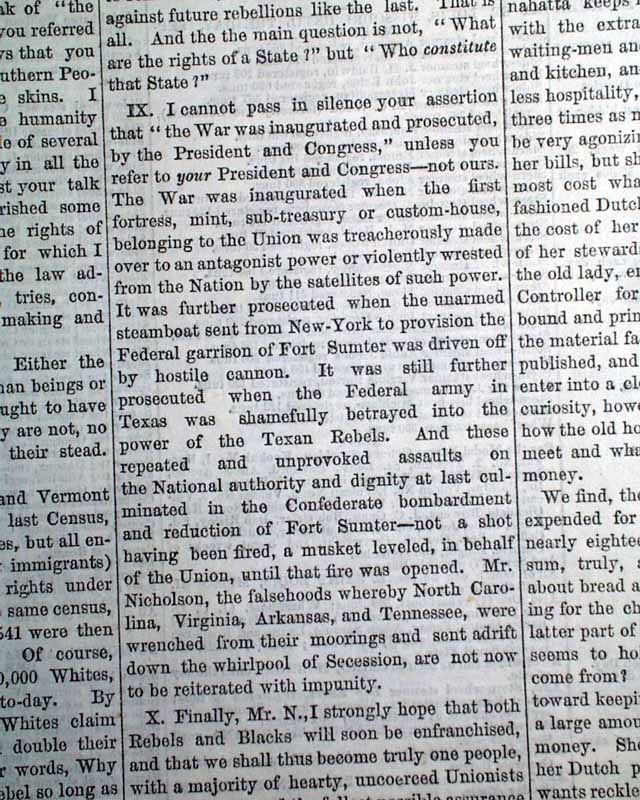
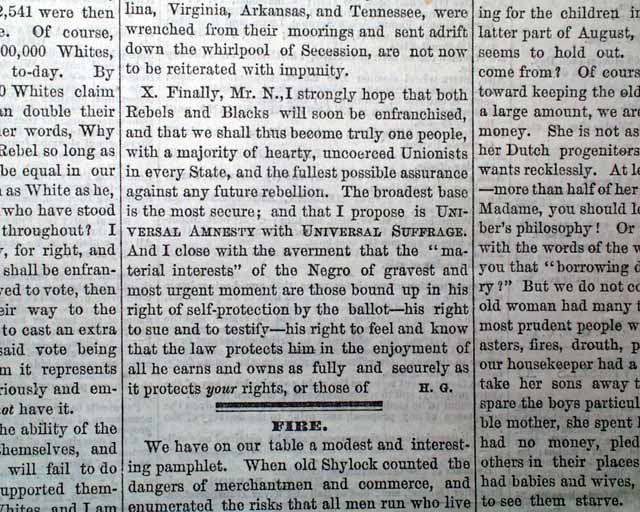
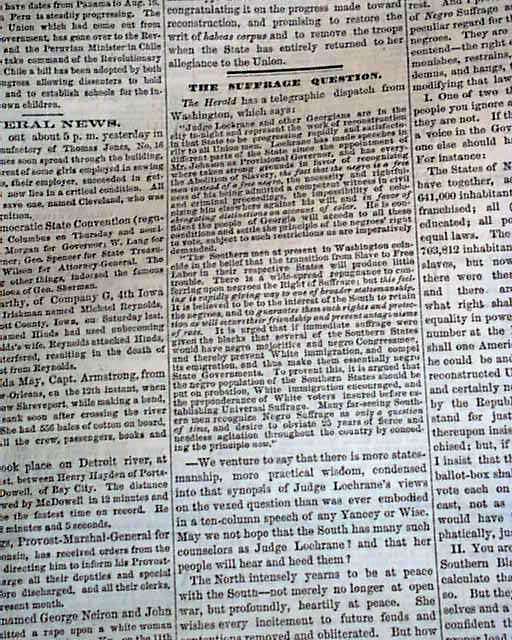
The most historically significant content is the intriguing letter on page 4: "A Letter To the Hon. A. O. P. Nicholson", signed in type: H. G., for Horace Greeley.
Following the end of the Civil War, this discussion addressed the physical, intellectual, and emotional condition of African Americans now that they were free. The exchange with Nicholson, often framed around discussions published in the New York Tribune, involved continued white fascination with analyzing, categorizing, and, in some cases, questioning the capabilities of African Americans in the post-emancipation era.
This very notable letter is likely only found in the Tribune, Greeley's newspaper.
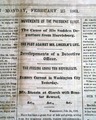
Additionally, the top of the front page has one column headings: "Andersonville" "The Trial of Wirz" "Dr. Bates Testimony Resumed" "Evidence of a Loyal Physician" "Sickening Details of Rebel Barbarities" "A Prisoner Killed by a Bloodhound" "Wirz Knocks a Man Down & Stamps on Him".
Complete with 8 pages, uncut and unbound (uncommon), minimal wear, nice condition.
Background: Greeley's letter serves as a vital primary source from the dawn of the Reconstruction Era. As the influential editor of the North’s most widely read newspaper, Horace Greeley used this exchange with A.O.P. Nicholson to dismantle the "scientific" and social prejudices used to justify the disenfranchisement of formerly enslaved people.
The historical importance of the letter lies in its role as a bridge between the abolition of slavery and the fight for civil rights. While Nicholson’s inquiries reflected a widespread white obsession with the "fitness" of African Americans for freedom, Greeley’s response championed the "Free Labor" ideology. He argued that the perceived "condition" of Black Americans was not a biological trait, but a direct consequence of the degradations of slavery.
By advocating for the transformative power of education, land ownership, and the ballot, Greeley provided the intellectual framework for the 14th and 15th Amendments. This document captures the exact moment the United States shifted from a military conflict to a philosophical battle over the definition of citizenship and the innate potential of the individual regardless of race.
Category: Pre-Civil War
Available Now
$135.00