Home >
Item # 724247
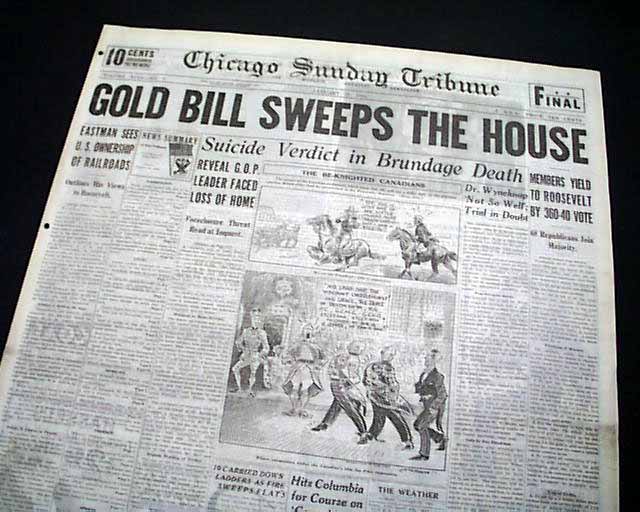
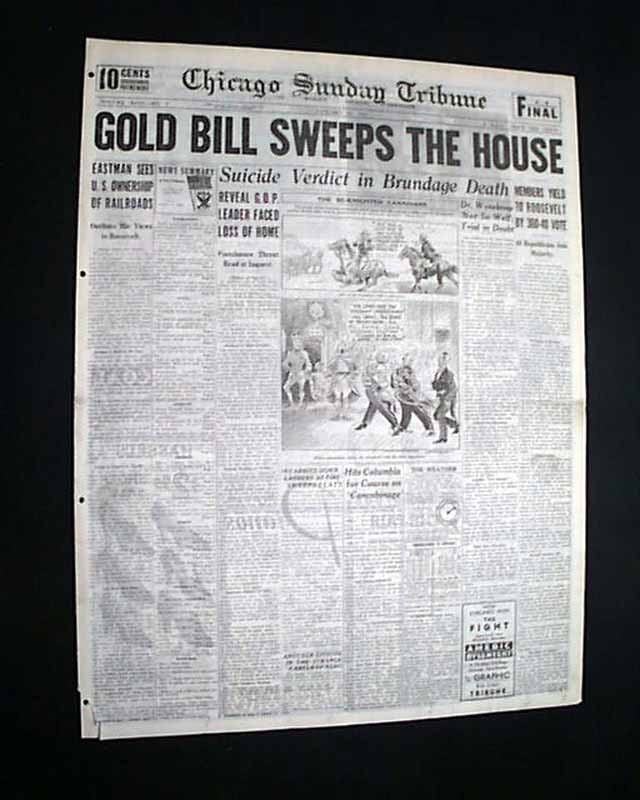
CHICAGO SUNDAY TRIBUNE, Jan. 21, 1934
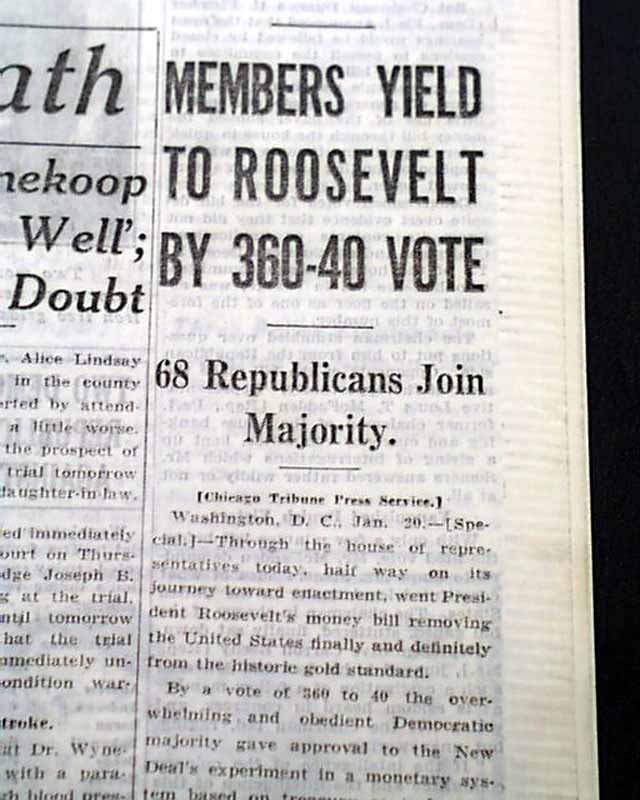
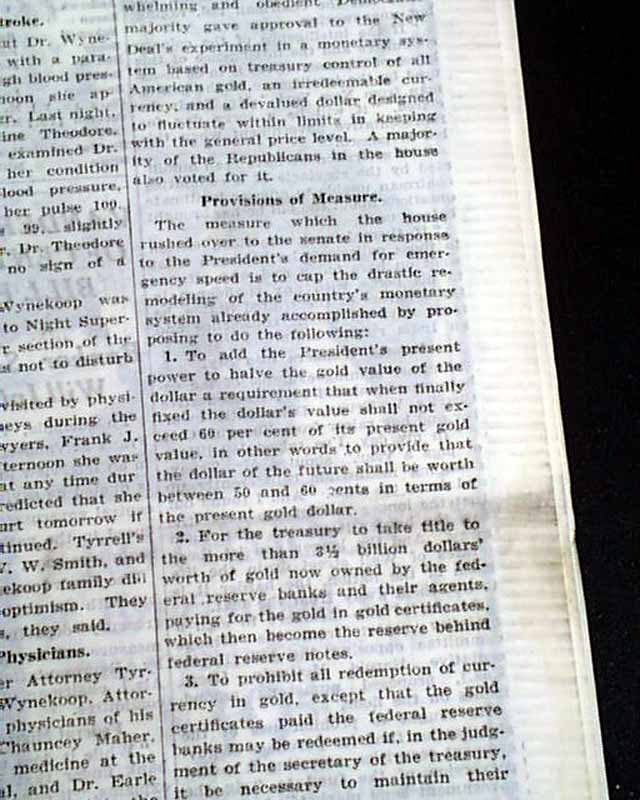
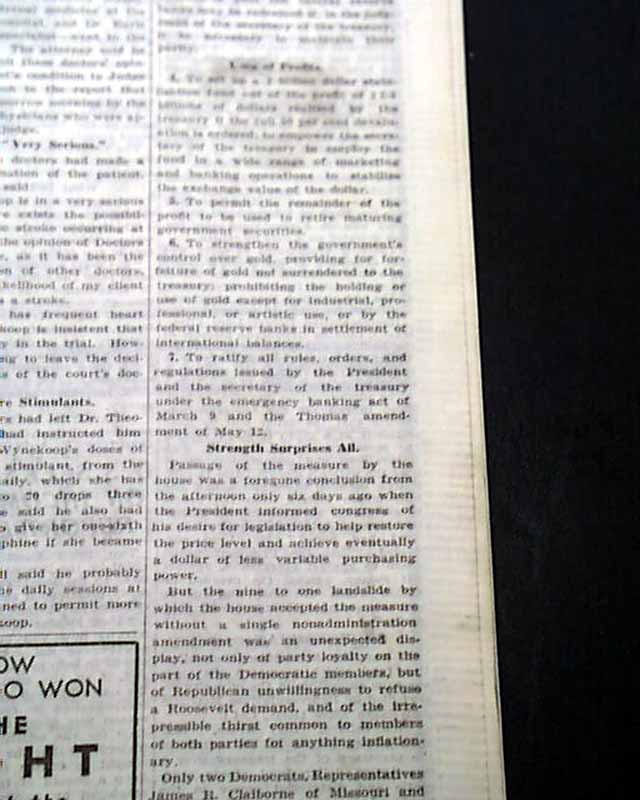
* House passes monetary bill re. the New Deal
* Part of formalizing the Gold Reserve Act
* Surrendering private holdings of gold to the Government
The front page has a nice banner headline: "GOLD BILL SWEEPS THE HOUSE" with subheads. (see images) Nice for display.
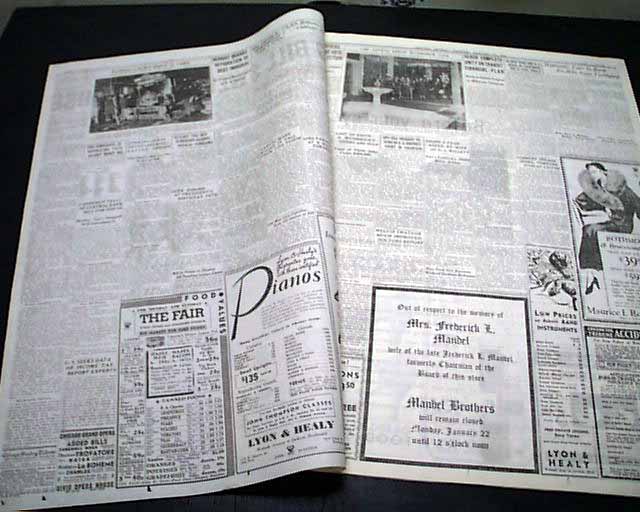
Complete 1st section only with all 16 pages, rag edition in nice condition. A few small binding holes along the spine.
background: On January 20, 1934, the United States House of Representatives passed key monetary legislation during the administration of Franklin D. Roosevelt as part of the New Deal response to the Great Depression. The bill advanced sweeping changes to U.S. monetary policy that were soon formalized in the Gold Reserve Act, enacted ten days later, which required private gold holdings to be surrendered to the federal government, transferred ownership of monetary gold to the U.S. Treasury, and authorized the president to devalue the dollar by raising the official price of gold from $20.67 to $35 per ounce. This measure strengthened federal control over currency, expanded the money supply, and aimed to combat deflation, stabilize banks, and stimulate economic recovery at the height of the Depression.
January 21, 1934
CHICAGO SUNDAY TRIBUNE, Jan. 21, 1934
* House passes monetary bill re. the New Deal
* Part of formalizing the Gold Reserve Act
* Surrendering private holdings of gold to the Government
The front page has a nice banner headline: "GOLD BILL SWEEPS THE HOUSE" with subheads. (see images) Nice for display.
Complete 1st section only with all 16 pages, rag edition in nice condition. A few small binding holes along the spine.
background: On January 20, 1934, the United States House of Representatives passed key monetary legislation during the administration of Franklin D. Roosevelt as part of the New Deal response to the Great Depression. The bill advanced sweeping changes to U.S. monetary policy that were soon formalized in the Gold Reserve Act, enacted ten days later, which required private gold holdings to be surrendered to the federal government, transferred ownership of monetary gold to the U.S. Treasury, and authorized the president to devalue the dollar by raising the official price of gold from $20.67 to $35 per ounce. This measure strengthened federal control over currency, expanded the money supply, and aimed to combat deflation, stabilize banks, and stimulate economic recovery at the height of the Depression.
Category: The 20th Century
Available Now
$58.00