

Harriot Stanton Batch death... Women's suffrage movement...
Item # 723814
November 21, 1940
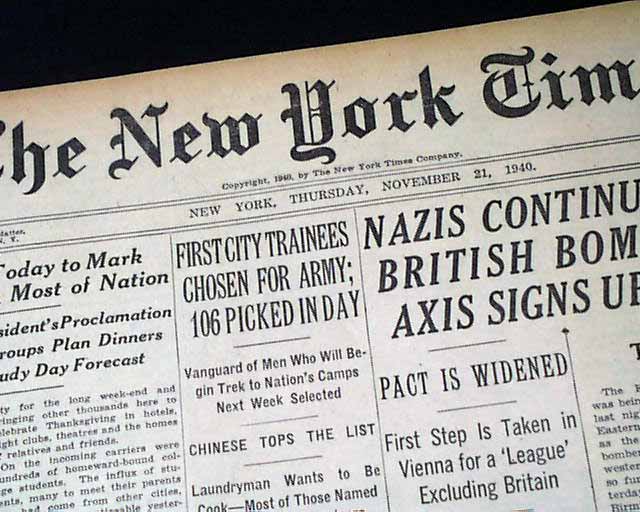
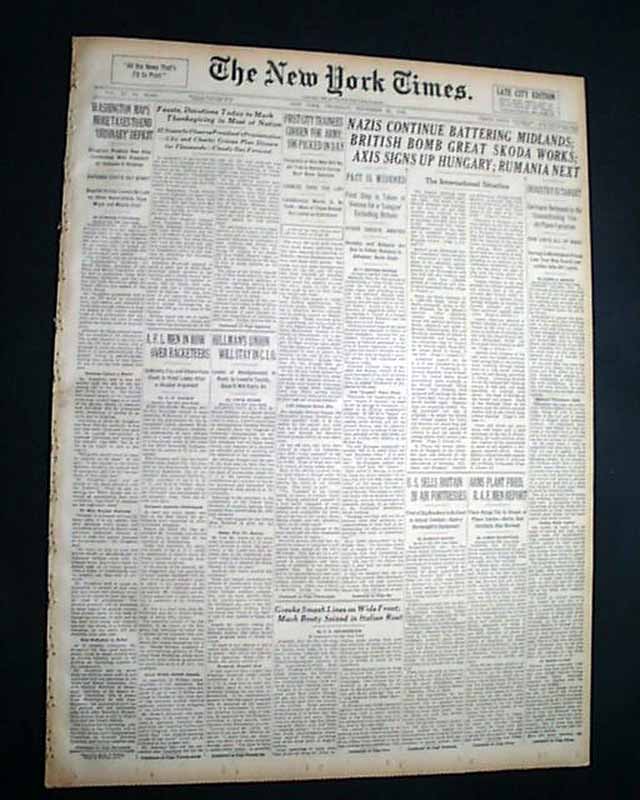
THE NEW YORK TIMES, Nov. 21, 1940
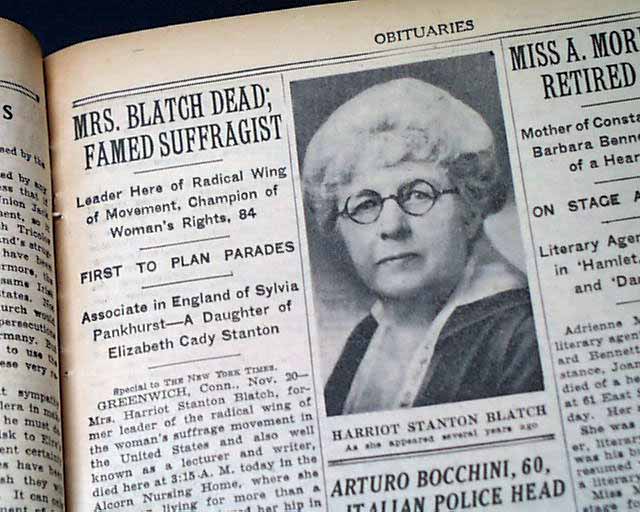
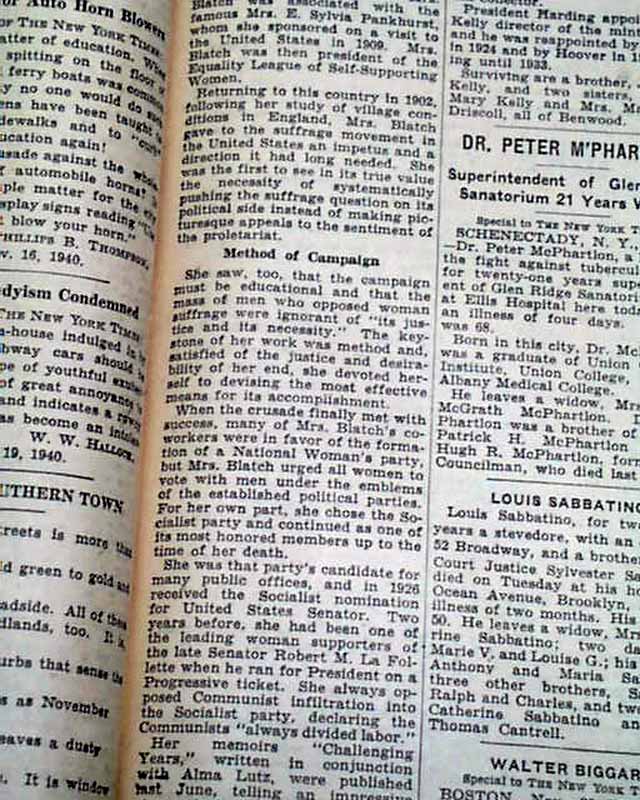
* Harriot Stanton Batch death w/ photo
* Elizabeth Cady Stanton's daughter
* Woman's - Women's suffrage movement
* Known for organizing historic marches
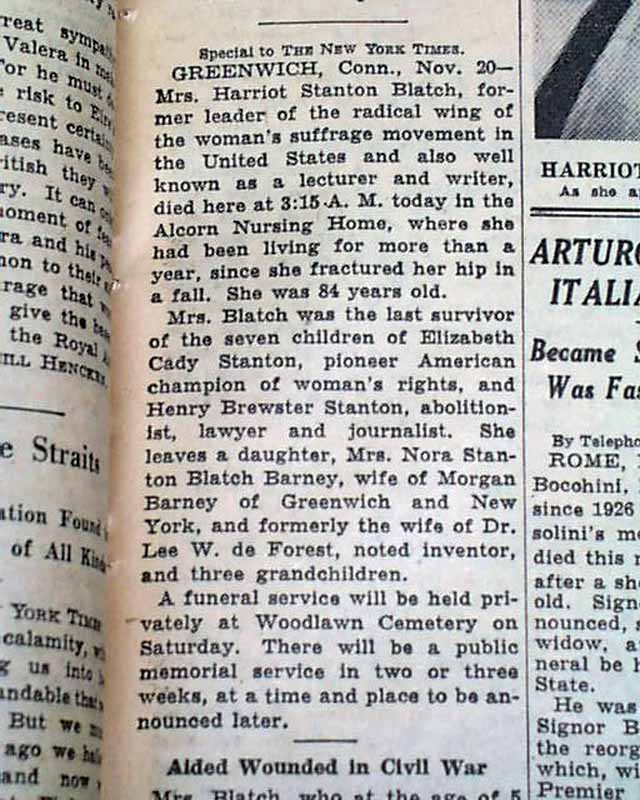
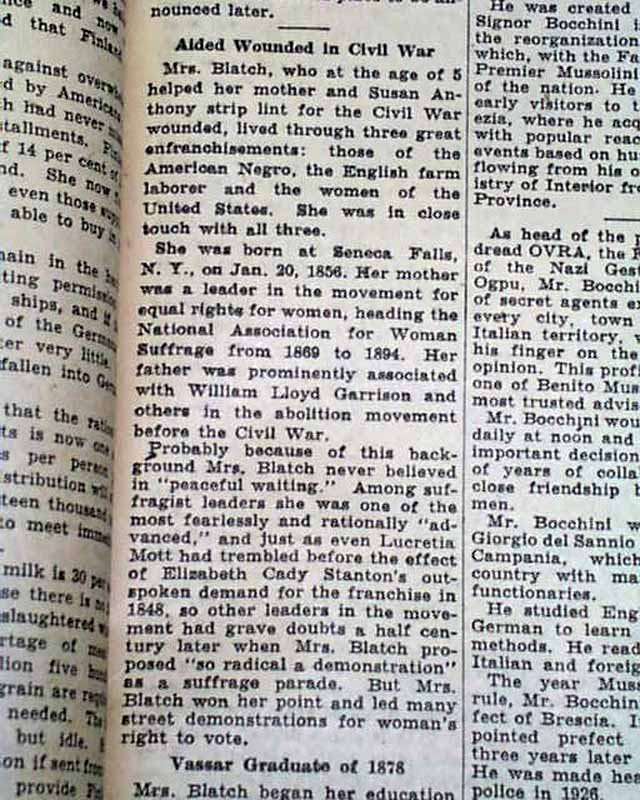
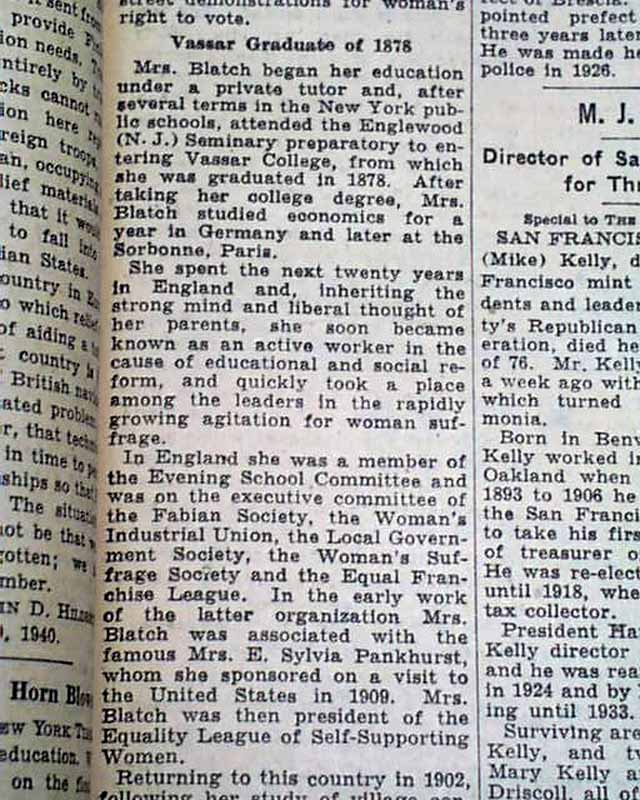
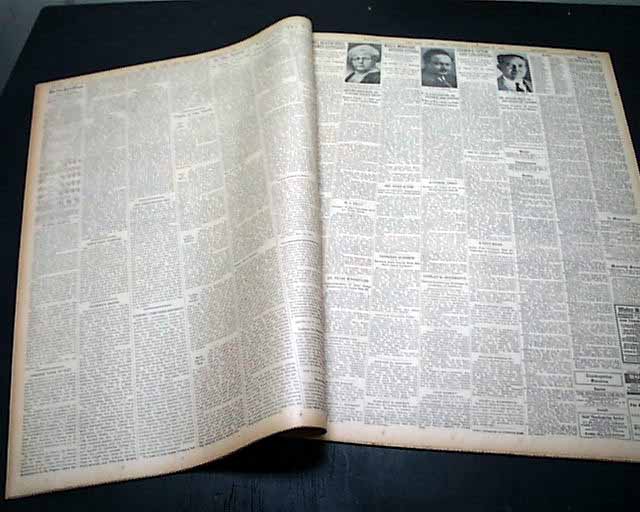
The top of the 1st column of page 29 has a one column heading: "MRS. BLATCH DEAD; FAMED SUFFRAGIST" with subheads and photo. (see images)
Complete with all 60 pages, light toning at the margins, nice condition.
background: Harriot Stanton Blatch (1856–1940), daughter of Elizabeth Cady Stanton, was a central figure in transforming the American woman-suffrage movement from a largely elite, lecture-based cause into a mass, street-level political campaign. After years spent in England, where she absorbed the militant tactics of British suffragists, Blatch returned to the United States convinced that visibility and public pressure were essential. In 1907 she founded the Equality League of Self-Supporting Women, later renamed the Women’s Political Union, deliberately recruiting factory workers, clerks, teachers, and wage-earning women to show that suffrage was not merely a “society women’s” issue. Under her leadership, the organization staged some of the earliest large-scale suffrage parades in New York City, most notably the May Day parade of 1908, in which thousands of women marched openly for the vote, and the dramatic 1910 and 1912 Fifth Avenue parades, featuring banners, uniforms, and coordinated columns designed to command public attention and newspaper coverage. These spectacles shocked contemporaries but proved enormously effective, helping to normalize women’s political presence in public space. Blatch linked suffrage to labor reform, equal pay, and women’s industrial participation, especially during World War I, arguing that economic contribution justified full political rights. Her emphasis on mass marches and disciplined pageantry helped set the model later used by national suffrage organizations and contributed directly to the momentum that culminated in the passage of the Nineteenth Amendment.
* Harriot Stanton Batch death w/ photo
* Elizabeth Cady Stanton's daughter
* Woman's - Women's suffrage movement
* Known for organizing historic marches
The top of the 1st column of page 29 has a one column heading: "MRS. BLATCH DEAD; FAMED SUFFRAGIST" with subheads and photo. (see images)
Complete with all 60 pages, light toning at the margins, nice condition.
background: Harriot Stanton Blatch (1856–1940), daughter of Elizabeth Cady Stanton, was a central figure in transforming the American woman-suffrage movement from a largely elite, lecture-based cause into a mass, street-level political campaign. After years spent in England, where she absorbed the militant tactics of British suffragists, Blatch returned to the United States convinced that visibility and public pressure were essential. In 1907 she founded the Equality League of Self-Supporting Women, later renamed the Women’s Political Union, deliberately recruiting factory workers, clerks, teachers, and wage-earning women to show that suffrage was not merely a “society women’s” issue. Under her leadership, the organization staged some of the earliest large-scale suffrage parades in New York City, most notably the May Day parade of 1908, in which thousands of women marched openly for the vote, and the dramatic 1910 and 1912 Fifth Avenue parades, featuring banners, uniforms, and coordinated columns designed to command public attention and newspaper coverage. These spectacles shocked contemporaries but proved enormously effective, helping to normalize women’s political presence in public space. Blatch linked suffrage to labor reform, equal pay, and women’s industrial participation, especially during World War I, arguing that economic contribution justified full political rights. Her emphasis on mass marches and disciplined pageantry helped set the model later used by national suffrage organizations and contributed directly to the momentum that culminated in the passage of the Nineteenth Amendment.
Category: The 20th Century


