

Moody and Sankey and the religious awakening...
Item # 722823
November 17, 1875
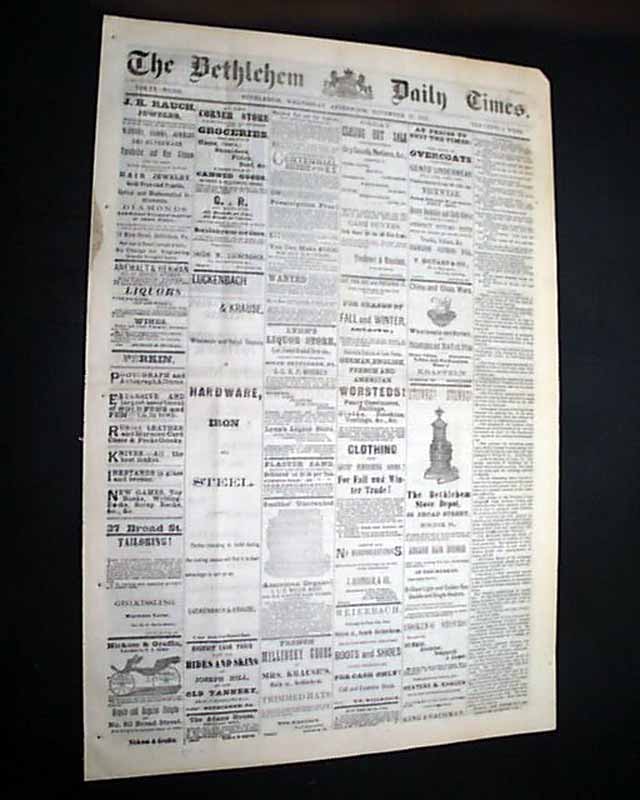
THE BETHLEHEM DAILY TIMES, Nov. 17, 1875
* Ira D. Sankey & Dwight Lyman Moody
* Evangelist - Evangelism - sermons
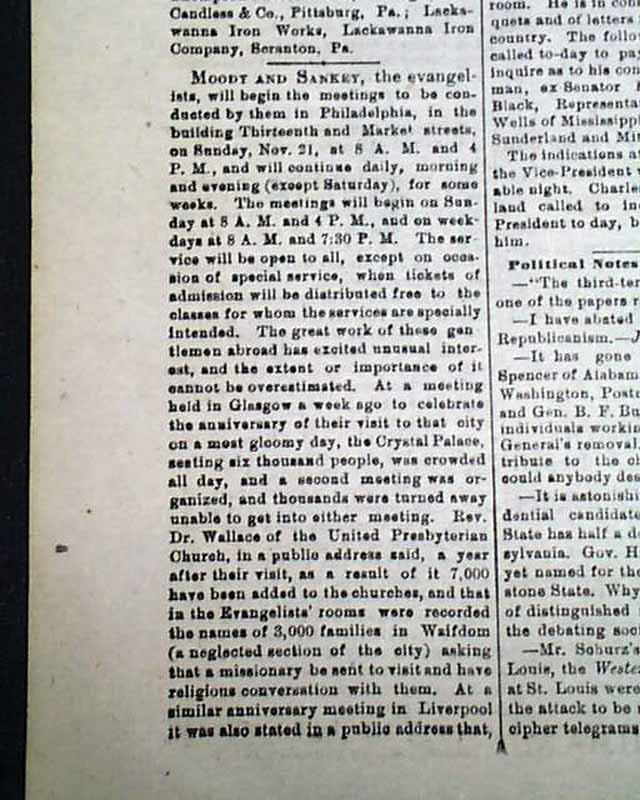
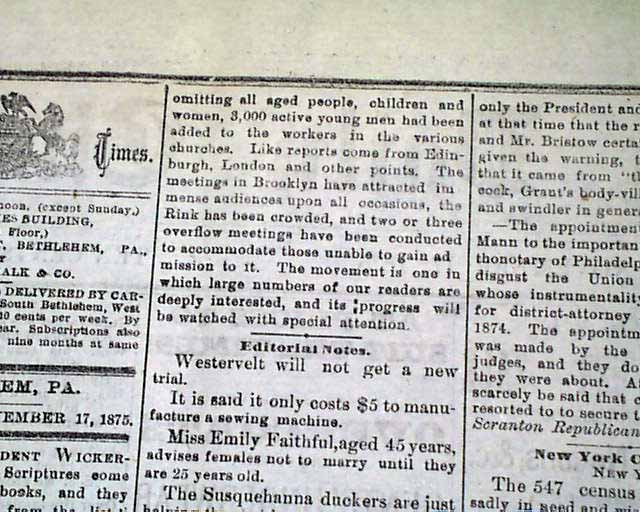
Page 2 has a small one column headng: "Moody And Sankey"
(see images) This is on Dwight L. Moody, a notable American evangelist, and Ira D. Sankey, an American gospel singer and composer, known for his long association with Dwight L. Moody in a series of religious revival campaigns in America and Britain during the closing decades of the 19th century.
* Ira D. Sankey & Dwight Lyman Moody
* Evangelist - Evangelism - sermons
Page 2 has a small one column headng: "Moody And Sankey"
(see images) This is on Dwight L. Moody, a notable American evangelist, and Ira D. Sankey, an American gospel singer and composer, known for his long association with Dwight L. Moody in a series of religious revival campaigns in America and Britain during the closing decades of the 19th century.
Four pages, nice condition.
AI notes: In November 1875, evangelists Dwight L. Moody and Ira D. Sankey conducted one of the most influential revival campaigns of the nineteenth century in Philadelphia, a city then marked by rapid industrial growth and social change. Meeting in the newly constructed Philadelphia Tabernacle, which seated more than 10,000 people, the campaign drew enormous daily crowds over several weeks and became a defining moment in American urban evangelism. Moody’s plainspoken, emotionally direct sermons emphasized personal conversion and practical Christianity, while Sankey’s gospel hymns—often sung solo and accompanied by a small organ—proved deeply moving and accessible, helping to popularize a new style of sacred music. The Philadelphia meetings helped solidify Moody and Sankey’s national reputation following their British revivals earlier in the decade, inspired the formation of inquiry meetings and lay involvement in evangelism, and left a lasting imprint on Protestant religious life in the United States, influencing revival methods, church music, and mass religious gatherings well into the late nineteenth century.
AI notes: In November 1875, evangelists Dwight L. Moody and Ira D. Sankey conducted one of the most influential revival campaigns of the nineteenth century in Philadelphia, a city then marked by rapid industrial growth and social change. Meeting in the newly constructed Philadelphia Tabernacle, which seated more than 10,000 people, the campaign drew enormous daily crowds over several weeks and became a defining moment in American urban evangelism. Moody’s plainspoken, emotionally direct sermons emphasized personal conversion and practical Christianity, while Sankey’s gospel hymns—often sung solo and accompanied by a small organ—proved deeply moving and accessible, helping to popularize a new style of sacred music. The Philadelphia meetings helped solidify Moody and Sankey’s national reputation following their British revivals earlier in the decade, inspired the formation of inquiry meetings and lay involvement in evangelism, and left a lasting imprint on Protestant religious life in the United States, influencing revival methods, church music, and mass religious gatherings well into the late nineteenth century.
Category: Post-Civil War


