Home >
Review & premiere of "The Shining", in a Los Angeles newspaper...
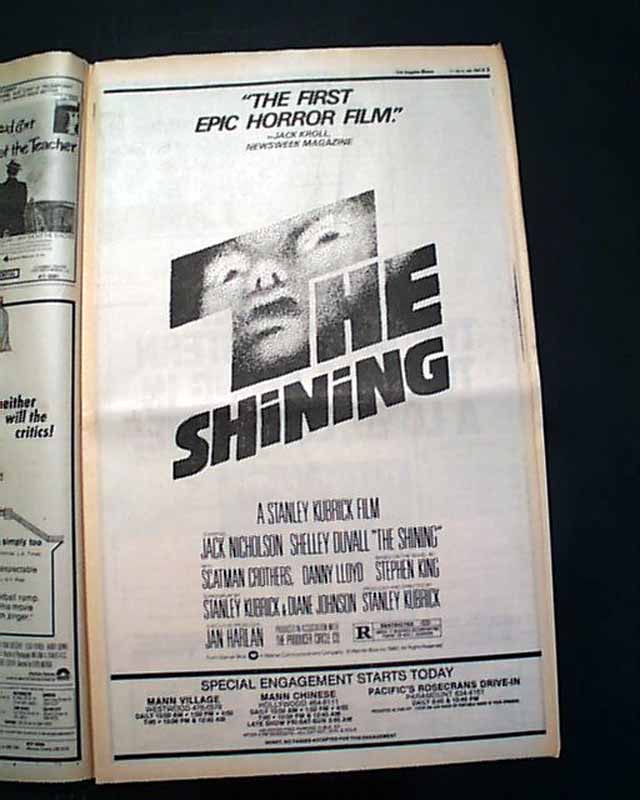

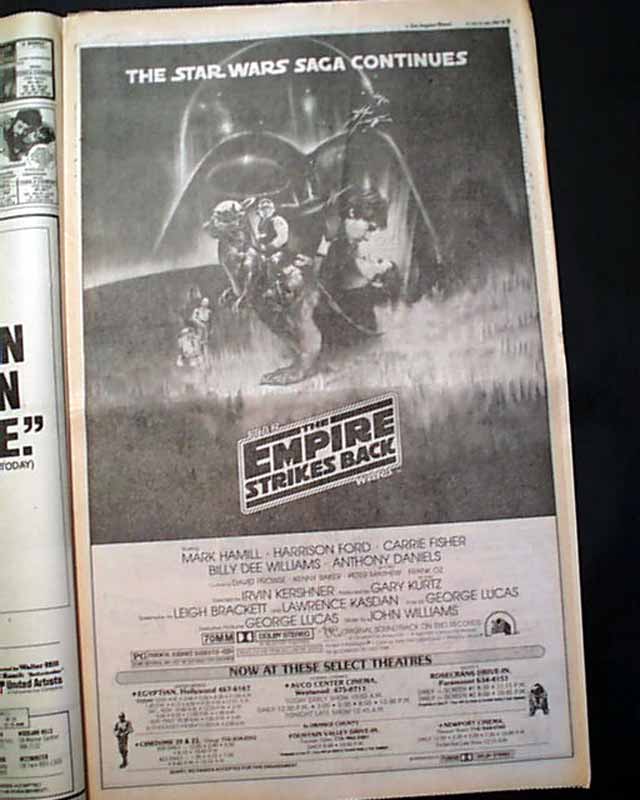
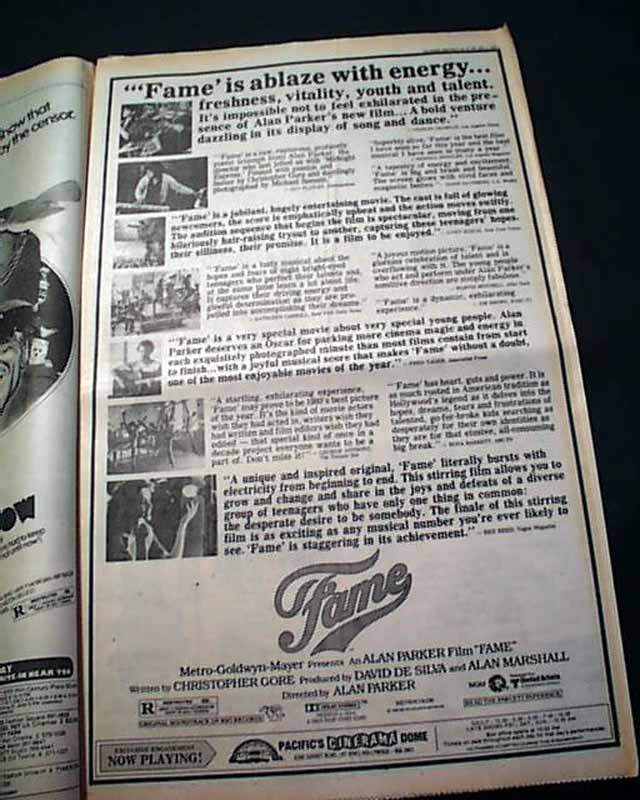
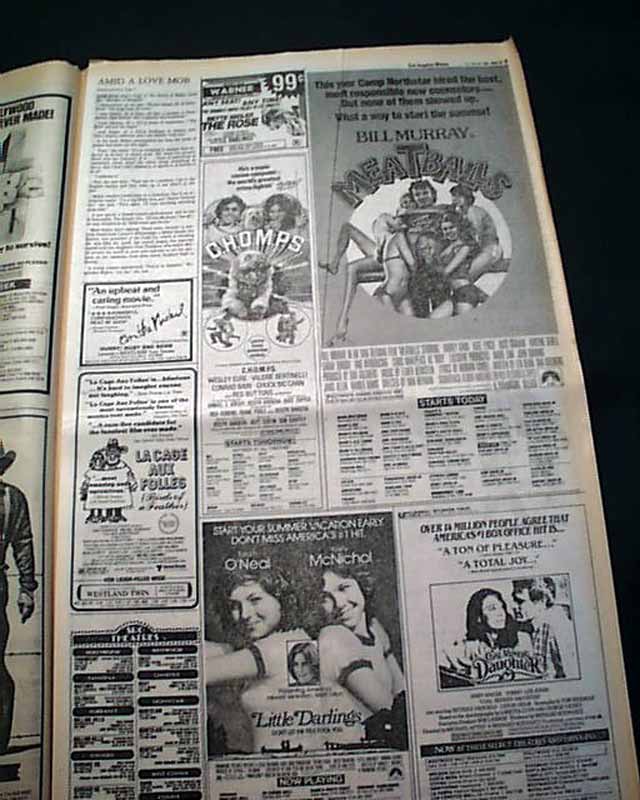


Review & premiere of "The Shining", in a Los Angeles newspaper...
Item # 722623
May 23, 1980
LOS ANGELES TIMES, May 23, 1980
* Best "The Shining" advertisement
* Grand Opening Day premiere review
* Jack Nicholson psychological horror
A terrific issue on the premiere of the motion picture hit "The Shining" and perhaps no better newspaper could be found than this, the leading newspaper from the home of the entertainment industry - the Hollywood area's prime publication.
Note: Where else might one find authentic, poster-size ads for Opening Day showings, in the most desirable Hollywood-area newspaper - as we were lucky enough to obtain this (and others) indirectly from the Los Angeles Times' own collection? It simply doesn't get any better! In over 40 years of collecting, we have yet to see such unique & dramatic coverage with truly top-shelf, eye-catching displayability (see images).
The front page of section VI has a review of the film, headed: " Kubrick's 'Shining': A Freudian's Picnic" And perhaps more significant is the terrific, full page advertisement for the film (see).
A quite rare issue as it would not have been saved since it contains no historically significant content. Present are the complete sections 1 and VI only totaling 44. Great condition.
AI notes: Stanley Kubrick’s The Shining (1980) serves as a chilling masterclass in psychological horror, intentionally diverging from Stephen King’s source material to explore the terrifying fragility of the human psyche. By utilizing the then-revolutionary Steadicam to glide through the "impossible architecture" of the Overlook Hotel, Kubrick creates a sense of spatial disorientation that mirrors Jack Torrance’s descent into homicidal mania. While the supernatural elements—the twins, the elevator of blood, and the rotting woman in Room 237—provide the scares, the true horror lies in the domestic collapse of the Torrance family under the weight of isolation and Jack's simmering resentment. Every frame is meticulously composed to evoke a feeling of "the uncanny," culminating in a labyrinthine chase through the hedge maze that cements the film as a permanent fixture in the cultural zeitgeist.
Category: The 20th Century
Available Now
$112.00