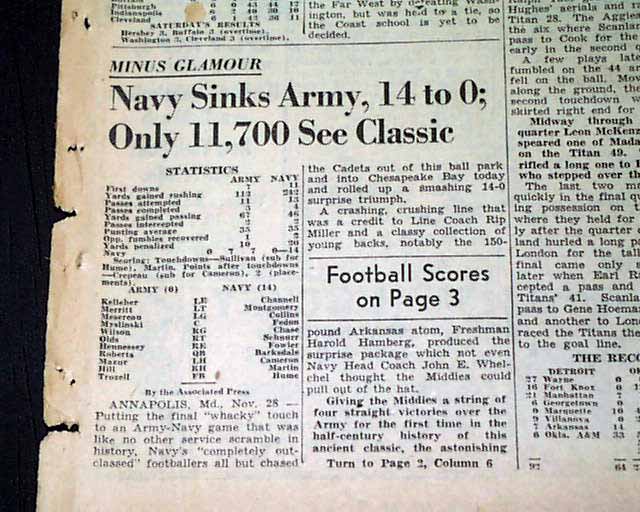
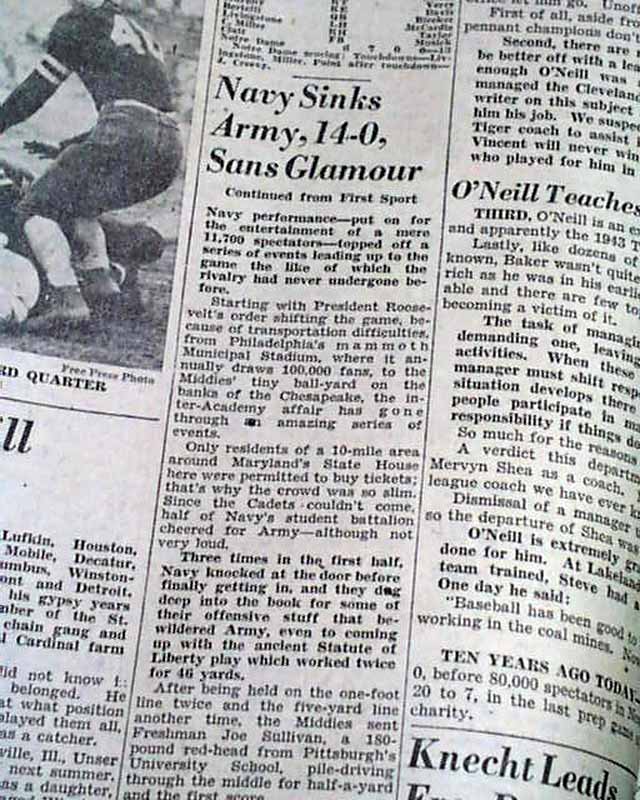
AI notes: The November 29, 1942 Army-Navy football game in Annapolis was much more than just a contest between two college football teams—it was a reflection of the broader national mood during World War II, where the stakes of the game symbolized the deep sense of patriotism and sacrifice of the time. Played in the midst of the war, with many of the athletes already enlisted or soon to be drafted into military service, the rivalry between Army and Navy had heightened significance. The game took place at Navy-Marine Corps Memorial Stadium in Annapolis, home of the U.S. Naval Academy, and was charged with the tension of a country at war. Army, led by future Heisman winner Doc Blanchard, was a heavy favorite, and their powerful running game, which would dominate the game in cold and gusty conditions, secured a 14-0 victory over Navy. However, the true significance lay in the players themselves—these future officers were already preparing to leave the football field for the frontlines, and their athleticism was a symbol of the country’s resilience and resolve. The game underscored the intertwining of sports and military duty, with both teams embodying the fighting spirit of their respective branches, and the victory for Army further fueled the sense of national pride. In a time when Americans were facing the global conflict head-on, the Army-Navy game was a rare and cherished moment of unity, pride, and hope, as it celebrated not just the rivalry but the broader purpose of defending the nation.