Home >
Historically impactful new laws enacted, "favoring" the slaves...
Historically impactful new laws enacted, "favoring" the slaves...
Item # 722132
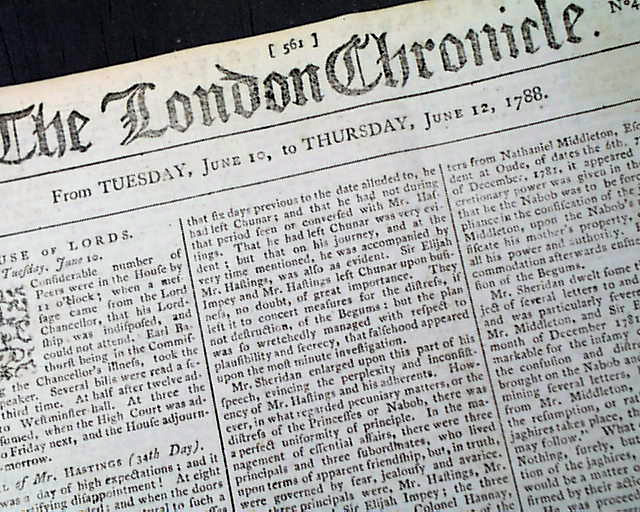
June 12, 1788
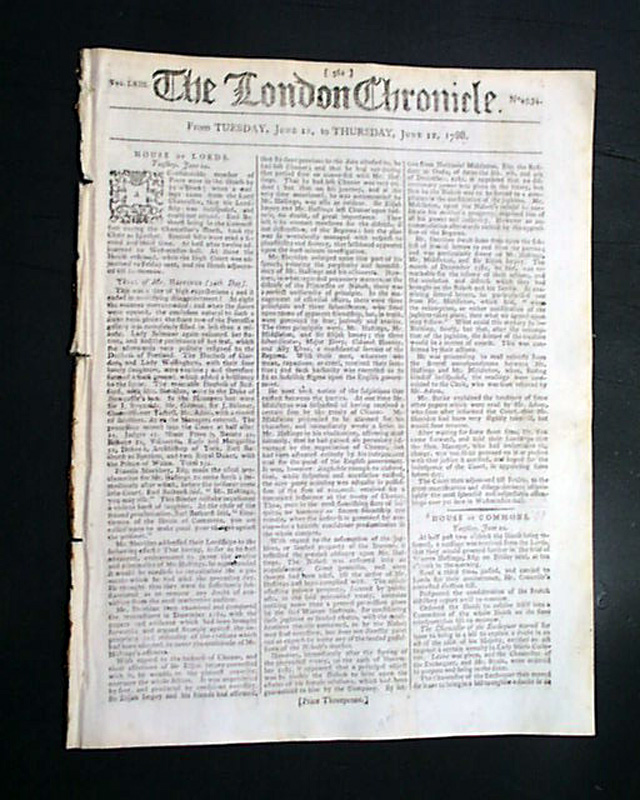
THE LONDON CHRONICLE, England, June 12, 1788
* Slavery on the Island of Jamaica
* Revisions to current slave laws
* Still legal but with certain exceptions
* Early movement towards eventual abolition
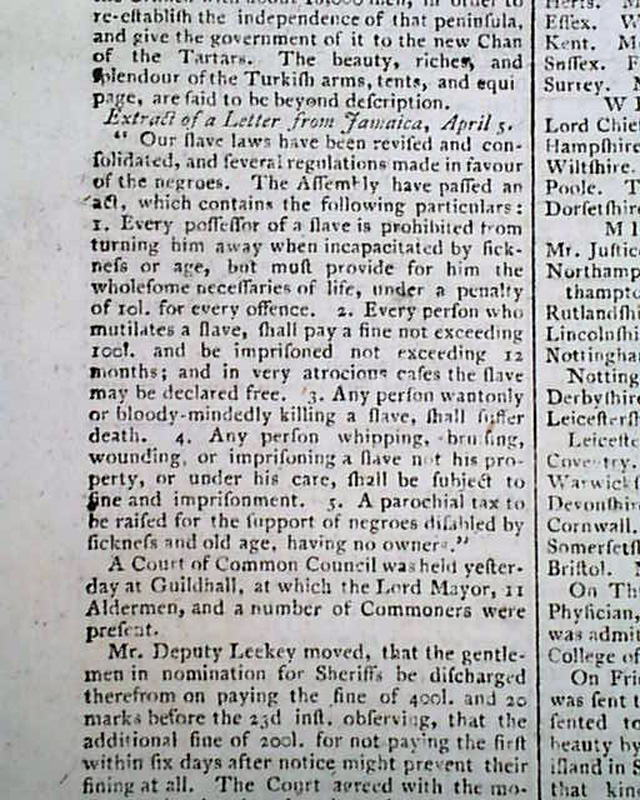
Page 6 has a historically significant report from Jamaica beginning: "Our slave laws have been revised & consolidated & several regulations made in favour of the negroes...".
Among them are: "Every possessor of a slave is prohibited for turning him away when incapacitated by sickness or age...Every person who mutilates a slave, shall pay a fine not exceeding 100 pounds...Any person wantonly or bloody-mindedly killing a slave shall suffer death. Any person whipping, bruising, wounding, or imprisoning a slave not his property...shall be subject to fine & imprisonment..." with more.
Eight pages, 9 1/4 by 12 inches, wide, never-trimmed margins, archival strengthening at the blank spine, very nice condition.
Background: In 1788, the Jamaican Assembly undertook a revision of the island’s slave laws in response to mounting pressure from the burgeoning British abolitionist movement, which had exposed the brutal conditions on West Indian plantations. Determined to defend their authority and preserve the slave system, planters crafted a series of nominal “reforms” that claimed to regulate punishment, mandate minimal provisions of food and clothing, and require basic medical care for enslaved people, but in practice left slave owners with nearly unrestricted power. These measures were largely symbolic, intended to reassure Parliament that the colony was capable of policing itself and to forestall external intervention, yet their vague language and lack of enforcement underscored the impossibility of meaningful reform within a system built on coercion. Historically, the 1788 revisions are significant because they reveal how Jamaica’s planter elite attempted to adapt rhetorically to the age of abolition while maintaining the structural realities of slavery, ultimately reinforcing abolitionist arguments that only sweeping legislative change from Britain could curb abuses.
Category: British
Available Now
$112.00