Home >
George Washington's journal... Pay for the President...
George Washington's journal... Pay for the President...
Item # 720648
Currently Unavailable. Contact us if you would like to be placed on a want list or to be notified if a similar item is available.
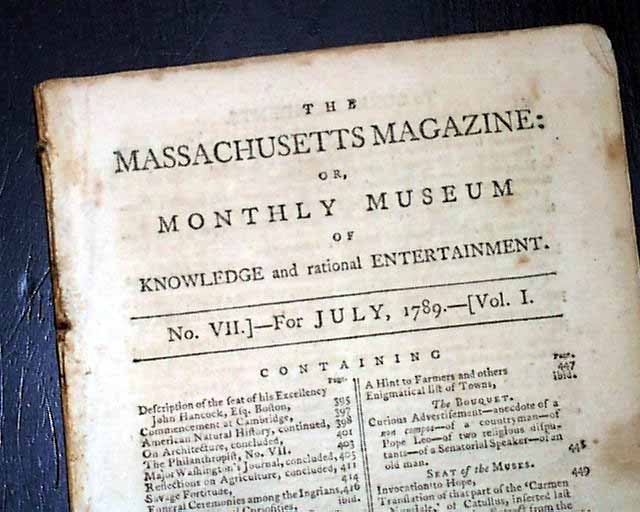
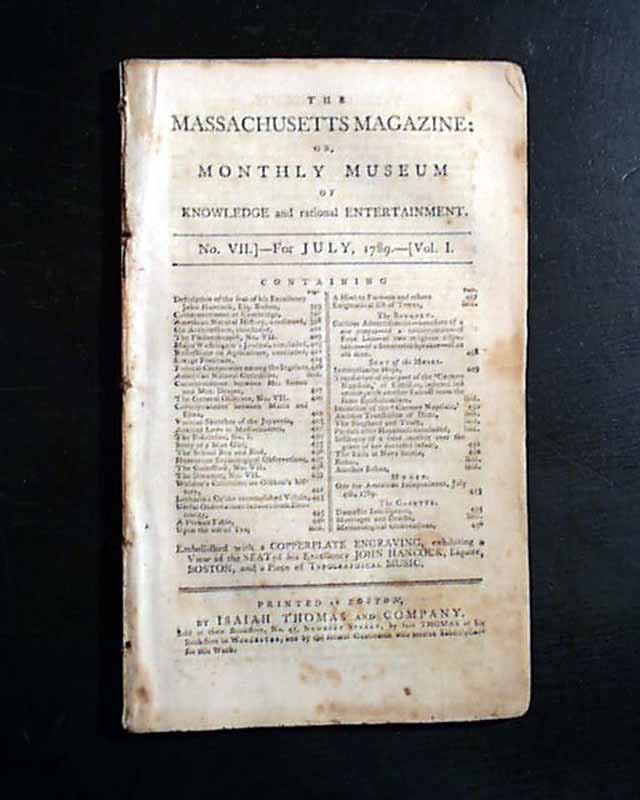
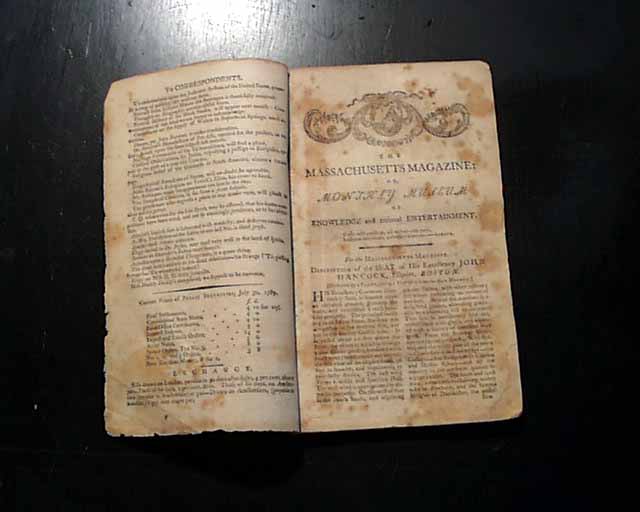
THE MASSACHUSETTS MAGAZINE, Boston, July, 1789* Year of George Washington's death
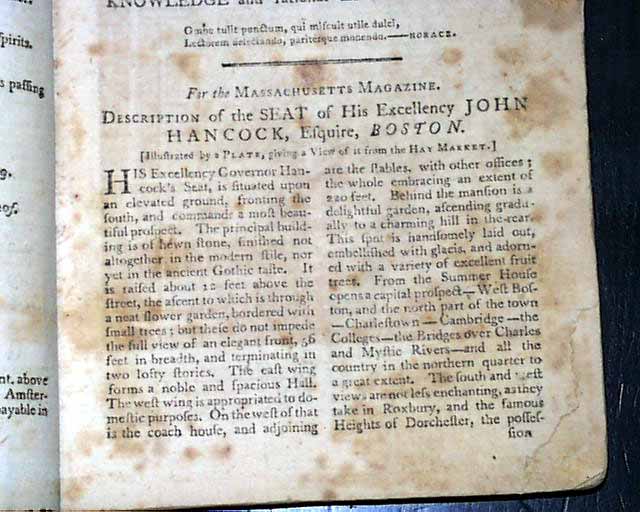
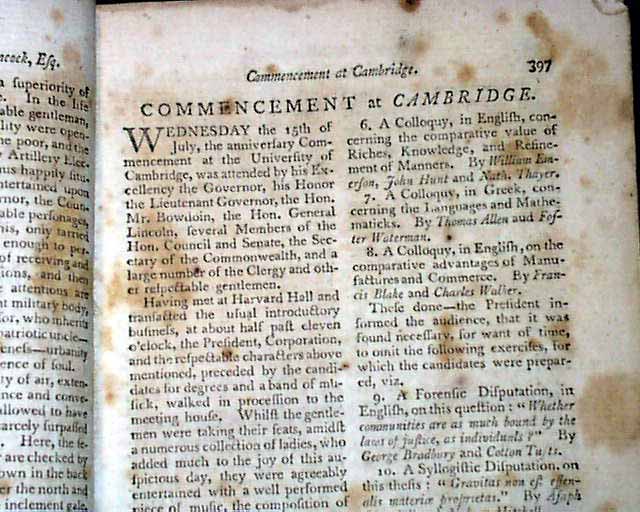
The issue begins with a: "Description of the Seat of His Excellency John Hancock, Esquire, Boston", the report taking 1 1/2 pages. The plate of it is lacking. This is followed by: "Commencement at Cambridge".
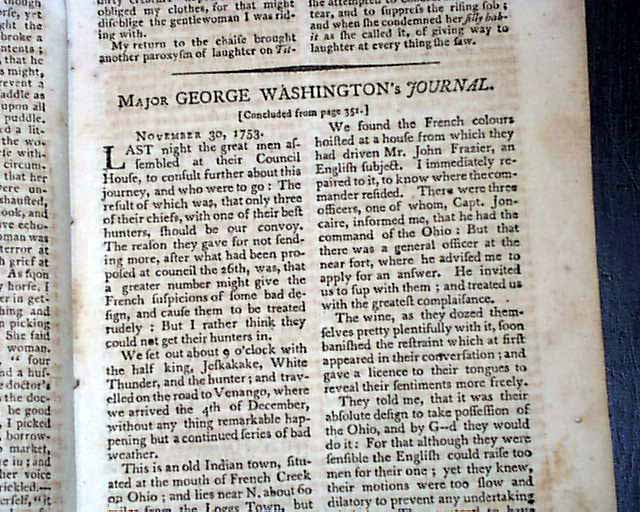
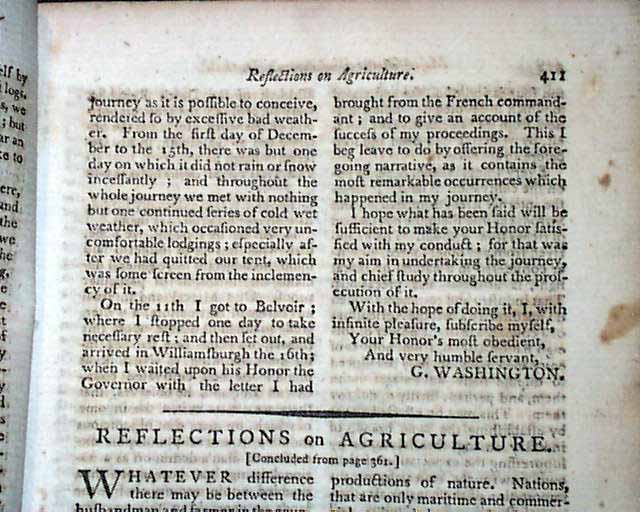
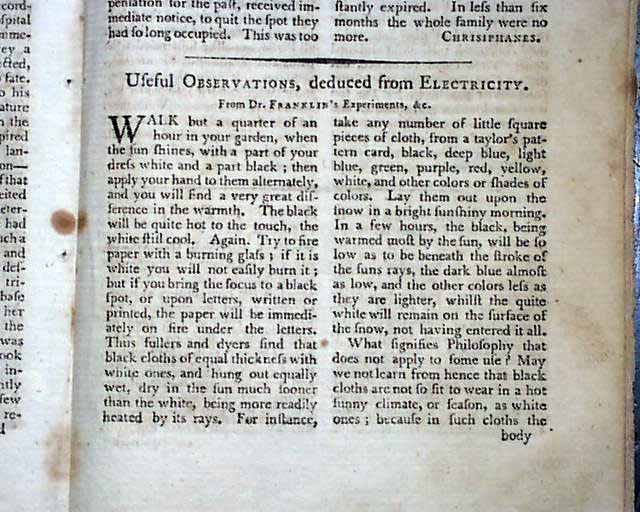
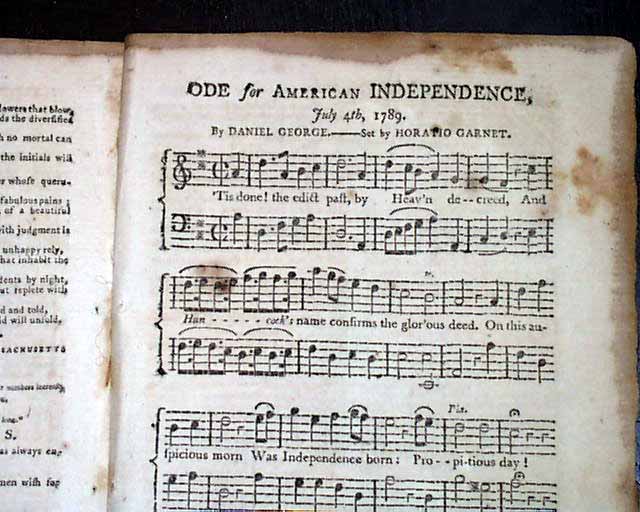
Further on is the continuation of: "Major George Washington's Journal" from 1753 which takes about 6 pages & is signed by him in type at its conclusion: G. Washington. Also: "Useful Observations Deduced from Electricity, From Dr. Franklin's Experiments, etc." "Various Sketches of the Japanese" & near the back is music for: "Ode for American Independence".
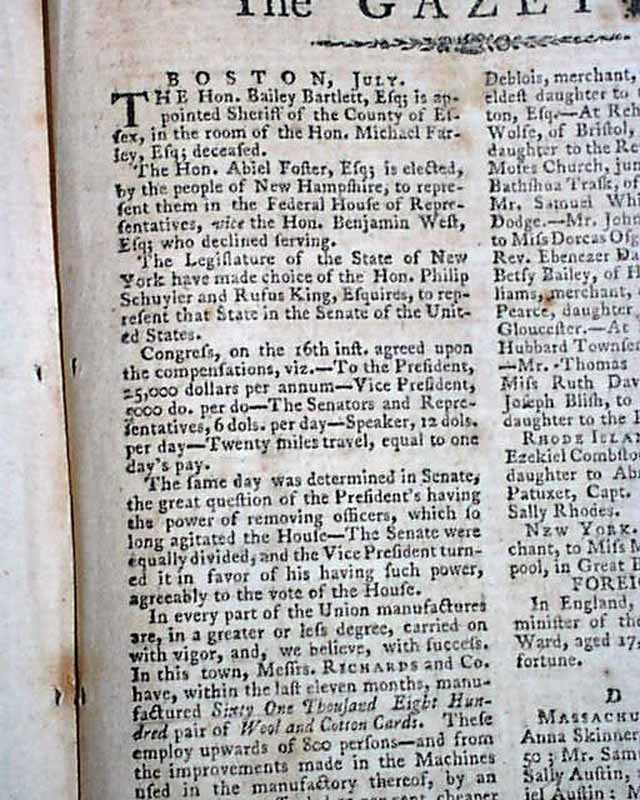
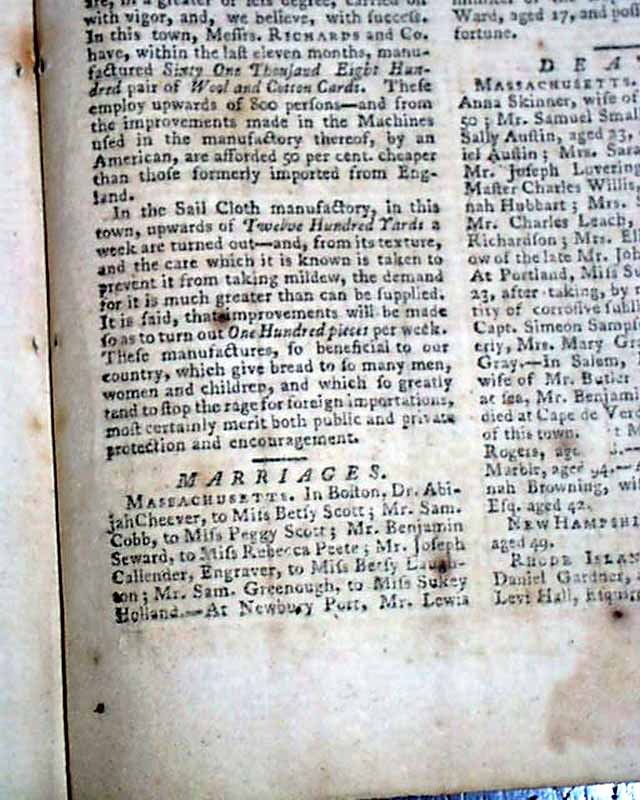
At the back is: "The Gazette" which includes a report that: "Congress, on the 16th inst. agreed upon the compensations, vis. To the President, 25,000 dollars per annum--Vice President, 5000 ...The Senators & Representatives, 6 dols. per day--Speaker, 12 dols. per day--Twenty miles travel, equal to one day's pay..." with more.
Complete in 64 pages, 5 by 8 1/2 inches, some foxing, generally good condition.
AI notes: In the July 1789 issue of The Massachusetts Magazine: or, Monthly Museum of Knowledge and Rational Entertainment—a Boston‑published periodical of literature, history, science, and news founded by Isaiah Thomas—the editors included a substantial reprint of Major George Washington’s journal from his youthful service in the French and Indian War, originally written in 1753–1754 when Washington was a young officer in the Virginia militia and detailing his expedition into the contested Ohio territory and his diplomatic dealings with French commanders. This journal narrative, spanning several pages in that issue, offers readers of the early Republic a first‑hand glimpse of Washington’s early leadership and frontier experiences long before he became the first President, and was presented as historical interest rather than as current presidential commentary.
Category: The 1600's and 1700's
No Longer Available