Home >
Seeking a location in the Chesapeake for a naval depot...
Seeking a location in the Chesapeake for a naval depot...
Item # 707345
Currently Unavailable. Contact us if you would like to be placed on a want list or to be notified if a similar item is available.
February 22, 1817
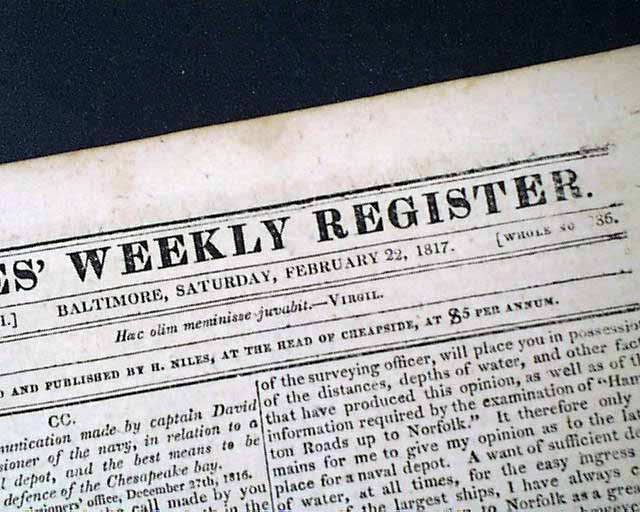
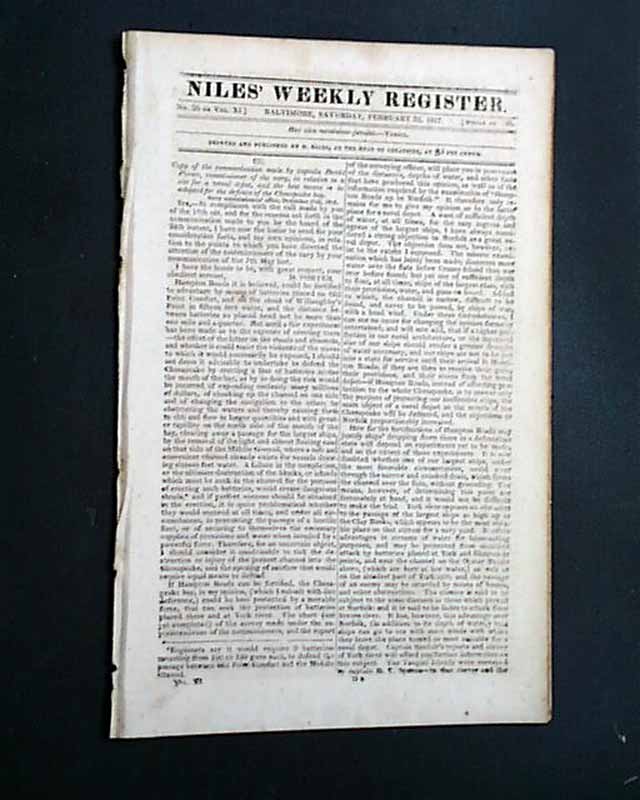
NILES' WEEKLY REGISTER, Baltimore, Feb. 22, 1817
* Chesapeake Bay naval depot search
* Captain David Porter - U.S. Navy
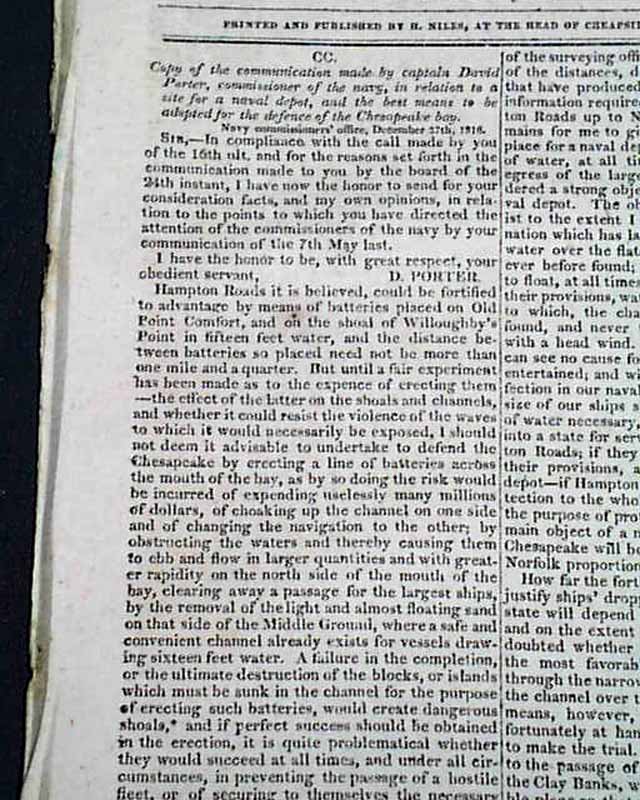
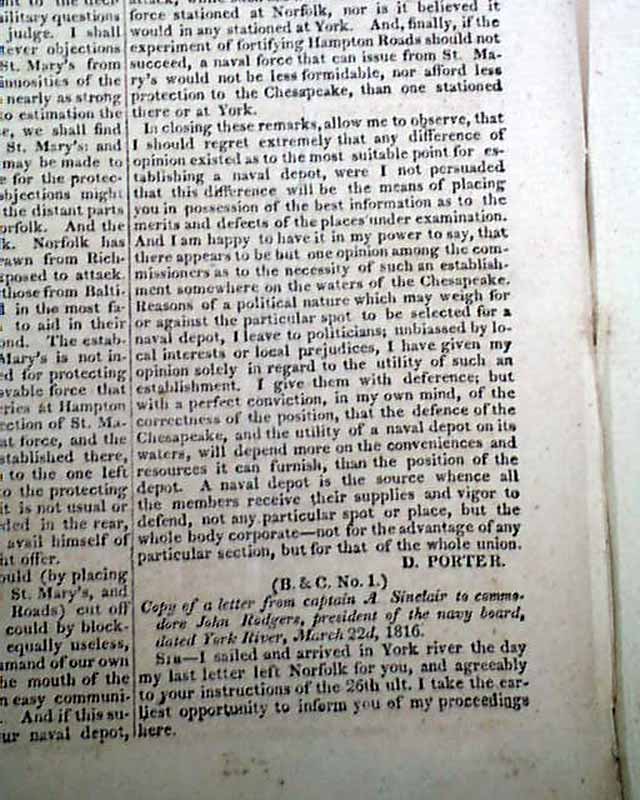
The first two pages are taken up with a lengthy report signed in type by: D. Porter, being: "...the communication made by captain David Porter, commissioner of the navy in relation to the site for a naval depot & the best means to be adopted for the defence of the Chesapeake bay." The report begins: "Hampton Roads, it is believed, could be fortified to advantage by means of batteries placed on Old Point Comford & on the shoal of Willoughby's Point..." with much more.
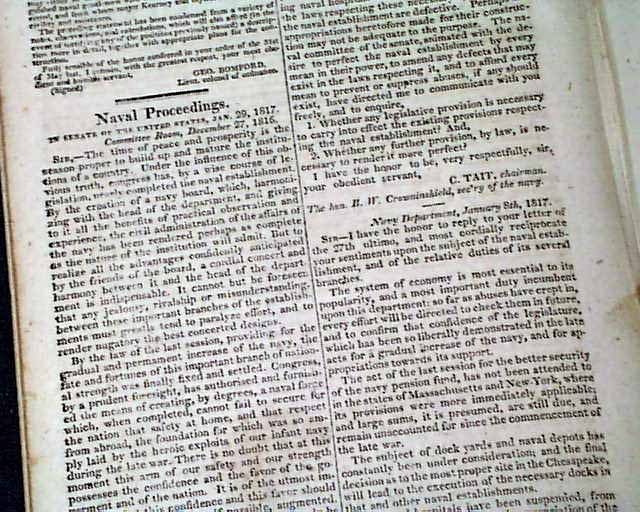
Following this report are several more naval reports.
Sixteen pages, 6 by 9 inches, very nice condition.
AI notes: In the 1817 debate over the Chesapeake naval depot, David Porter emerged as the Board's most strategic—and stubborn—dissenter, prioritizing the control of the "maritime gateway" over the mere shelter of the fleet. While his fellow commissioners, John Rodgers and Stephen Decatur, favored the St. Mary’s River for its deep-water anchorage and inland safety, Porter submitted a formal minority opinion arguing that any depot north of the Virginia Capes was a tactical trap. He asserted that if the British Navy could once again blockade the mouth of the Bay at Hampton Roads, a base at St. Mary’s would become a "gilded cage" where American ships of the line would be effectively neutralized without firing a shot. Porter advocated instead for the massive fortification of Old Point Comfort and the Rip Raps to "close" the entrance to the Chesapeake entirely, essentially turning the entire lower Bay into a secure, defended harbor. His aggressive insistence that the Navy must fight at the threshold of the ocean rather than retreating into the tributaries eventually shifted the national strategy toward the construction of Fort Monroe, the largest stone fortification in the United States, which mirrored his philosophy of forward-leaning coastal defense.
As noted in Wikipedia, this title: "...(was) one of the most widely-circulated magazines in the United States...Devoted primarily to politics...considered an important source for the history of the period."
Category: Pre-Civil War
No Longer Available