Home >
Thomas Edison invents the phonograph (1st mention)... Baseball science...


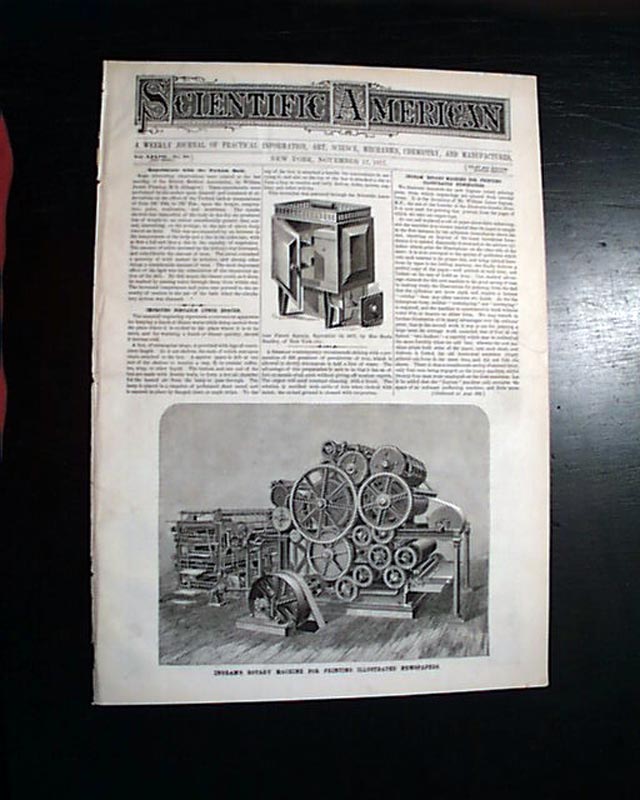
Thomas Edison invents the phonograph (1st mention)... Baseball science...
Item # 707327
November 17, 1877
SCIENTIFIC AMERICAN, New York, Nov. 17, 1877
* Historic Phonograph invention
* Early Pre-public unveiling
* Thomas Edison - inventor
* Early baseball science
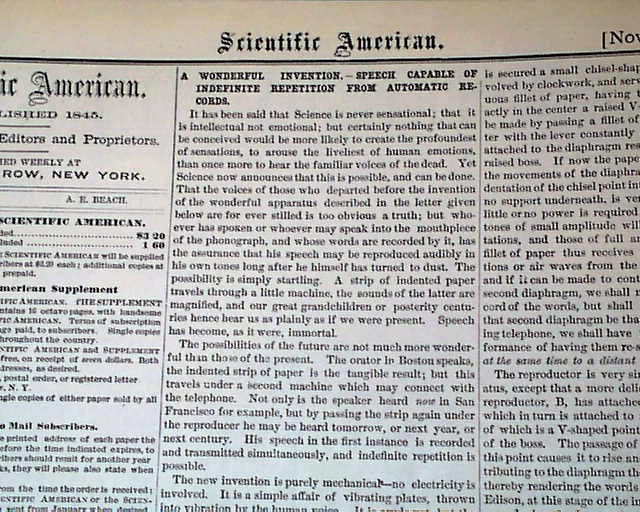
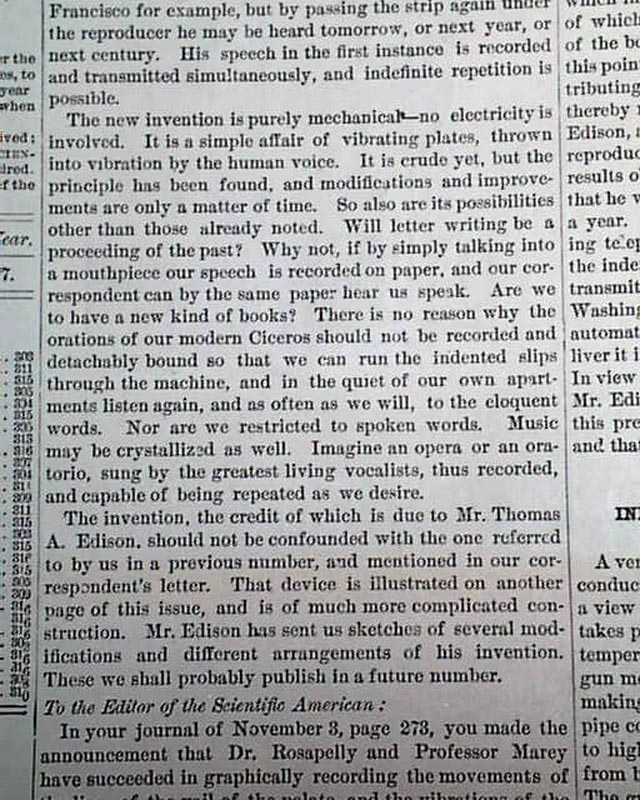
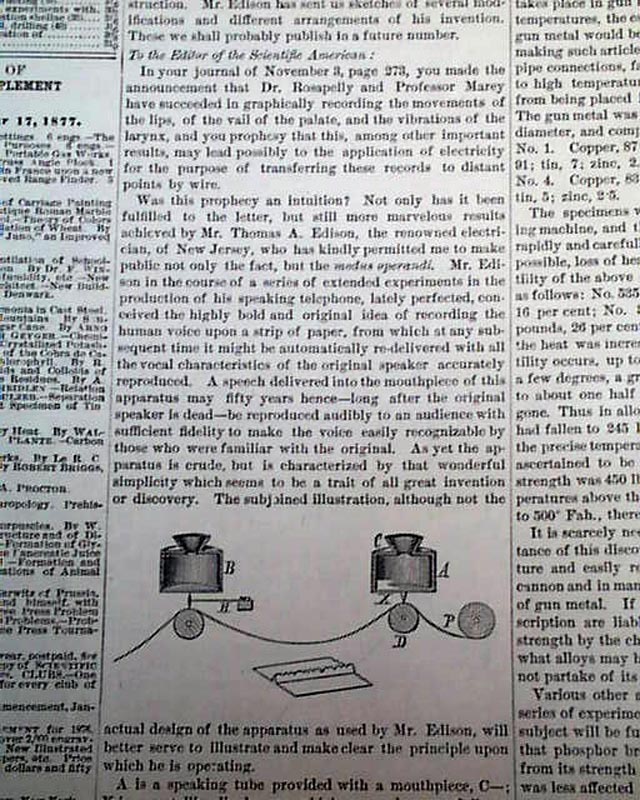
A page 2 article headed: "A Wonderful Invention--Speech Capable Of Indefinite Repetition From Automatic Records" reports this about Edison's latest invention: "...The possibility is simply startling...a strip of indented paper travels through a little machine, the sounds of the latter are magnified....Speech has become, as it were, immortal....the new invention is purely mechanical--no electricity is involved. It is a simple affair of vibrating plates, thrown into vibration by the human voice....The invention...the credit of which is due to Mr. Thomas Edison..." and more. Included is a small illustration of the device.
A most significant and early report of one of the more noteworthy inventions of the nineteenth century, and great to have this report in this famous science-themed periodical. The article takes 1 1/2 columns.
The PBS series, American Experience (season 27, episode 3), states that this was the very first mention of Edison's phonograph in a major publication.
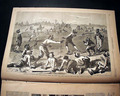
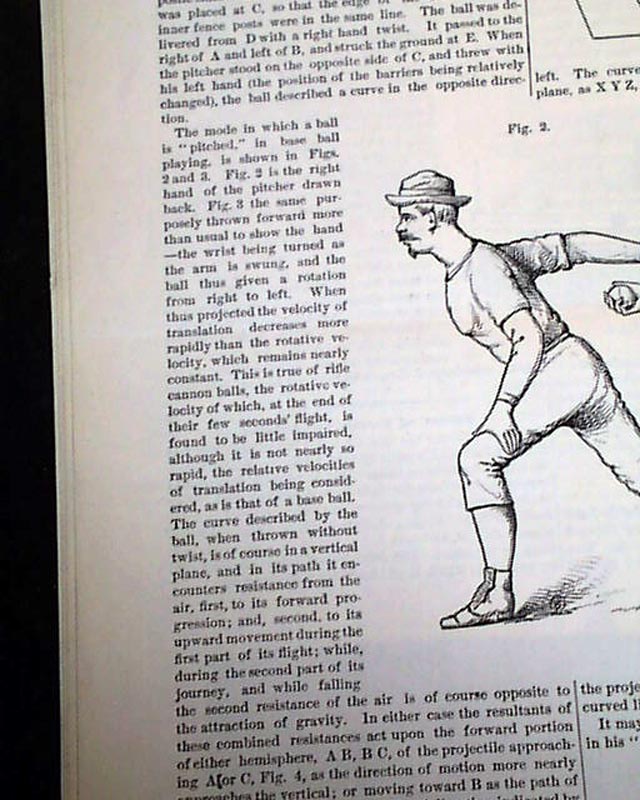
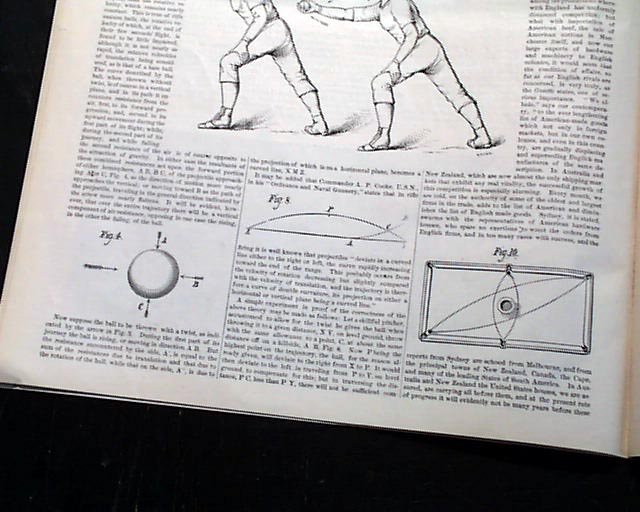
Also of interest is a very interesting article: "Base Ball Science" concerning the possibility of throwing a ball in such a way that it can curve, with several illustrations. A fascinating & early, scientific report on the curve ball.
Sixteen pages, nice condition.
AI notes: The 1877 Edison phonograph was the first device ever to record and reproduce sound, invented by Thomas Alva Edison and unveiled in December 1877. The original machine used a hand-cranked cylinder wrapped in tinfoil, onto which sound vibrations from a speaking diaphragm were mechanically inscribed as indentations by a stylus; when the cylinder was turned again, a second stylus traced the grooves and reproduced the sound audibly. Edison reportedly conceived the idea while working on improvements to the telegraph and telephone, and he famously demonstrated the invention by reciting “Mary Had a Little Lamb.” Although fragile and impractical for repeated use—the tinfoil wore out quickly—the 1877 phonograph astonished the public and press, earning Edison the nickname “The Wizard of Menlo Park.” While Edison temporarily set the invention aside, it laid the foundation for later sound-recording technology, leading to improved wax-cylinder phonographs in the late 1880s and ultimately the modern recording industry.
Category: Post-Civil War
Available Now
$290.00