Home > Back to Search Results >
The historic Acts of Union, joining England & Scotland, takes effect...
The historic Acts of Union, joining England & Scotland, takes effect...
Item # 707125
May 05, 1707
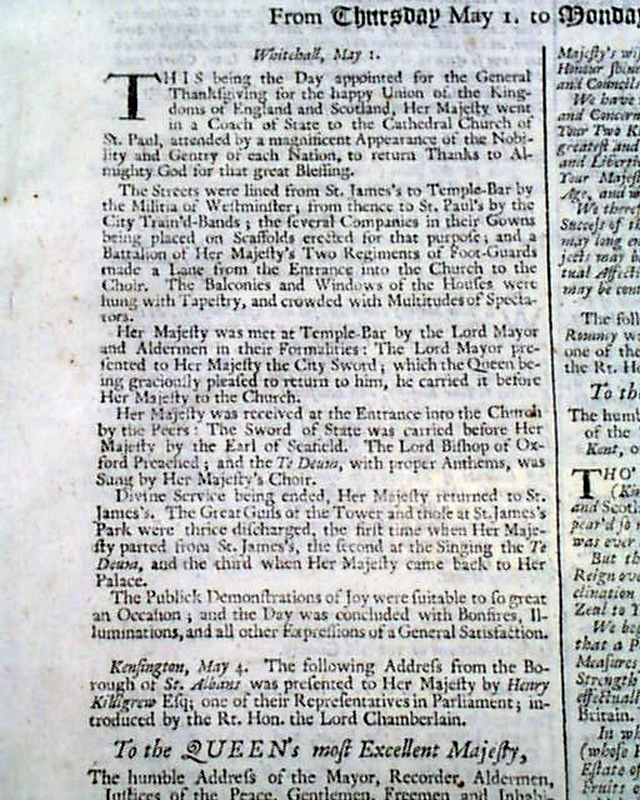
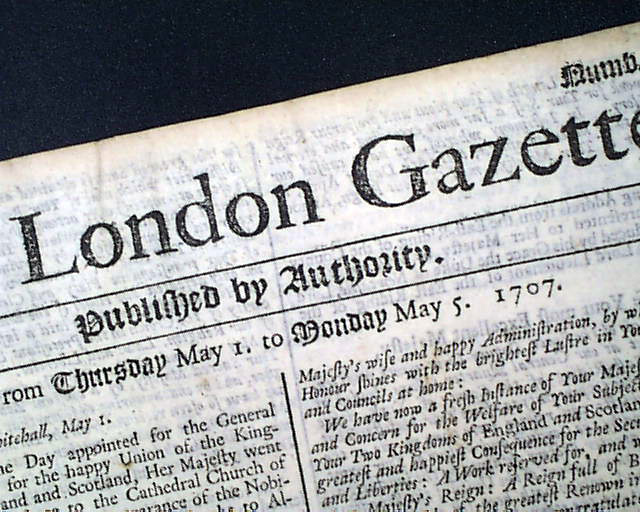
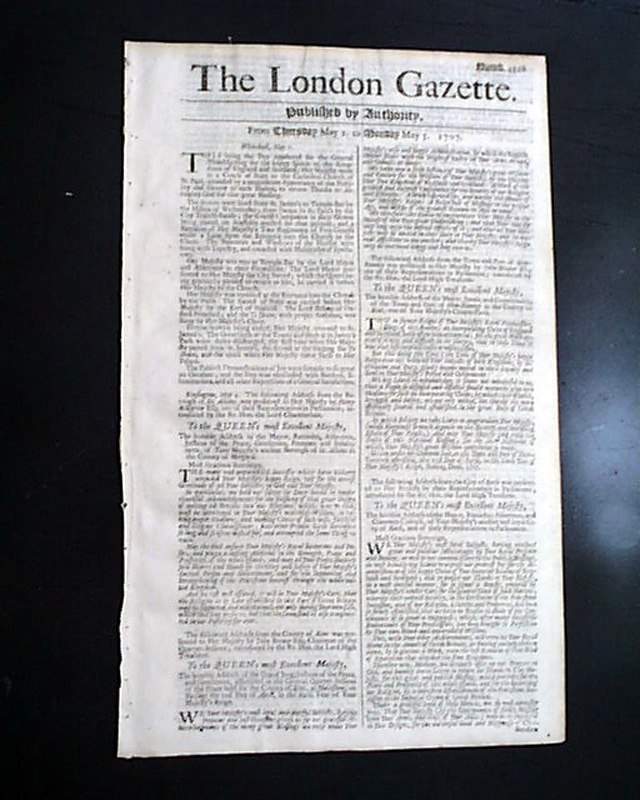
THE LONDON GAZETTE, England, May 5, 1707
* "The Acts of Union" ratification
* The creation of "Great Britain"
* England & Scotland merger
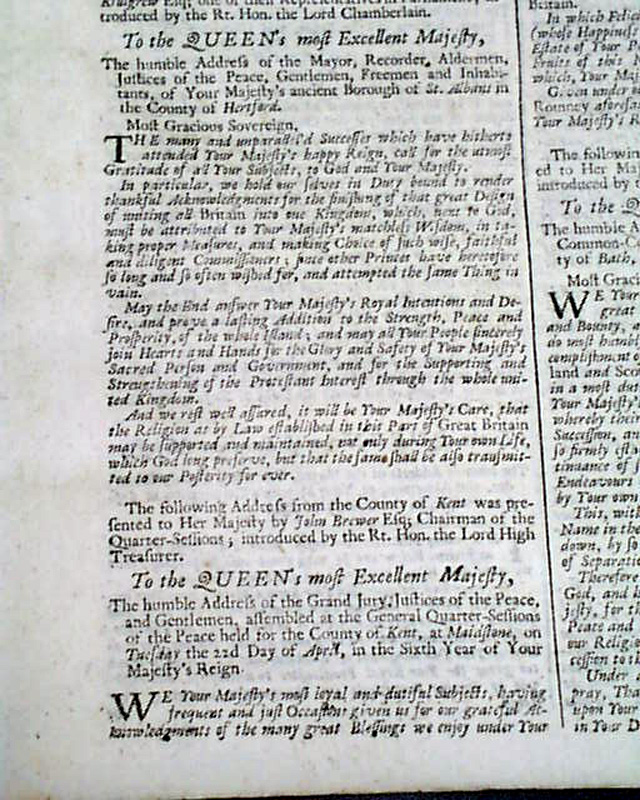
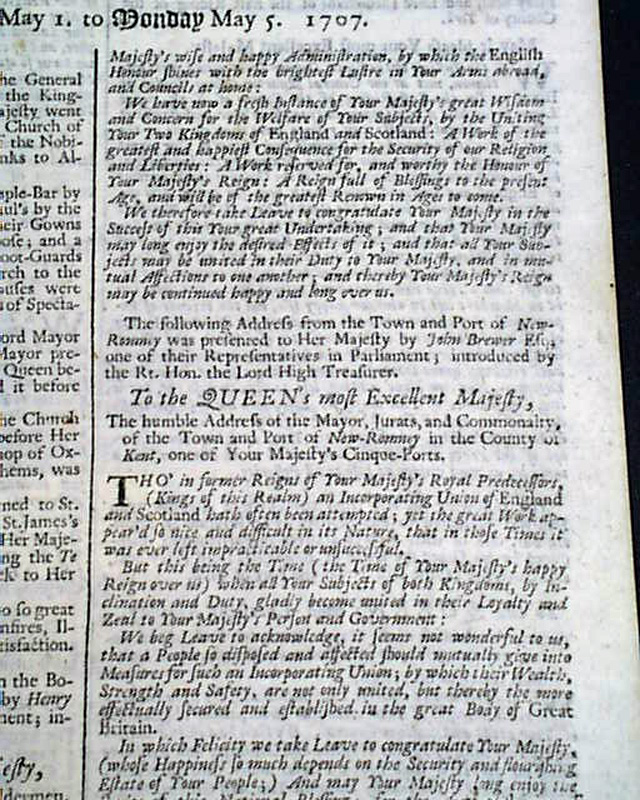
The front page begins with an announcement from Whitehall, in London, dated May 1, stating: "This being the deay appointed for the General Thanksgiving for the happy Union of the Kingdoms of England and Scotland, Her majesty went in a coach of state to the Cathedral Church of St. Paul...to return thanks to Almighty God for that great blessing..." with more on this.
One of the more notable events of the early 18th century was the formal union of England & Scotland, through the Acts of Union ratified by both Parliaments, and taking effect May 1, 1707.
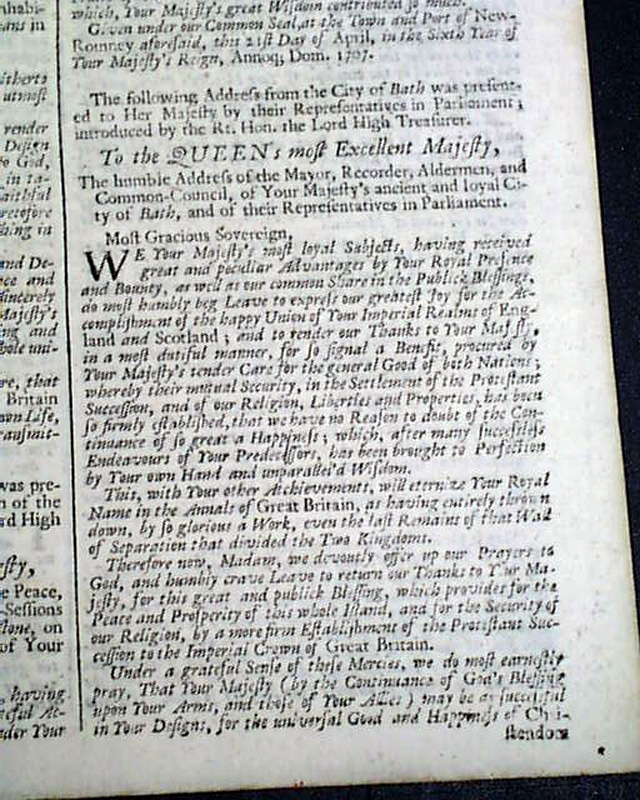
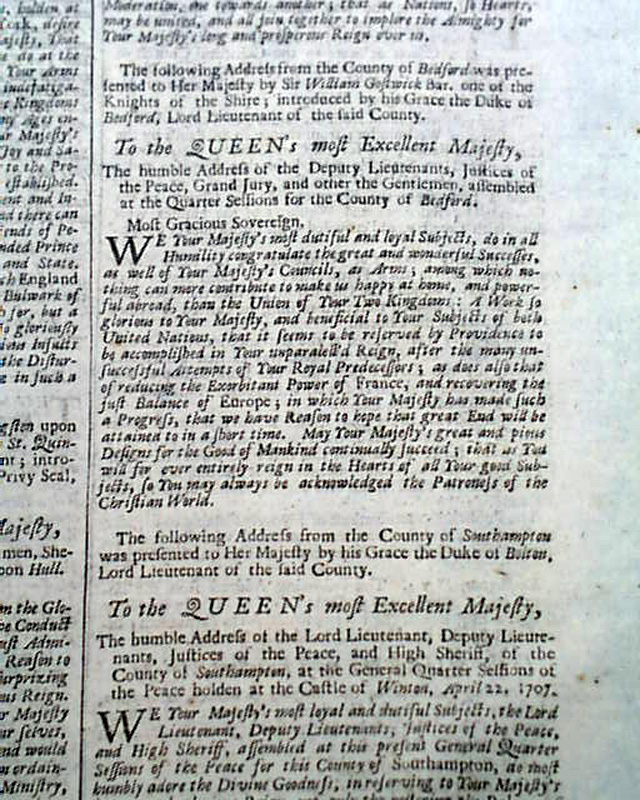
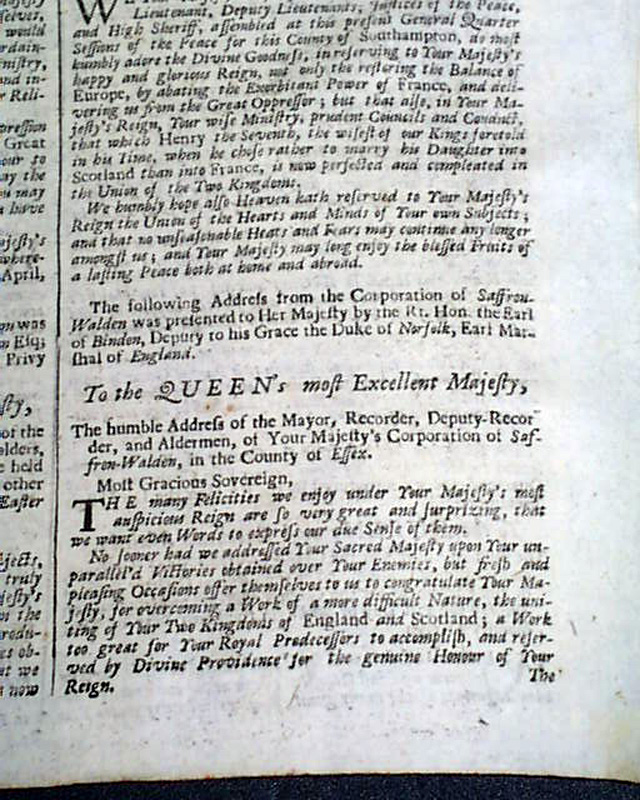
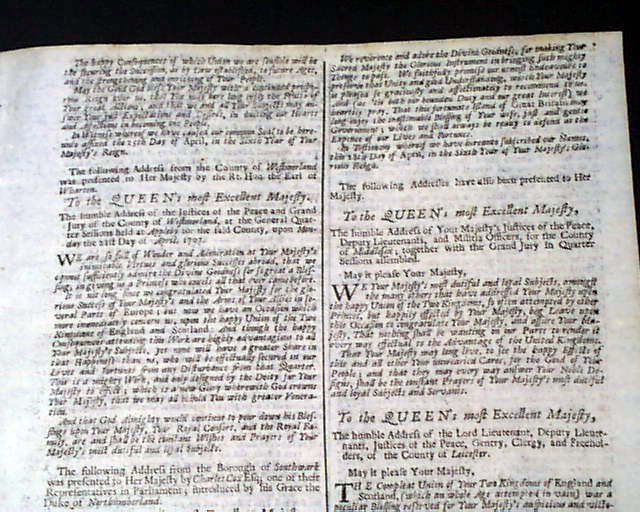
Most of the balance of this issue is taken up with many address from various town mayors congratulating the Queen on this notable event.
Four pages, 7 1/4 by 11 3/4 inches, great condition.
background: The Acts of Union took effect on May 1, 1707, fundamentally reshaping the British Isles by merging the kingdoms of England and Scotland into a single sovereign state called Great Britain. While the two nations had shared a monarch since 1603, this legislative union dissolved their independent parliaments in favor of a unified body at Westminster. The move was driven by a mix of pragmatic necessity and political strategy: England sought to ensure the Hanoverian succession and prevent Scotland from choosing a different monarch who might side with France, while a financially depleted Scotland—reeling from the catastrophic failure of the Darien Scheme—viewed the union as a vital lifeline to English colonial markets and economic stability. Despite intense public rioting in Edinburgh and lingering resentment, the treaty granted Scotland significant concessions to preserve its national identity, most notably the protection of Scots Law and the Presbyterian Church, creating a unique "unionist-nationalism" that allowed Scotland to maintain its distinct institutional character within the new British state.
Category: The 1600's and 1700's
Available Now
$82.00