Home >
England is close to conceding independence to the American colonies...
England is close to conceding independence to the American colonies...
Item # 707123
October 08, 1782
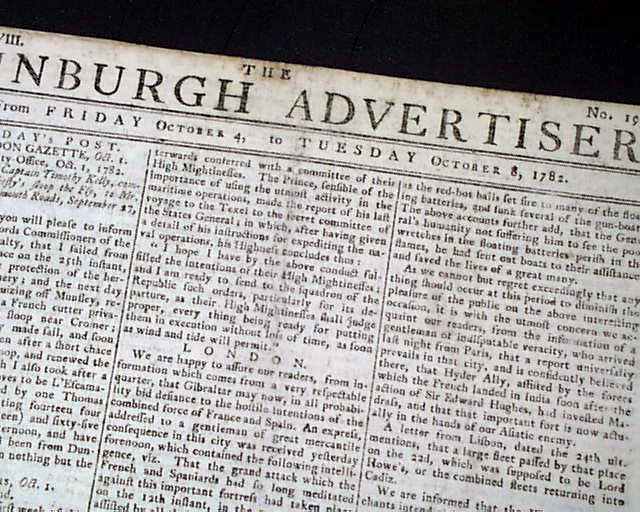
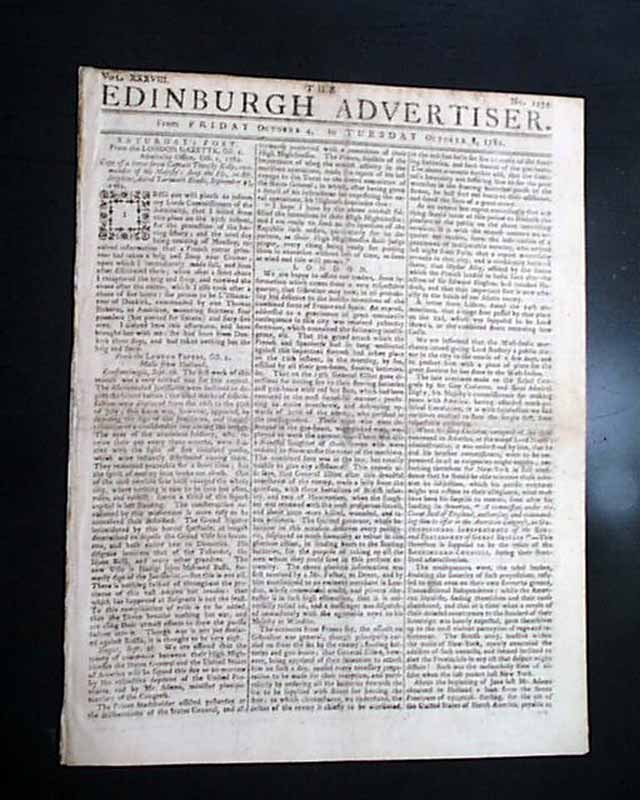
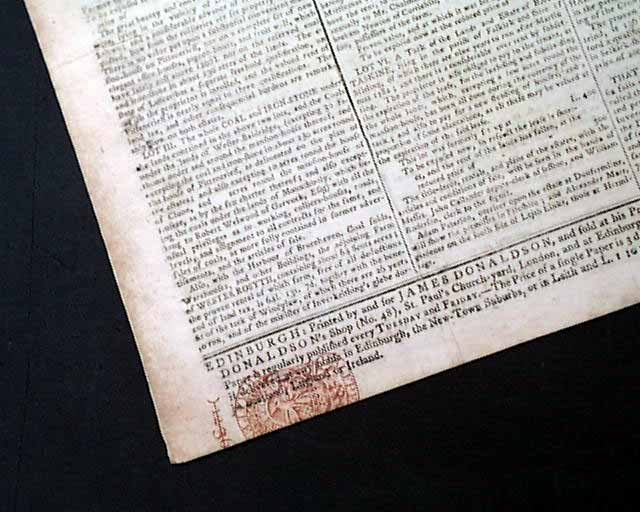
THE EDINBURGH ADVERTISER, Scotland, Oct. 8, 1782
* American independence close ?
* General Sir Guy Carleton
* American Revolutionary War
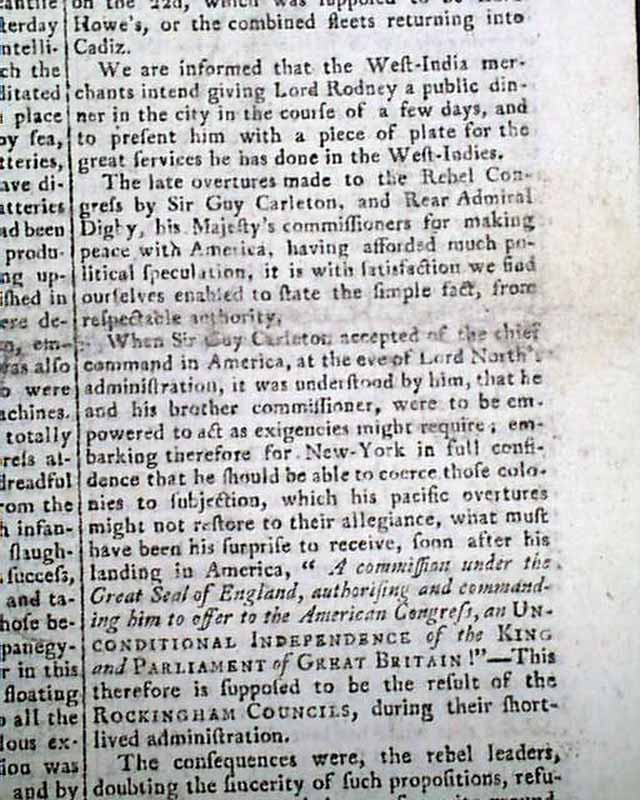
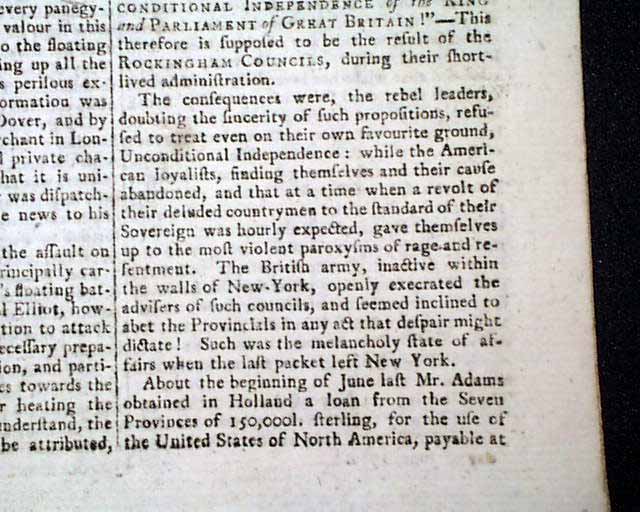
The front page has a report with bits including: "...The late overtures made to the Rebel Congress by Sir Guy Carlton...for making peace with America, having afforded much political speculation, it is with satisfaction we find ourselves enabled to state the simple fact, from respectable authority. When Sir Guy Carleton accepted of the chief command in America...it was understood by him that he & his brother commissioners, were to be empowered to act as exigencies might require; embarking therefore for New York in full confidence that he should be able to coerce those colonies to objection, which his pacific overtures might not restore to their allegiance, what must have been his surprise to receive, soon after his landing in America, 'A commission...authorizing & commanding him to offer to the American Congress an Unconditional Independence of the King and Parliament of Great Britain!'..." with more.
Eight pages, 8 3/4 by 11 1/4 inches, minor front page rubbing, nice condition.
AI notes: In 1782, Sir Guy Carleton, the British commander-in-chief in North America, found himself at the center of the ongoing diplomatic negotiations that were moving towards recognizing American independence. While Carleton had been a steadfast opponent of the American Revolution, believing that British control of the colonies was essential, by this point, the military situation was increasingly untenable. The defeat of British forces at Yorktown in 1781 had severely weakened Britain's position, and public opinion at home, along with the mounting costs of the war, pushed the British government toward a peace settlement. Carleton, a pragmatic and cautious leader, was tasked with overseeing the British response to American overtures for peace. Despite his reluctance to fully concede American independence without certain assurances—especially concerning the protection of Loyalists who had supported the British cause—he ultimately recognized the necessity of negotiating a settlement. Carleton’s involvement in the peace talks, particularly in discussions over the future of the Loyalists and the strategic interests of Britain in Canada, played a key role in shaping the final terms of the Treaty of Paris in 1783, which formally recognized the United States as an independent nation. Though Carleton’s personal views leaned toward safeguarding British interests in North America, he was eventually forced to accept the political and military realities that made American independence inevitable.
Category: Revolutionary War
Available Now
$134.00