Home >
The John Brown raid at Harper's Ferry... Brownsville, Texas
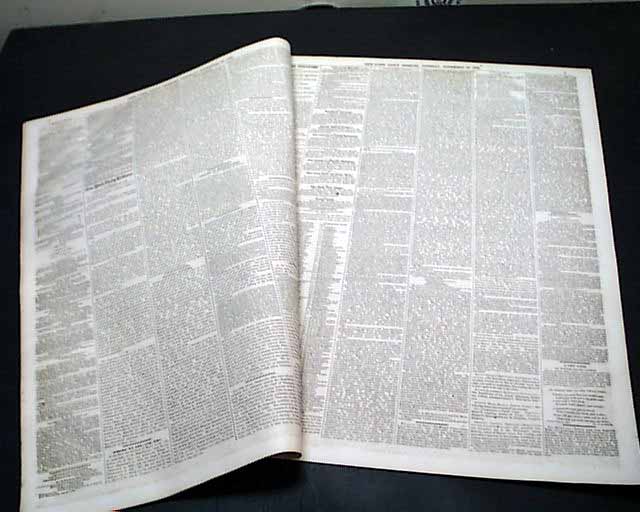
The John Brown raid at Harper's Ferry... Brownsville, Texas
Item # 706999
November 29, 1859
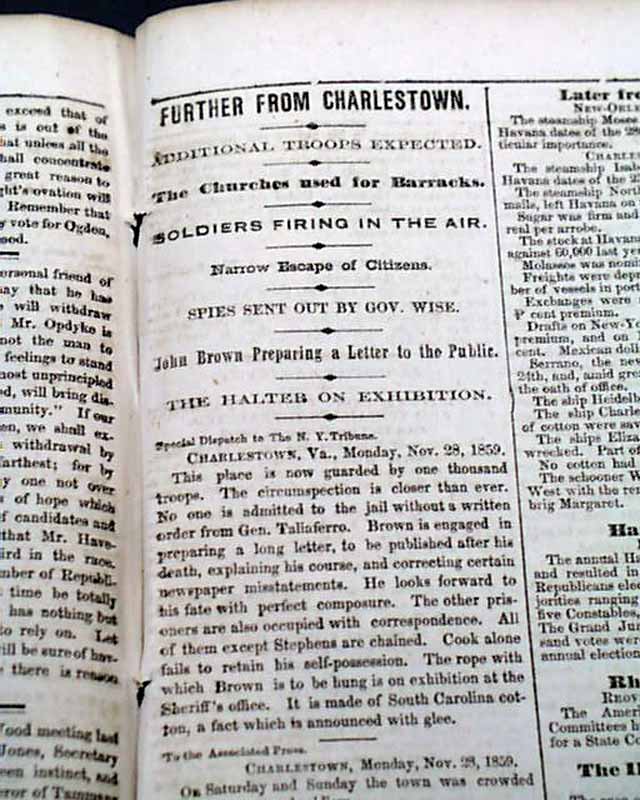
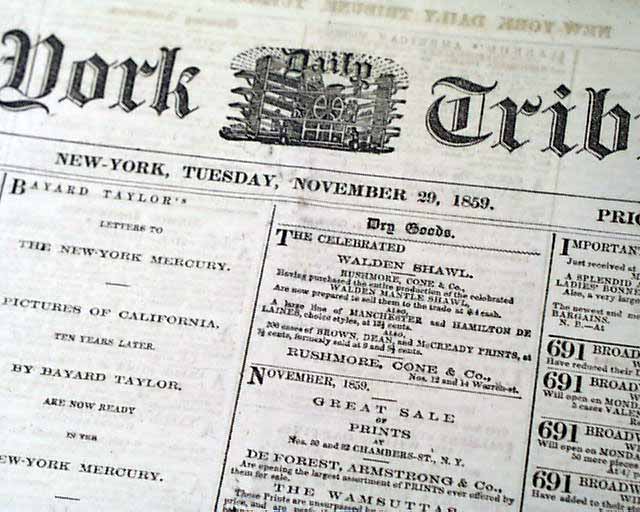
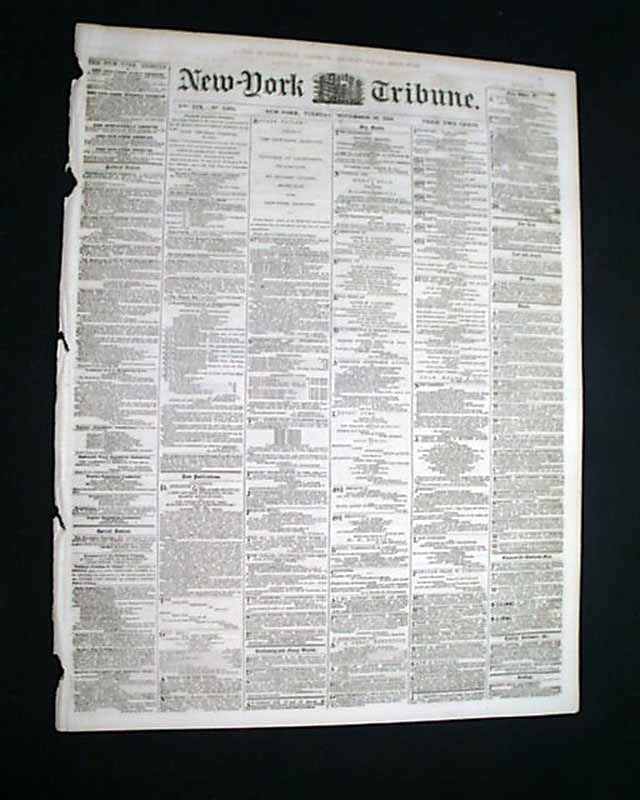
NEW YORK TRIBUNE Nov. 29, 1859
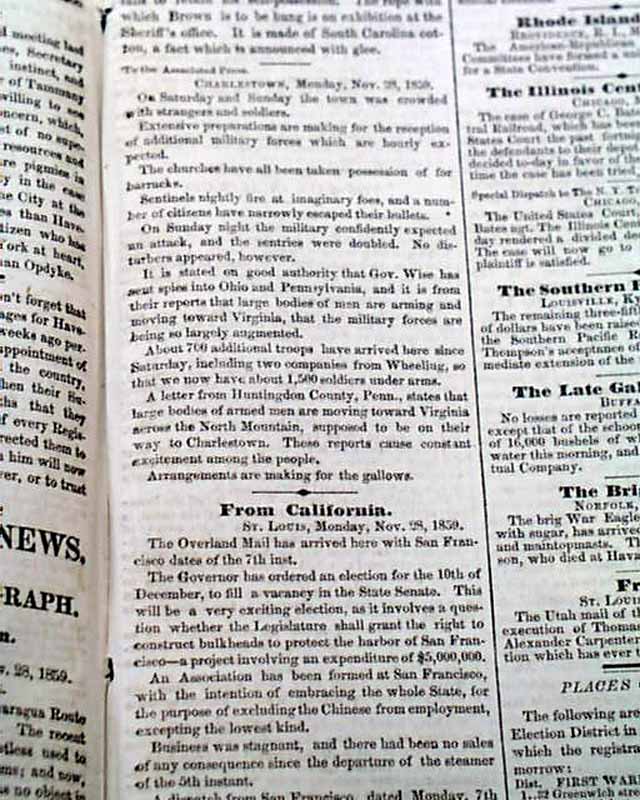
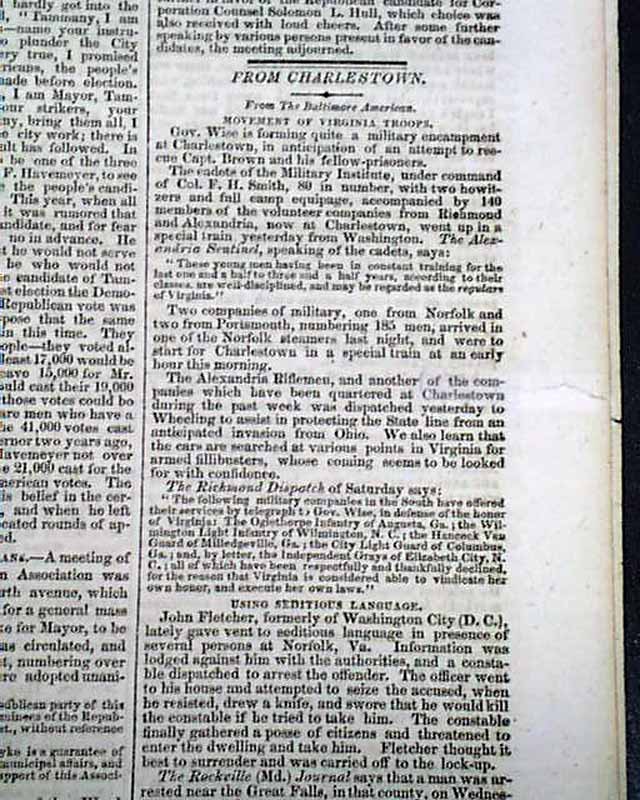
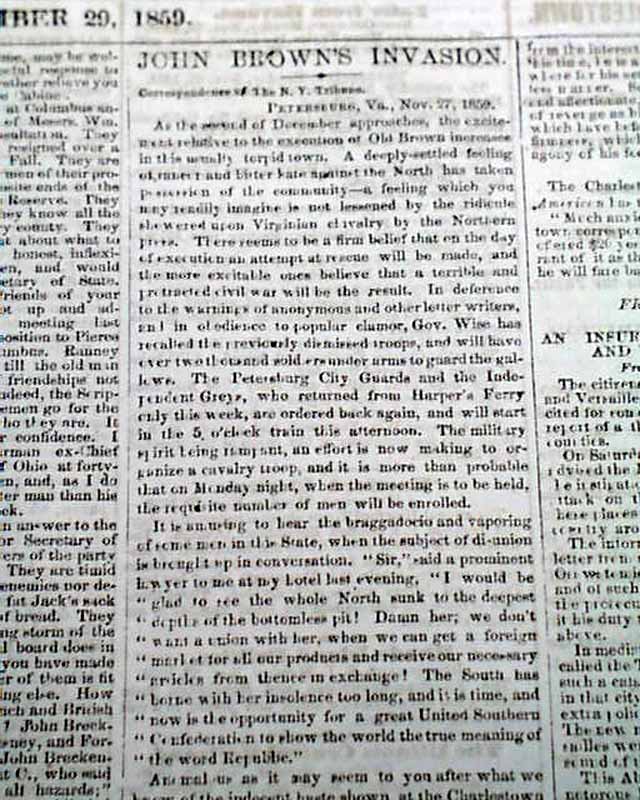
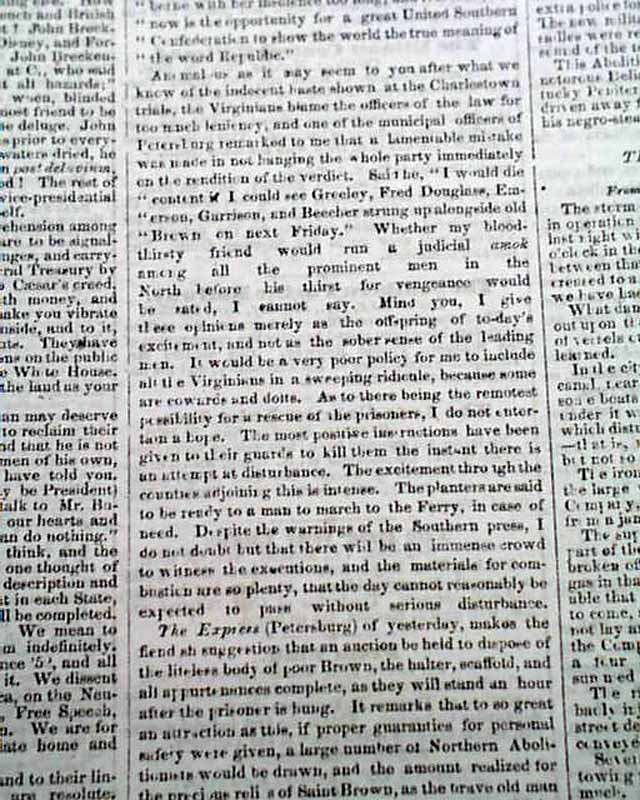
* John Brown's raid on Harper's Ferry
* Pre Civil War tensions re. slavery question
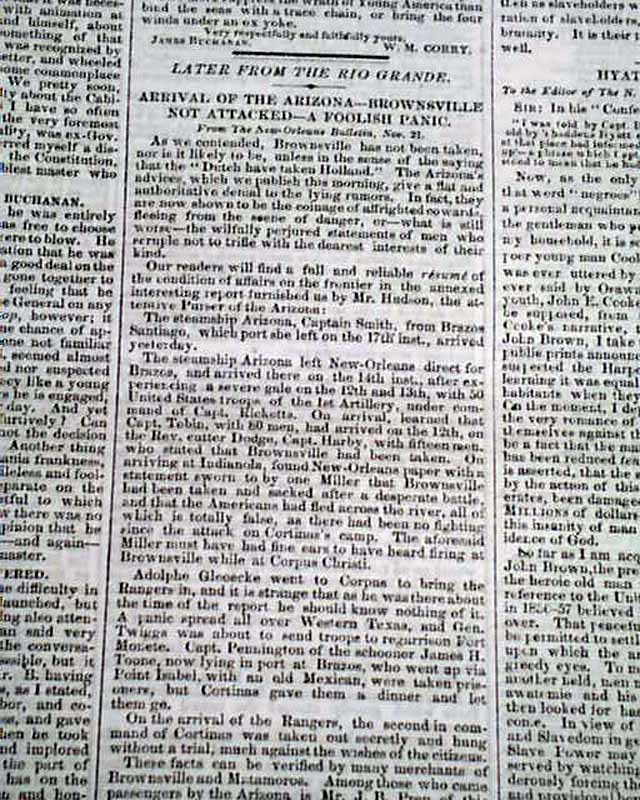
Inside has two articles on: "Brownsville", Texas, concerning the troubles at the border with Mexico.
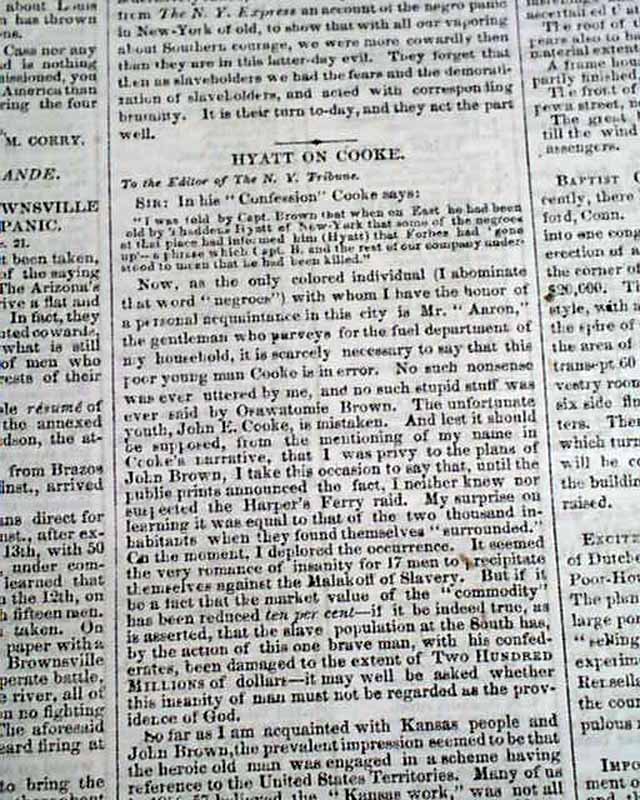
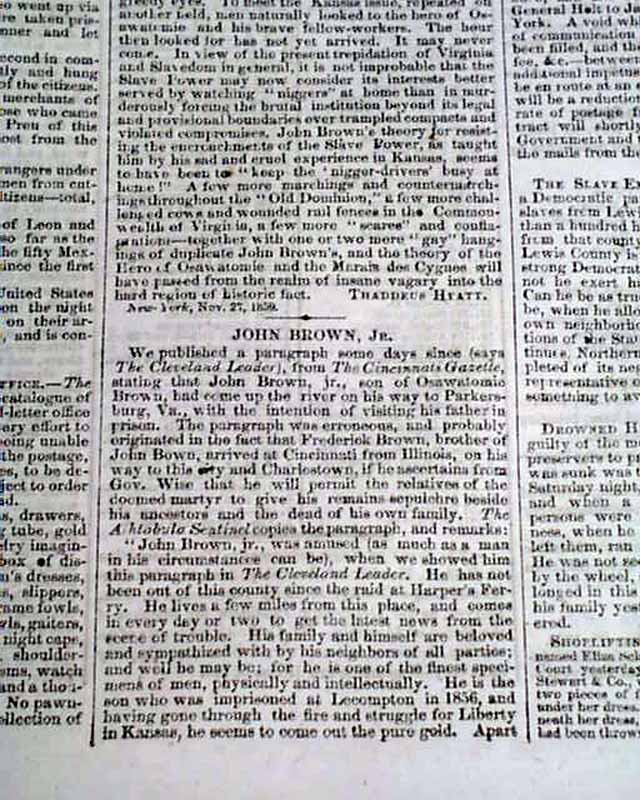
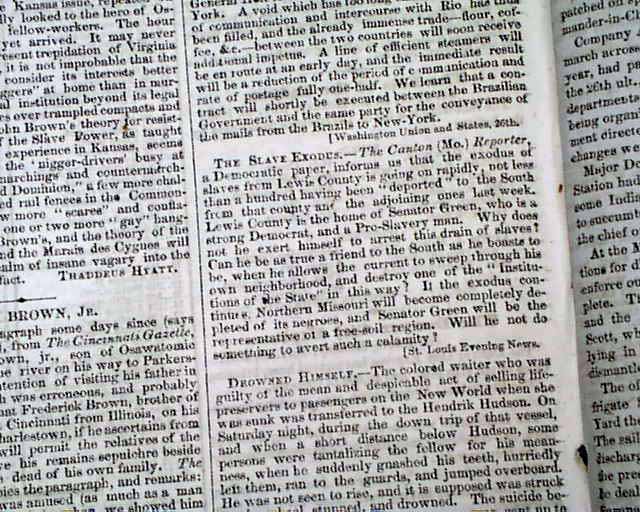
But the more notable content is on the John Brown raid at Harper's Ferry, with column heads including: "Further from Charlestown" "Additional Troops Expected" "The Churches Used for Barracks" "Soldiers Firing in the Air" "Narrow Escape of Citizens" "Spies Sent Out by Gov. Wise" "John Brown Preparing a Letter to the Public" "John Brown's Invasion" and: "John Brown, Jr." A small article: "The Slave Exodus"
Eight pages, irregular at the spine margin from disbinding but no loss of text, good condition.
background: This issue of the New York Tribune serves as a grim snapshot of a fractured republic, capturing the precise moment the American legal and social order began to collapse under the weight of the slavery question. By November 29, 1859, the federal government was fighting a two-front war for stability: in the Southwest, the Cortina War in Brownsville signaled a breakdown of authority on the Mexican border, while in the East, the impending execution of John Brown turned Charlestown, Virginia, into an armed camp. The headlines regarding "Churches Used for Barracks" and "Spies Sent Out" reveal a Southern establishment gripped by an almost hysterical paranoia, fearing that Brown’s raid was not an isolated incident but the vanguard of a massive Northern invasion. Meanwhile, the Tribune’s inclusion of "The Slave Exodus" and Brown’s "Letter to the Public" highlights the shift in Northern sentiment; as Brown traded his Sharps rifle for a pen in his final days, he successfully transitioned from a failed insurgent to a powerful abolitionist martyr, effectively polarizing the nation beyond the point of political reconciliation just one year before the election of Abraham Lincoln.
Category: Pre-Civil War
Available Now
$58.00