Home >
Gold in the Black Hills... Descriptive article on the Indians' situation... Mountain Meadows Massacre...
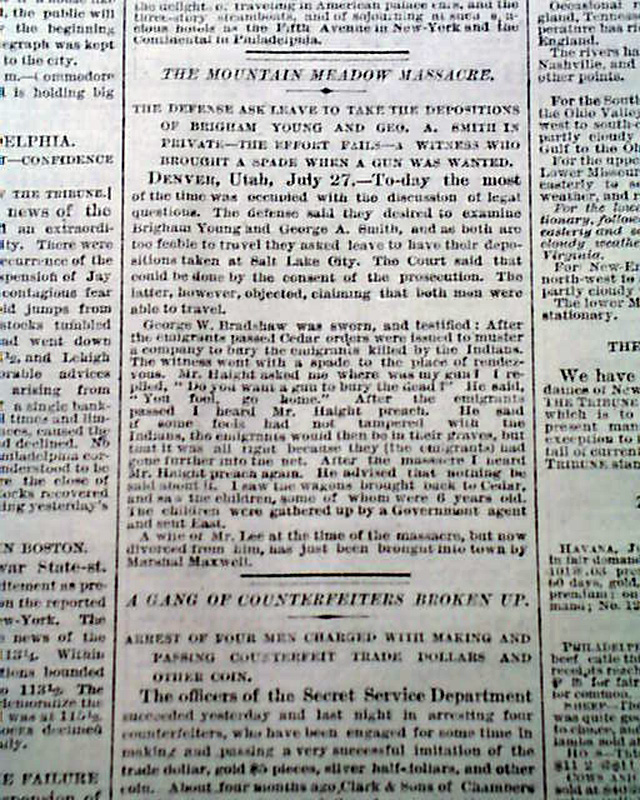
Gold in the Black Hills... Descriptive article on the Indians' situation... Mountain Meadows Massacre...
Item # 705964
July 28, 1875
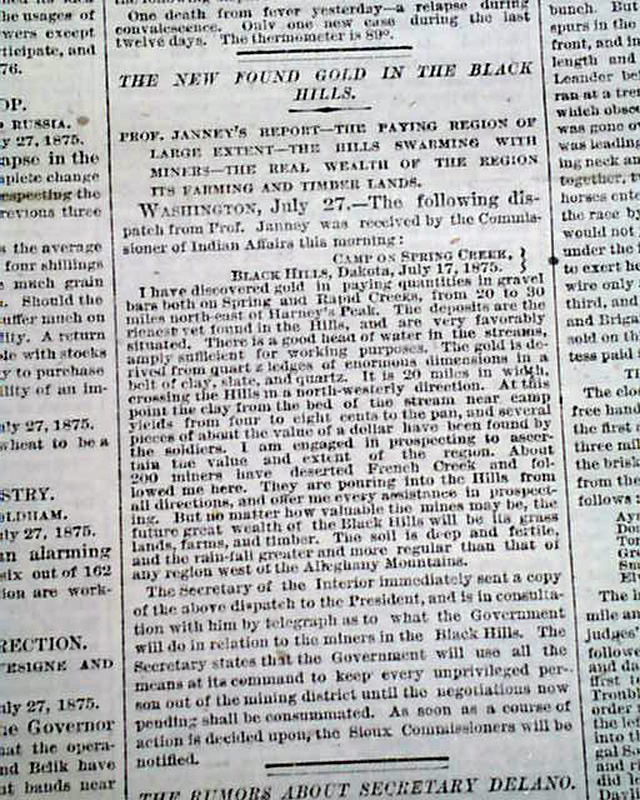
NEW YORK TRIBUNE, July 28, 1875 The front page has a report headed: "Gold In The Black Hills" "Fresh Discoveries--Coarser Gold, But More of It--A Crowd of Miners Coming Into the Hills".
This is followed by: "Prof. Janney's Report--The Paying Region of Large Extend--The Hills Swarming With Miners--The Real Wealth of the Region Is Farming and Timber Lands".
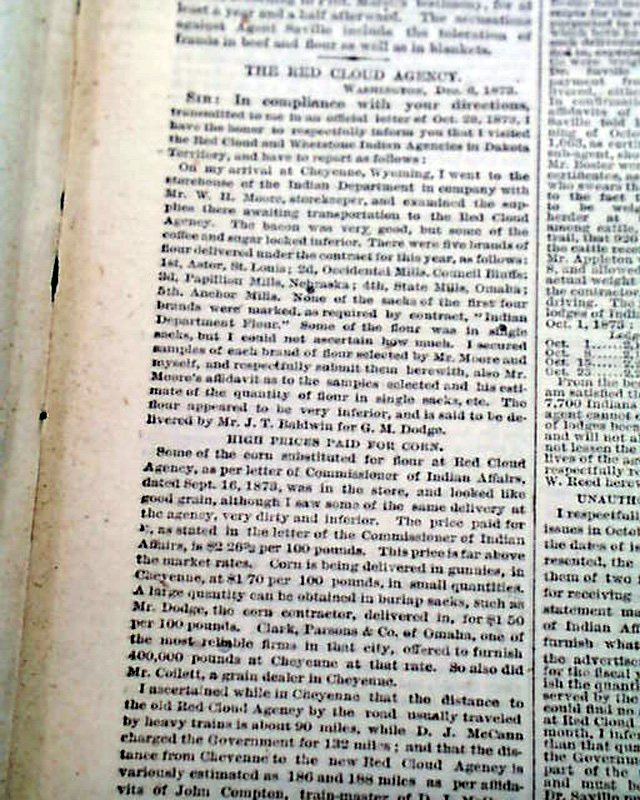
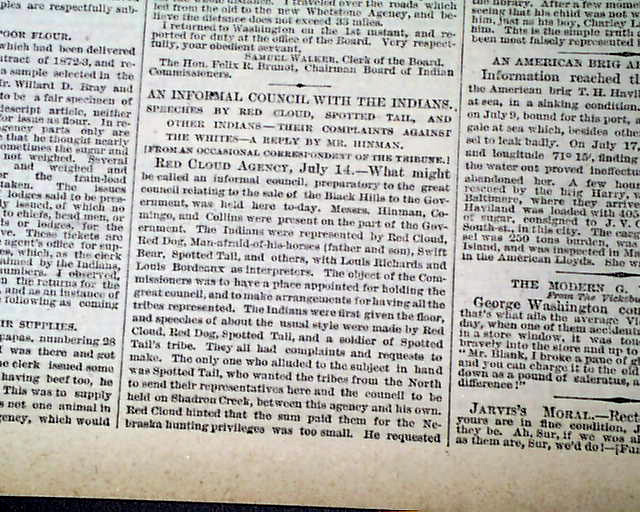
Page 3 has more than a full column taken up with a terrific & very descriptive article: "The Indian Service" with subheads: "The Red Cloud Agency" "The Whetstone Agency" "Indians Cheated Out of Whole Issues" "Affairs at New Red Cloud Agency" and more.
Page 5 has a very lengthy & descriptive article: "Mountain Meadow Massacre" "Beginning of the Trial of Conspirators--The Testimony Of a Mormon Bishop and An Eye-Witness of the Massacre--The Cruel and Cowardly Nature of the Massacre Fully Exposed" with the dateline from Beaver, Utah.
Eight pages, very nice condition.
background: By 1875, the American West was a landscape of broken promises and violent transitions, where the discovery of gold in the Black Hills served as the final catalyst for the destruction of Plains Indian sovereignty. Although the 1868 Treaty of Fort Laramie had reserved the Black Hills for the Lakota, the 1874 Custer Expedition's confirmation of gold triggered an illegal invasion of miners that the federal government chose to protect rather than prevent. This left Indigenous tribes in a state of "starvation into submission," as the deliberate extermination of the buffalo herds stripped them of their primary resource, forcing them toward the restrictive and often corrupt reservation system. Simultaneously, the moral and legal authority of the frontier was under scrutiny during the 1875 trial of John D. Lee for the Mountain Meadows Massacre; while the massacre occurred nearly two decades prior, the 1875 proceedings marked a rare moment of federal accountability for the slaughter of over 120 emigrants, even as the government itself prepared for a total war against the Sioux and Cheyenne that would culminate at the Little Bighorn the following year.
Category: Post-Civil War
Available Now
$52.00