Home > Exceedingly rare Napoleon occupation newspaper...
Click image to enlarge 705576
Show image list »

Exceedingly rare Napoleon occupation newspaper...


Item # 705576

January 05, 1811

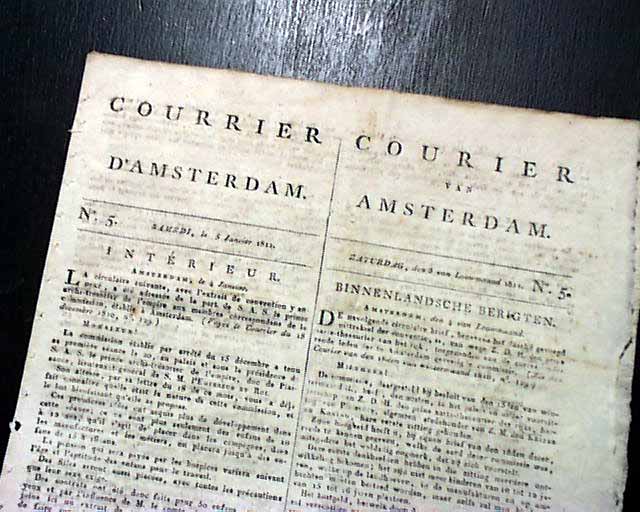
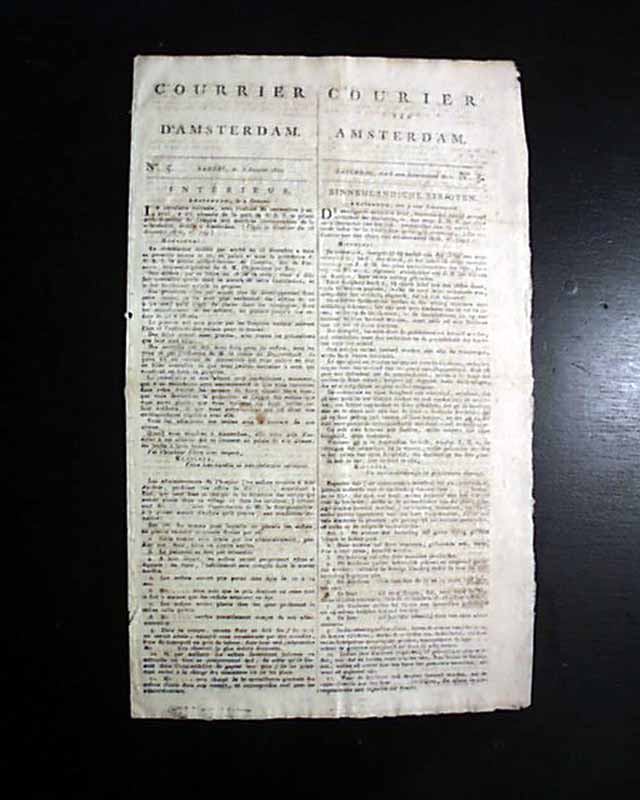
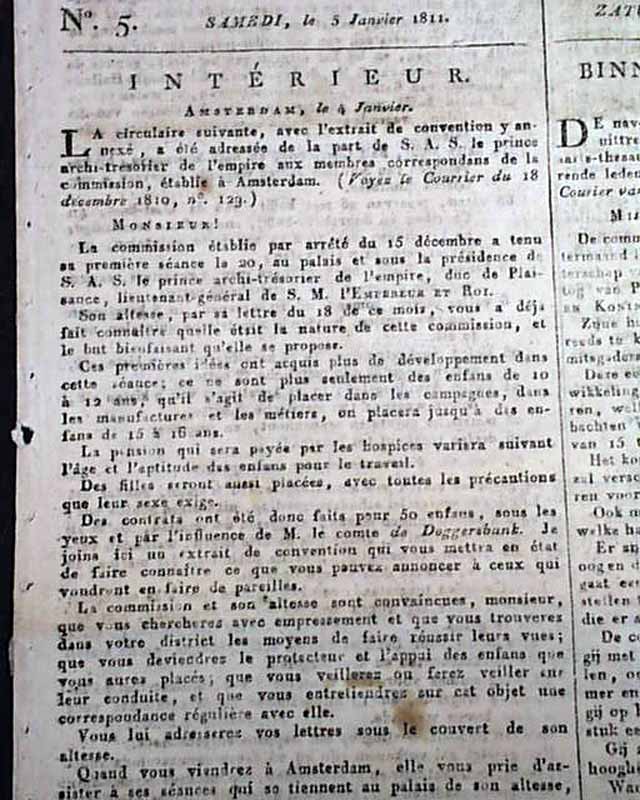
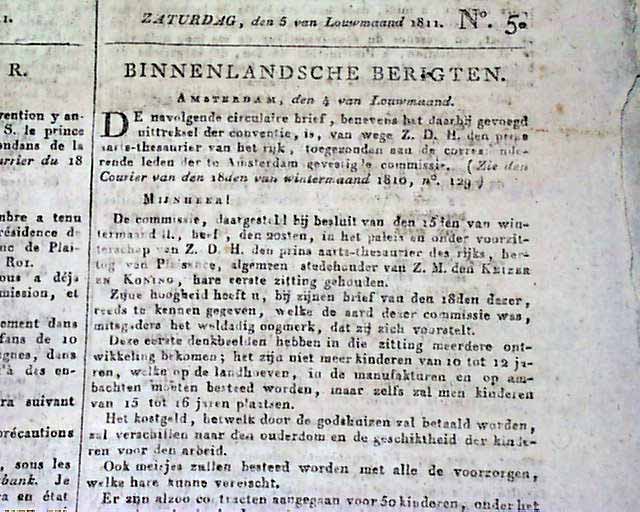
COURRIER D'AMSTERDAM or the COURIER VAN AMSTERDAM, January 5, 1811 (No. 5)  

* Exceedingly rare Napoleon Bonaparte occupation newspaper

This was a daily newspaper published in Amsterdam during the French occupation of Holland. It is bilingual: half printed in French and half in Dutch. Two mastheads as well, one in each language.
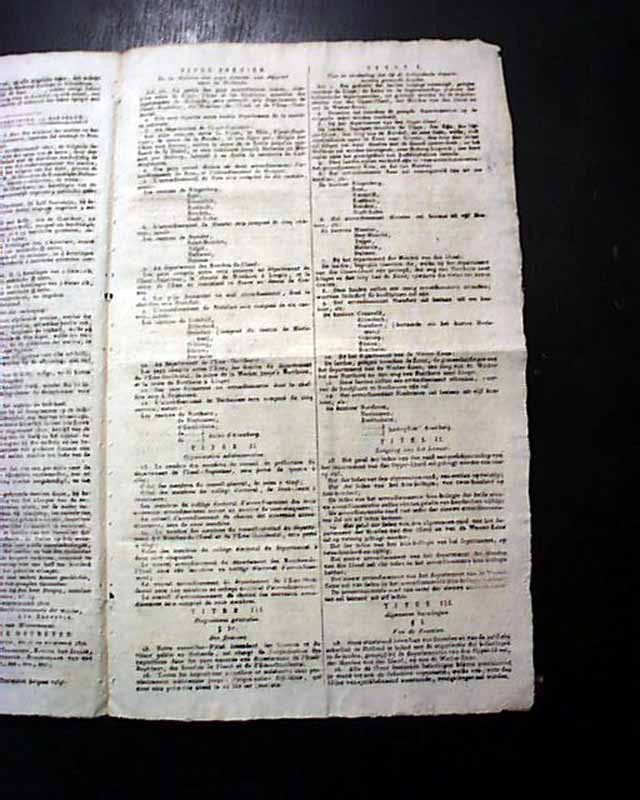
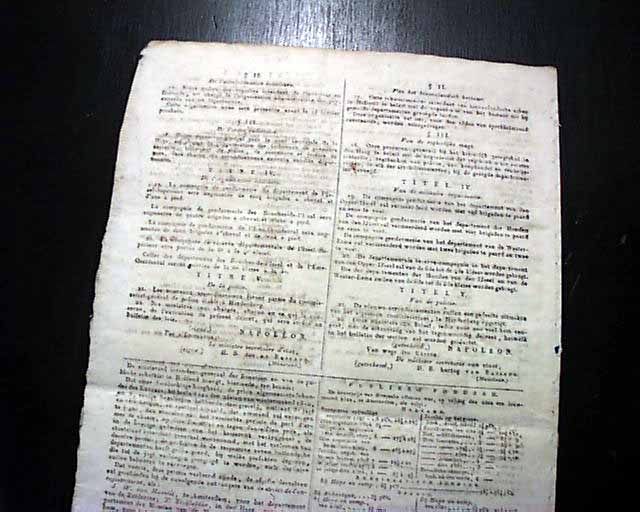
In 1810 Napoleon Bonaparte annexed Holland to his empire, hence this newspaper being in two languages. This issue was published during his occupation.  All of page 3 and half of page 4 are a document signed in type by: Napoleon concerning the annexing of Holland
In all my years of collecting rare newspapers I have only encountered five such issues, one of which resides in our private collection.
Complete in four pages, 9 1/2 by 15 1/2 inches, very nice condition.

AI notes: During Napoleon Bonaparte’s occupation of Europe, newspapers were tightly controlled instruments of state policy, serving primarily as official organs for disseminating laws, decrees, and government-approved news. In annexed territories like the Netherlands, the Courrier d’Amsterdam (1810–1811) exemplified this approach: it was published bilingually in French and Dutch to reach both the local population and the French administration, replacing earlier publications such as the Moniteur d’Amsterdam. Under strict Napoleonic decrees, only one newspaper per département was often allowed, ensuring that all printed information conformed to imperial objectives, including promoting loyalty to Napoleon, reporting military campaigns favorably, and suppressing dissent. These papers were typically issued by government-appointed printers or bureaus, blending administrative announcements with propaganda, and their content focused on political, legal, and military matters rather than independent journalism. Today, surviving issues of such newspapers are rare but invaluable, offering historians a window into the methods of press control, propaganda dissemination, and the linguistic and cultural policies implemented across French-occupied Europe.


Category: Pre-Civil War