Home >
Bank of the United States is created...
Bank of the United States is created...
Item # 705462
Currently Unavailable. Contact us if you would like to be placed on a want list or to be notified if a similar item is available.
March 02, 1791
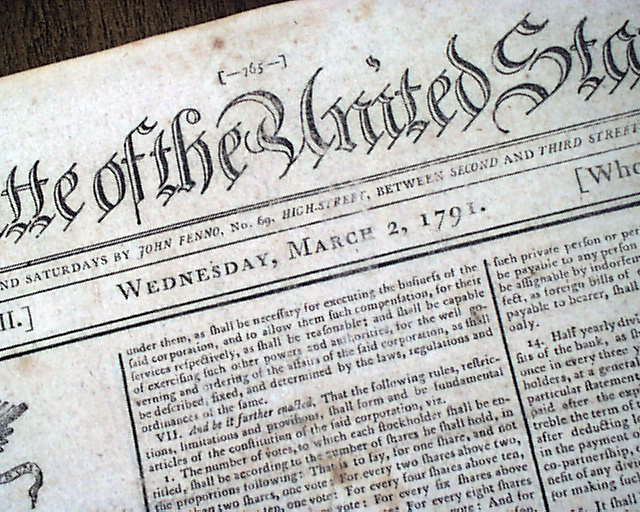
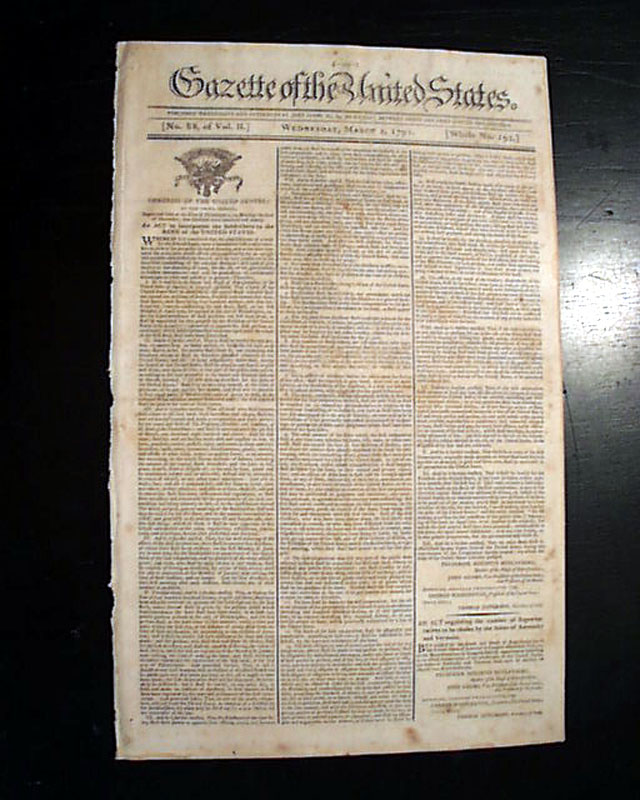
GAZETTE OF THE UNITED STATES, Philadelphia, March 2, 1791
* First Bank of the United States creation
* George Washington - John Adams & more
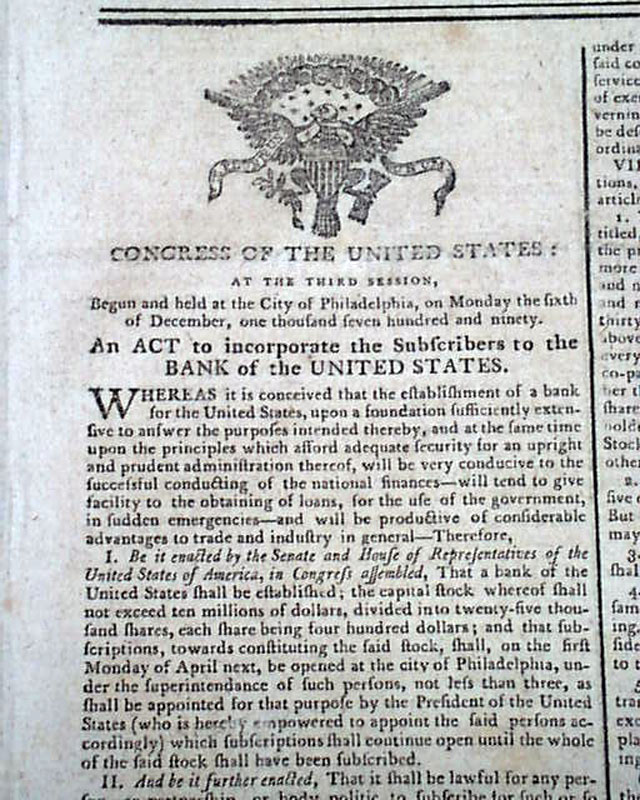
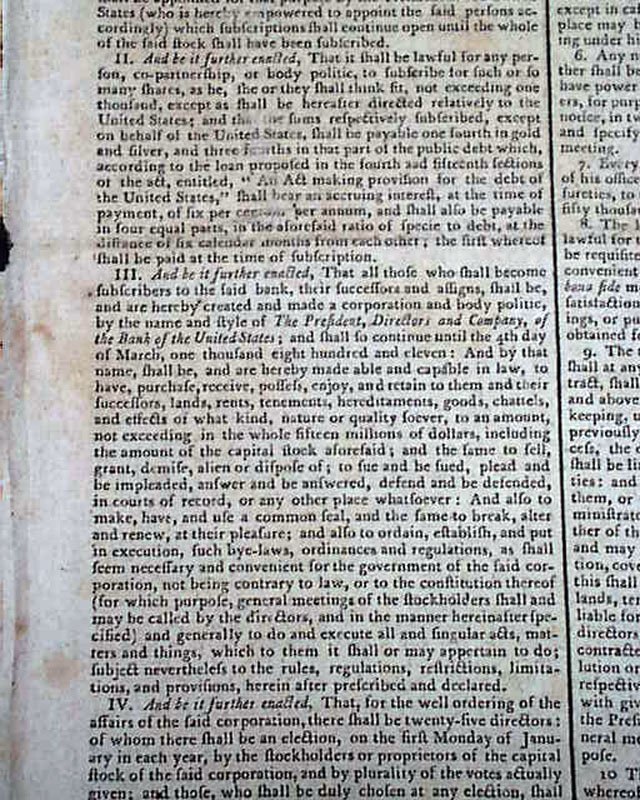
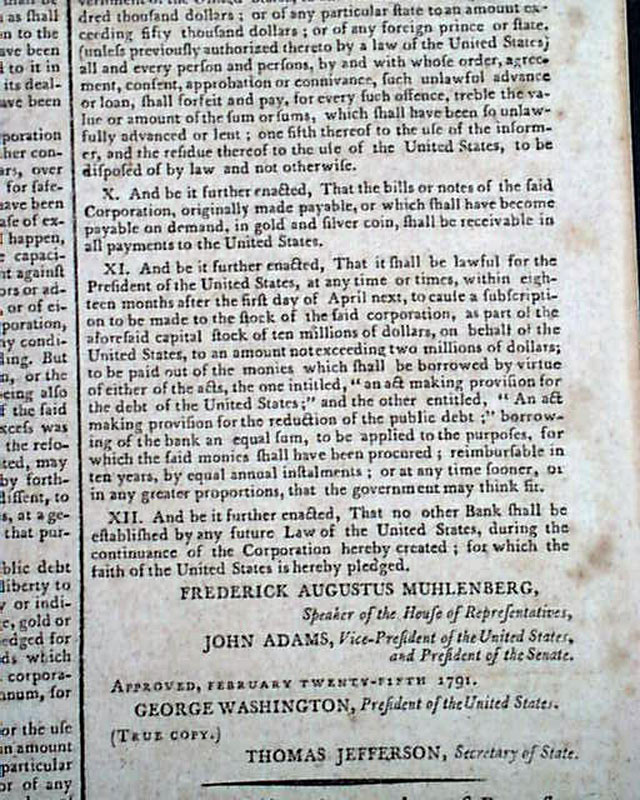
On the front page at the top of the first column under an engraving of an early version of the Great Seal of the United States is: "An ACT to Incorporate the Subscribers to the Bank of the United States". The text of the act takes most of the front page and is signed in type: Frederick Augustus Muhlenberg, John Adams, George Washington & Thomas Jefferson.
One of the more important Acts signed into law during the early years of our federal system.
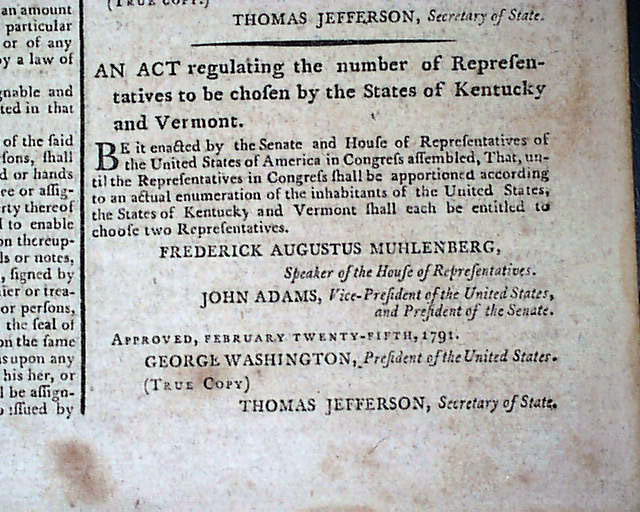
Also on the front page is: "An ACT regulating the number of Representatives chosen by Kentucky and Vermont." This act is also signed in type by Muhlenberg, Adams, Washington & Jefferson.
Nice to have this content in this famous federalist newspaper, which was essentially the "mouthpiece" of the Washington administration and which consequently was the first newspaper to print such legal documents.
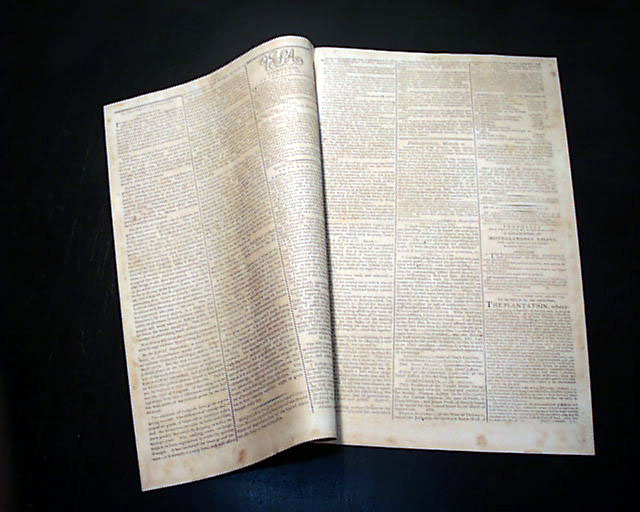
Four pages, nice condition.
AI notes: The First Bank of the United States, established in 1791, was a pivotal institution in the early financial history of the United States, created at the urging of Alexander Hamilton, the first Secretary of the Treasury. Hamilton believed a national bank was essential for stabilizing the fledgling nation's economy, managing war debt from the American Revolution, establishing public credit, and creating a uniform currency. Modeled after the Bank of England, the Bank served as a central repository for federal funds, facilitated tax collection, issued loans, and regulated currency through its banknotes. Though it was privately owned, the federal government held a significant share and oversaw operations. The Bank quickly became a cornerstone of Hamilton’s broader economic plan, but it also ignited fierce political opposition. Thomas Jefferson and James Madison, among others, argued that the Constitution did not grant the federal government the authority to create a bank, making it a central issue in the broader debate over strict versus loose interpretations of the Constitution. Despite its success in improving national finances, the Bank's 20-year charter expired in 1811, and Congress, under pressure from Jeffersonian Republicans, chose not to renew it, fearing centralized financial power and foreign influence.
Category: The 1600's and 1700's
No Longer Available