Home >
"Dishonest malevolence?" The printing controversy over Thomas Paine's "Common Sense"...
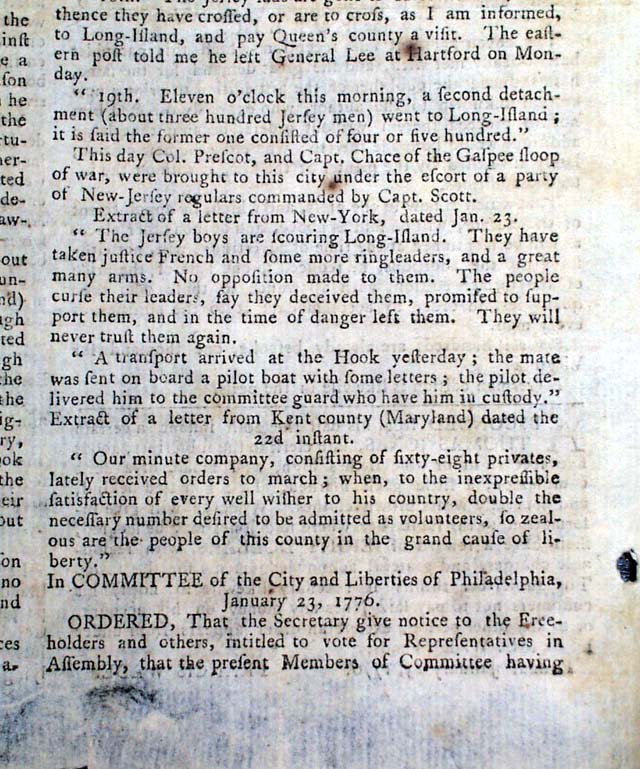
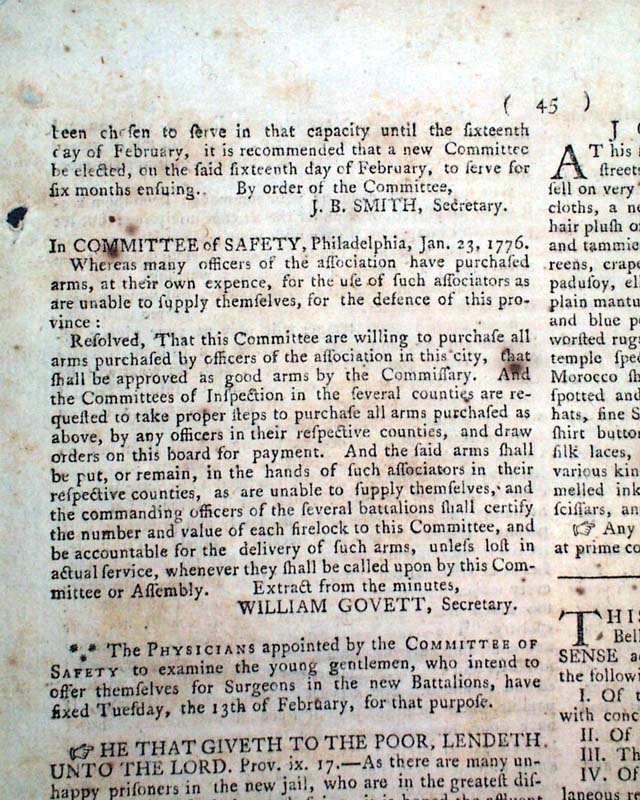
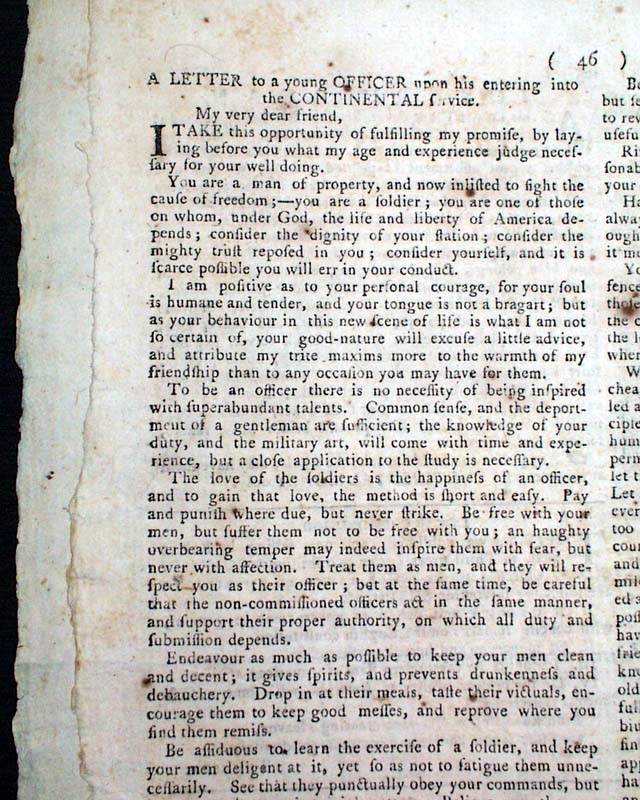
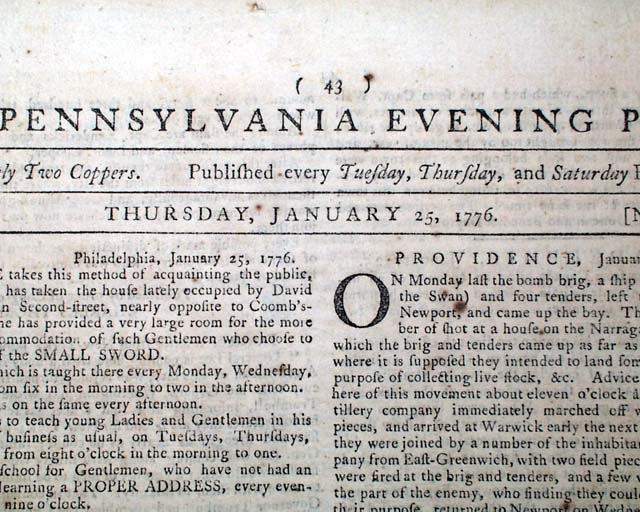
"Dishonest malevolence?" The printing controversy over Thomas Paine's "Common Sense"...
Item # 704399
January 25, 1776
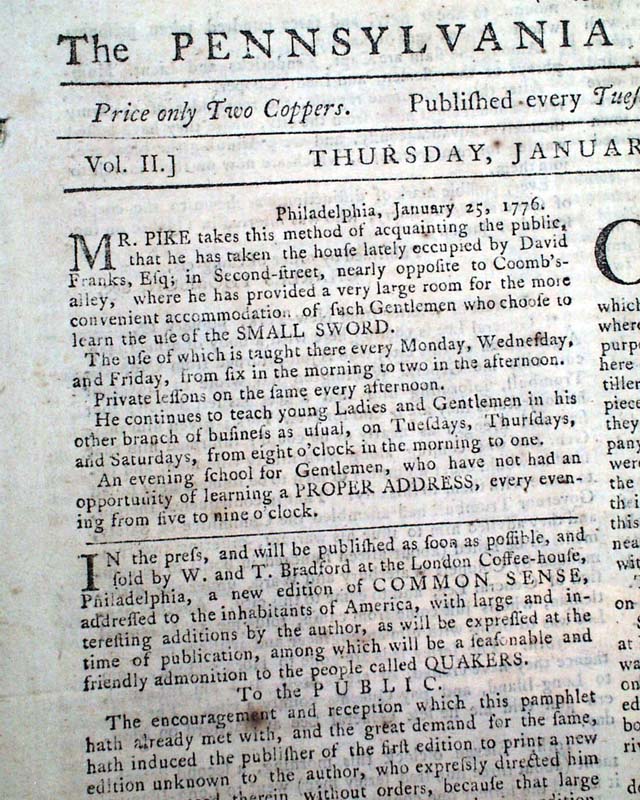
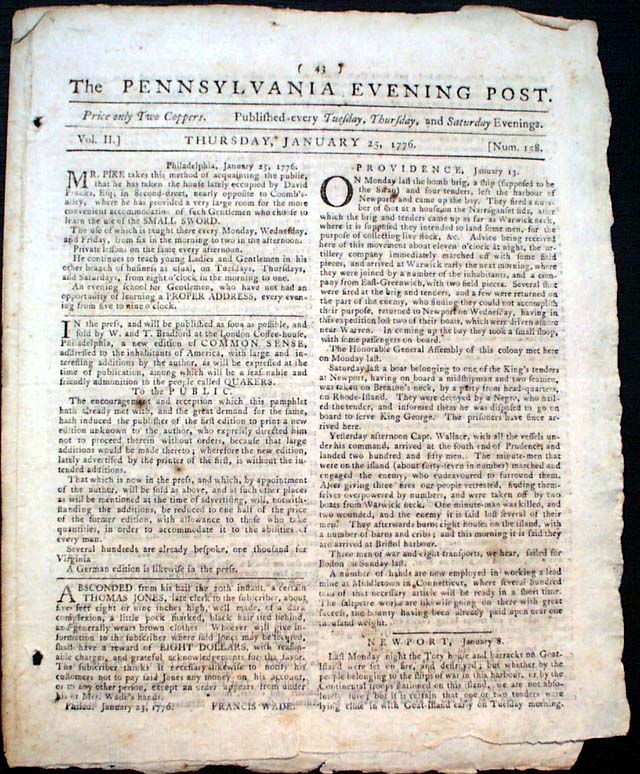
THE PENNSYLVANIA EVENING POST, Philadelphia, Jan. 25, 1776
* The "dishonest malevolence" controversy
* Thomas Paine "Common Sense" & Robert Bell
* Great year to have (1776) Revolutionary War
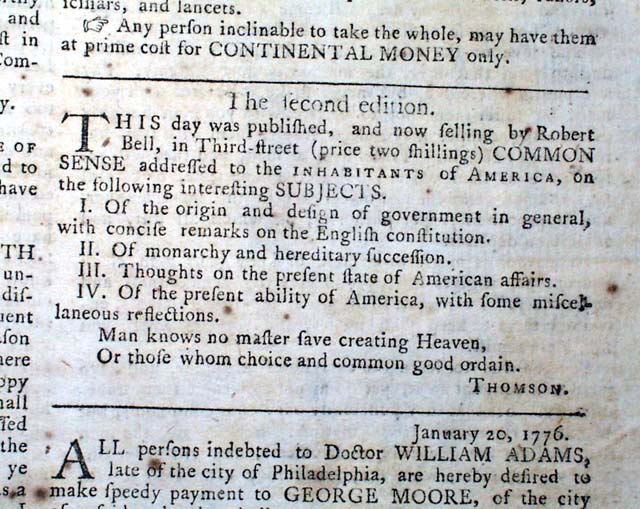
As a bit of a back story, printer Robert Bell ran an advertisement taking most of a column in the January 27 issue attacking both Paine and Bradford and ingenuously accusing them of "dishonest malevolence." He also continued his efforts to sell his own second edition of Thomas Paine's famous work 'Common Sense'.
There is an interesting background to two competing advertisements that appears in this newspaper (front page and page 3). The following can be found in the website for the ZSR Library:
"Common Sense was first published on January 9, 1776. This first printing consisted of 1000 copies, with profits to be split evenly between the author and publisher. By January 20, Bell was advertising a “new edition” in press, which likely means that the first printing had already sold out.
Paine had already publicly announced a plan to use his share of the profits from Common Sense to buy mittens for the Continental Army in Quebec. However, Robert Bell insisted that printing costs had eaten up all the profits from the first edition and that he owed Paine nothing. A very public feud commenced between Paine and his publisher, with accusations and counter-accusations printed in the Pennsylvania Evening Post.
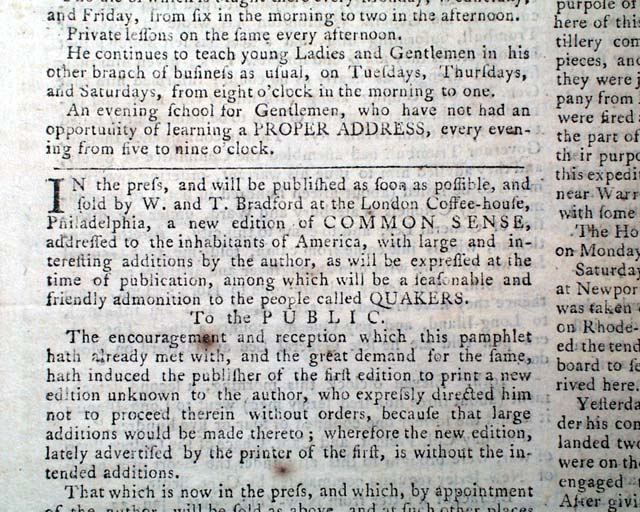
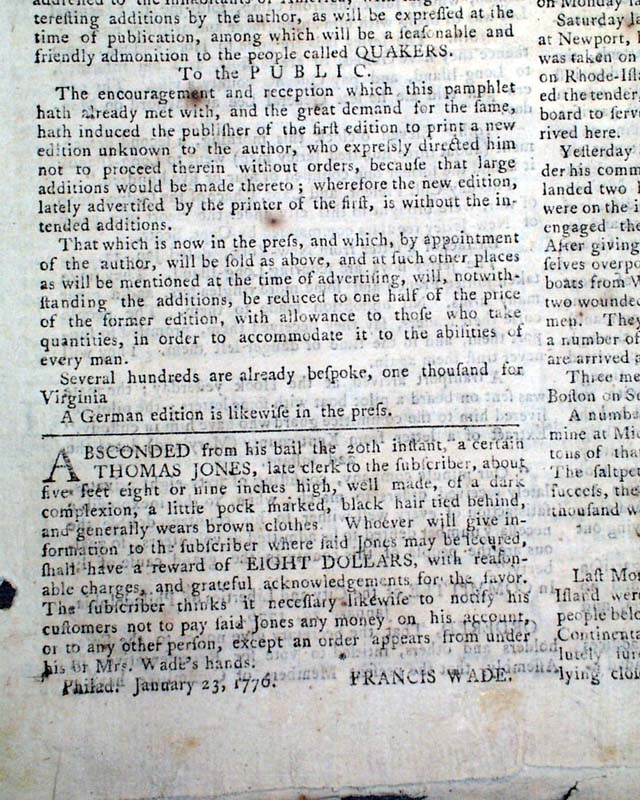
Bell published his unauthorized “second edition” (really just a reprint of the first edition) on January 27 [see the page 3 notice in this newspaper]. Paine meanwhile contracted with printers Thomas and William Bradford to publish, at the author’s expense, a “new edition” with “large and interesting additions by the author” and a response to Quaker objections to a military rebellion. The Bradford edition was published in February and sold for half the price (one shilling) of Bell’s.
A publisher’s advertisement from Bell’s 3rd edition of Common Sense gives an idea of the reading habits of Philadelphians in 1776. Undeterred, Bell produced a third edition that not only pirated the additional materials from the Bradford edition, but also included a section called “Large Additions to Common Sense,” which reprinted several pieces by other authors. Paine was predictably incensed by this and published another denunciation in the Post, to which Bell then responded in kind."
The front page of this issue has a notice for the Bradford edition referred to as "...a New Edition of COMMON SENSE..." that mentions the addition of "...a seasonable and friendly admonition to the people called Quakers...".
Great to have in this single issue content from these rival publishers, Bell and Bradford, relating to the publishing controversy over Paine's Common Sense.
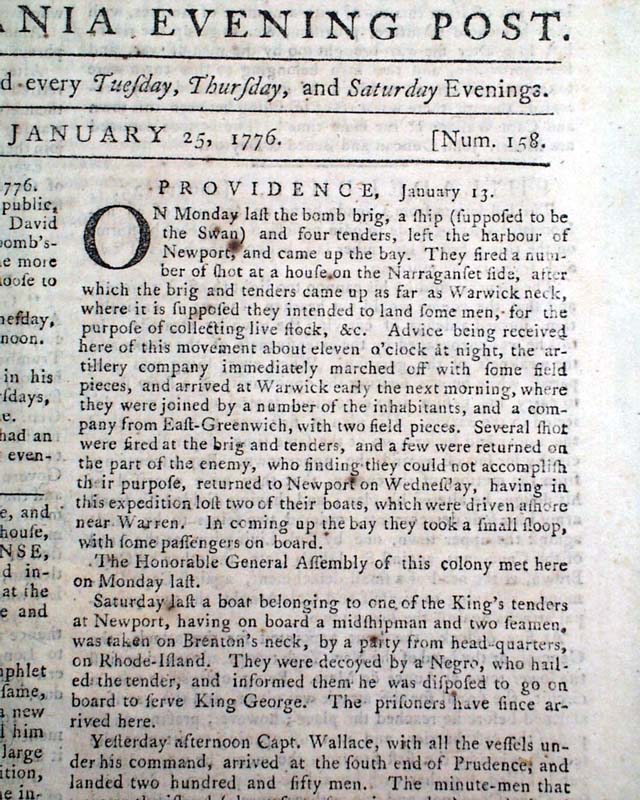
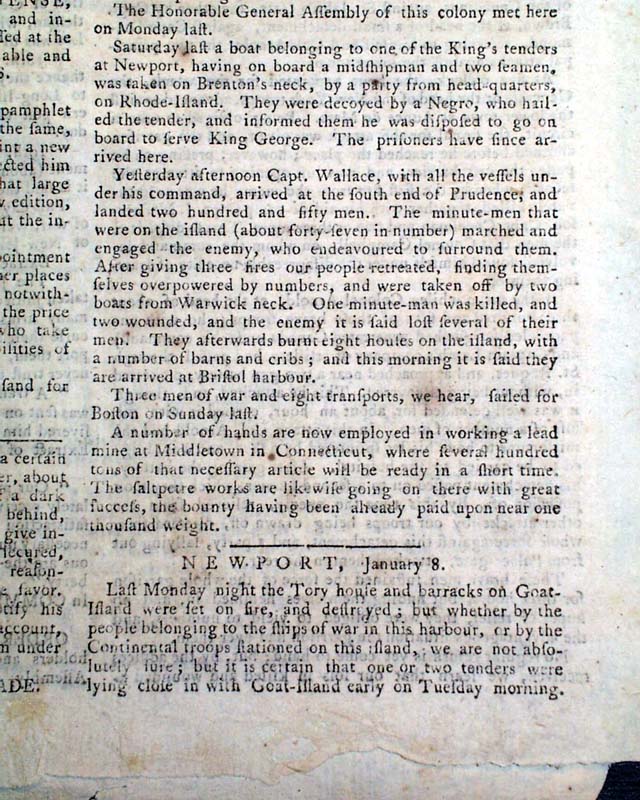
As if the above was not sufficient for one issue, there is much good war-related content as well. Half of the front page has reports from Rhode Island concerning a nail encounter, plus more.
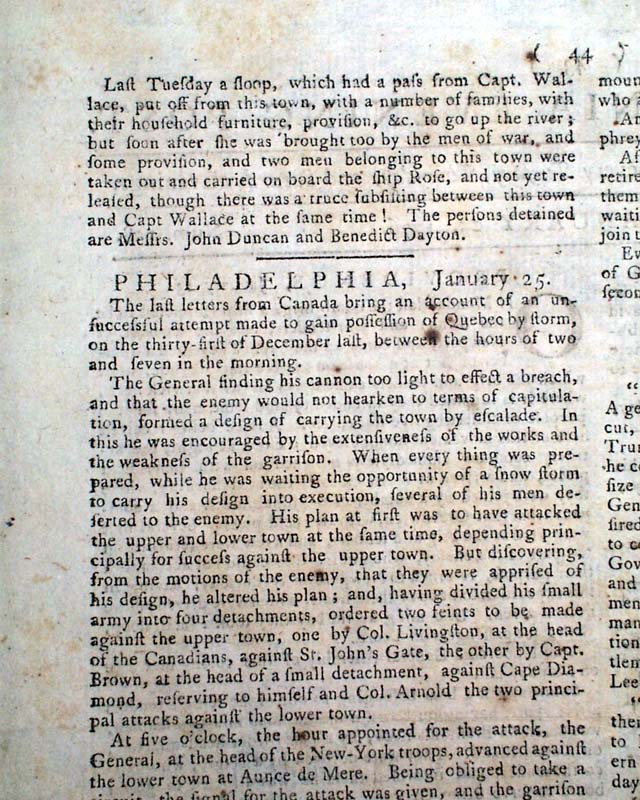
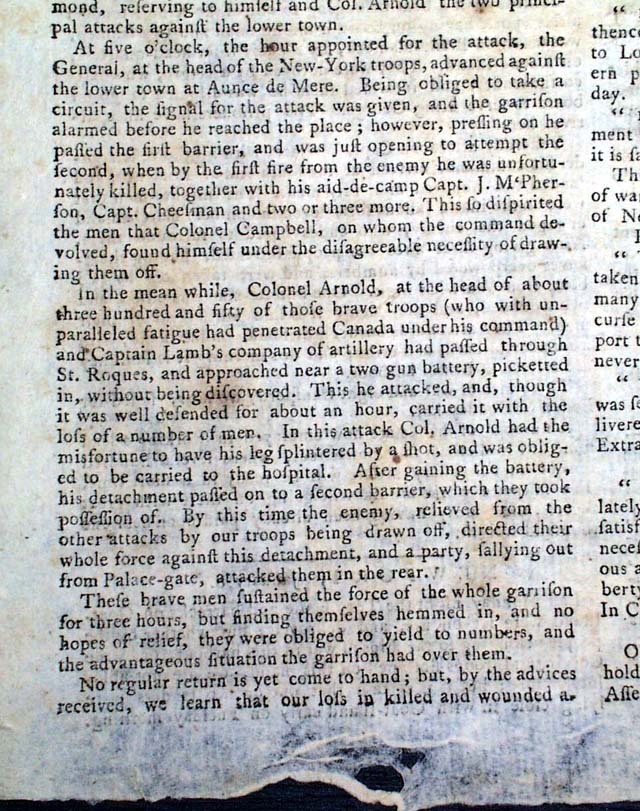
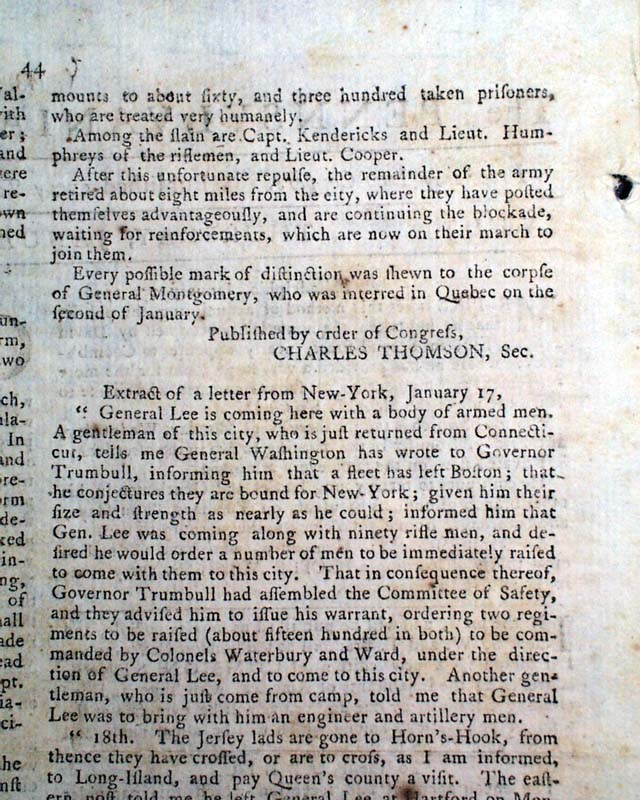
Page 2 has a lengthy account: "...from Canada bring(ing) an account of an unsuccessful attempt made to gain possession of Quebec by storm on the 31st of December last...". This is the battle of Quebec at which General Montgomery would die. This account also includes: "...In the mean while, Colonel Arnold, at the head of about 350 of those brave troops...This he attacked and, though it was well defended for about an hour, carried it with the loss of a number of men. In this attack Col. Arnold had the misfortune to have his leg splintered by a shot & was obliged to be carried to the hospital...". This injury would plague Benedict Arnold for the remainder of his life.
Four pages, 8 1/2 by 10 1/4 inches, never-trimmed margins, great condition.
background: The "dishonest malevolence" controversy stemmed from a volatile breakdown in trust between Thomas Paine and his printer, Robert Bell, following the explosive success of Common Sense in early 1776. Originally, the two agreed to split profits equally after expenses, but when the pamphlet became a runaway bestseller, Bell claimed there were no profits to distribute, leading a suspicious Paine to accuse him of creative accounting and greed. The feud turned into a public spectacle when Paine sought to publish an expanded edition with a rival printer, intended to benefit the Continental Army; in retaliation, Bell rushed out his own unauthorized "New Edition," undercut Paine’s price, and added snide rebuttals in the margins. This prompted Paine to blast Bell in the Pennsylvania Evening Post for his "dishonest malevolence," a public shaming that highlighted the cutthroat nature of 18th-century colonial printing and solidified Paine's reputation as a writer who prioritized the revolutionary cause over personal enrichment.
The front page of this issue has a notice for the Bradford edition referred to as "...a New Edition of COMMON SENSE..." that mentions the addition of "...a seasonable and friendly admonition to the people called Quakers...".
Great to have in this single issue content from these rival publishers, Bell and Bradford, relating to the publishing controversy over Paine's Common Sense.
As if the above was not sufficient for one issue, there is much good war-related content as well. Half of the front page has reports from Rhode Island concerning a nail encounter, plus more.
Page 2 has a lengthy account: "...from Canada bring(ing) an account of an unsuccessful attempt made to gain possession of Quebec by storm on the 31st of December last...". This is the battle of Quebec at which General Montgomery would die. This account also includes: "...In the mean while, Colonel Arnold, at the head of about 350 of those brave troops...This he attacked and, though it was well defended for about an hour, carried it with the loss of a number of men. In this attack Col. Arnold had the misfortune to have his leg splintered by a shot & was obliged to be carried to the hospital...". This injury would plague Benedict Arnold for the remainder of his life.
Four pages, 8 1/2 by 10 1/4 inches, never-trimmed margins, great condition.
background: The "dishonest malevolence" controversy stemmed from a volatile breakdown in trust between Thomas Paine and his printer, Robert Bell, following the explosive success of Common Sense in early 1776. Originally, the two agreed to split profits equally after expenses, but when the pamphlet became a runaway bestseller, Bell claimed there were no profits to distribute, leading a suspicious Paine to accuse him of creative accounting and greed. The feud turned into a public spectacle when Paine sought to publish an expanded edition with a rival printer, intended to benefit the Continental Army; in retaliation, Bell rushed out his own unauthorized "New Edition," undercut Paine’s price, and added snide rebuttals in the margins. This prompted Paine to blast Bell in the Pennsylvania Evening Post for his "dishonest malevolence," a public shaming that highlighted the cutthroat nature of 18th-century colonial printing and solidified Paine's reputation as a writer who prioritized the revolutionary cause over personal enrichment.
Category: Revolutionary War
Available Now
$695.00