Home >
Lengthy Jefferson report... Marie Antoinette is sentenced and beheaded...

Lengthy Jefferson report... Marie Antoinette is sentenced and beheaded...
Item # 703231
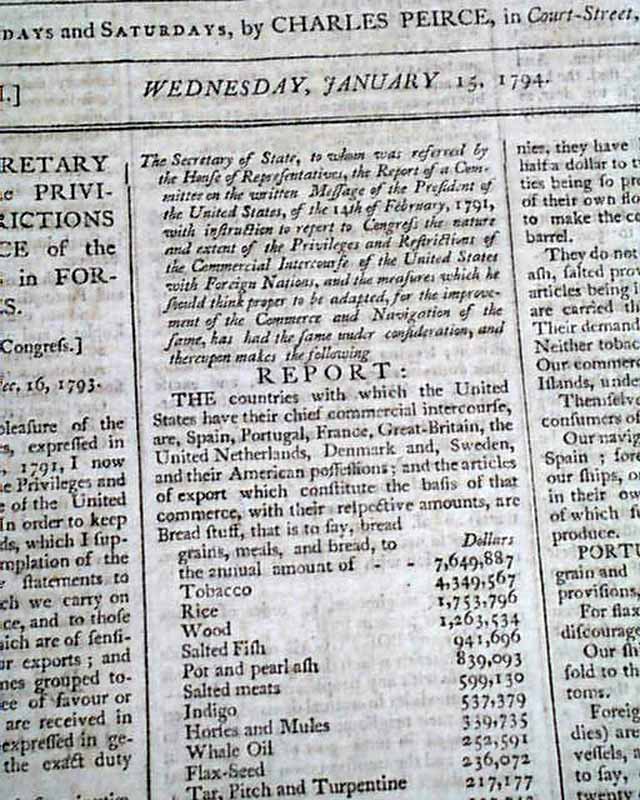
January 15, 1794
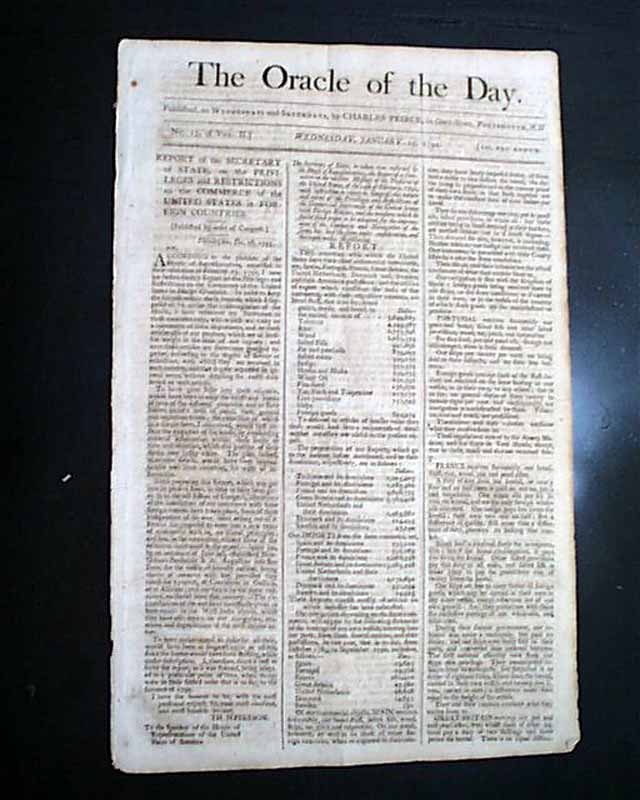
THE ORACLE OF THE DAY, Portsmouth, New Hampshire, Jan. 15, 1794
* Marie Antoinette sentence & beheading
* Thomas Jefferson commerce report
* Secretary of State to U.S. Congress
This is a quite scarce 18th century American title, this being the volume 2, number 13 issue. It existed only until 1799.
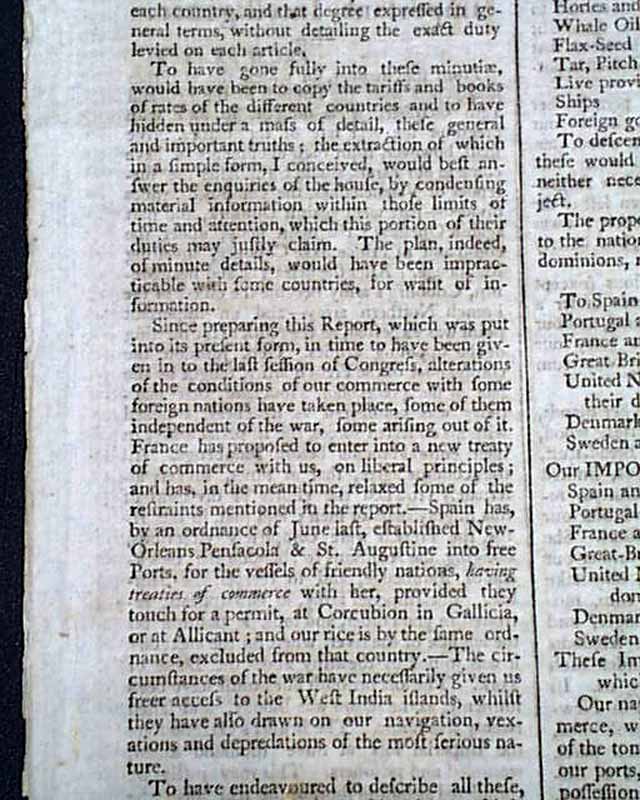
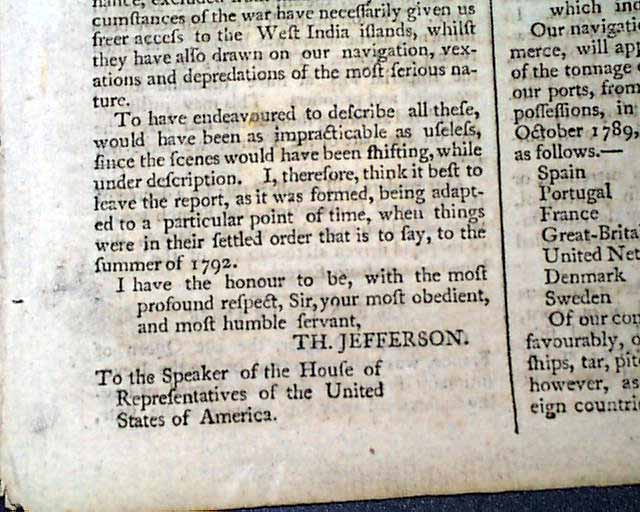
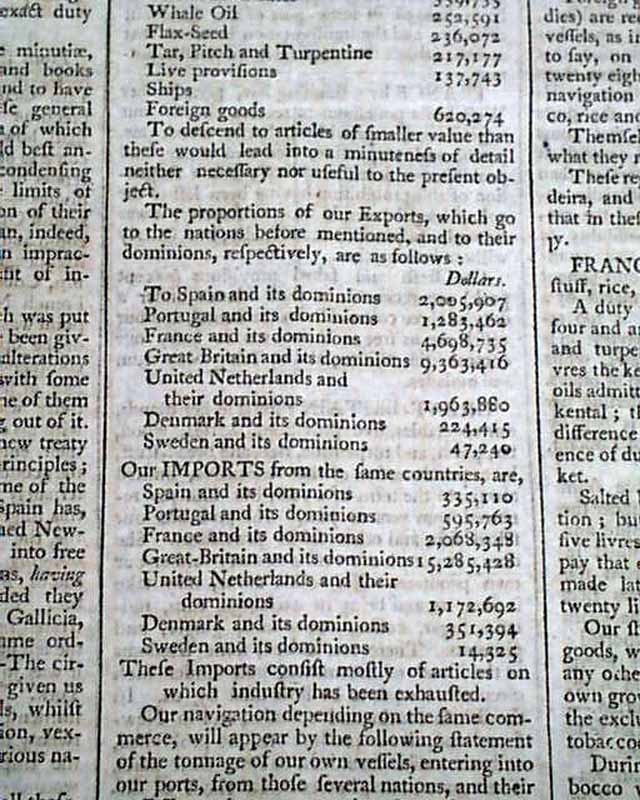
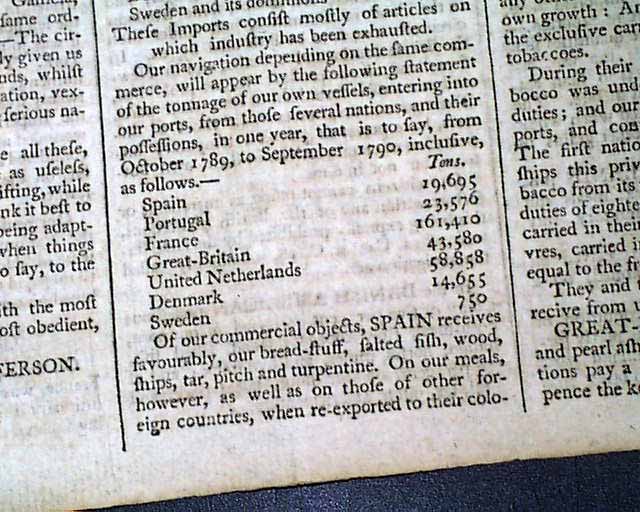
All of the front page and most of page 2 are taken up with the: "Report Of the Secretary of State on the Privileges and Restrictions on the Commerce of the United States in Foreign Countries" which is signed in type: Th. Jefferson. Following the letter are considerable details.
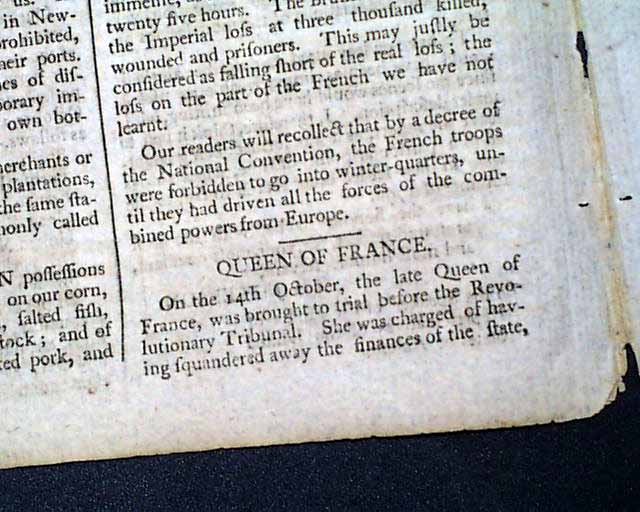
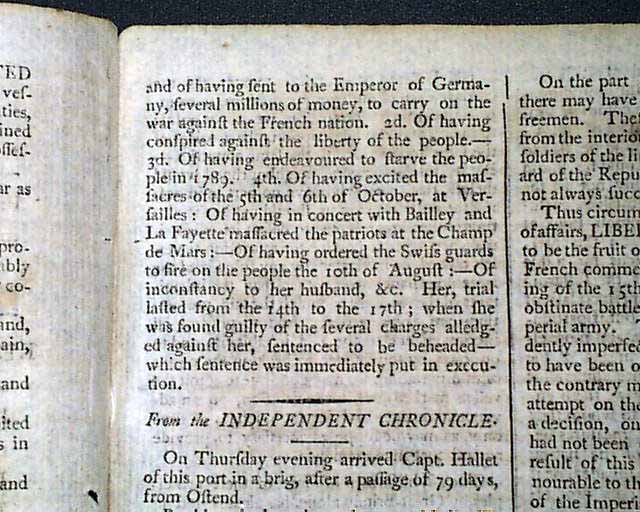
Inside has a report headed: "Queen Of France' which notes in part: "On the 14th October, the late Queen of France was brought to trial before the Revolutionary Tribunal. She was charged of having squandered away the finances of the state..." with additional charges. Then the report closes with: "...when she was found guilty of the several charges alleged against her, sentenced to be beheaded--which sentence was immediately put in execution."
Four pages, great condition.
AI notes: On December 16, 1793, Secretary of State Thomas Jefferson submitted to Congress his influential “Report on the Privileges and Restrictions on the Commerce of the United States in Foreign Countries.” Prepared at the request of the House of Representatives, the report surveyed how major trading nations—particularly Great Britain, France, Spain, Portugal, and the Netherlands—treated American commerce in their ports and colonies. Jefferson argued that many European powers imposed discriminatory tariffs, navigation laws, and colonial trade restrictions that favored their own shipping while disadvantaging American merchants. He urged Congress to consider reciprocal commercial measures, such as countervailing duties and navigation restrictions, to pressure foreign nations into granting the United States equal trading rights. Although Congress did not immediately adopt Jefferson’s more aggressive recommendations, the report became a foundational statement of Republican trade policy, highlighting early American tensions between free trade ideals and economic retaliation, and foreshadowing later debates over neutrality, commercial leverage, and national sovereignty in foreign affairs.
Category: The 1600's and 1700's
Available Now
$285.00