

Inaugural addresses of John Adams, and much more...
Item # 703229
March 08, 1797
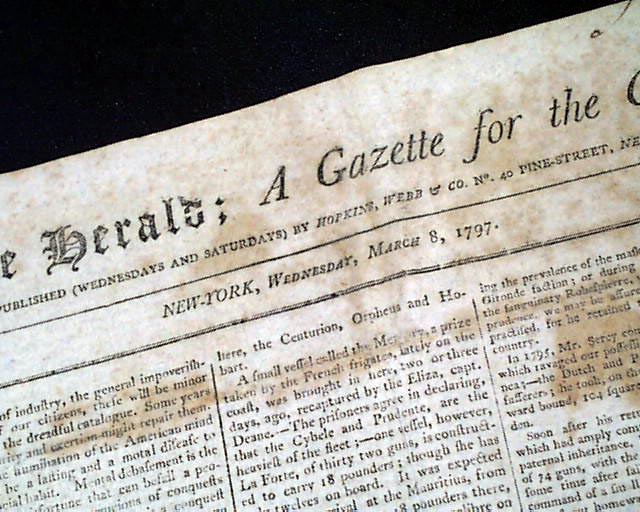
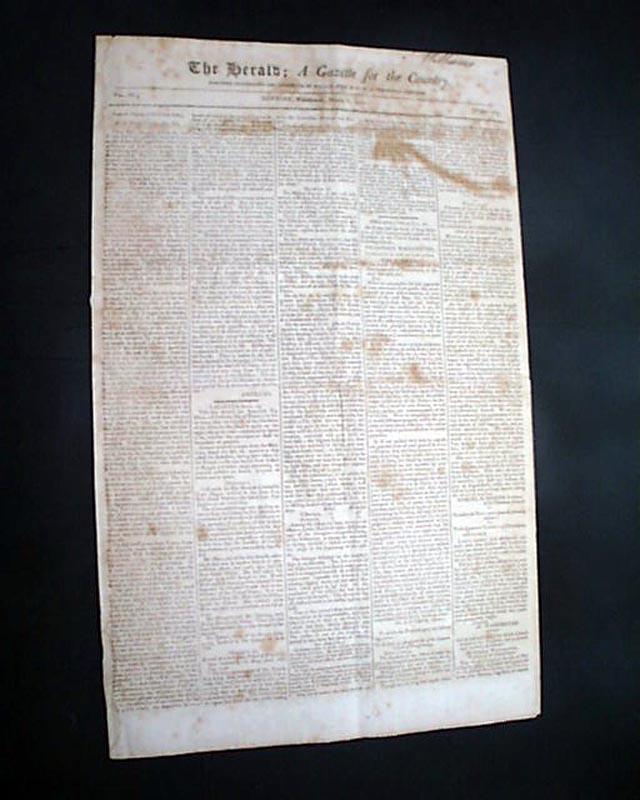
THE HERALD; A GAZETTE FOR THE COUNTRY, New York, March 8, 1797
* John Adams inauguration
* V.P. Thomas Jefferson
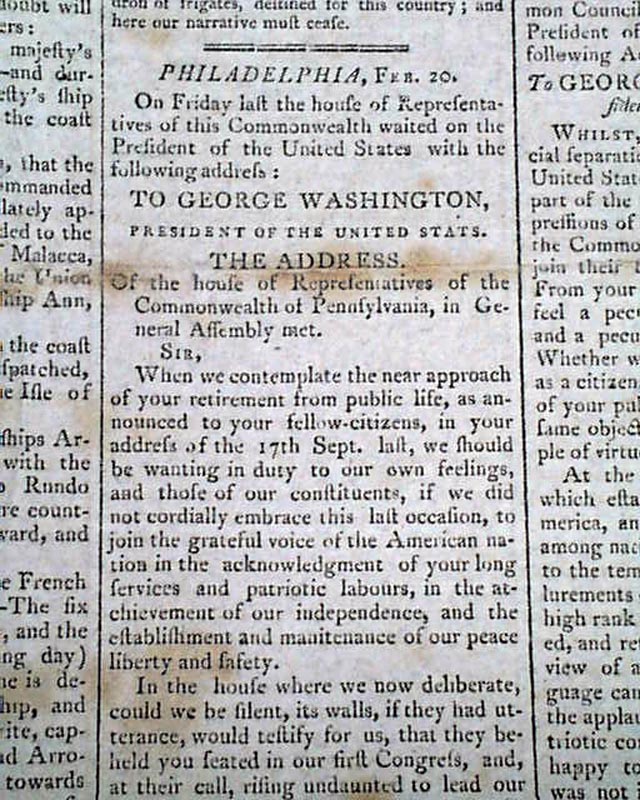
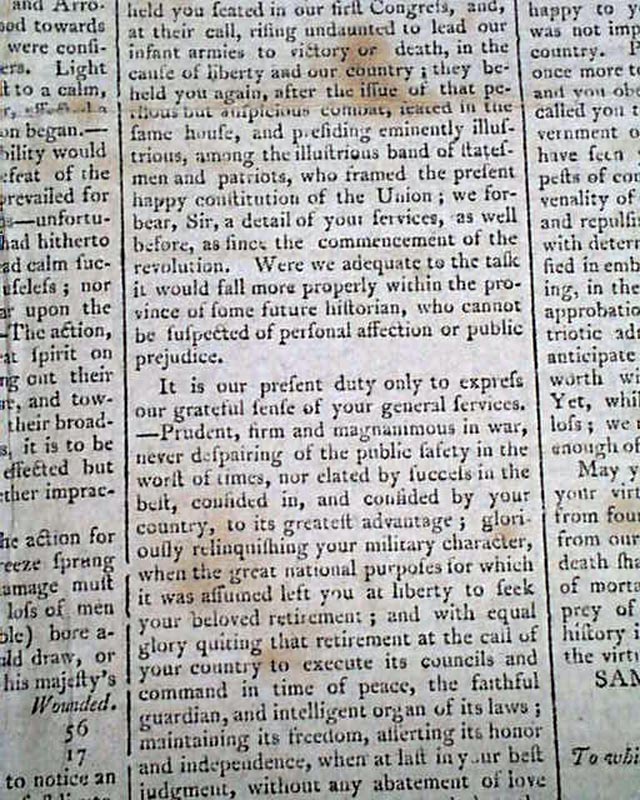
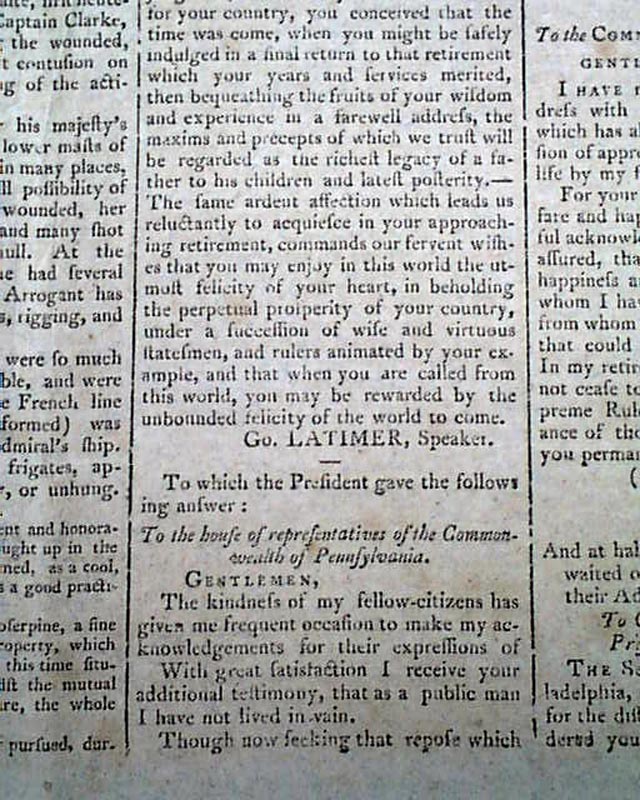
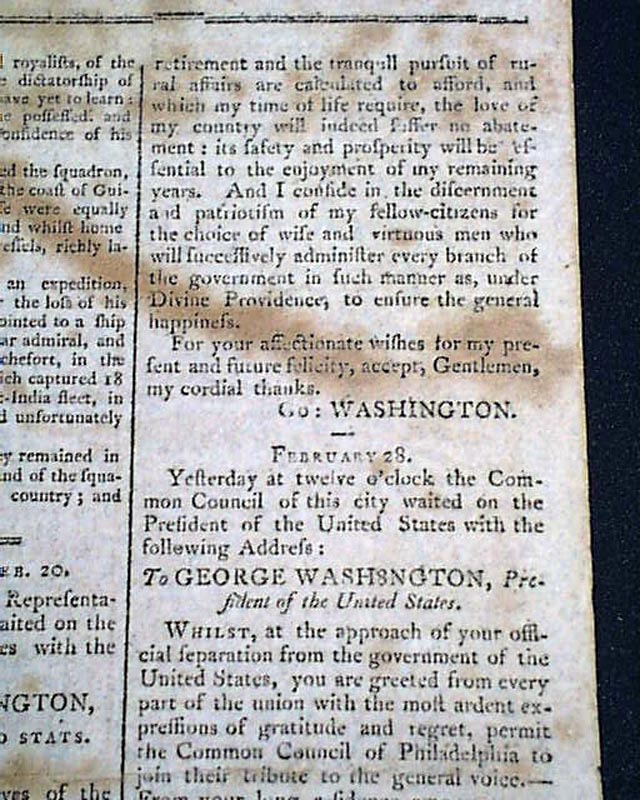
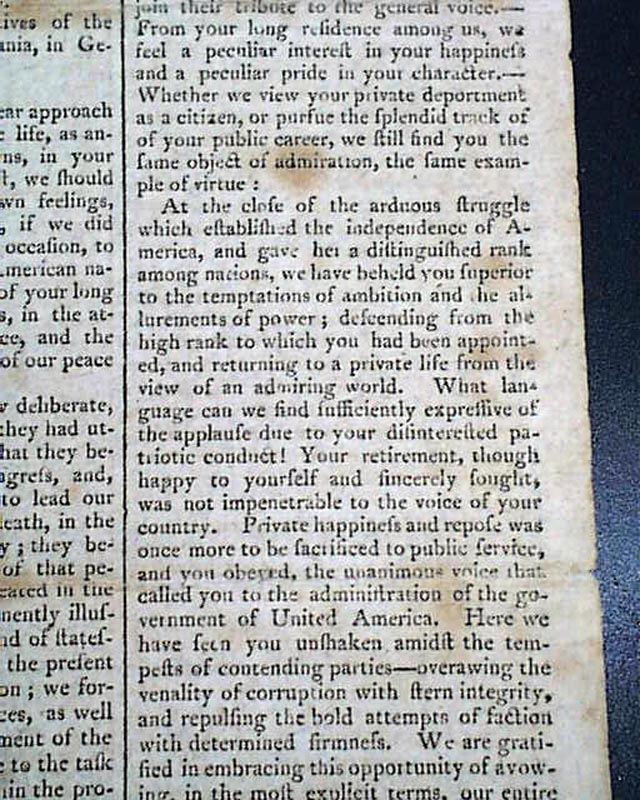
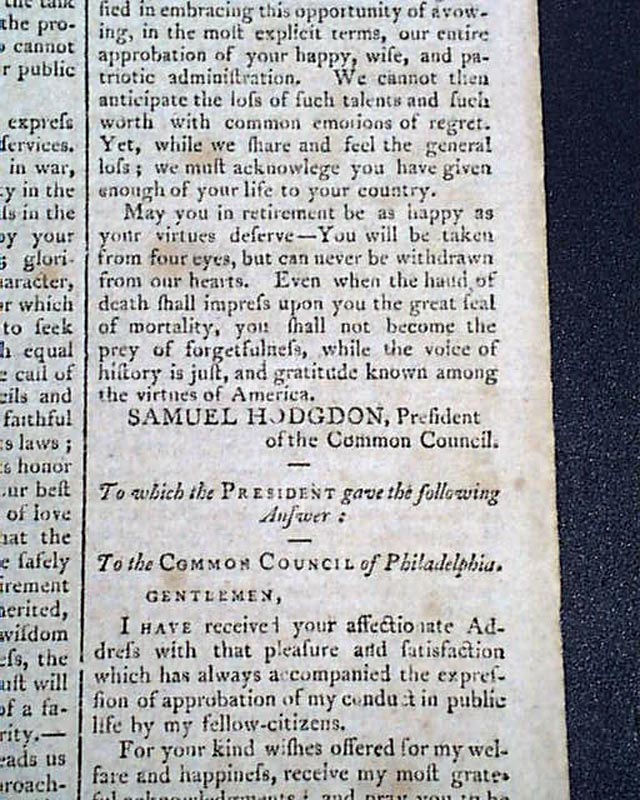
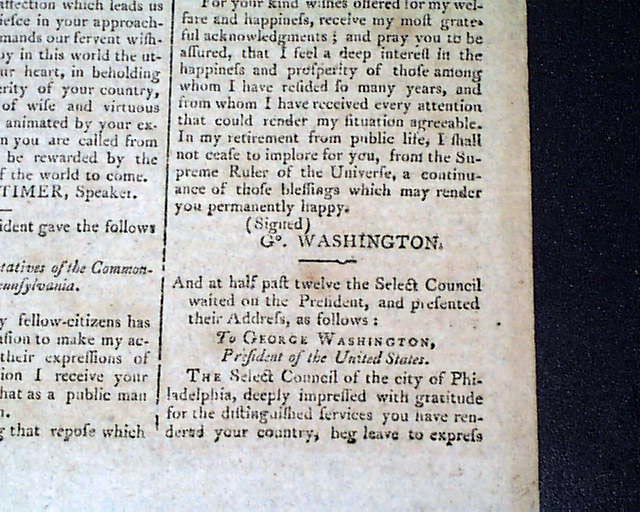
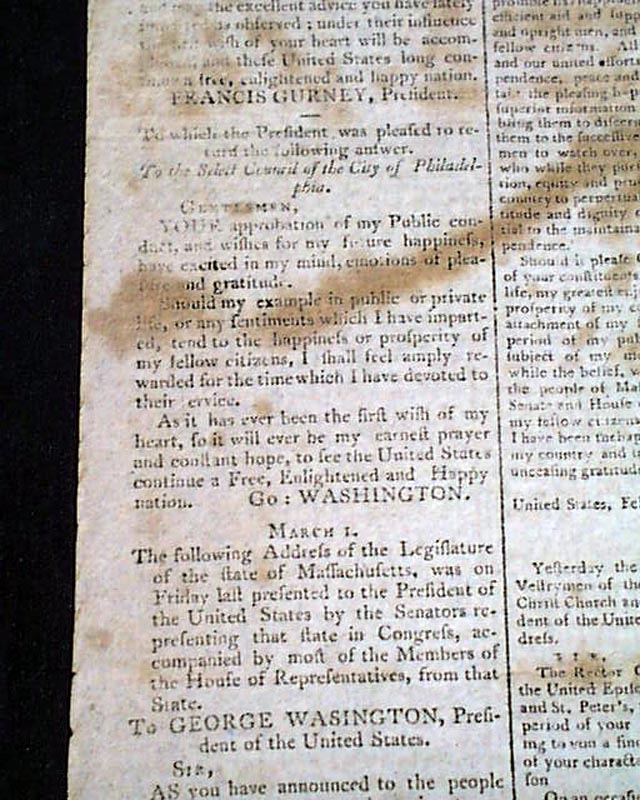
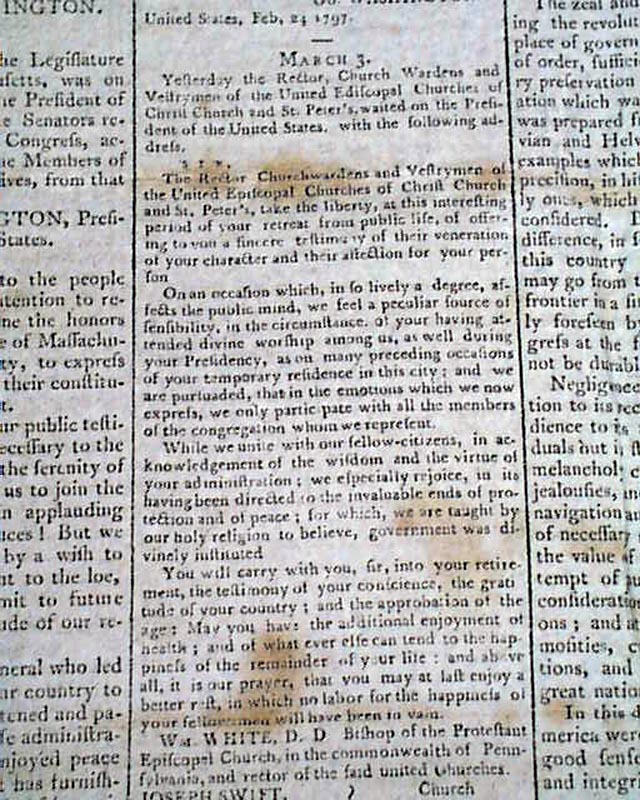
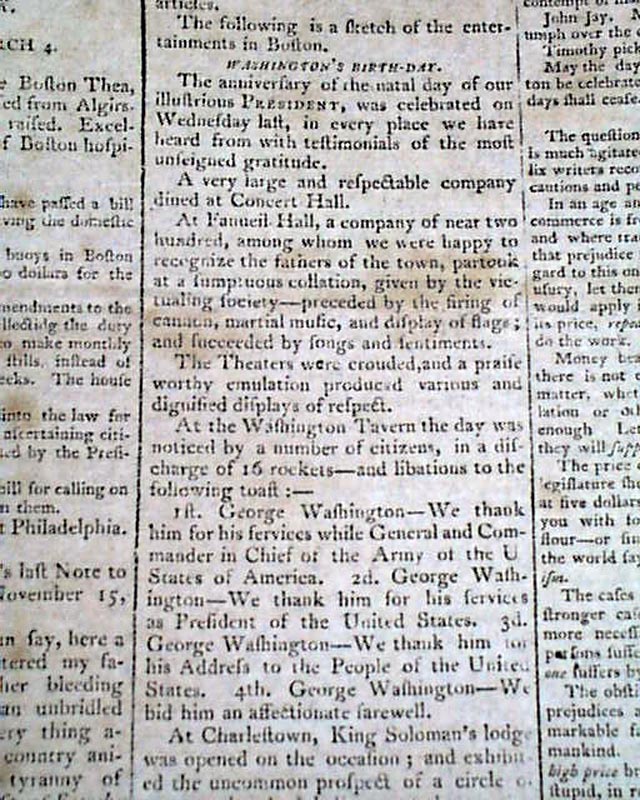
The front page has an address: "To George Washington" from the Penna. legislature on his retirement from public office, to which he responded with a letter signed in type; Go. Washington.
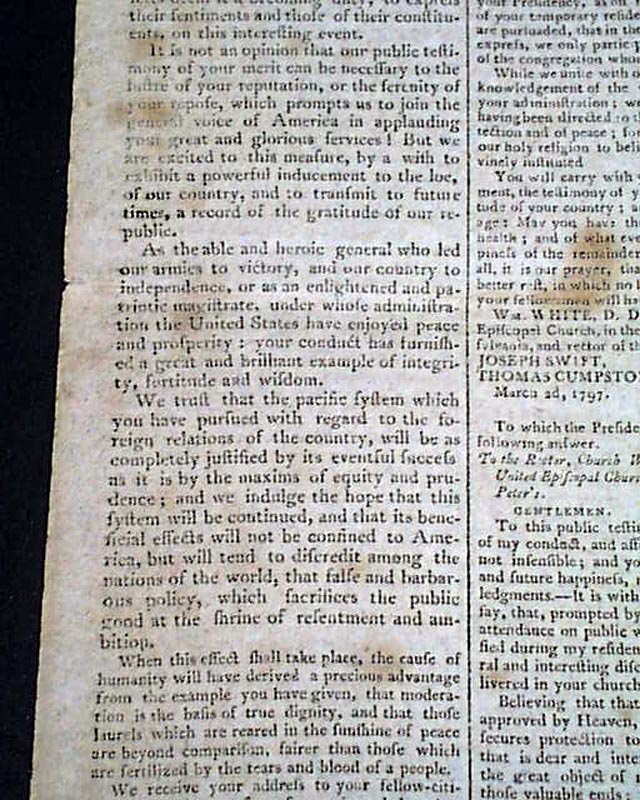
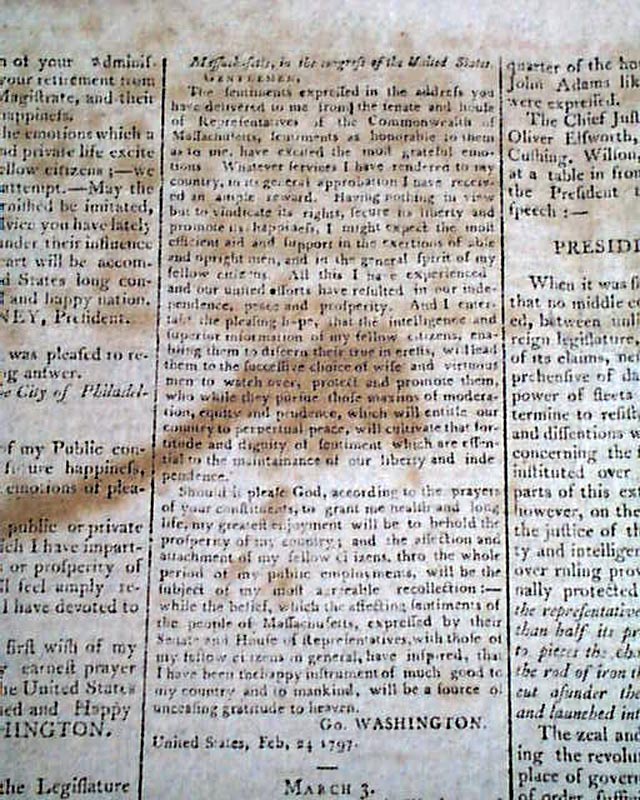
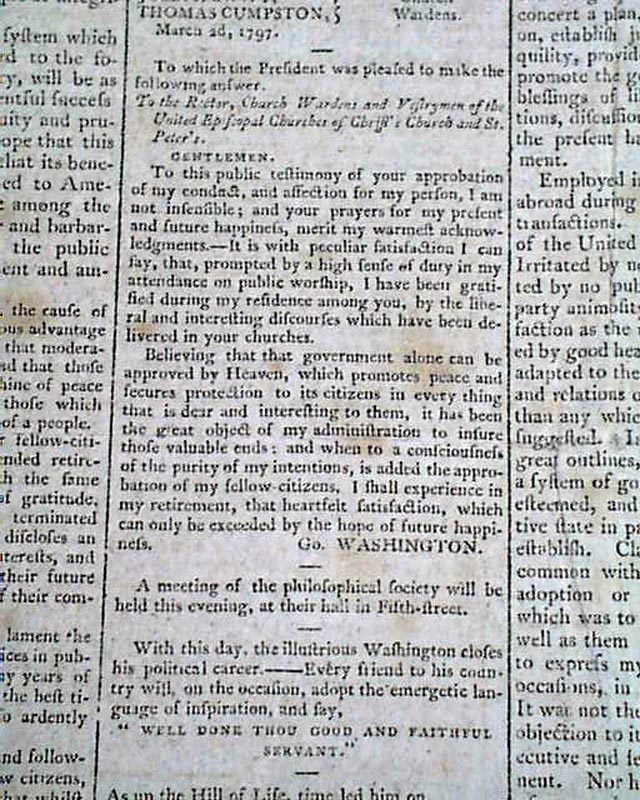
This is followed by another similar letter to the President, again with his response signed; Go. Washington. Then carrying over two page 2 is another letter with Washington's response, and then a letter from the Mass. Legis. to Washington, with his response. In total five letters signed: Go. Washington, the last to the United Episcopal Church.
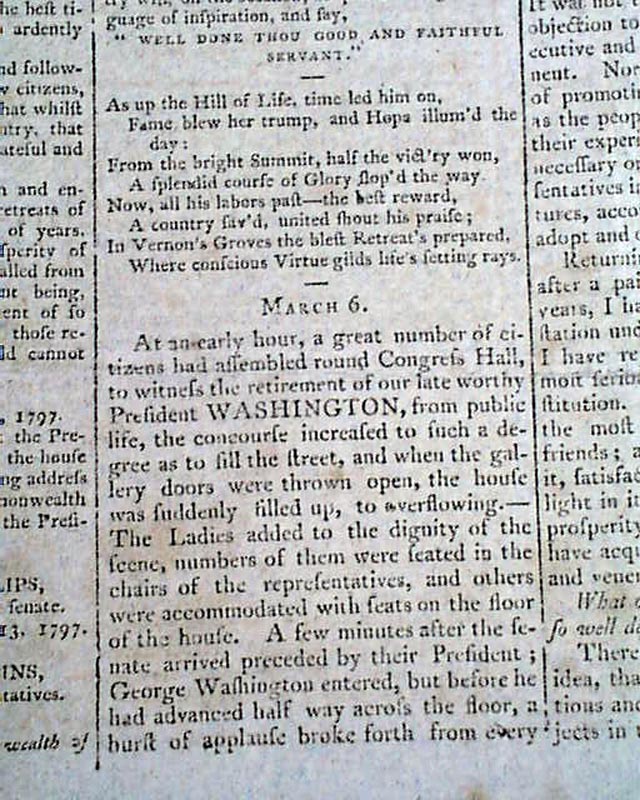
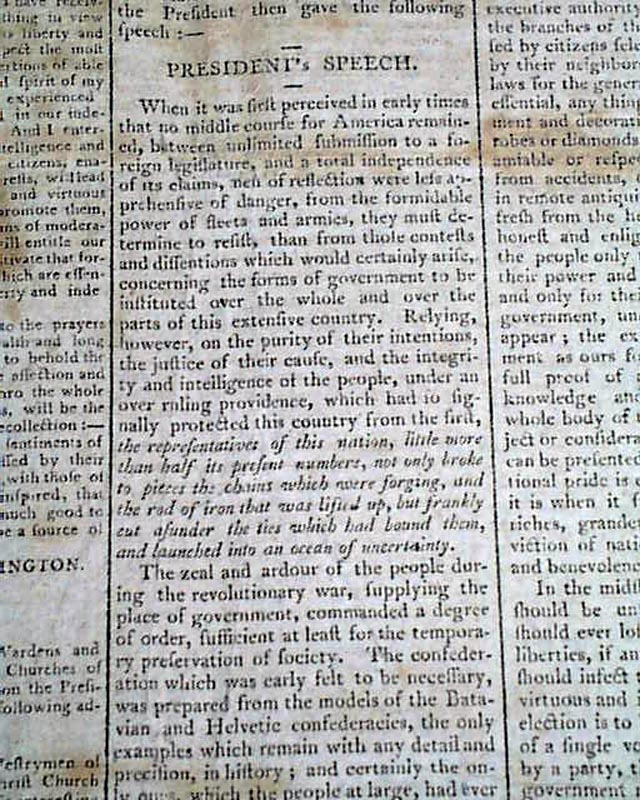
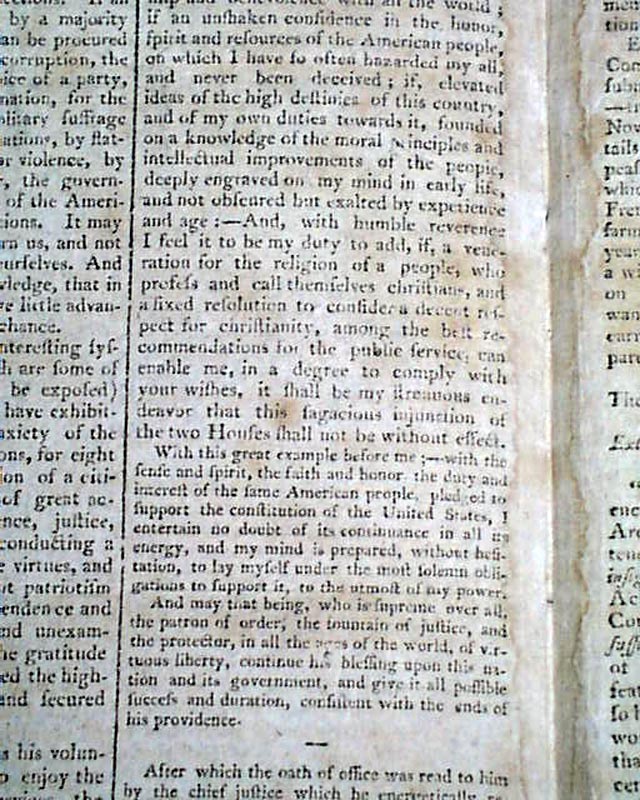
Then a terrific report on the ceremony immediately preceding the "President's Speech", being the lengthy inaugural address of John Adams. The preface mentions in part: "...after the senate arrived preceded by their President; George Washington entered but before he had advanced half way across the floor a burst of applause broke forth from every quarter...on the entrance of John Adams like marks of approbation were expressed..." with more.
Following Adams' inaugural address is: "After which the oath of office was read to him by the chief justice which he energetically repeated; he reseated himself...The Vice President followed in about a minute, and George Washington moved on after him admits reiterated huzzas and a discharge of artillery; thus closed a scene the like of which was never before witnessed in this or any other country--which forms a new epoch in our history, and in the history of republican freedom, to which we use committee the glorious subject..." then more.
This last comment cannot be overemphasized. Considering that history has typically proven that the transfer of power within countries was the result of bloody fights, battles and general chaos, this smooth transition of power was a novelty which proved the newly-tested American Constitution was a successful document.
* John Adams inauguration
* V.P. Thomas Jefferson
The front page has an address: "To George Washington" from the Penna. legislature on his retirement from public office, to which he responded with a letter signed in type; Go. Washington.
This is followed by another similar letter to the President, again with his response signed; Go. Washington. Then carrying over two page 2 is another letter with Washington's response, and then a letter from the Mass. Legis. to Washington, with his response. In total five letters signed: Go. Washington, the last to the United Episcopal Church.
Then a terrific report on the ceremony immediately preceding the "President's Speech", being the lengthy inaugural address of John Adams. The preface mentions in part: "...after the senate arrived preceded by their President; George Washington entered but before he had advanced half way across the floor a burst of applause broke forth from every quarter...on the entrance of John Adams like marks of approbation were expressed..." with more.
Following Adams' inaugural address is: "After which the oath of office was read to him by the chief justice which he energetically repeated; he reseated himself...The Vice President followed in about a minute, and George Washington moved on after him admits reiterated huzzas and a discharge of artillery; thus closed a scene the like of which was never before witnessed in this or any other country--which forms a new epoch in our history, and in the history of republican freedom, to which we use committee the glorious subject..." then more.
This last comment cannot be overemphasized. Considering that history has typically proven that the transfer of power within countries was the result of bloody fights, battles and general chaos, this smooth transition of power was a novelty which proved the newly-tested American Constitution was a successful document.
Complete in four pages, very nice condition. It would be a week later before the famous Columbian Centinel would have a similar report.
background: John Adams was inaugurated as the second President of the United States on March 4, 1797, in Philadelphia, marking a pivotal moment in American history as the first peaceful transfer of power between political parties. His election victory over Thomas Jefferson in 1796, though narrow, led to a peaceful transition from George Washington’s presidency, which was critical in establishing the new nation's political stability. In his inaugural address, Adams focused on national unity, calling for Americans to set aside political divisions in the interest of the common good. He also emphasized his commitment to maintaining the country’s neutrality in foreign affairs, especially as tensions with France were escalating, a key issue during his presidency. While his speech was short, it conveyed a sense of solemn duty, acknowledging the challenges ahead, both in foreign diplomacy and in managing a nation divided by partisan conflict. Adams’ inauguration was not just a ceremonial event, but a symbolic affirmation of the growing strength of the U.S. political system and its ability to manage the peaceful transfer of power despite intense political rivalries.
background: John Adams was inaugurated as the second President of the United States on March 4, 1797, in Philadelphia, marking a pivotal moment in American history as the first peaceful transfer of power between political parties. His election victory over Thomas Jefferson in 1796, though narrow, led to a peaceful transition from George Washington’s presidency, which was critical in establishing the new nation's political stability. In his inaugural address, Adams focused on national unity, calling for Americans to set aside political divisions in the interest of the common good. He also emphasized his commitment to maintaining the country’s neutrality in foreign affairs, especially as tensions with France were escalating, a key issue during his presidency. While his speech was short, it conveyed a sense of solemn duty, acknowledging the challenges ahead, both in foreign diplomacy and in managing a nation divided by partisan conflict. Adams’ inauguration was not just a ceremonial event, but a symbolic affirmation of the growing strength of the U.S. political system and its ability to manage the peaceful transfer of power despite intense political rivalries.
Category: The 1600's and 1700's


