Home >
Juneteenth-themed reports... Former slaves to remain with their masters?


Juneteenth-themed reports... Former slaves to remain with their masters?
Item # 702466
Currently Unavailable. Contact us if you would like to be placed on a want list or to be notified if a similar item is available.
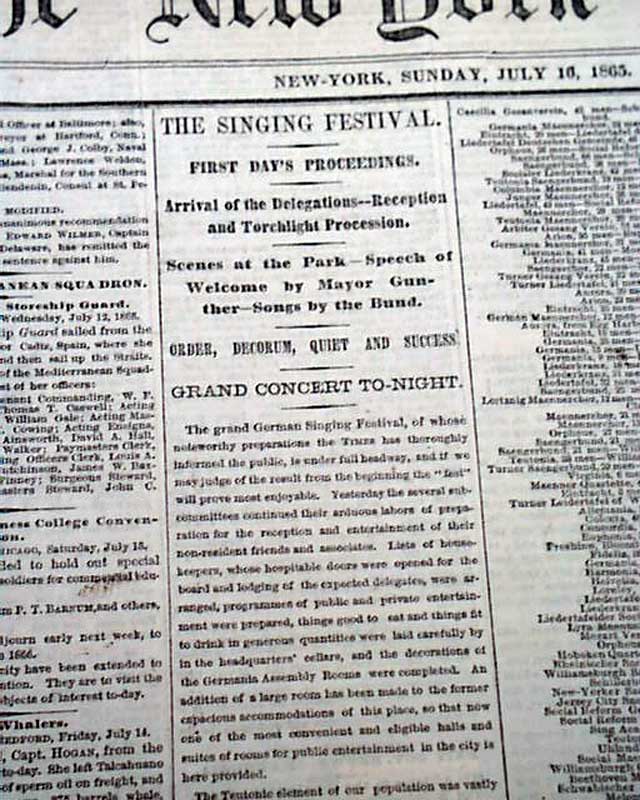
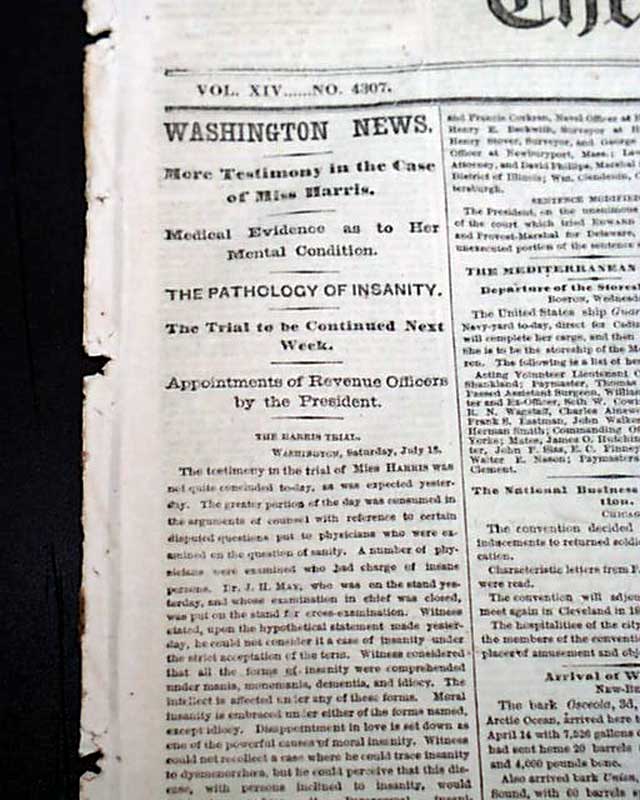
July 16, 1865
NEW YORK TIMES, July 16, 1865
* The origin of Juneteenth
* General Gordon Granger
* General Order No. 3 issued
* re. enslaved people of Texas
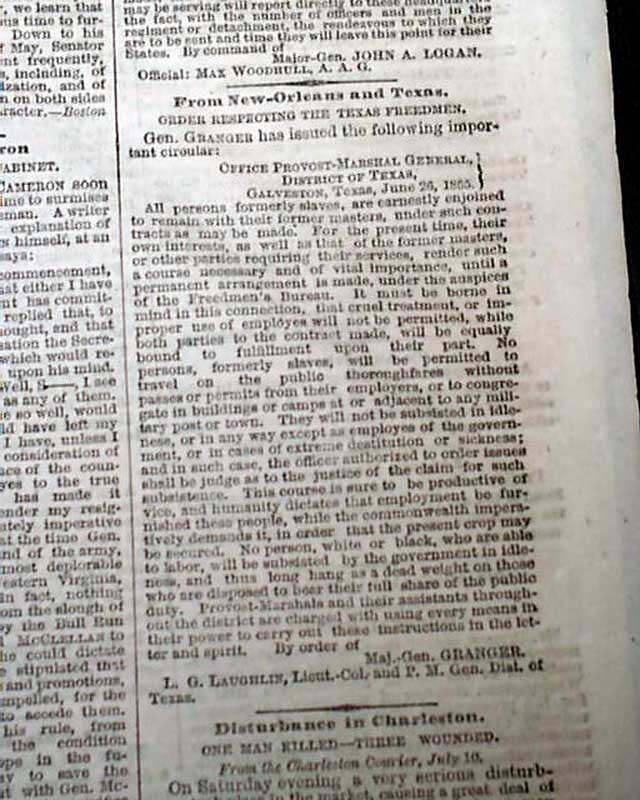
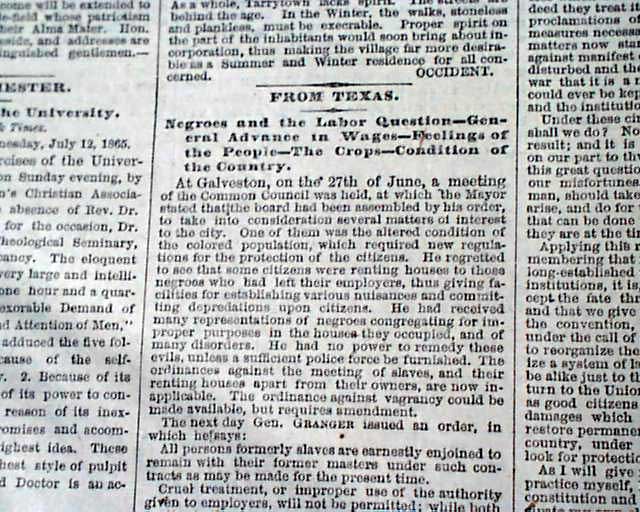
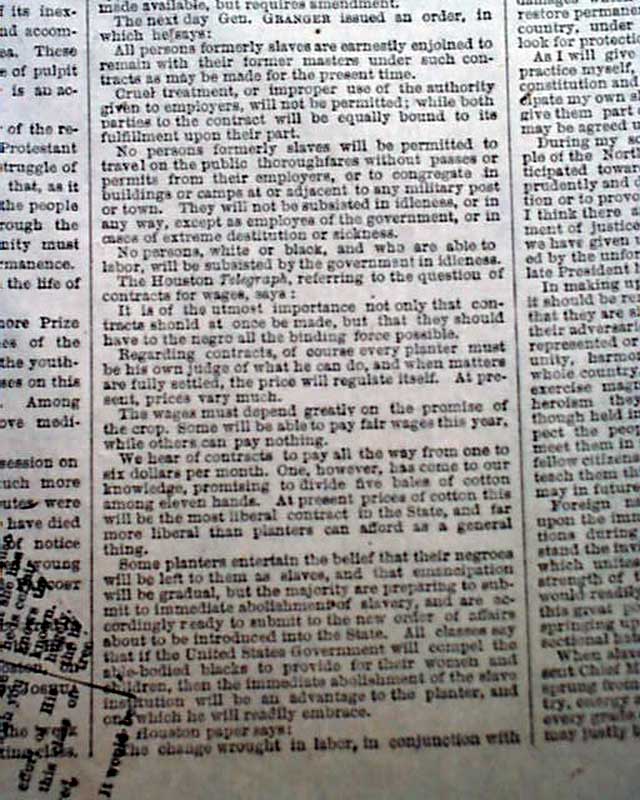
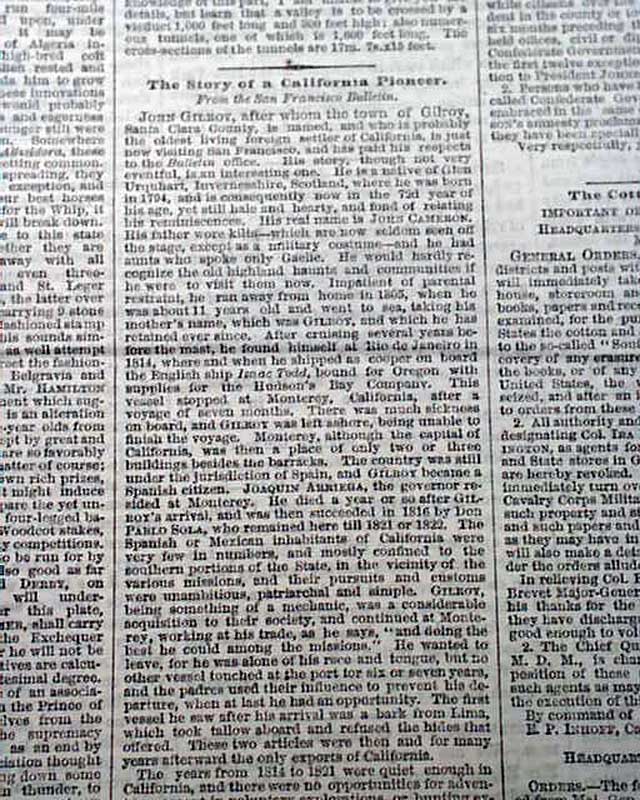
The last column on page three has an article: "From New Orleans and Texas", being an order by General Gordon Granger. This was a follow-up to his historic General Order No. 3 which declared all slaves in Texas to be free.
Both orders recommended the Freedmen to remain with their former masters, who were now to become their employers. This follow-up emphasizes the importance of labor and makes it clear the government (military) would not provide aid to those who set out on their own.
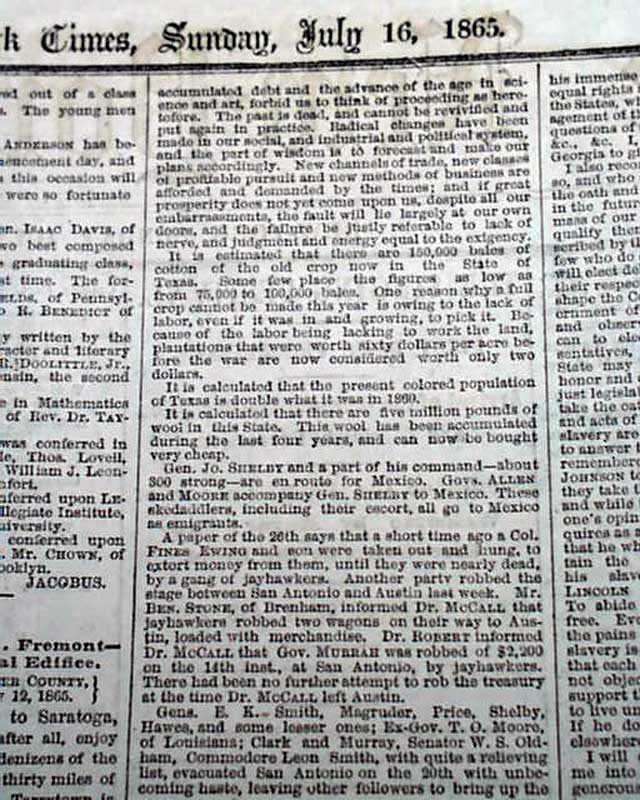
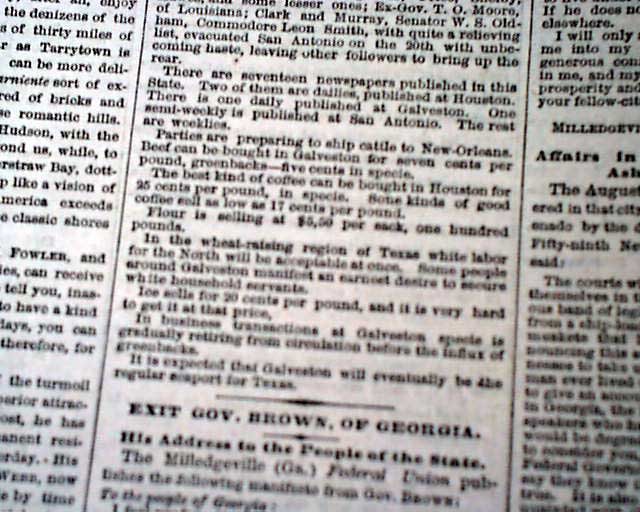
A related article on page 2 has: "FROM TEXAS. Negroes and the Labor Question - General Advance in Wages - Feelings of the People...".
Eight pages, a printing flaw to the first leaf causes a portion of a lower corner to be blank on page 1 and double-printed on page, but fortunately not affecting mentioned reports. Small indents at the blank spine, good condition.
AI notes: In June of 1865, Union General Gordon Granger arrived in Galveston, Texas, with a contingent of federal troops and issued General Order No. 3, formally informing the people of Texas that all enslaved individuals were free, in accordance with President Lincoln’s Emancipation Proclamation of 1863. The announcement came more than two years after the original proclamation because Texas, being a remote Confederate state with a small Union presence, had largely ignored the earlier order. Granger’s directive emphasized not only the freedom of formerly enslaved people but also their equality in personal and property rights, signaling a radical shift in social and economic relations. The order effectively ended slavery in Texas and became a defining moment in American history, giving rise to the annual celebration of Juneteenth, a holiday honoring African American liberation and the broader struggle for civil rights. The event highlighted both the challenges of enforcing emancipation in remote regions and the resilience of formerly enslaved communities in claiming their freedom.
Category: Post-Civil War
No Longer Available