Home >
Great on the Mountain Meadows Massacre... Nice on Walt Whitman...
Great on the Mountain Meadows Massacre... Nice on Walt Whitman...
Item # 699963
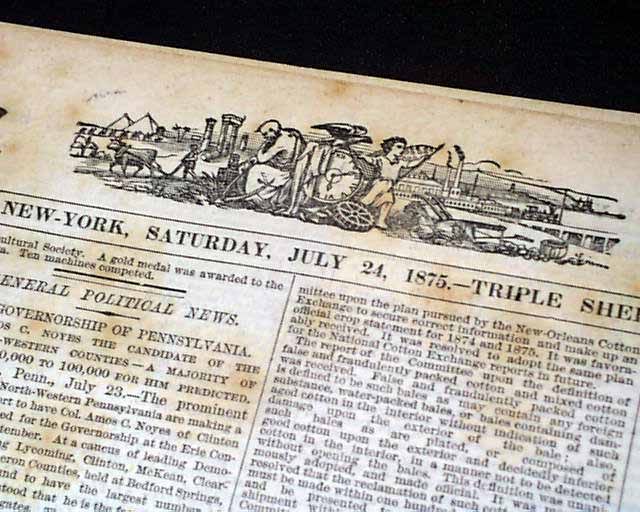
July 24, 1875
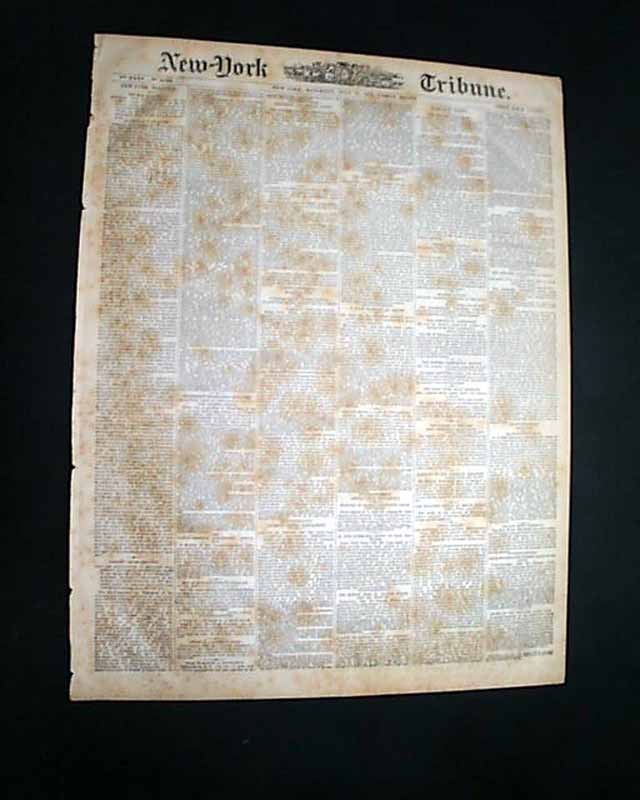
NEW YORK TRIBUNE, July 24, 1875
* Mountain Meadows Massacre
* Mormons - Mormonism trial
* John D. Lee - Brigham Young
* Trial of the conspirators begins
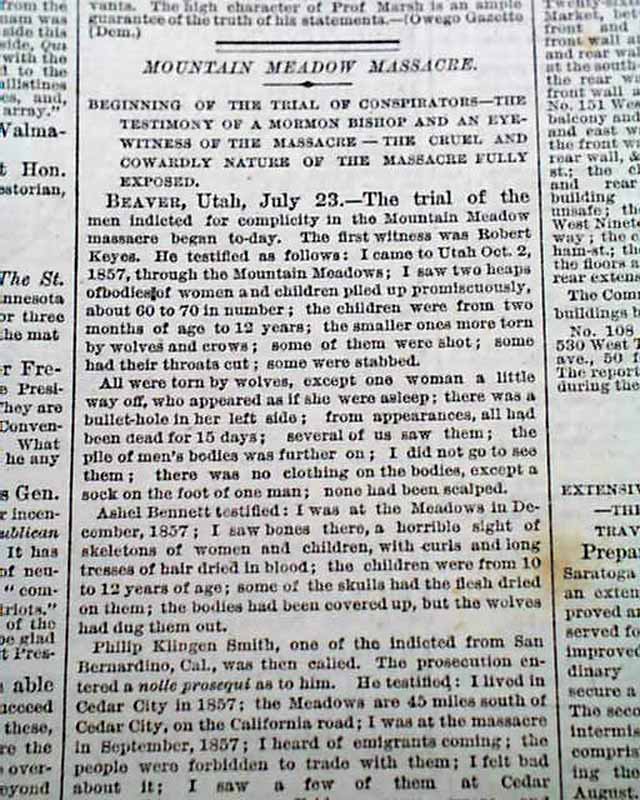
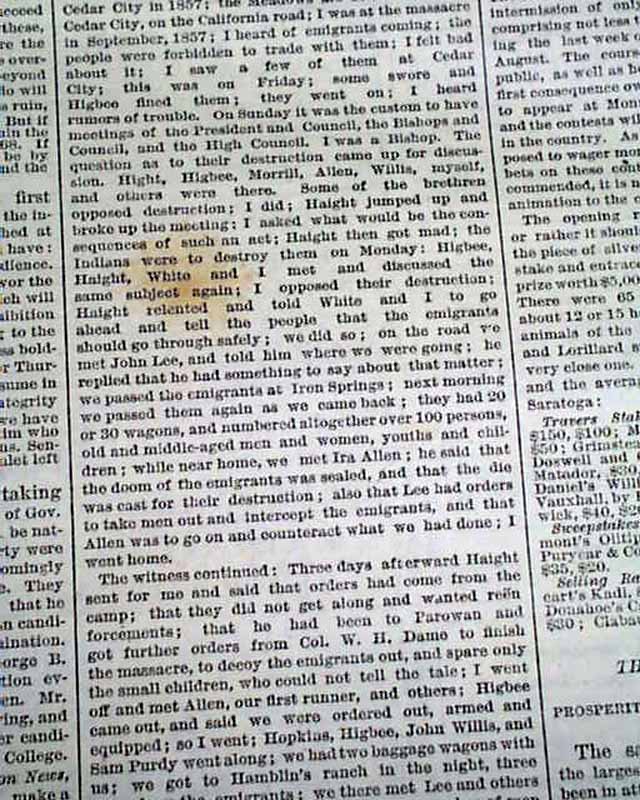
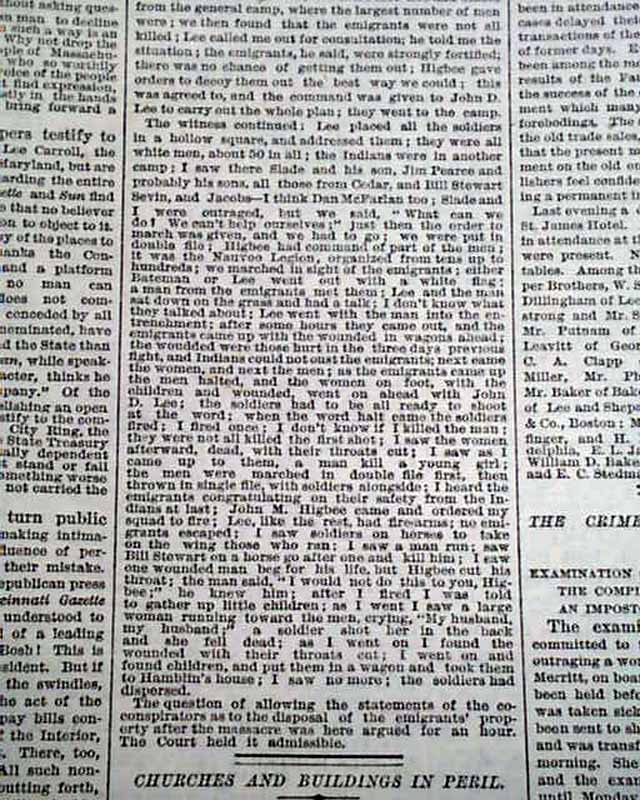
Page 7 has a report taking over half a column headed: "Mountain Meadow Massacre" "Beginning of the Trial of Conspirators--The Testimony of a Mormon Bishop and an Eye-Witness of the Massacre--The Cruel and Cowardly Nature of the Massacre Fully Exposed". This article has much detail.
The Mountain Meadows Massacre was a series of attacks during the Utah War that resulted in the mass murder of at least 120 members of an emigrant wagon train, occurring in the southern Utah Territory at Mountain Meadows. It was perpetrated by Mormons who recruited and were aided by some Southern Paiute Native Americans. The wagon train, made up mostly of families from Arkansas, was bound for California, traveling on the Old Spanish Trail that passed through the Territory.
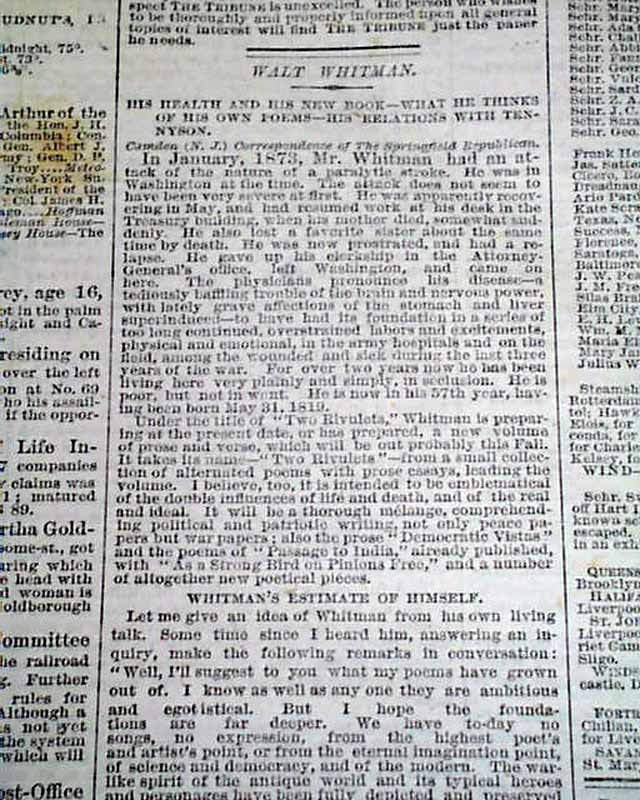
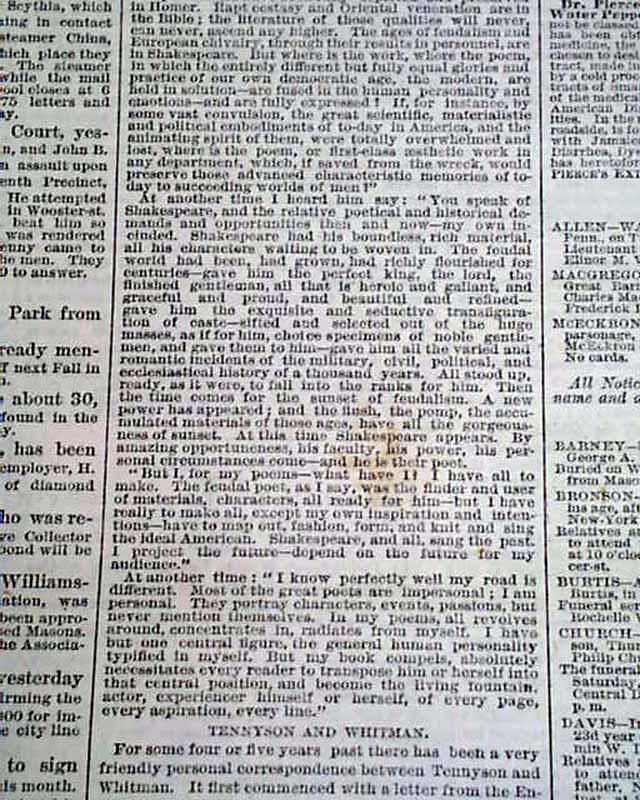
Also on page 7 is: "Walt Whitman" "His Health & His News Book--What He Thinks of His Own Poems--His Relations with Tennyson". This article takes half a column.
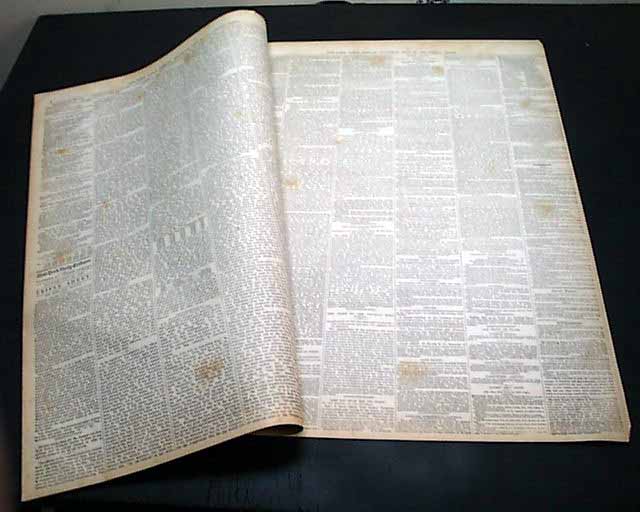
Eight pages, some light foxing, nice condition.
AI notes: On July 23, 1875, the first trial of John D. Lee began in Beaver, Utah Territory, marking the first serious legal effort to hold anyone accountable for the 1857 Mountain Meadows Massacre, in which a wagon train of Arkansas emigrants was attacked and almost entirely killed by a group of Mormon militia and Native American allies. Lee, a local Mormon leader and participant in the massacre, faced murder charges, and the trial was presided over by U.S. District Judge Jacob Boreman with a jury composed of both Mormon and non-Mormon citizens. The proceedings were fraught with tension and controversy, as Lee attempted to shift blame onto higher-ranking church officials and other participants, while the prosecution sought to establish his direct responsibility. The trial extended into early August but ultimately ended in a hung jury on August 5, 1875, with jurors unable to reach a consensus, reflecting the complex interplay of religious, political, and social pressures in the Utah Territory. This first trial set the stage for a second trial the following year, which would lead to Lee’s conviction and execution, leaving him as the only individual formally punished for the massacre.
Also on page 7 is: "Walt Whitman" "His Health & His News Book--What He Thinks of His Own Poems--His Relations with Tennyson". This article takes half a column.
Eight pages, some light foxing, nice condition.
AI notes: On July 23, 1875, the first trial of John D. Lee began in Beaver, Utah Territory, marking the first serious legal effort to hold anyone accountable for the 1857 Mountain Meadows Massacre, in which a wagon train of Arkansas emigrants was attacked and almost entirely killed by a group of Mormon militia and Native American allies. Lee, a local Mormon leader and participant in the massacre, faced murder charges, and the trial was presided over by U.S. District Judge Jacob Boreman with a jury composed of both Mormon and non-Mormon citizens. The proceedings were fraught with tension and controversy, as Lee attempted to shift blame onto higher-ranking church officials and other participants, while the prosecution sought to establish his direct responsibility. The trial extended into early August but ultimately ended in a hung jury on August 5, 1875, with jurors unable to reach a consensus, reflecting the complex interplay of religious, political, and social pressures in the Utah Territory. This first trial set the stage for a second trial the following year, which would lead to Lee’s conviction and execution, leaving him as the only individual formally punished for the massacre.
Category: Post-Civil War
Available Now
$78.00