Home > Mormons & polygamy: defying the Supreme Court ruling...
Click image to enlarge 699900
Show image list »

Mormons & polygamy: defying the Supreme Court ruling...


Item # 699900

February 09, 1879

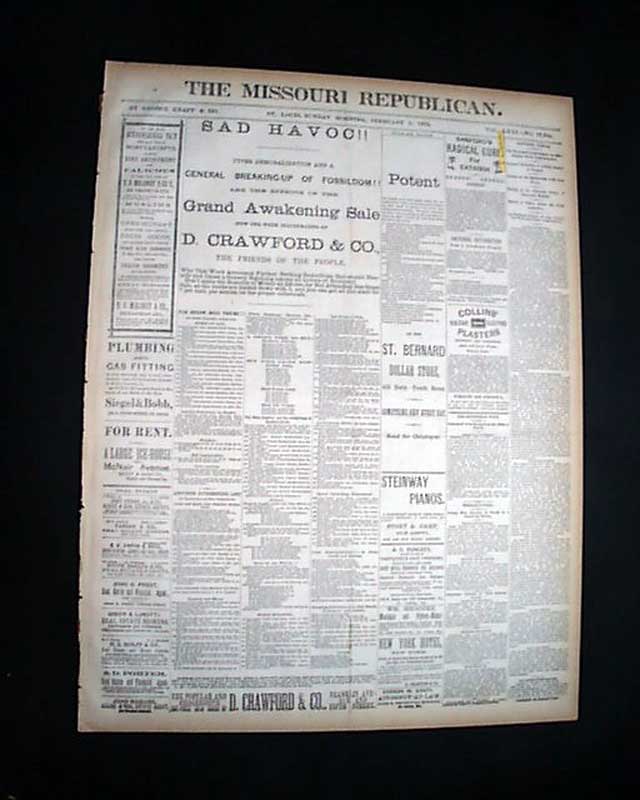
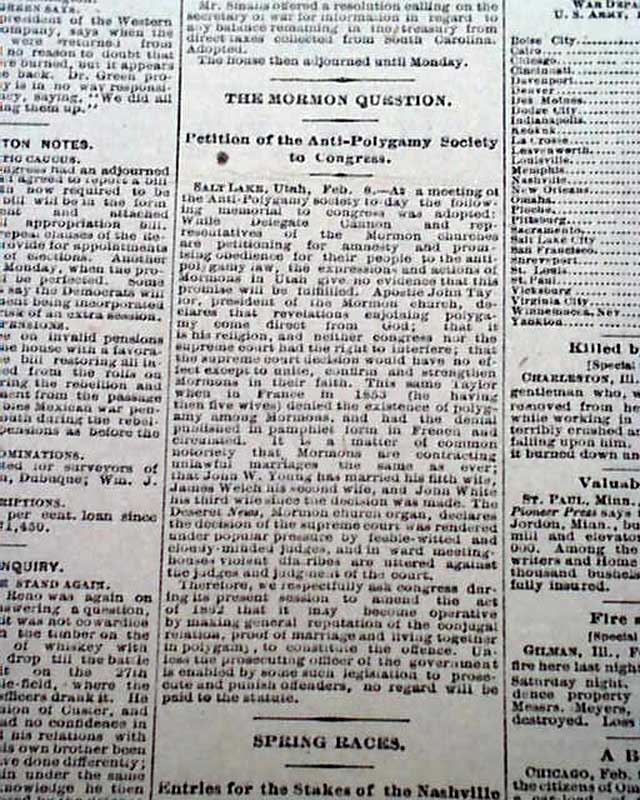
THE MISSOURI REPUBLICAN, St. Louis, Feb. 9, 1879  Page 7 has an article: "The Mormon Question" "Petition of the Anti-Polygamy Society to Congress" datelined at Salt Lake, Utah.  It notes in part: "...is a matter of common notoriety that Mormons are contracting unlawful marriages the same as ever; that John W. Young has parried his fifth wife, James Welch his second wife..." and more.
This relates to Reynolds v. United States case, in which the Supreme Court ruled unanimously that a federal law prohibiting polygamy did not violate the free exercise clause of the First Amendment. The Court's decision was among the first to hold that the free exercise of religion is not absolute.
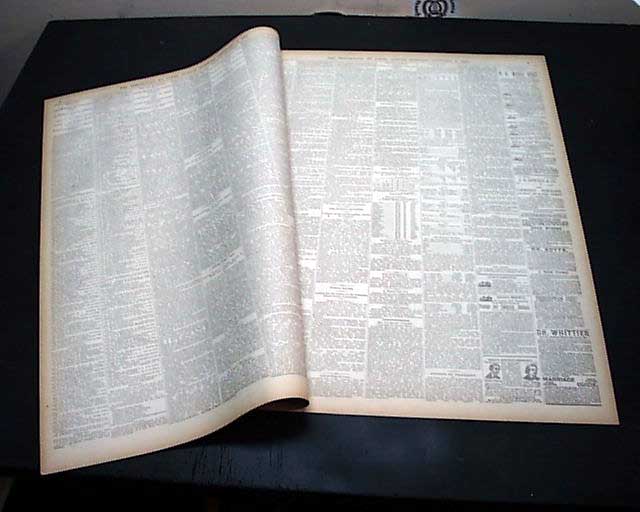
Eight pages, nice condition.

AI notes: Reynolds v. United States (98 U.S. 145, 1878) was a landmark Supreme Court case addressing the conflict between religious freedom and federal law. George Reynolds, a member of the Church of Jesus Christ of Latter‑day Saints in Utah Territory, had entered into a plural marriage and was convicted under federal anti‑bigamy laws. He argued that his First Amendment right to freely exercise his religion should exempt him from prosecution, since polygamy was a tenet of his faith. The Supreme Court unanimously rejected this claim, ruling that while religious beliefs are absolutely protected, religiously motivated actions that violate general laws are not. The Court emphasized that allowing otherwise would enable every citizen to become “a law unto himself,” undermining the rule of law. Reynolds’ conviction was upheld, establishing a crucial legal precedent that distinguished between protected religious beliefs and regulable conduct, a principle that continues to influence U.S. free-exercise jurisprudence.


Category: Post-Civil War