Home >
Uncle Tom's Cabin: the serialization before it became a book...
Uncle Tom's Cabin: the serialization before it became a book...
Item # 695884
June 26, 1851
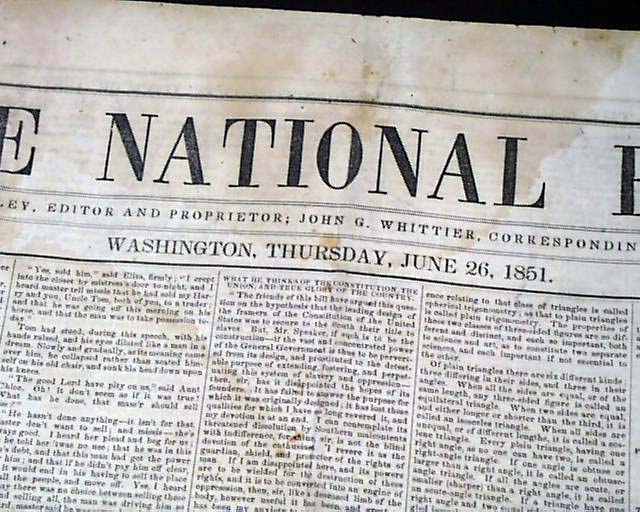
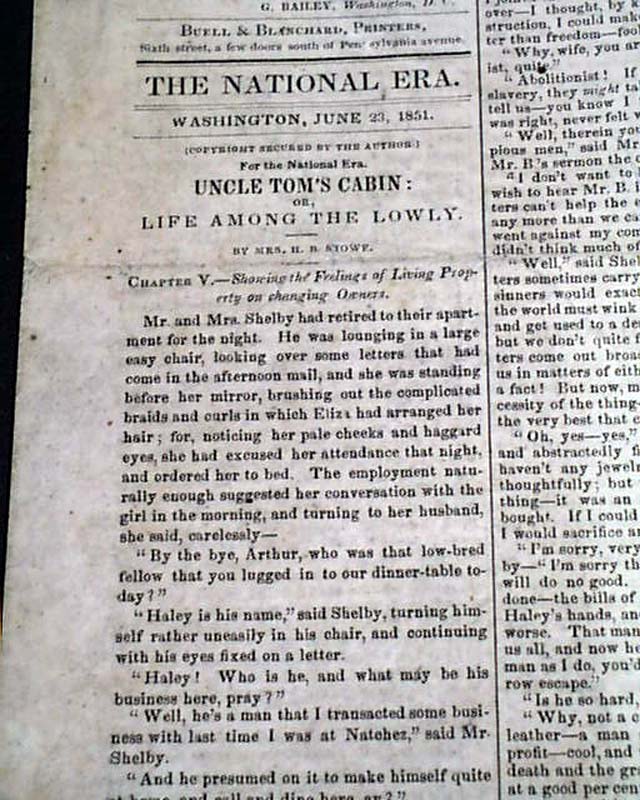
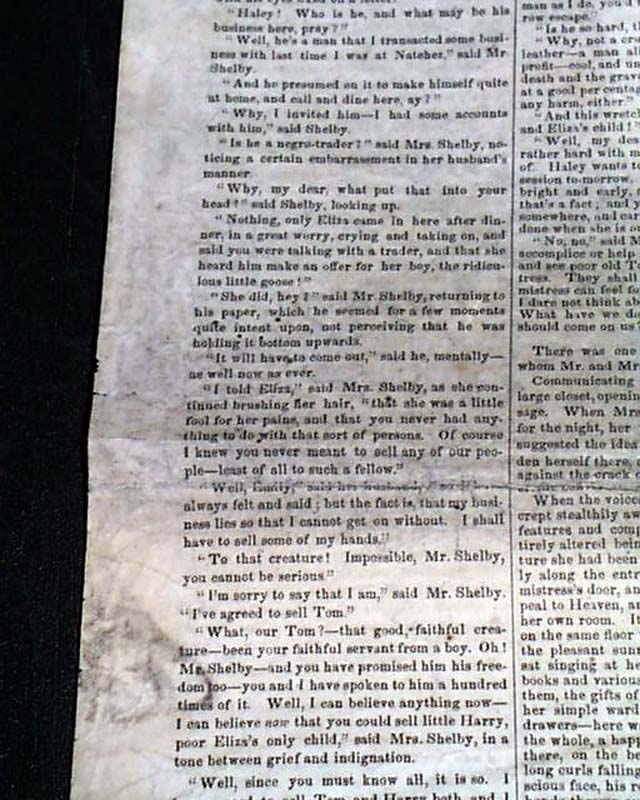
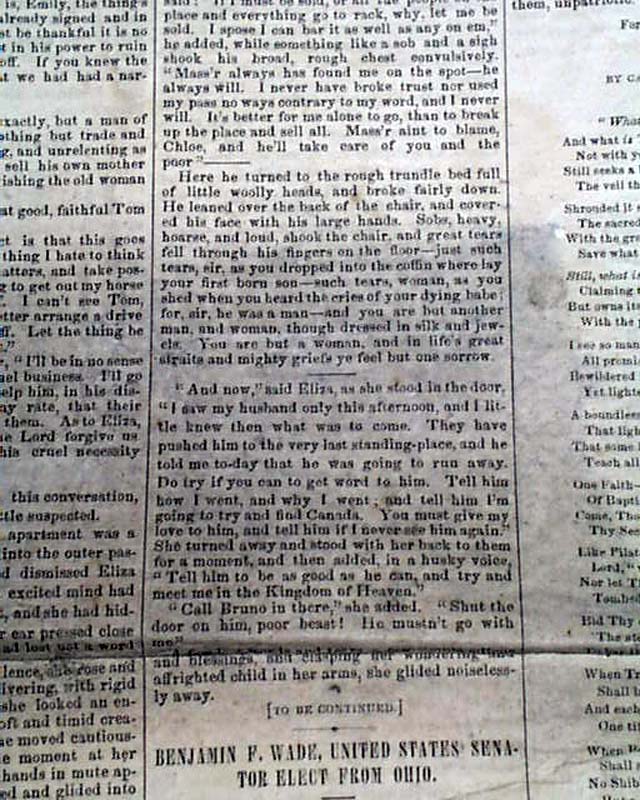
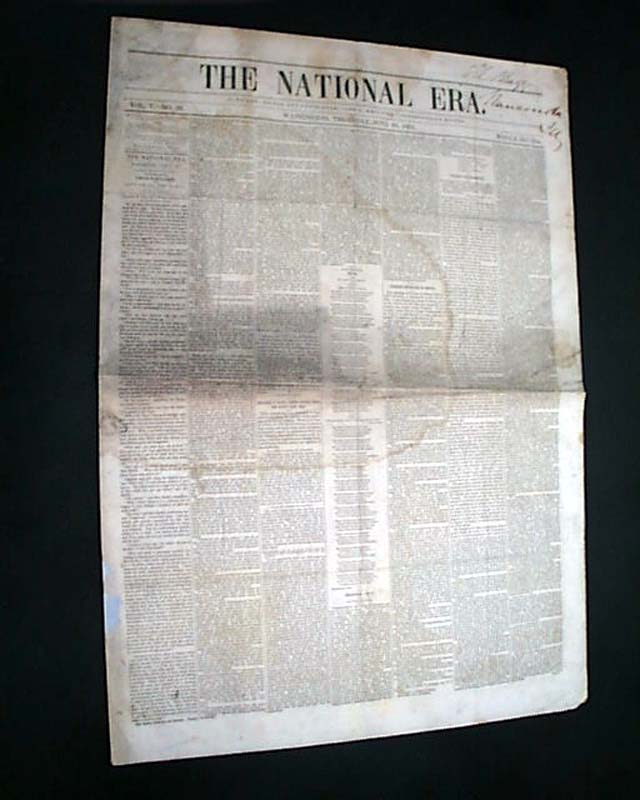
THE NATIONAL ERA, Washington, D.C., June 26, 1851 The front page of this anti-slavery newspaper is very significant, as it contains chapter 5 of: "Uncle Tom's Cabin: Or, Life Among the Lowly. by Mrs. H. B. Stowe".
This newspaper is forever linked to the best-selling novel of the 19th century, "Uncle Tom's Cabin". This historic work first appeared as a 41-week serial in The National Era, starting on June 5. It was originally intended as a shorter narrative that would run for only a few weeks. Stowe expanded the story significantly, however, and it was instantly popular, such that protests were sent to the Era office when she missed an issue (three issues were published without a chapter). The final installment was released in the April 1, 1852, issue of the Era.
While the story was still being serialized, publisher John P. Jewett contracted with Stowe to turn Uncle Tom's Cabin into a book. Convinced the book would be popular, Jewett made the unusual decision (for the time) to have six full-page illustrations engraved for the first printing. Published in book form on March 20, 1852, the novel sold 3,000 copies on that day alone, and over 300,000 within the first year.
The complete serialization appeared almost entirely in the National Era before the book was published, with an overlap of just ten days. Subscriptions to the Era increased by nearly 5,000 during the serialization.
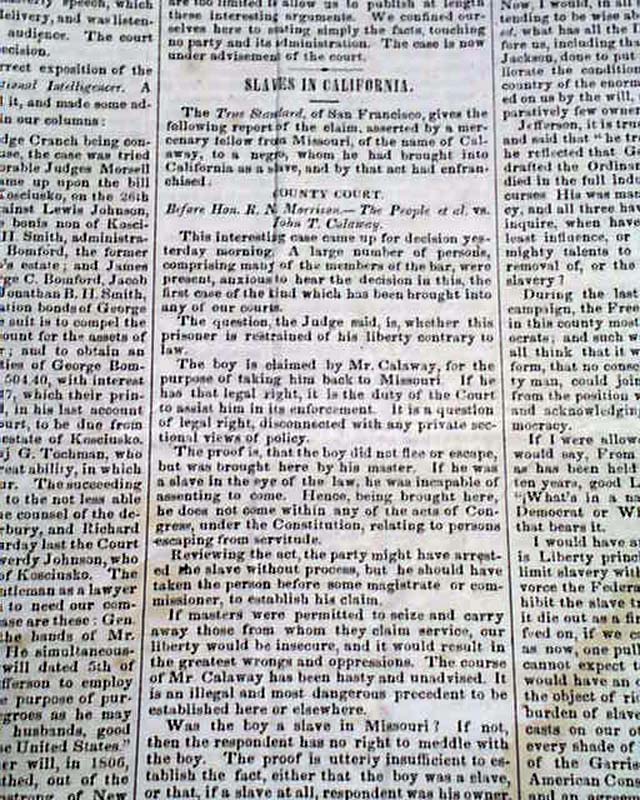
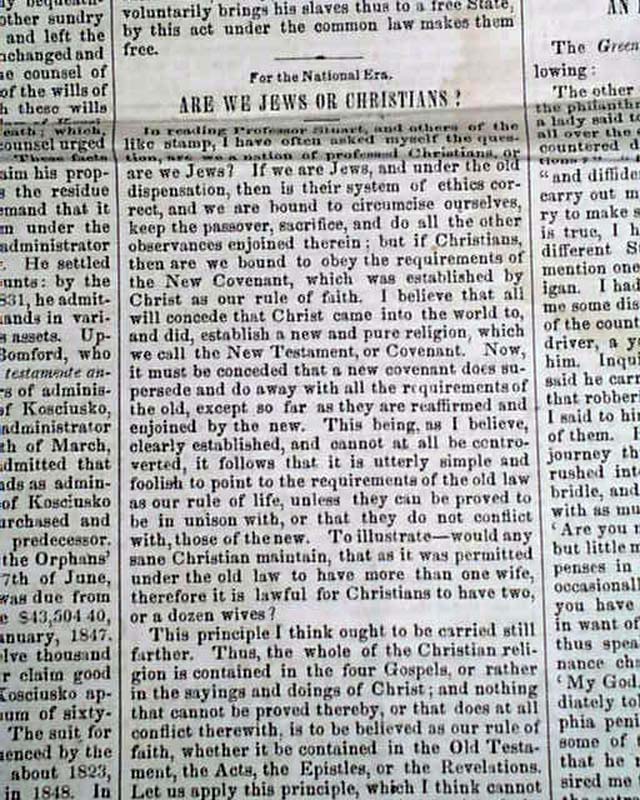
Being an anti-slavery newspaper page 4 has an article: "Slavery In California".
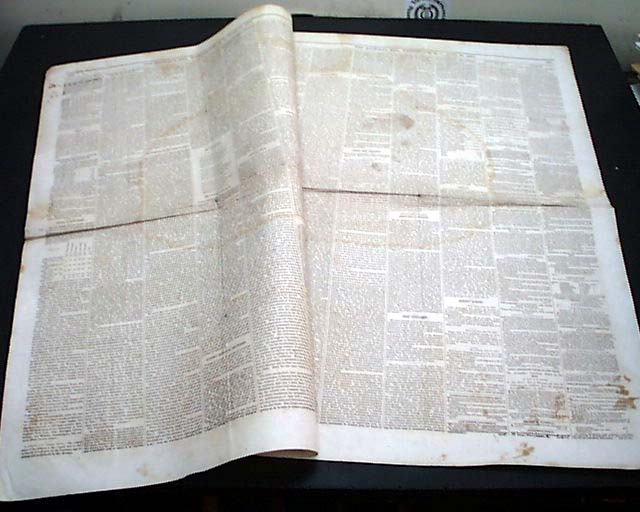
Four pages, great to have in never-bound, never trimmed condition just as sold on the streets. There is dirtiness and some damp staining plus creases at the fold, all deterring some but causing no loss of readability. Folder size noted is for the issue folded in half.
Being an anti-slavery newspaper page 4 has an article: "Slavery In California".
Four pages, great to have in never-bound, never trimmed condition just as sold on the streets. There is dirtiness and some damp staining plus creases at the fold, all deterring some but causing no loss of readability. Folder size noted is for the issue folded in half.
Category: Pre-Civil War
Available Now
$120.00