Home > Back to Search Results >
Guilford Court House... Captain Cook's journal...
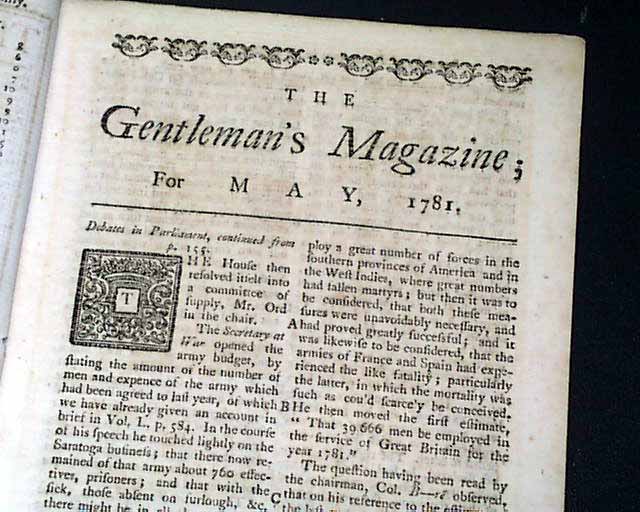
Guilford Court House... Captain Cook's journal...
Item # 678673
Currently Unavailable. Contact us if you would like to be placed on a want list or to be notified if a similar item is available.
GENTLEMAN'S MAGAZINE London, May, 1781* Battle of Guilford Courthouse
* American Revolutionary War
* Captain James Cook voyage
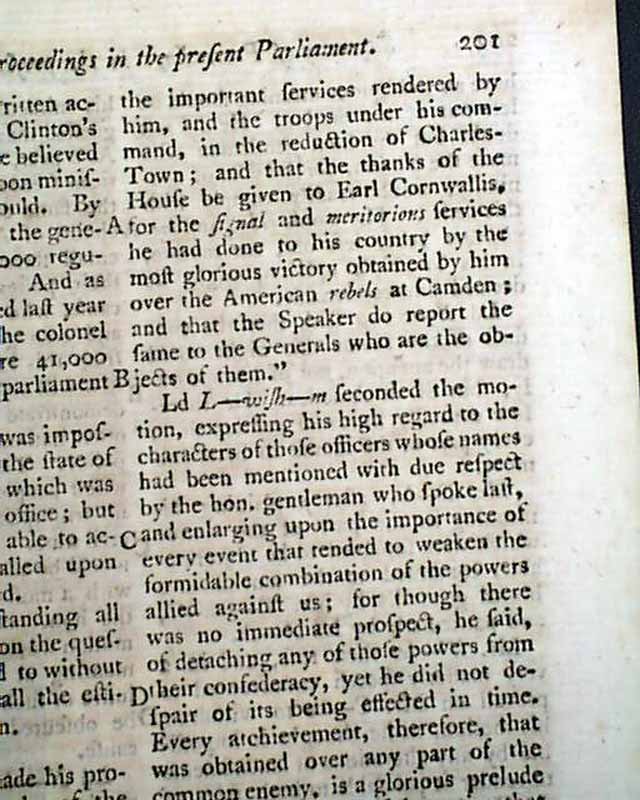
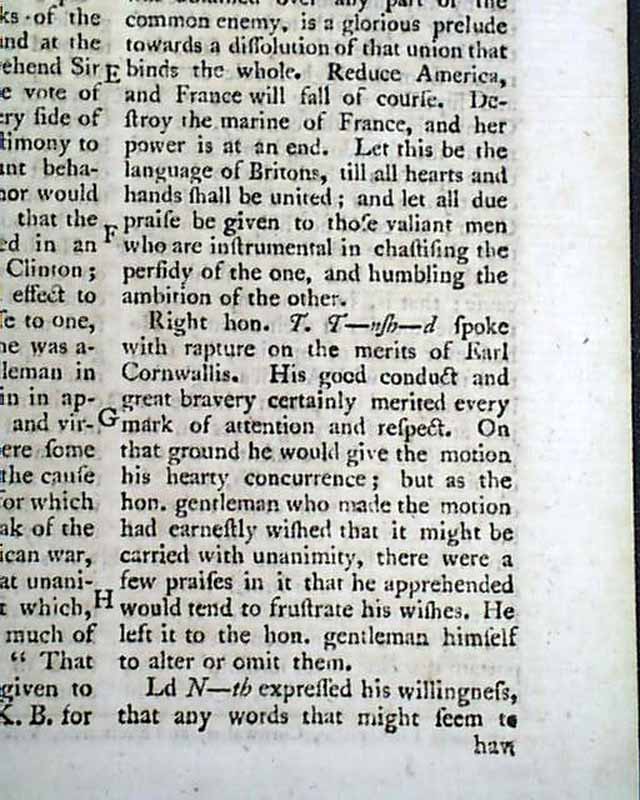
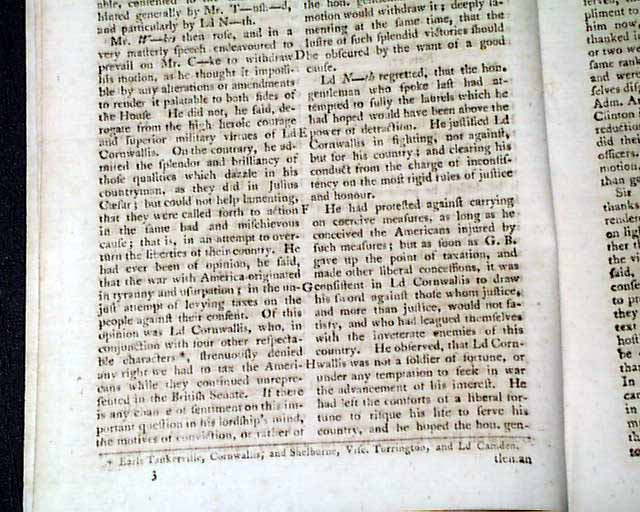
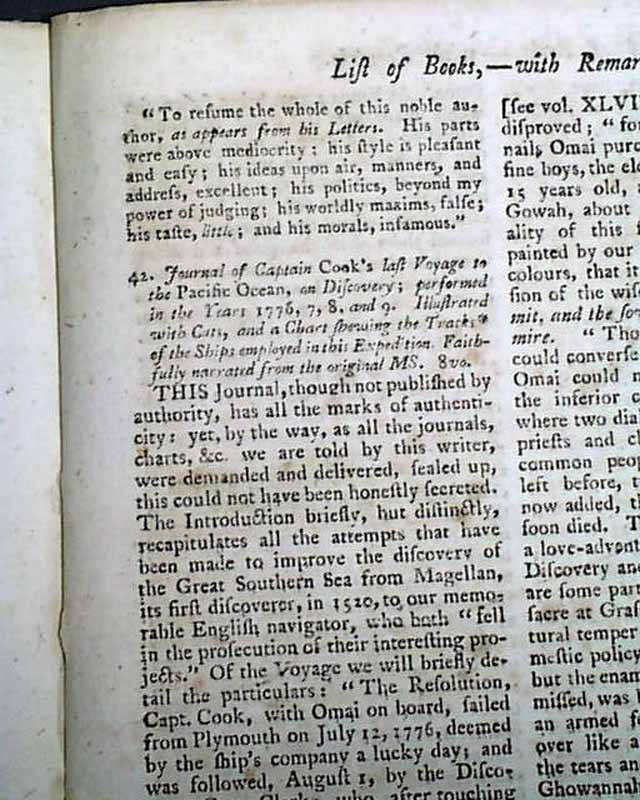
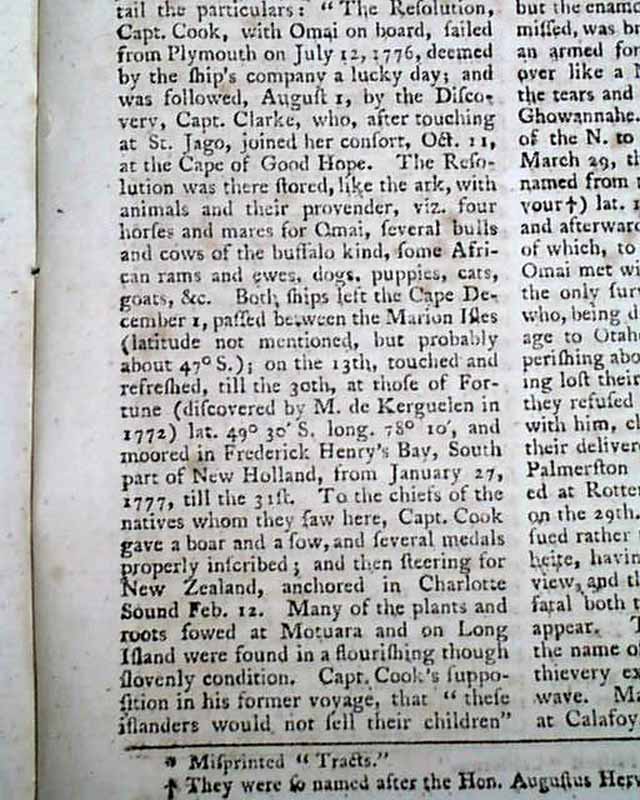
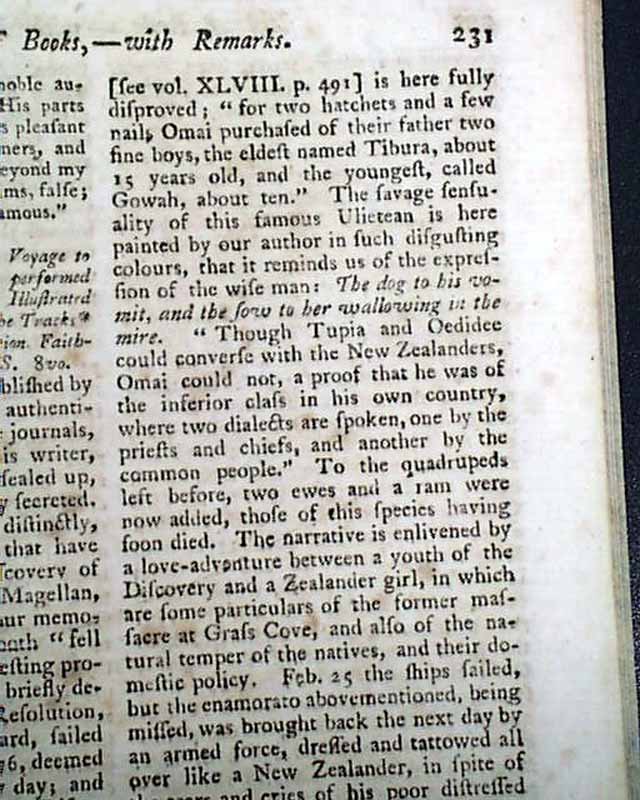
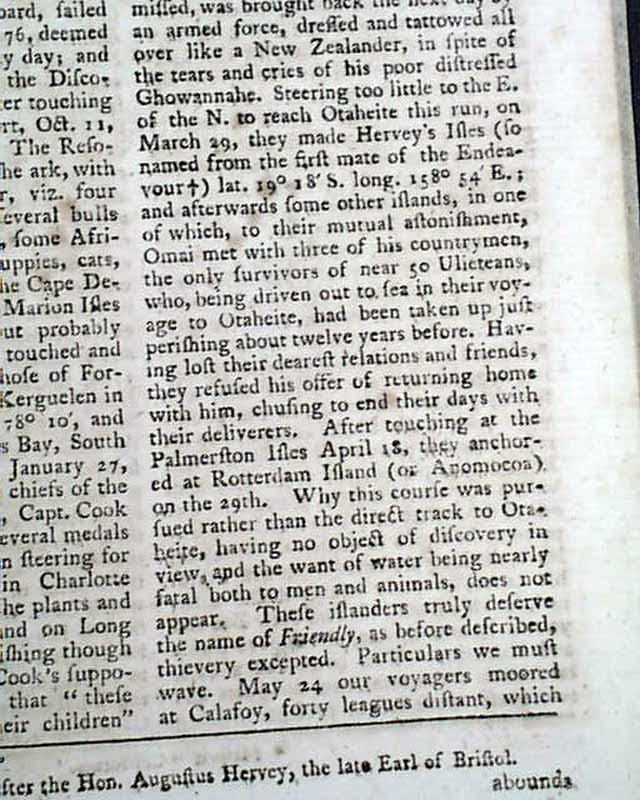
Content includes: "Debates in Parliament" includes talk on America. Another report is a review of the: "Journal of Captain Cook's Last Voyage to the Pacific Ocean, on Discovery, performed in the Years 1776, 7, 8 & 9..." which takes over 3 pages.
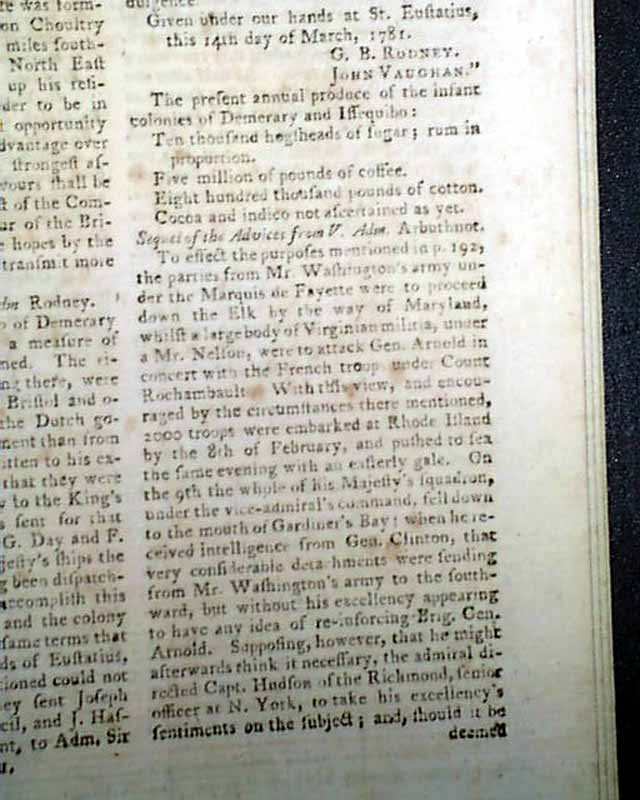
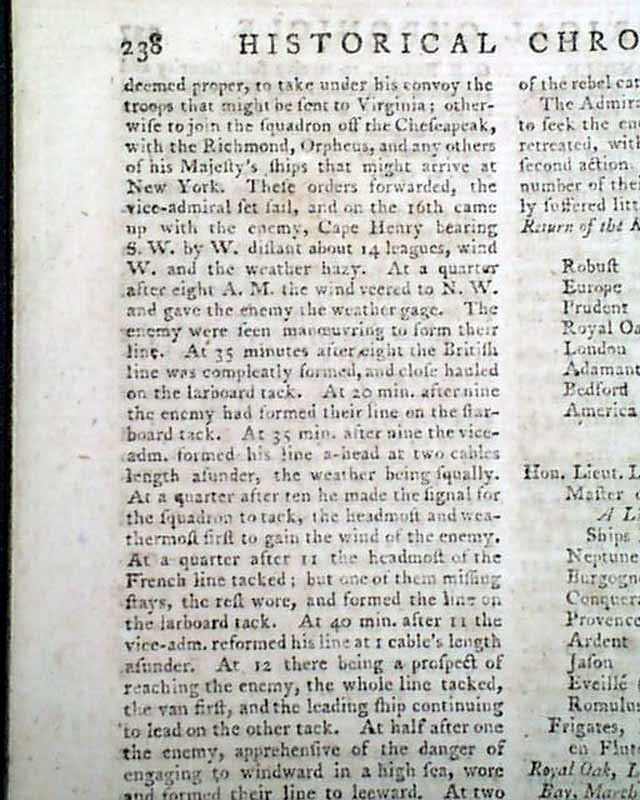
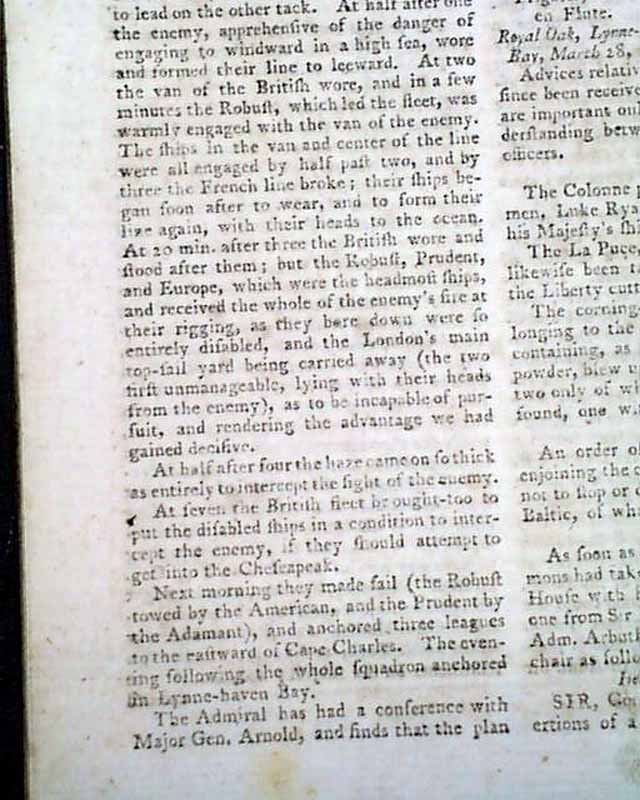
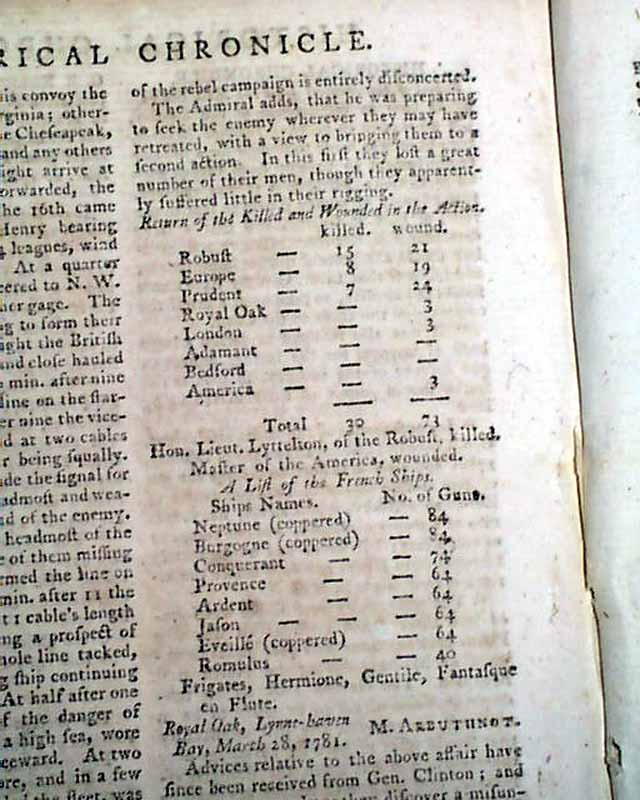
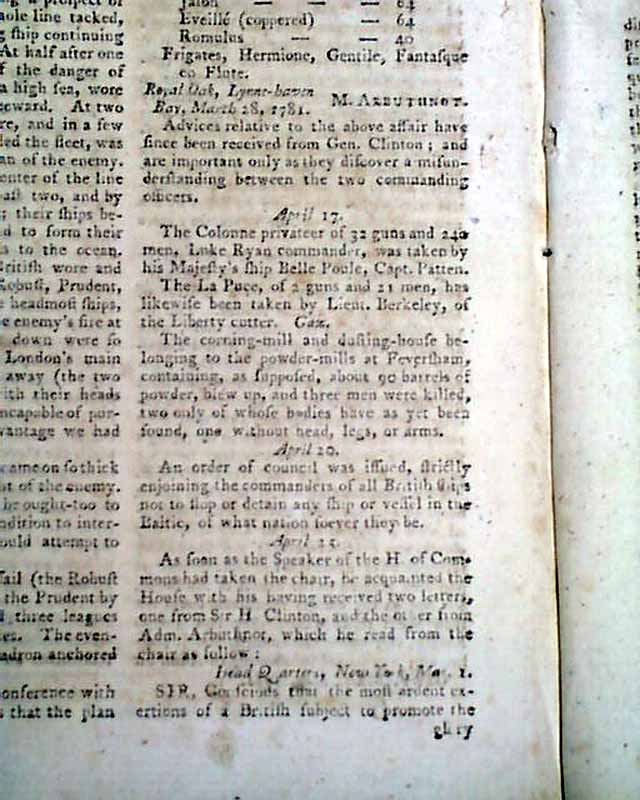
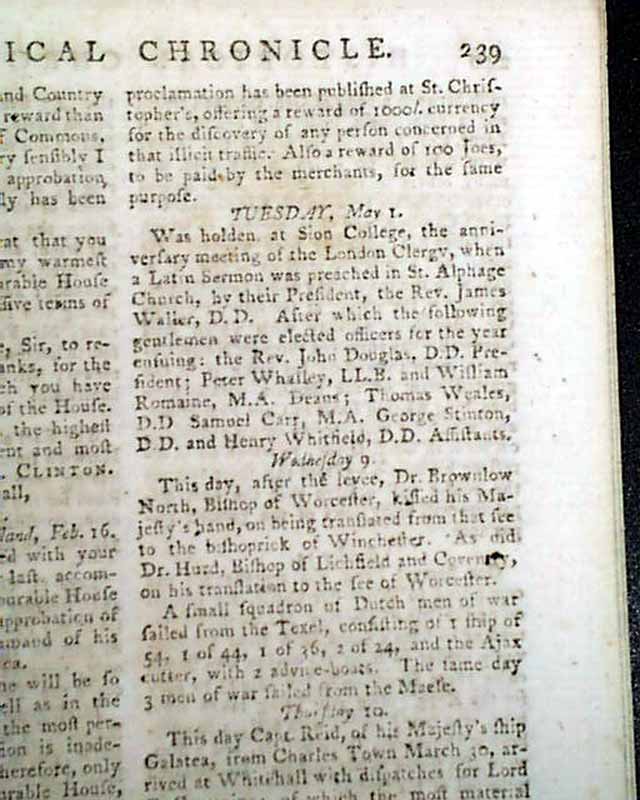
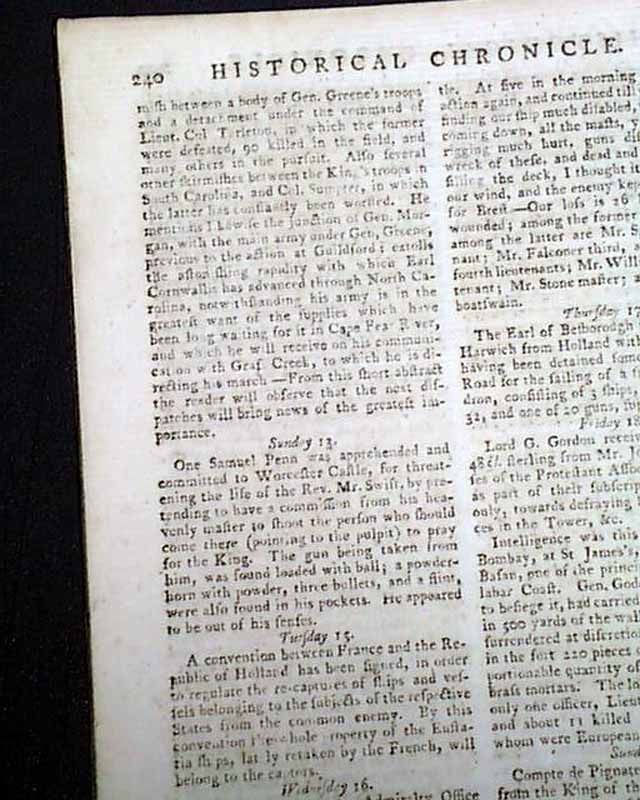
Another report mentions in part: "...parties from Mr. Washington's army under the Marquis de Fayette were to proceed down the Elk by the way of Maryland, whilst a large body of Virginians militia under Mr. Nelson were to attack Gen. Arnold...the Admiral has had a conference with Gen. Arnold and finds that the plan of the rebel campaign is entirely disconcerted..." with much content on the naval battle followed by a list of killed & wounded & the ships involved.
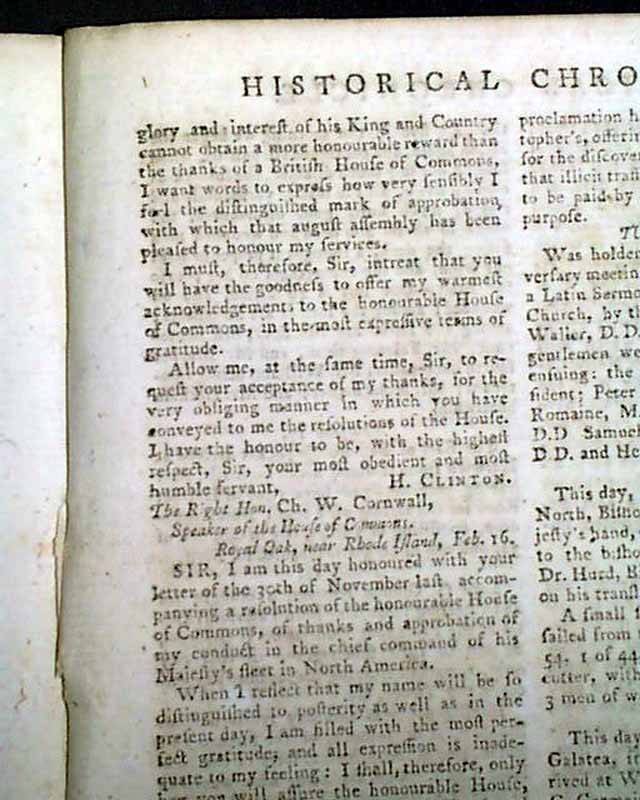
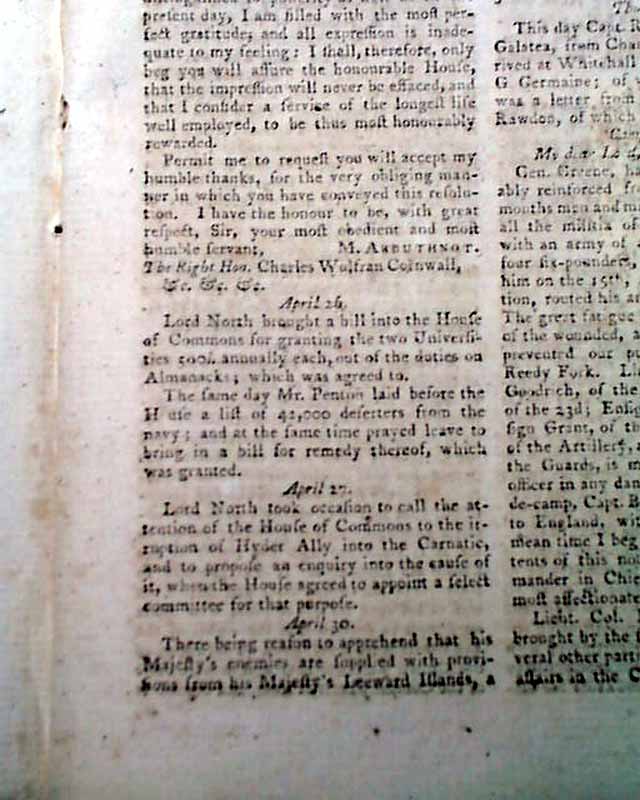
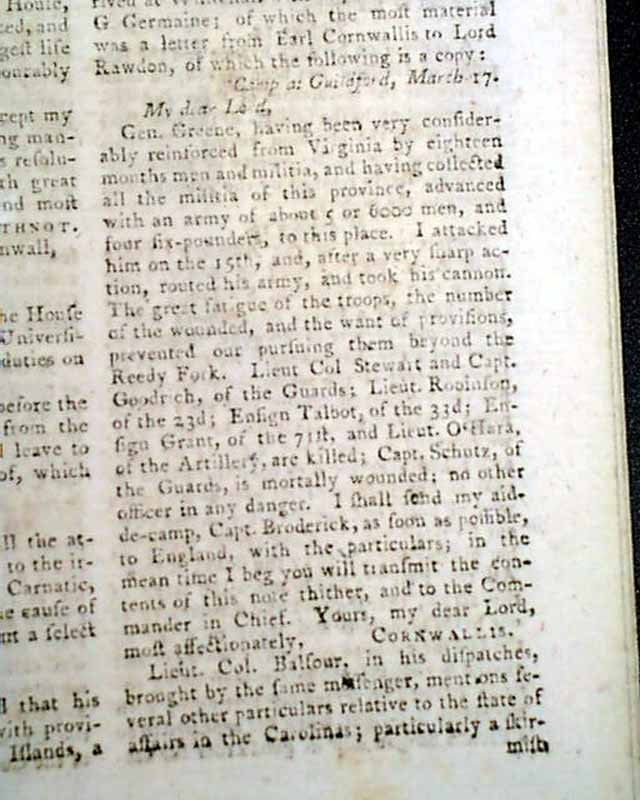
There is also a letter signed: H. Clinton, and yet another very nice letter on the battle of Guilford Court House in North Carolina signed: Cornwallis.
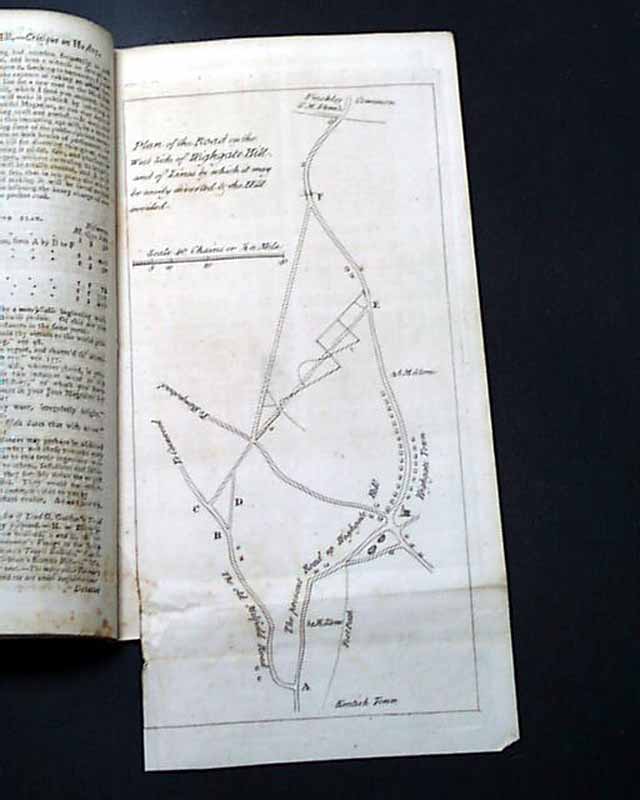
The fold out road map is present, the only plate called for.
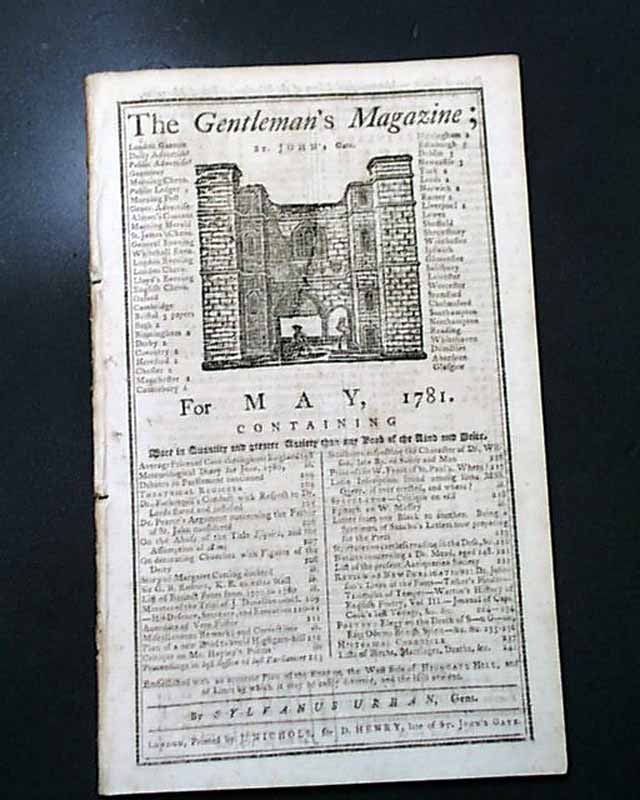
Complete in 48 pages, 5 1/4 by 8 1/4 inches, full title/contents page featuring an engraving of St. John's Gate, very nice condition.
AI notes: The Battle of Guilford Courthouse, fought on March 15, 1781, in present-day Greensboro, North Carolina, was a pivotal engagement of the American Revolutionary War that proved strategically decisive despite a British battlefield victory. British forces under Lt. Gen. Lord Charles Cornwallis, numbering about 1,900 men, attacked an American army of roughly 4,400 commanded by Maj. Gen. Nathanael Greene, who deployed his troops in three defensive lines modeled loosely on Daniel Morgan’s success at Cowpens. The British eventually forced the Americans from the field after intense fighting—particularly in the wooded second and third lines—but at devastating cost, suffering more than 25 percent casualties, including many experienced officers. Greene withdrew in good order, preserving his army, while Cornwallis, though technically victorious, was badly weakened and soon abandoned the Carolina interior, retreating to the coast and later moving north into Virginia—a campaign that culminated in his surrender at Yorktown later that year. As Cornwallis himself reportedly admitted, it was “a victory that almost destroyed the British army,” making Guilford Courthouse a classic example of a tactical defeat but strategic American success.
A very nice Revolutionary War era magazine from the "mother country" with a wide range of varied content. This was the first periodical to use the word "magazine" in its title, having begun in 1731 and lasting until 1907.
Category: Revolutionary War
No Longer Available