Home >
Three John Hancock documents, and more...
Three John Hancock documents, and more...
Item # 669162
September 21, 1793
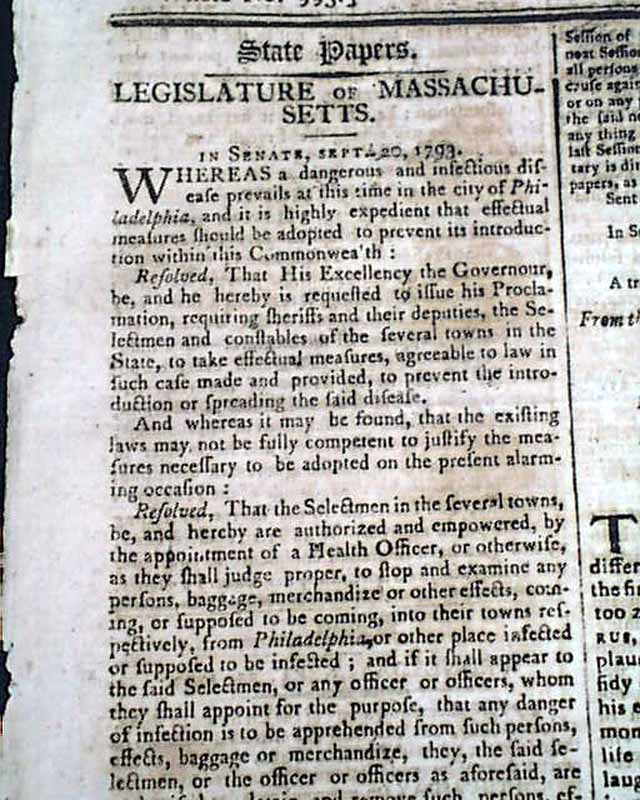
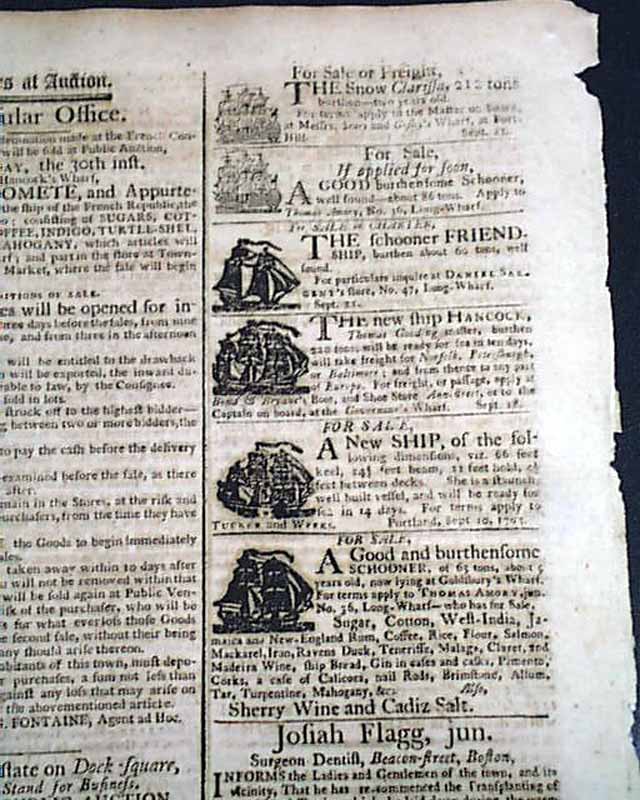
COLUMBIAN CENTINEL, Boston, Sept. 21, 1793
* Founding Father John Hancock
* Proclamation & documents
* re. Yellow Fever epidemic
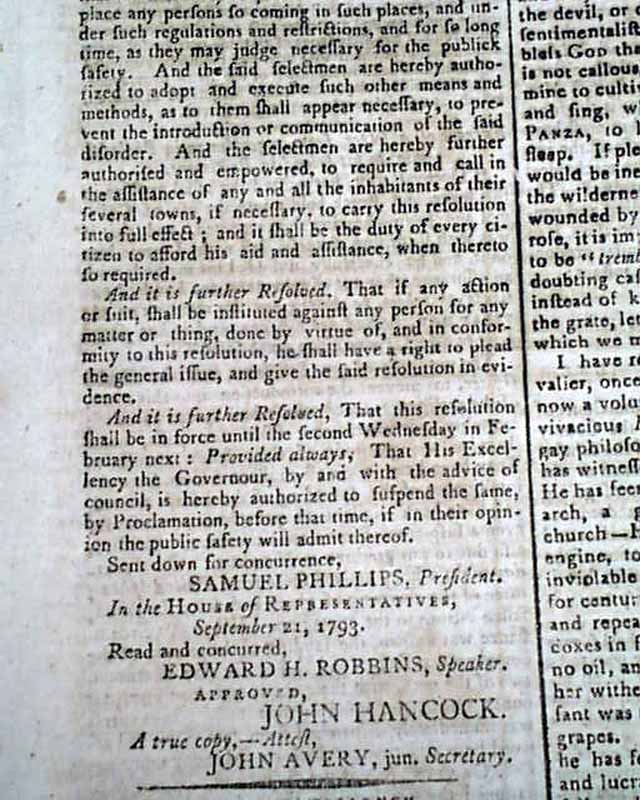
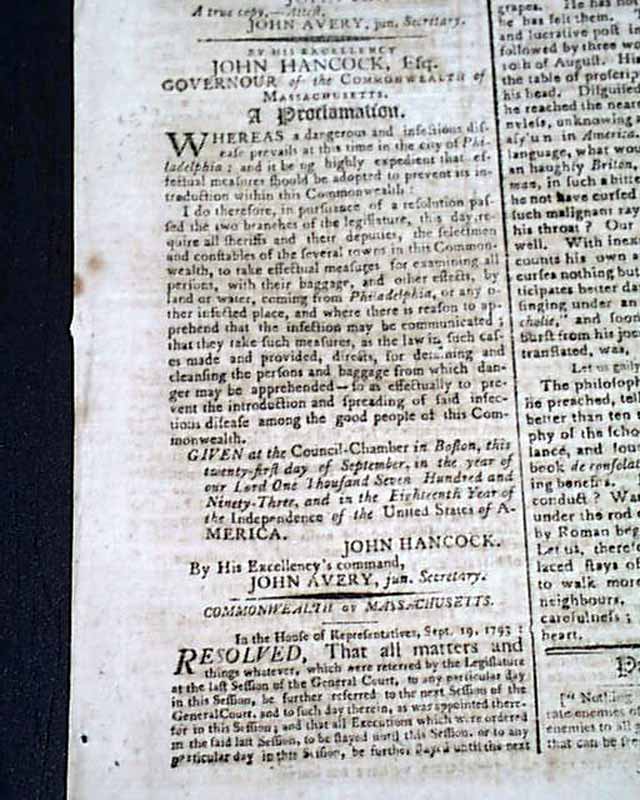
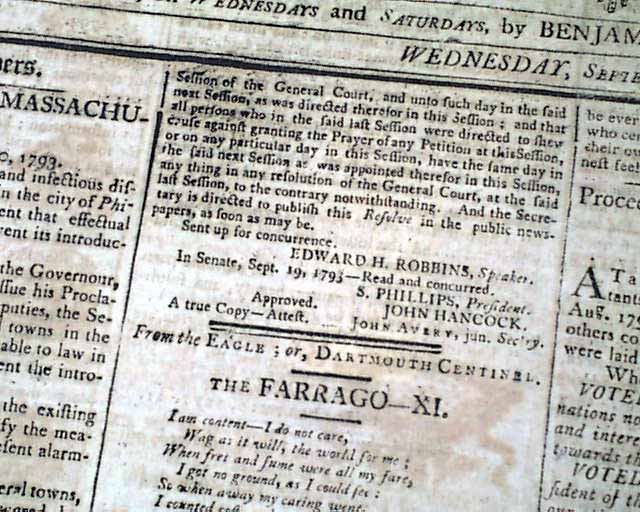
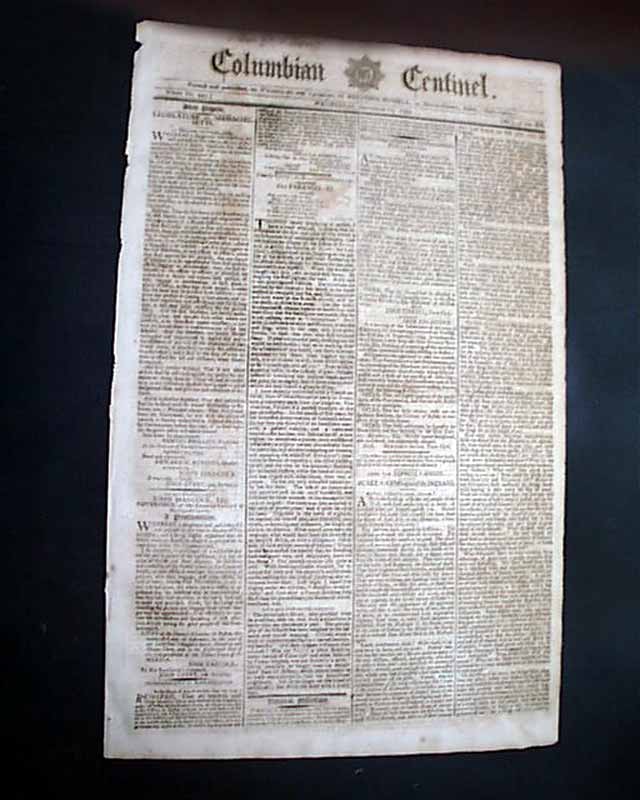
The front page begins with a document from Massachusetts on the restrictions to be enforced due to the spread of the Yellow Fever epidemic centered at Philadelphia, signed in type by the governor: John Hancock.
This is followed by "A Proclamation" from him also relating to the: "...dangerous and infectious disease...prevails at this time..." also signed: John Hancock, and yet a third document signed: John Hancock.
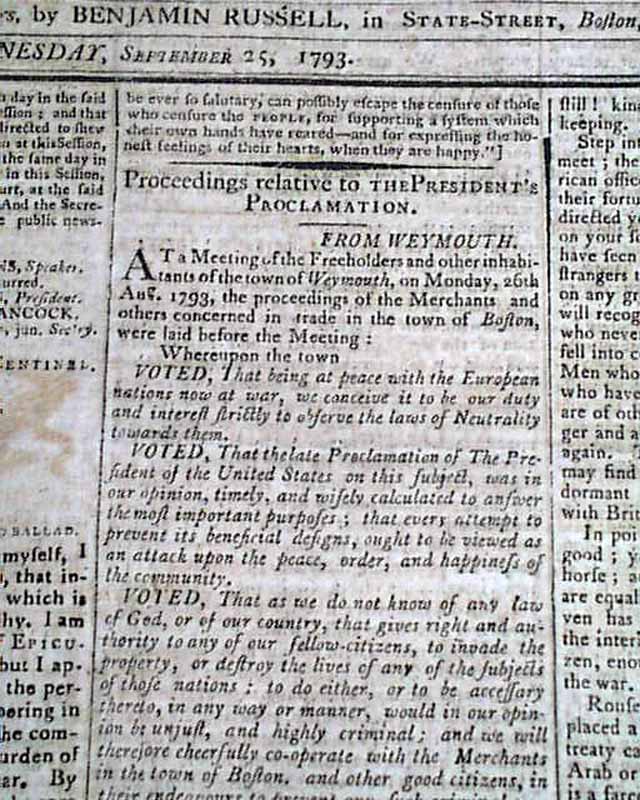
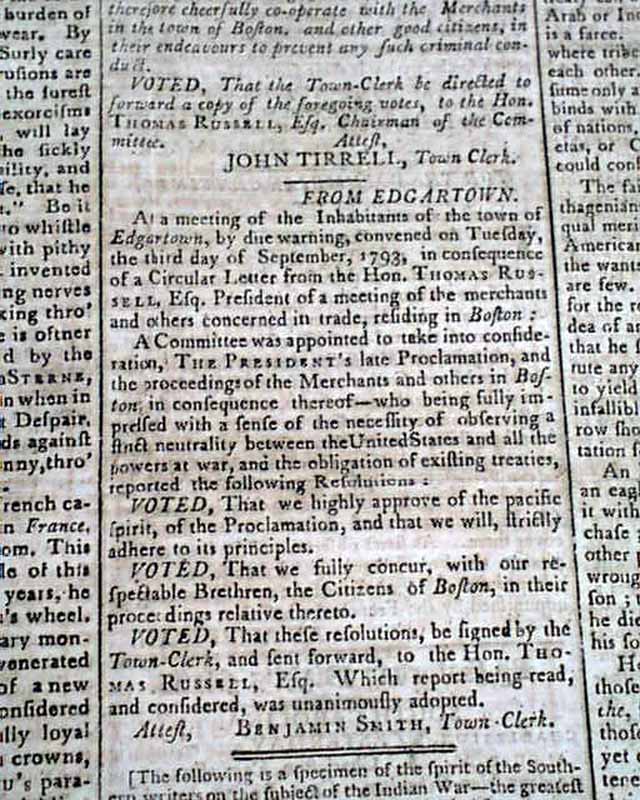
Also on the ftpg.is a report from Mass. supporting Washington and his neutrality policy as it relates to the conflict between England and France.
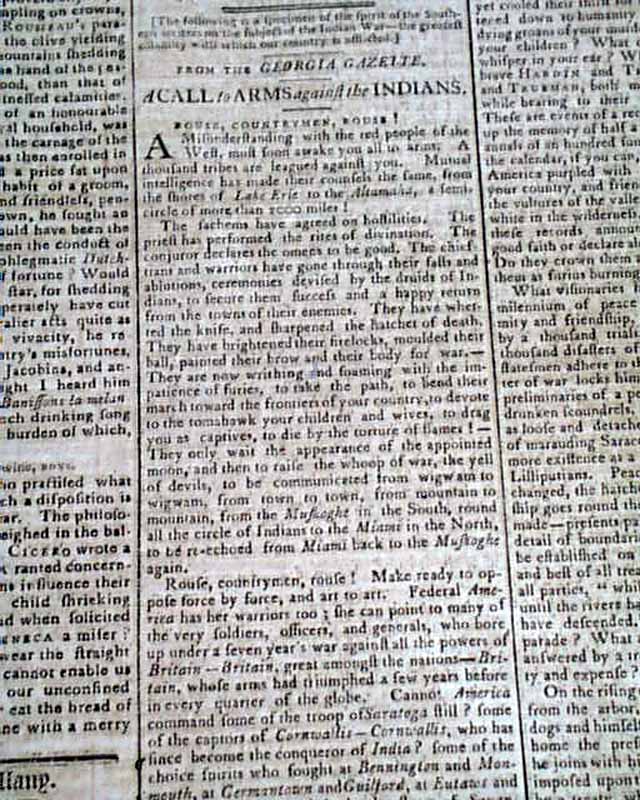
There is also a lengthy: "A Call to Army Against the Indians - Rouse, Countrymen, Rouse!" taken from the Georgia Gazette. It begins: "A misunderstanding with the red people of the West must soon awake you all to arms. A thousand tribes are leagued against you...The sachems have agreed on hostilities...Rouse, countrymen, rouse! Make ready to oppose force by force..." and much more, carrying over to page 2.
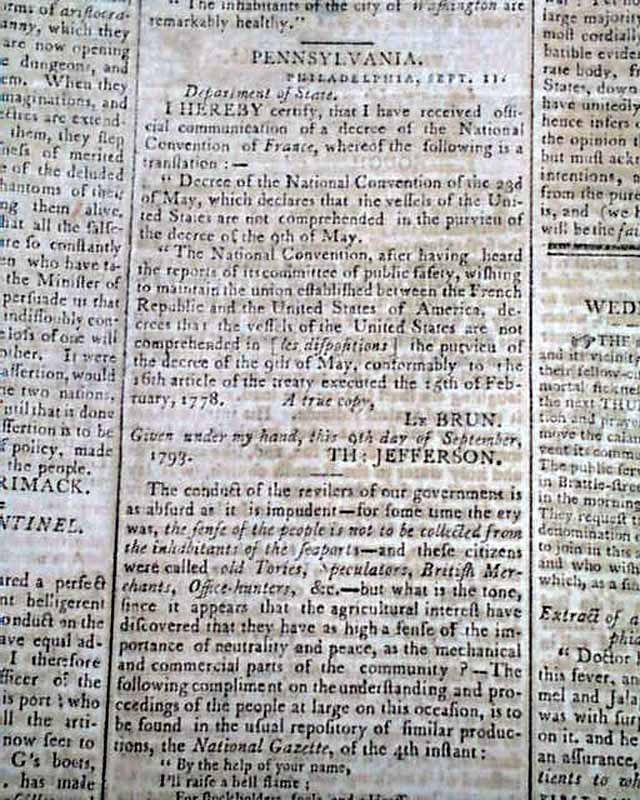
Page 2 has a document concerning France signed by: Th. Jefferson.
Four pages, very nice condition.
AI notes: John Hancock’s proclamation concerning the Yellow Fever epidemic was issued in September 1793, while Philadelphia—the temporary capital of the United States—was being ravaged by one of the deadliest outbreaks in American history. As Governor of Massachusetts, Hancock acted to protect his state by restricting travel and commerce from infected areas, especially Philadelphia. His proclamation ordered strict quarantine measures, requiring vessels, passengers, and goods arriving from Philadelphia or other infected ports to undergo inspection and isolation before entering Massachusetts towns. Local officials were instructed to enforce these rules rigorously, reflecting widespread fear that the disease could spread via people, cargo, or contaminated materials. The proclamation illustrates how early American governments responded to public-health crises before germ theory, relying on quarantine, port controls, and civic authority to combat epidemic disease during the 1793 Yellow Fever crisis that ultimately killed thousands and disrupted the federal government itself.
Category: The 1600's and 1700's
Available Now
$75.00