Home >
One of the most historic documents of the colonial period...

One of the most historic documents of the colonial period...
Item # 583715
Currently Unavailable. Contact us if you would like to be placed on a want list or to be notified if a similar item is available.
November 01, 1775
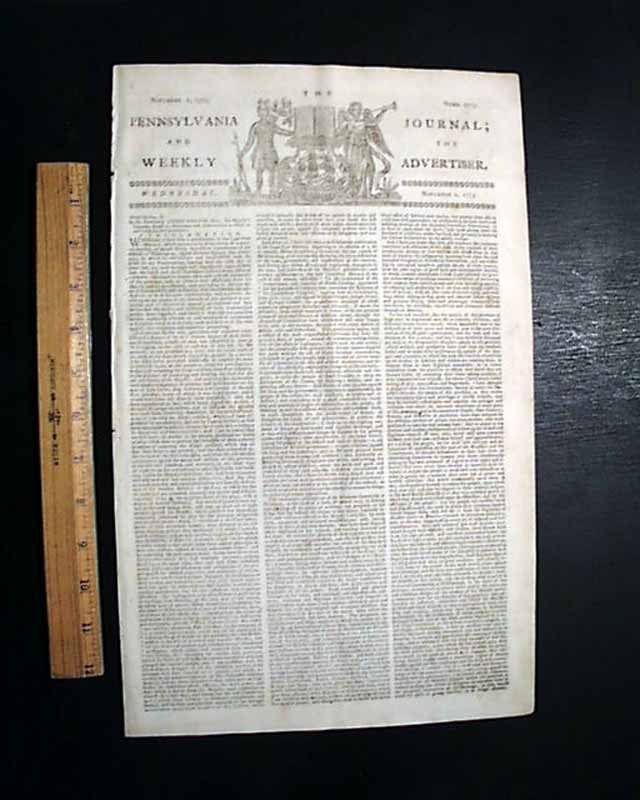
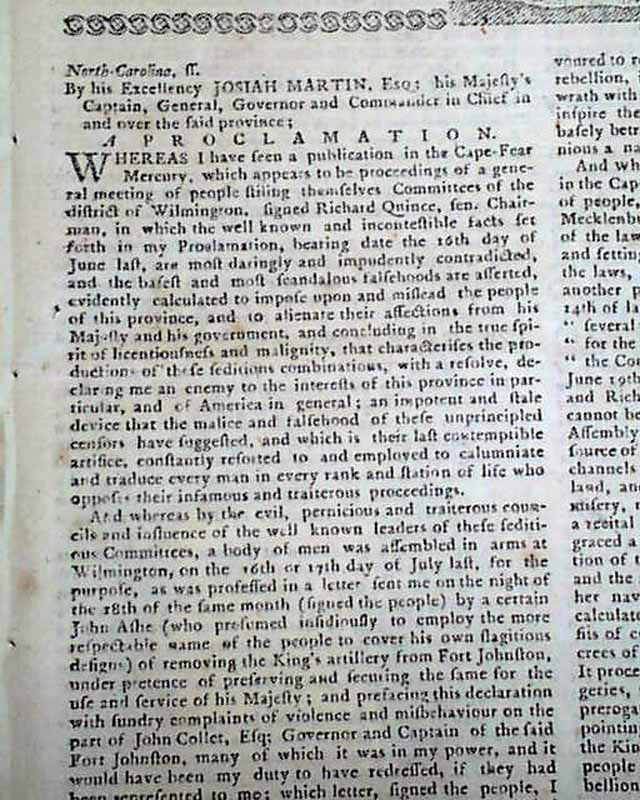
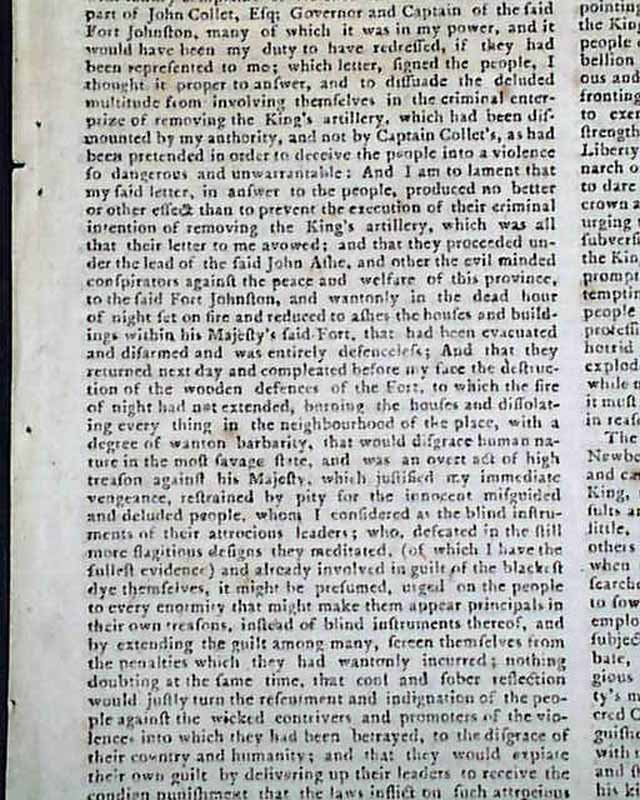
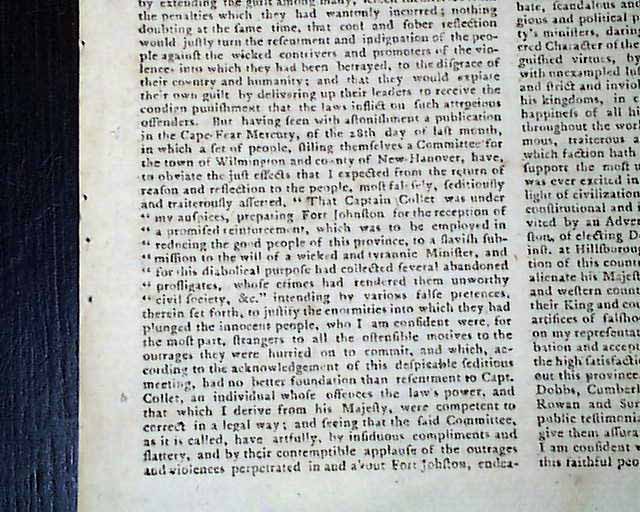
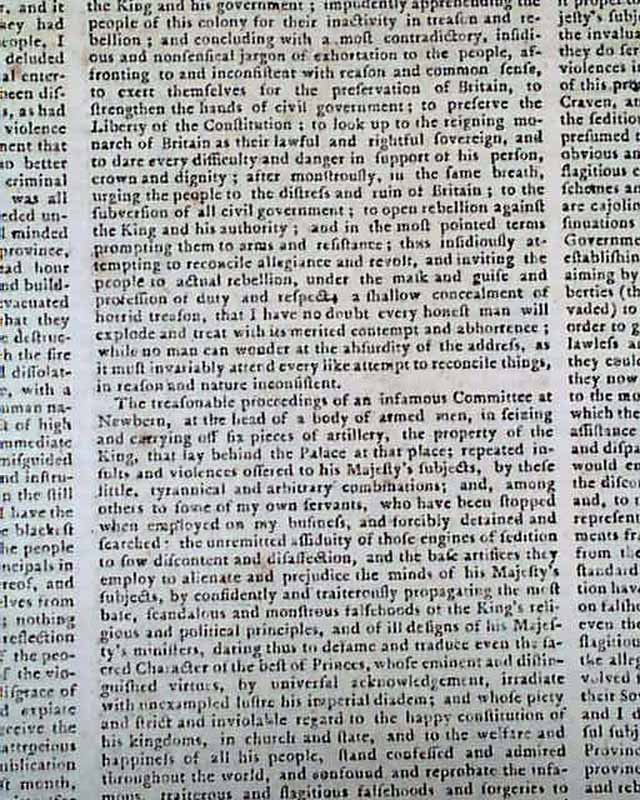
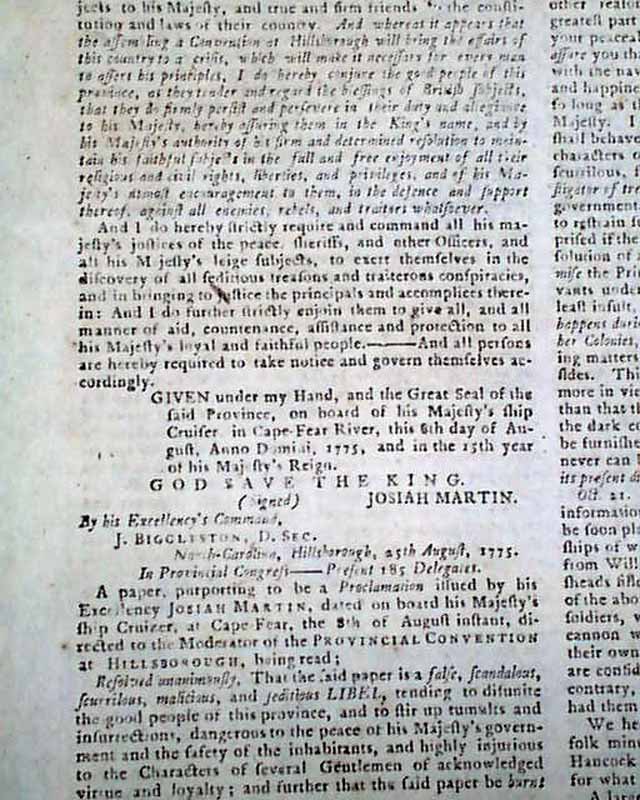
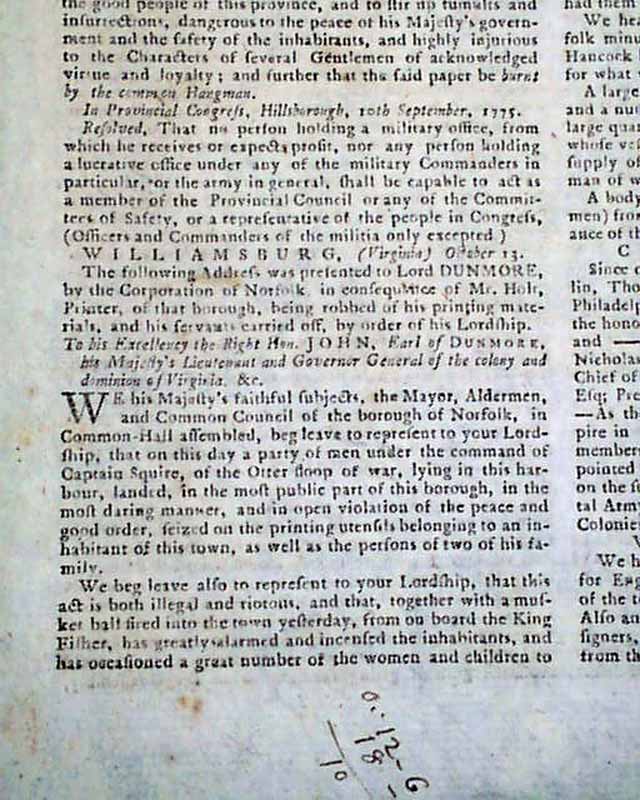
THE PENNSYLVANIA JOURNAL & WEEKLY ADVERTISER, Philadelphia, Nov. 1, 1775 The entire front page & a portion of page 2 are filled with a simply terrific "Proclamation". In May of 1775, Royal Governor Josiah Martin felt that his life was in jeopardy such that he fled the governor's mansion in New Bern for the safety of Fort Johnston at the mouth of the Cape Fear River. By the middle of July 1775, the assembling of large numbers of militia in Brunswick County and neighboring New Hanover County compelled Governor Martin to seek refuge aboard the HMS Cruizer, which had been stationed just offshore. After being confined to such a small space for several weeks, a furious Governor Josiah Martin decided to let his former constituents within the colony of North Carolina know just how he felt about their recent actions. His very angry comments are the text of this "Proclamation" (see for portions). This is followed by further documents relating to the Proclamation (see).
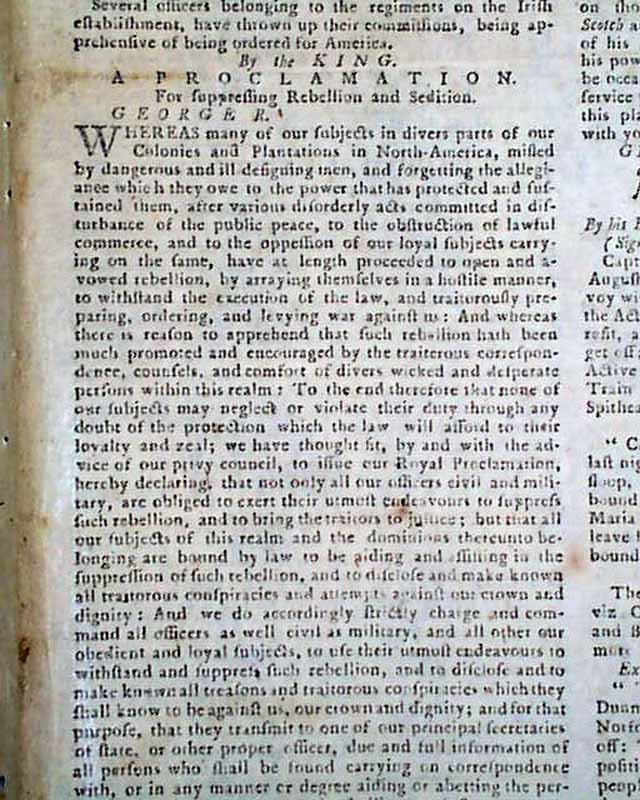
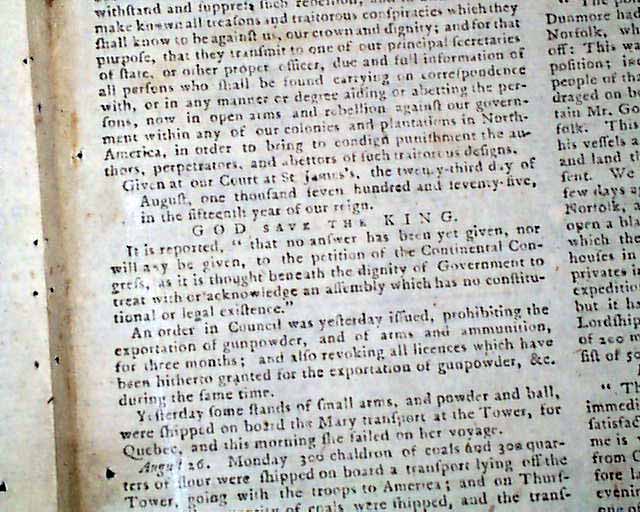
But the most significant content in this issue is on page 3, contains the very historic 'Proclamation For Suppressing Rebellion and Sedition" issued by the King of England. King George officially declared the American colonies to be in rebellion on August 23, 1775 in this Proclamation. This was a slap in the face to Americans who had just sent him a petition of peace, known as the Olive Branch Petition. This petition assured the king that the Americans remained his loyal subjects and had no desire for independence, as long as their grievances were satisfactorily addressed. It was two days later that King George issued this Proclamation. This is one of the actions that persuaded many wavering American colonists that the king was actively seeking to destroy their God-given rights and led to their Declaration of Independence the next year (see for the full text). This was essentially the "war proclamation" by the King of England. If there was an official British document declaring war, this would be it.
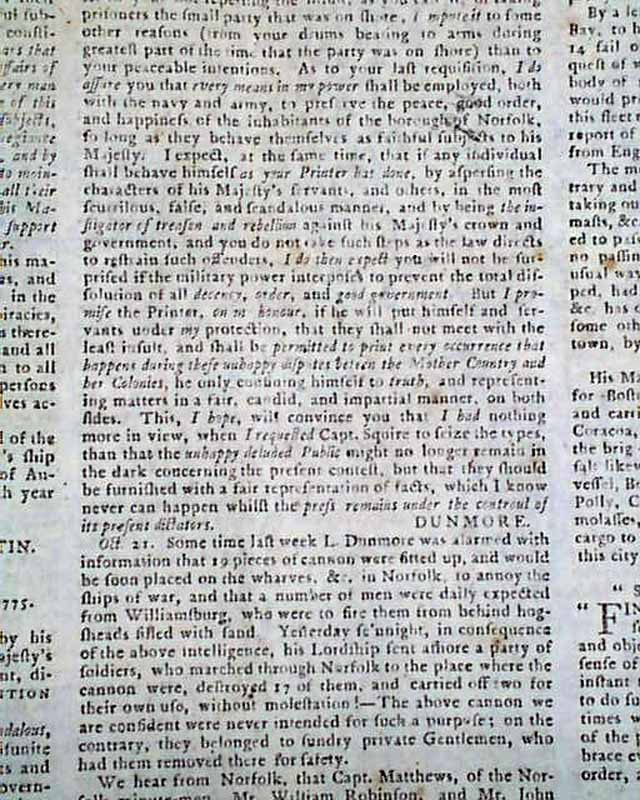
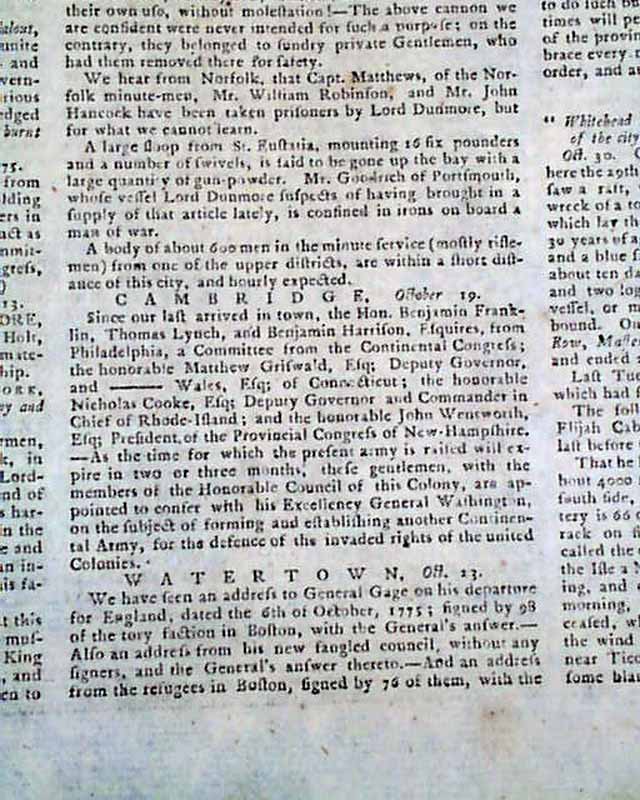
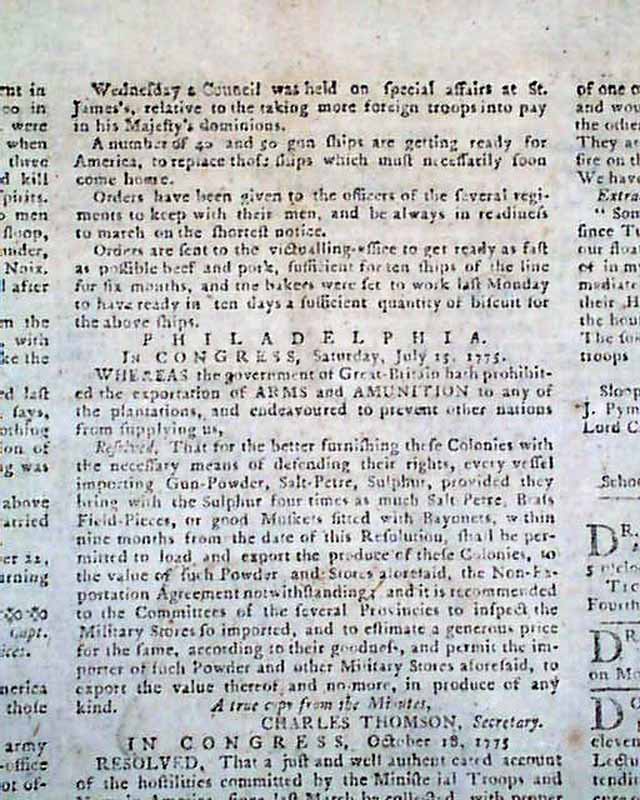
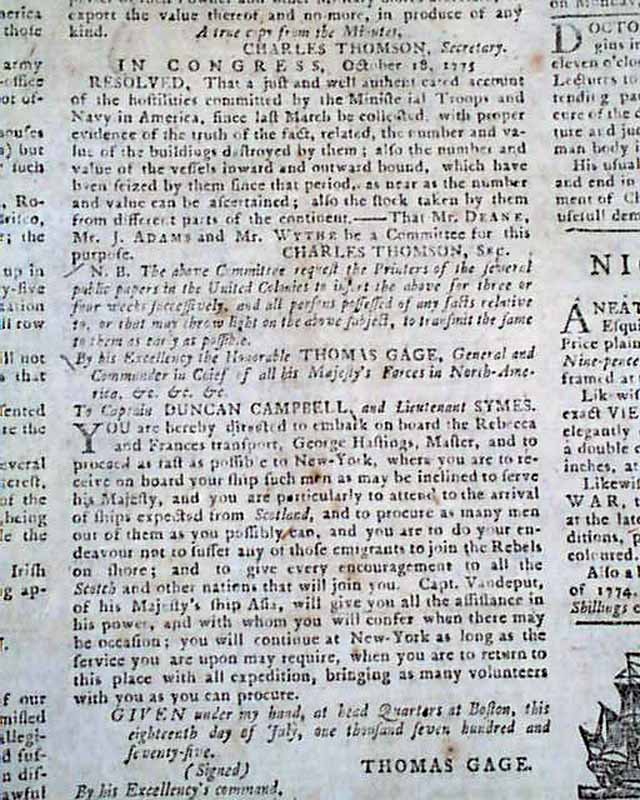
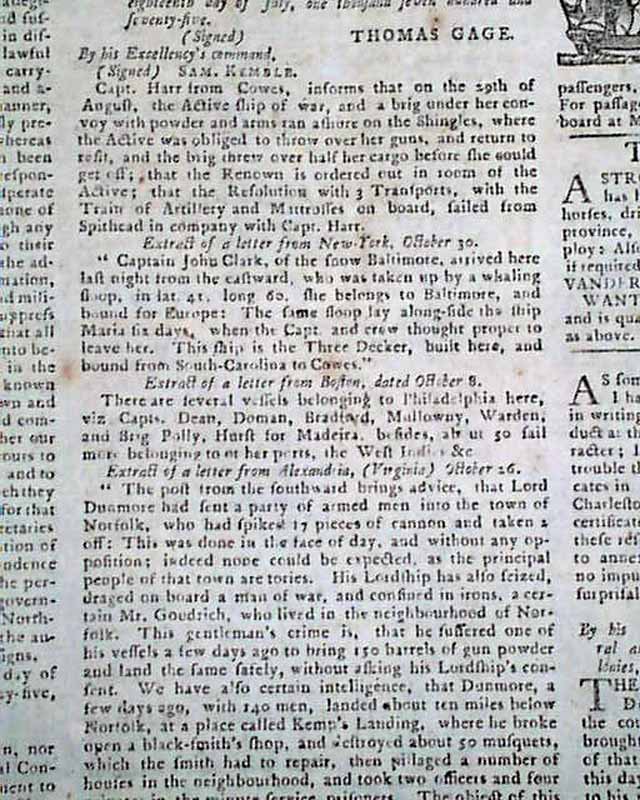
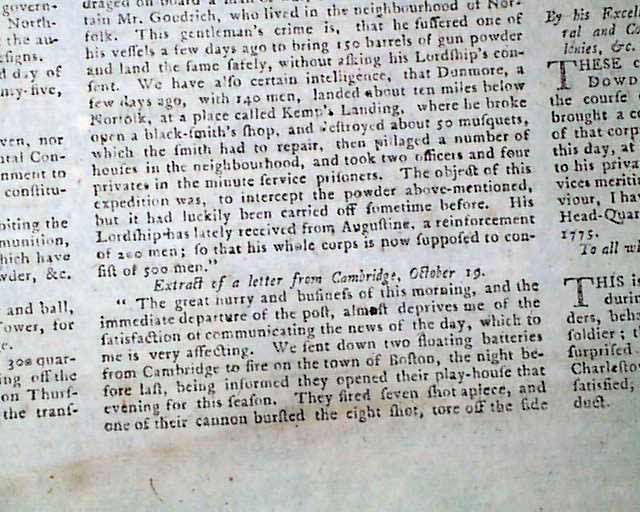
Much more great content on pages 2 & 3 as well, including one item from Virginia noting: "...L. Dunmore was alarmed with information that 19 pieces of cannon were fitted up & would be soon placed on the wharves, etc. in Norfolk to annoy the ships of war & that a number of men were daily expected from Williamsburg...his Lordship sent ashore a party of soldiers who marched through Norfolk to the place where the cannon were, destroyed 17 of them..." with more. And: "...we hear from Norfolk that Capt. Matthews, of the Norfolk minute-men, Mr. William Robinson & Mr. John Hancock have been taken prisoners by Lord Dunmore but for what we cannot learn." Other fine content is shown in the photos.
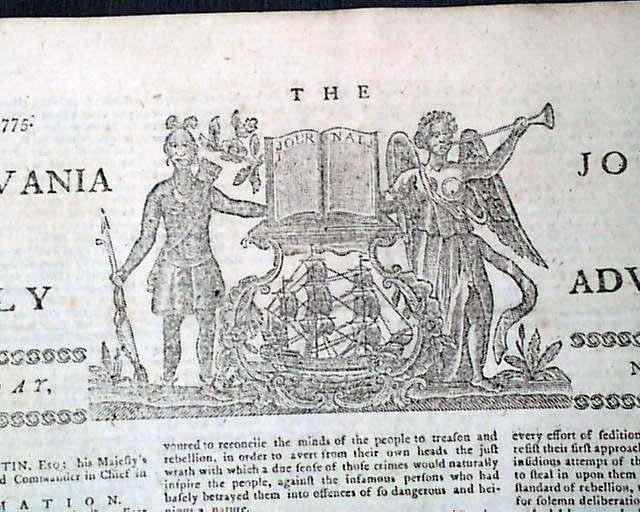
Four pages, a very handsome & large engraving in the masthead, and in excellent condition.
Category: Revolutionary War
No Longer Available