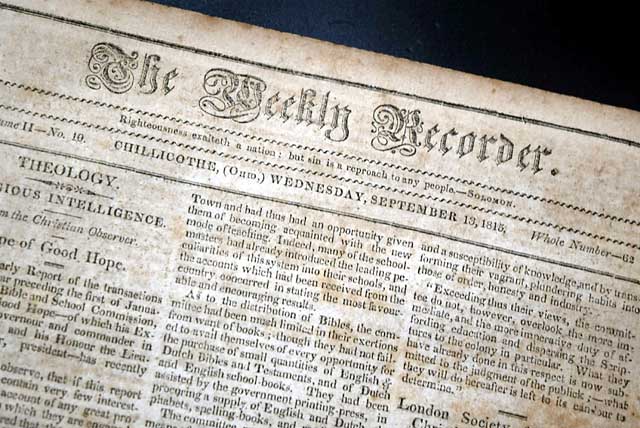
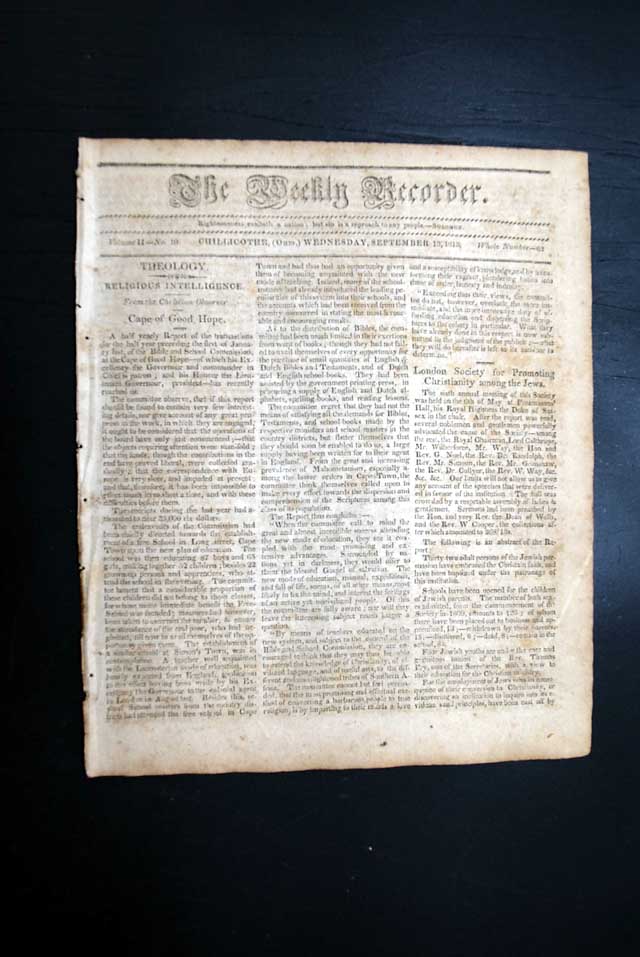
Very early from Ohio, once the capital of the Ohio Territory...
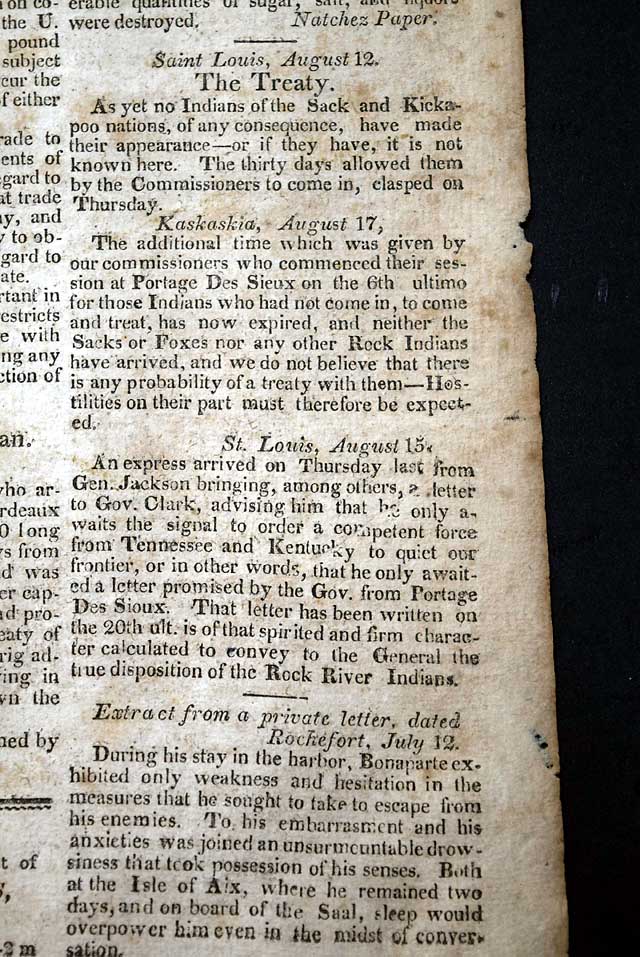
THE WEEKLY RECORDER, Chillicothe, Ohio, Sept. 13, 1815 Page 7 has a report from Saint Louis: "The Treaty with 3 reports mostly concerning the Indians, one item noting: "...from Gen. Jackson bringing...a letter to Gov. Clark advising him that he only awaits the signal to order a competent force from Tennessee and Kentucky to quiet our frontier...".
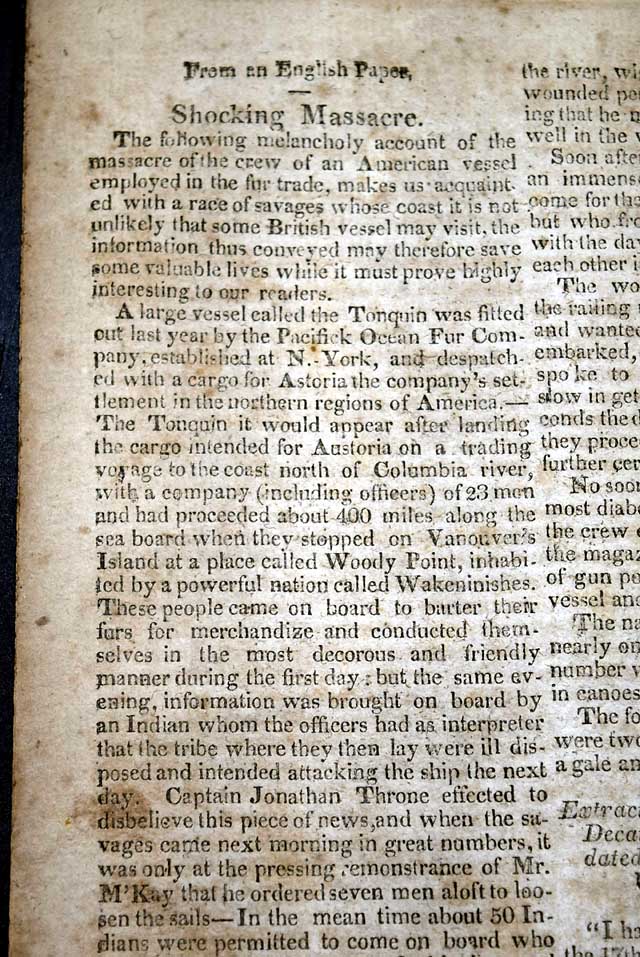
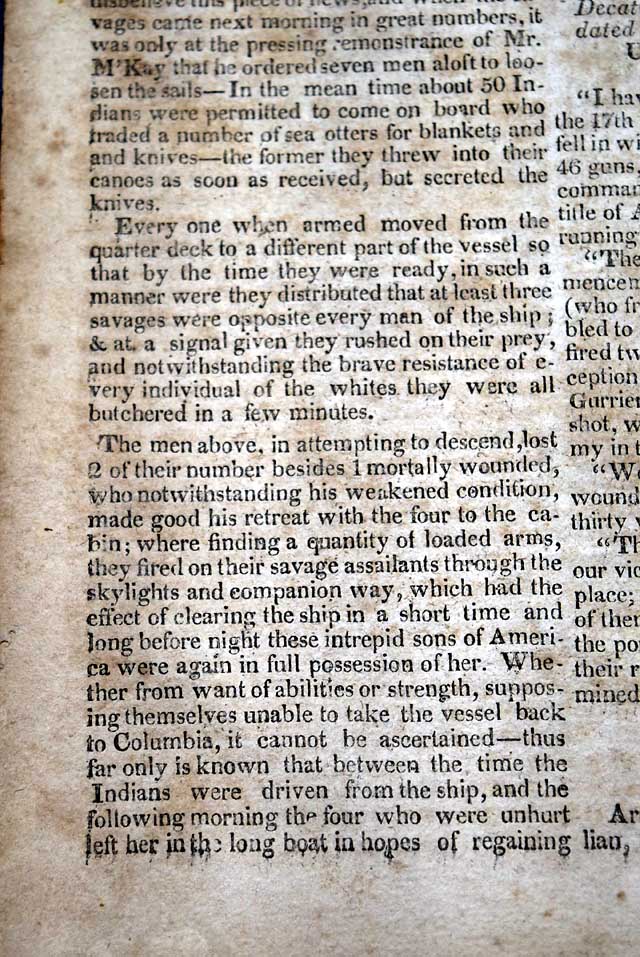
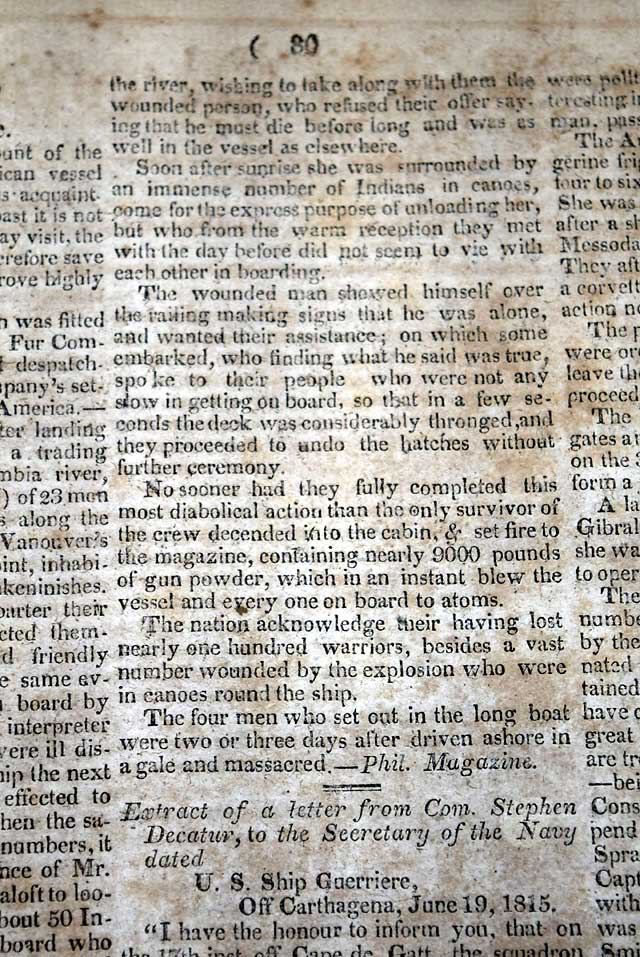
The back page has a report headed: "Shocking Massacre". The report describes the 1811 destruction of the American fur-trading ship Tonquin, owned by John Jacob Astor’s Pacific Fur Company, while trading near Vancouver Island. After Captain Jonathan Thorn reportedly disregarded warnings that local Indigenous traders intended an attack, about fifty men were allowed aboard and suddenly assaulted the dispersed crew, killing Thorn and most of his approximately 23 men. Several wounded Americans initially survived, with four escaping in a longboat, while one remained aboard. When hundreds of Indigenous people returned the following morning to plunder the apparently abandoned vessel, the surviving sailor deliberately ignited the Tonquin’s large powder magazine, blowing up the ship and reportedly killing nearly 100 warriors and wounding many others. The four men who had escaped were later driven ashore and killed, leaving the Tonquin and virtually its entire crew lost in one of the most dramatic disasters of the early American Pacific fur trade.
This was one of Ohio's most important frontier and early statehood communities. Chillicothe served as the capital of the Ohio Territory and later the state itself for several periods between 1803 and 1812, making it a center of politics, commerce, and communication in the Old Northwest.
Published during the early 19th century, the Weekly Recorder was part of the rapidly expanding newspaper culture that accompanied settlement west of the Appalachian Mountains. Of the first ten newspapers published in Ohio, only two were from the 18th century. This title was the 9th by one ranking. Of the first ten, four were published in Chillicothe, giving evidence to the historical significance of this town.
Six pages, 9 by 11 inches, nice condition.
Item from our most recent catalog - #371 - released for October, 2026
Other issues you may like
§ related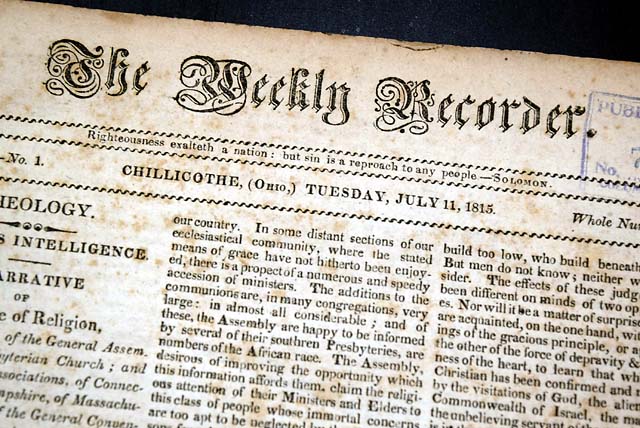
THE WEEKLY RECORDER, Chillicothe, Ohio, July 11, 1815
- Very early & rare for the state of Ohio
This was one of Ohio's most important frontier and early
...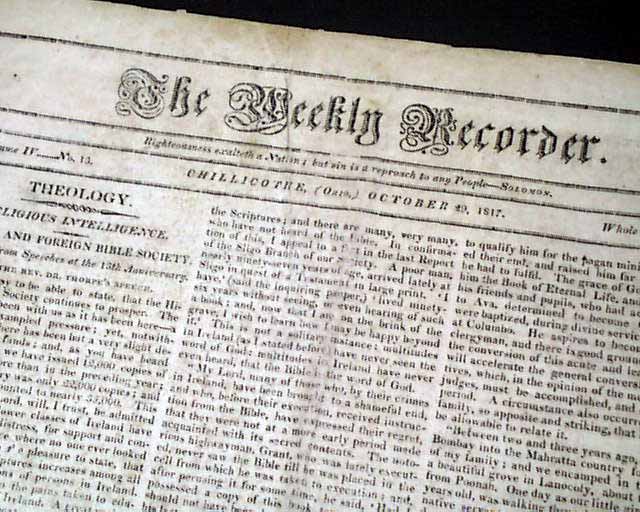
THE WEEKLY RECORDER, Chillicothe, Ohio, Oct. 29, 1817
- Very rare publication
- 1st & 3rd capital of Ohio
- Ross County
A very early Ohio newspaper rarely offered
...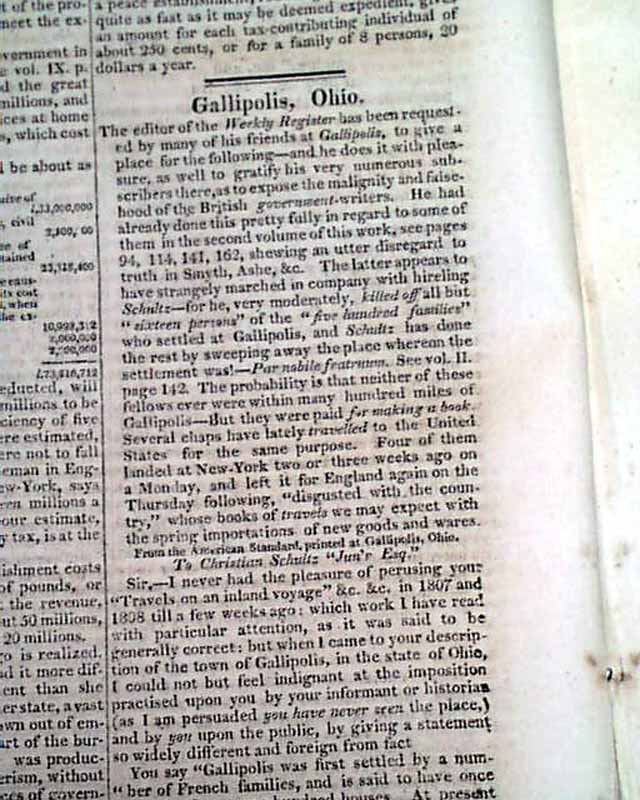
NILES' WEEKLY REGISTER, Baltimore, Sept. 21, 1816 Nearly a full page has: "Gallipolis, Ohio" which provides a brief but historic background of this
...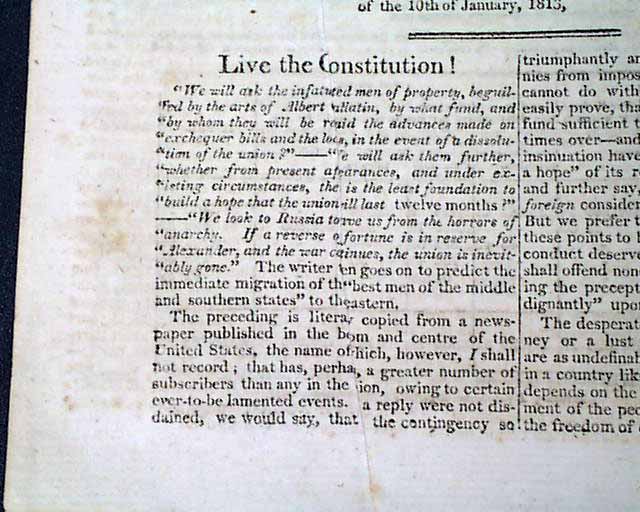
THE WEEKLY REGISTER, Baltimore, Feb. 13, 1813 Inside has; "Law of Ohio - An Act for the Encouragement of Volunteers in the North-Western Army of the United
...