Item # 727251
·
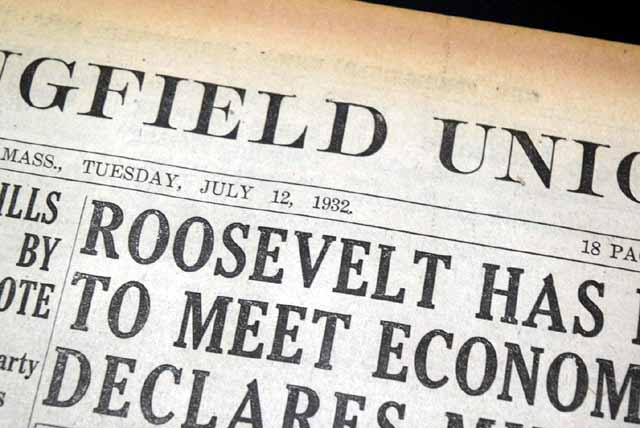
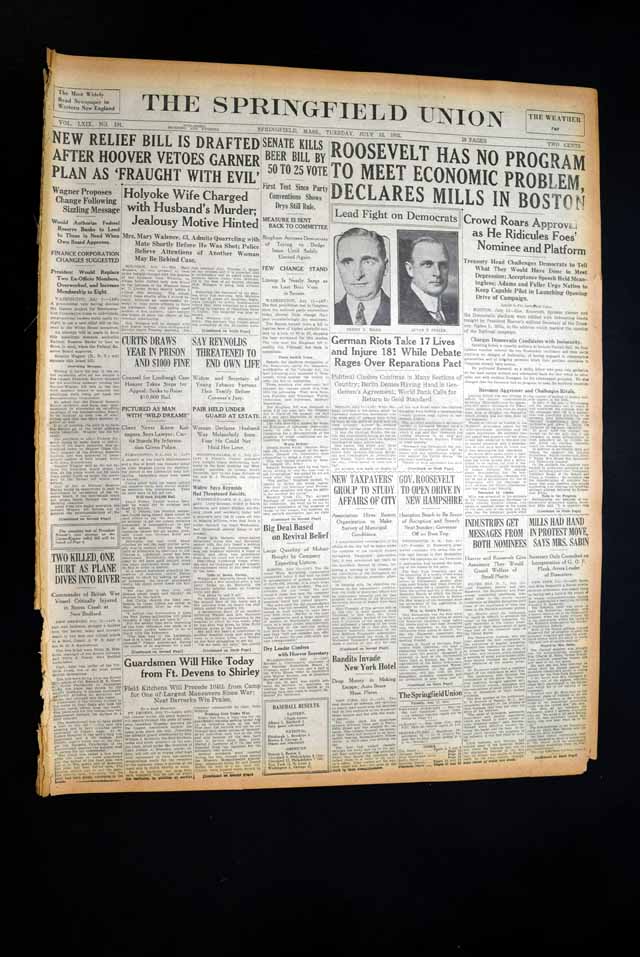
THE SPRINGFIELD UNION, Mass. July 12, 1932
* Prohibition coming to an end ?
* The "Great Depression" era
* No beer - alcohol - liquor
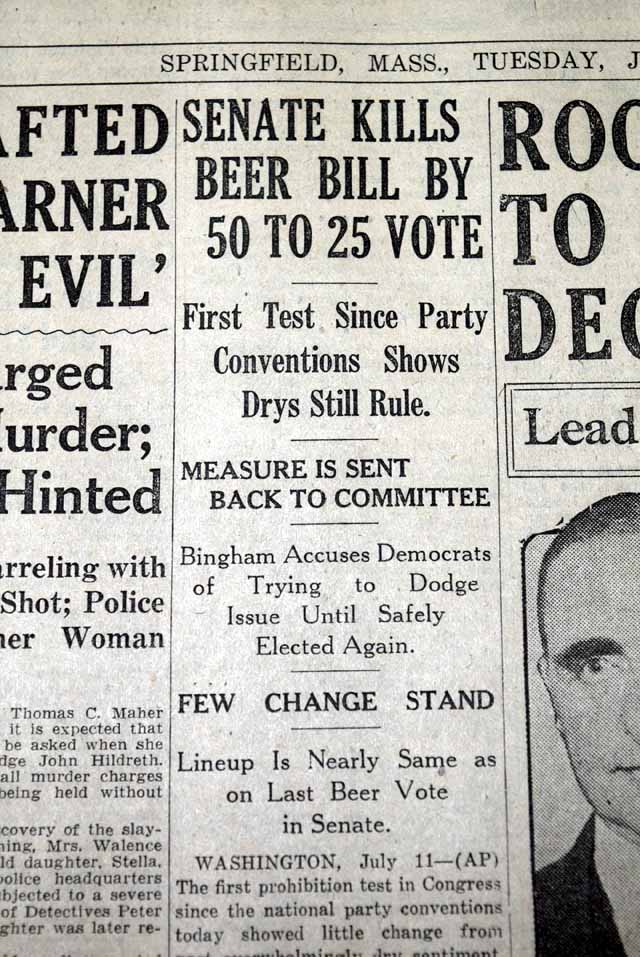
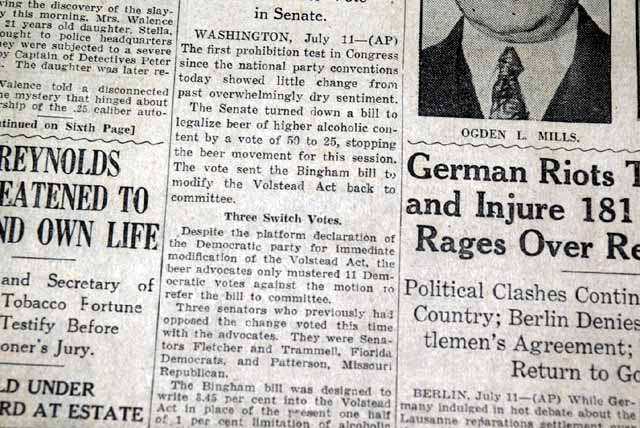
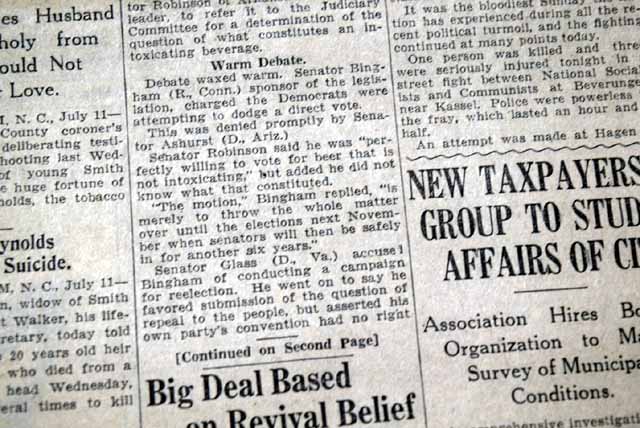
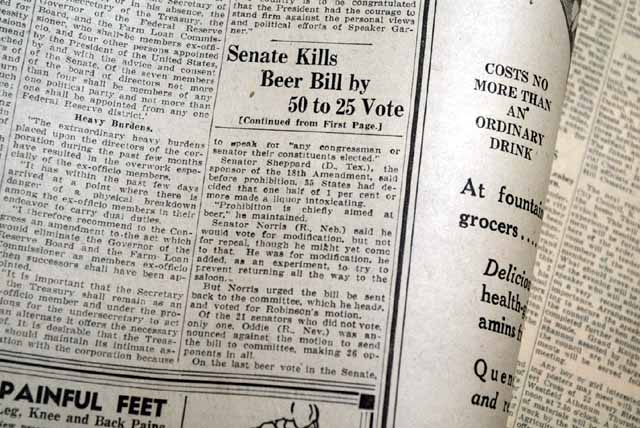
The top of the front page has a one column heading: "SENATE KILLS BEER BILL BY 50-25 VOTE" with subheads. (see images)
Complete with all 18 pages, light toning and a little wear at the margins, generally in good condition.
Background: The Senate's decisive 50-to-25 vote on July 11, 1932, to bury the legal-beer rider to the Federal Home Loan Bank Bill stands as a critical, final legislative flashpoint before the collapse of National Prohibition. Coming deep in the Great Depression and on the heels of both major political parties' national conventions, this event highlighted a desperate, tactical clash: "wet" lawmakers sought to legalize 2.75% beer by framing it as a "non-intoxicating" source of desperately needed federal tax revenue and employment, while "dry" traditionalists and tactical leaders like Senator Joseph T. Robinson prioritized passing economic relief without a constitutional quagmire. This vote is historically significant because it drew a definitive line in the sand; it exposed the fracturing of the Prohibitionist stronghold just months before the landslide election of Franklin D. Roosevelt, serving as the absolute legislative breaking point that directly catalyzed the subsequent passage of the Cullen-Harrison Act and the ratification of the Twenty-First Amendment in 1933.
* Prohibition coming to an end ?
* The "Great Depression" era
* No beer - alcohol - liquor
The top of the front page has a one column heading: "SENATE KILLS BEER BILL BY 50-25 VOTE" with subheads. (see images)
Complete with all 18 pages, light toning and a little wear at the margins, generally in good condition.
Background: The Senate's decisive 50-to-25 vote on July 11, 1932, to bury the legal-beer rider to the Federal Home Loan Bank Bill stands as a critical, final legislative flashpoint before the collapse of National Prohibition. Coming deep in the Great Depression and on the heels of both major political parties' national conventions, this event highlighted a desperate, tactical clash: "wet" lawmakers sought to legalize 2.75% beer by framing it as a "non-intoxicating" source of desperately needed federal tax revenue and employment, while "dry" traditionalists and tactical leaders like Senator Joseph T. Robinson prioritized passing economic relief without a constitutional quagmire. This vote is historically significant because it drew a definitive line in the sand; it exposed the fracturing of the Prohibitionist stronghold just months before the landslide election of Franklin D. Roosevelt, serving as the absolute legislative breaking point that directly catalyzed the subsequent passage of the Cullen-Harrison Act and the ratification of the Twenty-First Amendment in 1933.
Category: The 20th Century
Price
$48
100% Authentic: Original printing, never a reproduction.
Other issues you may like
§ related
End of U.S. Prohibition nears in 1933...
BOSTON EVENING TRANSCRIPT, Nov. 29, 1933
* End of prohibition (final week) - beer & liquor returning
* Repeal of 18th Amendment with applied 21st Amendment
Th...
* End of prohibition (final week) - beer & liquor returning
* Repeal of 18th Amendment with applied 21st Amendment
Th...
Nov 1933
$34
Prohibition ending in 1933... Beer returning...
THE KNICKERBOCKER PRESS, Albany, New York, March 14, 1933
* Prohibition ending - beer returning
* President Franklin D. Roosevelt - FDR
The top of...
* Prohibition ending - beer returning
* President Franklin D. Roosevelt - FDR
The top of...
Mar 1933
$52
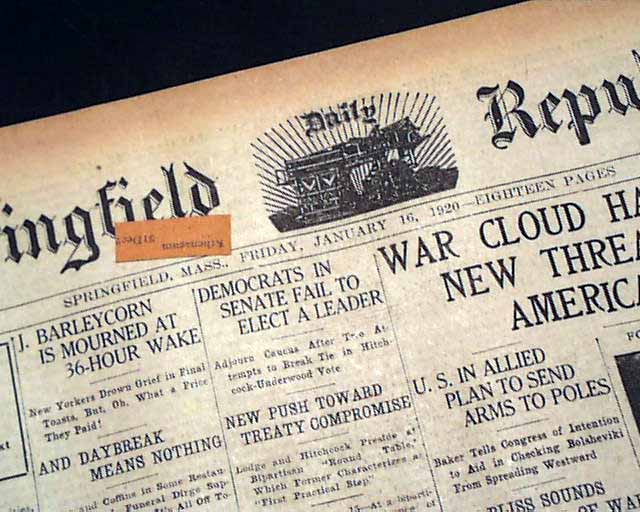
Prohibition begins... No Beer...
THE SPRINGFIELD REPUBLICAN, Springfield, Massachusetts, January 16, 1920 This 18 page newspaper has one column headlines on the front page that include:...
Jan 1920
$52
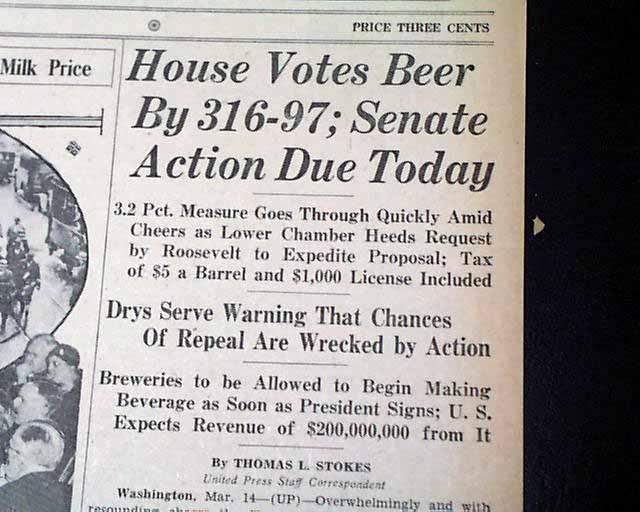
Prohibition ending in 1933... Beer returning...
THE KNICKERBOCKER PRESS, Albany, New York, March 15, 1933
* Prohibition ending - beer returning
* House passes 3.2 % beer bill
The top of the front...
* Prohibition ending - beer returning
* House passes 3.2 % beer bill
The top of the front...
Mar 1933
$58