

World's 1st nuclear device explosion announcement...
Item # 727167
September 12, 1945
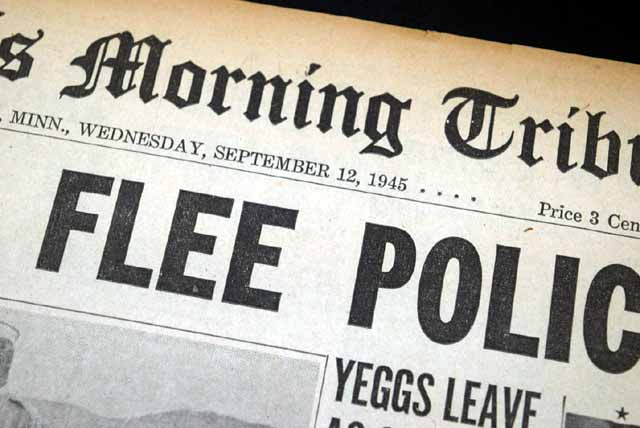
MINNEAPOLIS MORNING TRIBUNE, Sept. 12, 1945
* Manhattan Project comes to fruition
* Director physicist J. Robert Oppenheimer
* Post atomic bombing of Hiroshima & Nagasaki
* Japanese claim of radiation in deaths
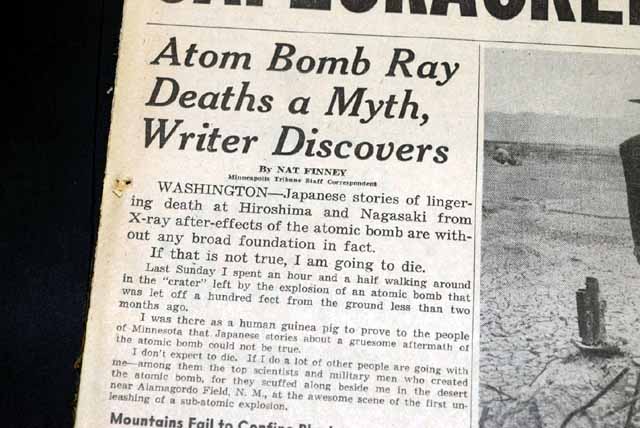
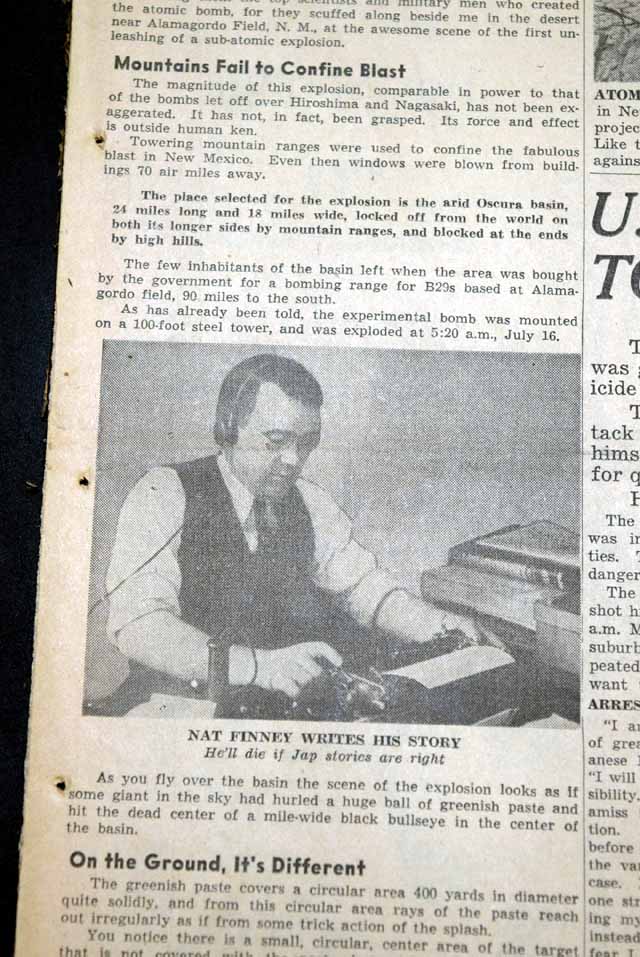
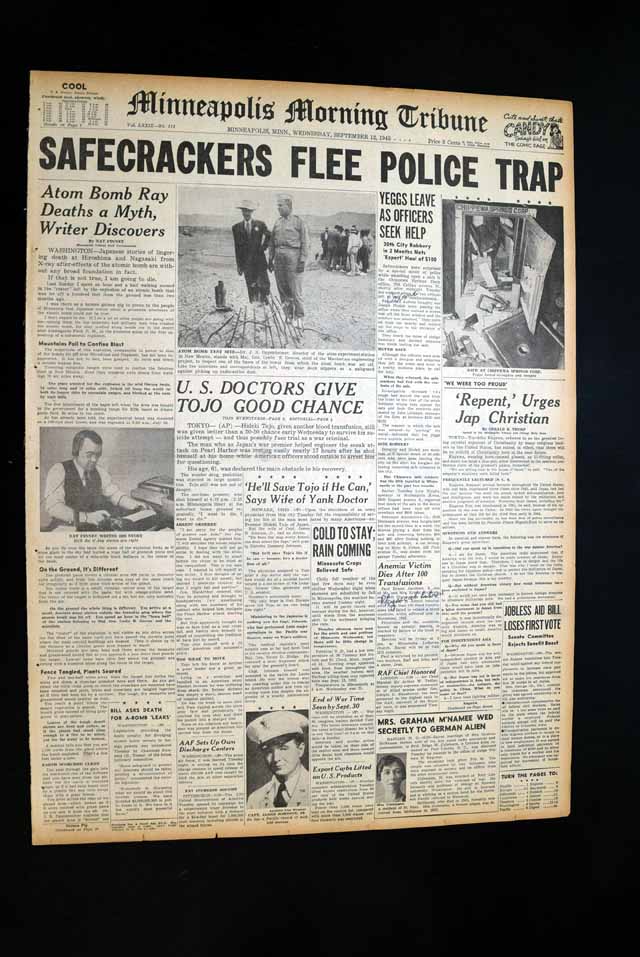
The front page has a two column heading: "Atom Bomb Ray Deaths a Myth, Writer Discovers" with photo of Nat Finney. (see images)
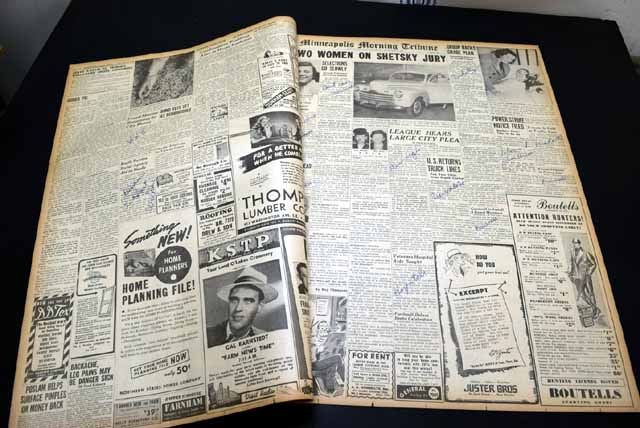
Complete with all 20 pages, several small ink notations throughout with 2 on the front page, but none affecting the key report, some tiny binding holes along the spine, generally good.
Background: In September 1945, Nat S. Finney, a Washington correspondent for the Minneapolis Tribune, achieved a monumental journalistic coup by becoming the first civilian newspaper reporter granted access into the top-secret atomic bomb laboratory at Los Alamos, New Mexico, just weeks after the bombings of Hiroshima and Nagasaki. This assignment resulted in a rare, historic series of dispatches that served as the American public's first non-governmental glimpse into the birthplace of the nuclear age, shifting the narrative from sterile military press releases to a deeply human, analytical examination of the "Battle of the Laboratories." The immense significance of Finney’s September 1945 reporting lies in how he captured the immediate, raw existential dread of J. Robert Oppenheimer and his fellow scientists, who were already openly grappling with the geopolitical fallout and moral weight of their creation. This rare publication cracked open the blanket of wartime censorship and established a vital precedent for press scrutiny of nuclear policy; it also ignited Finney’s own career-long crusade against government classification, directly paving the way for his 1948 Pulitzer Prize-winning exposure of the Truman administration's peacetime censorship plans.
* Manhattan Project comes to fruition
* Director physicist J. Robert Oppenheimer
* Post atomic bombing of Hiroshima & Nagasaki
* Japanese claim of radiation in deaths
The front page has a two column heading: "Atom Bomb Ray Deaths a Myth, Writer Discovers" with photo of Nat Finney. (see images)
Complete with all 20 pages, several small ink notations throughout with 2 on the front page, but none affecting the key report, some tiny binding holes along the spine, generally good.
Background: In September 1945, Nat S. Finney, a Washington correspondent for the Minneapolis Tribune, achieved a monumental journalistic coup by becoming the first civilian newspaper reporter granted access into the top-secret atomic bomb laboratory at Los Alamos, New Mexico, just weeks after the bombings of Hiroshima and Nagasaki. This assignment resulted in a rare, historic series of dispatches that served as the American public's first non-governmental glimpse into the birthplace of the nuclear age, shifting the narrative from sterile military press releases to a deeply human, analytical examination of the "Battle of the Laboratories." The immense significance of Finney’s September 1945 reporting lies in how he captured the immediate, raw existential dread of J. Robert Oppenheimer and his fellow scientists, who were already openly grappling with the geopolitical fallout and moral weight of their creation. This rare publication cracked open the blanket of wartime censorship and established a vital precedent for press scrutiny of nuclear policy; it also ignited Finney’s own career-long crusade against government classification, directly paving the way for his 1948 Pulitzer Prize-winning exposure of the Truman administration's peacetime censorship plans.
Category: The 20th Century


