

Hagia Sophia Mosque...
Item # 727164
November 20, 1933
THE NEW YORK TIMES, November 20, 1933
* Hagia Sophia Mosque
* Thomas Whittemore
* Christian mosaics discovery
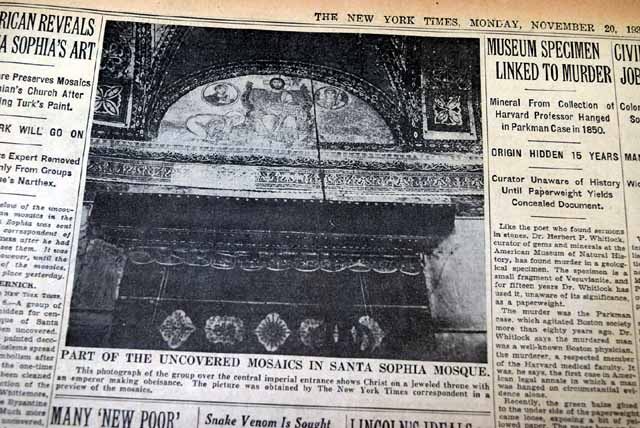
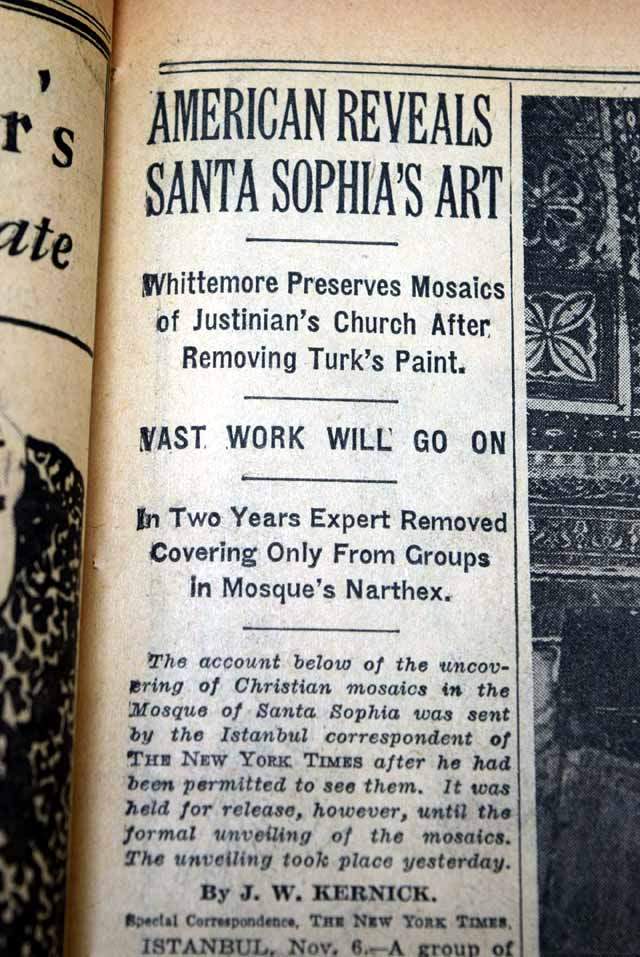
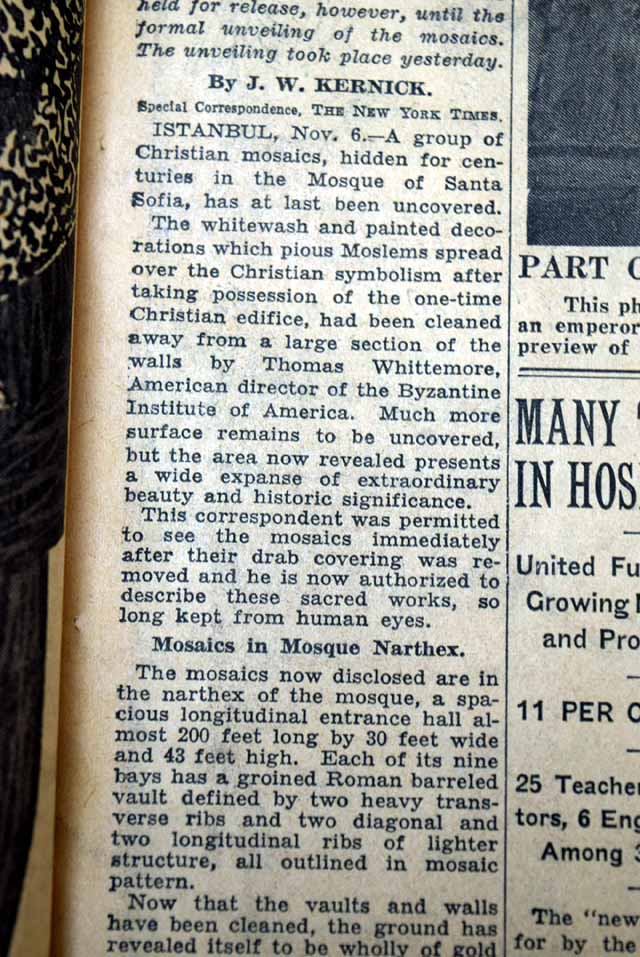
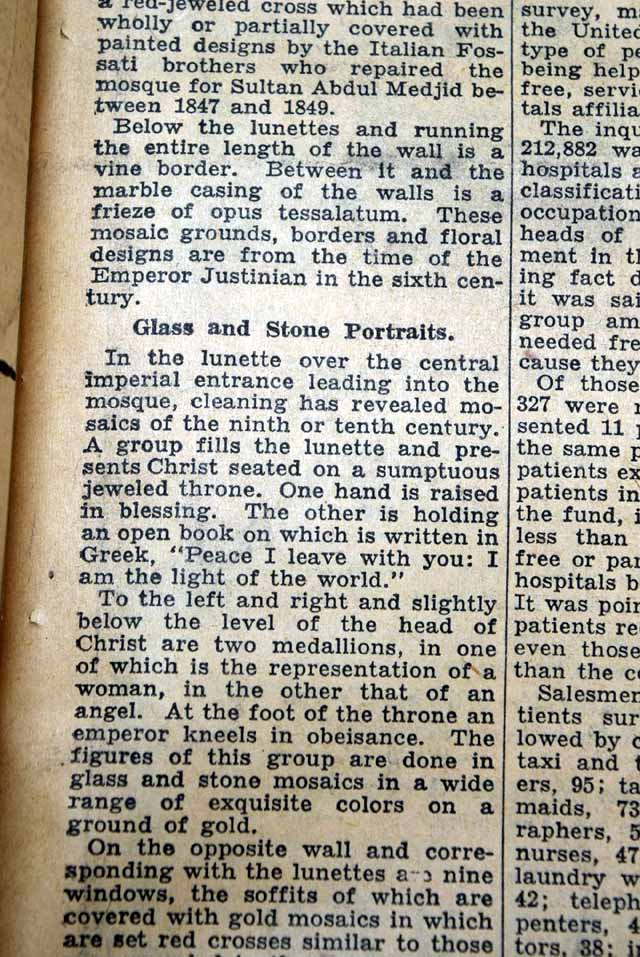
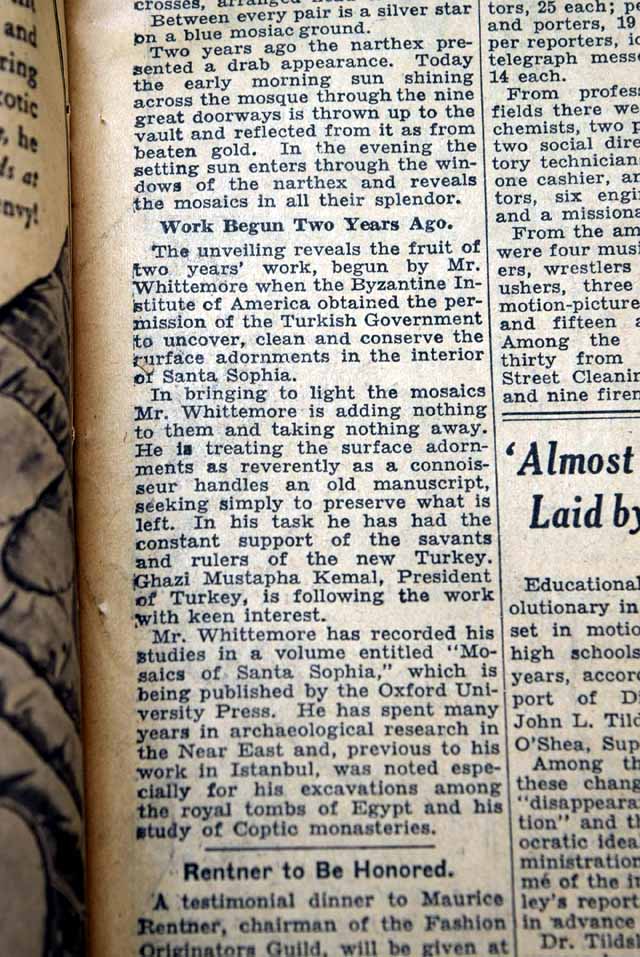
The top of page has a one column heading: "AMERICAN REVEALS SANTA SOPHIA'S ART" with subheads and related photo (fuzzy). (see) Coverage on Thomas Whittemore uncovering christian mosaics inside the Hagia Sophia in Istanbul, Turkey.
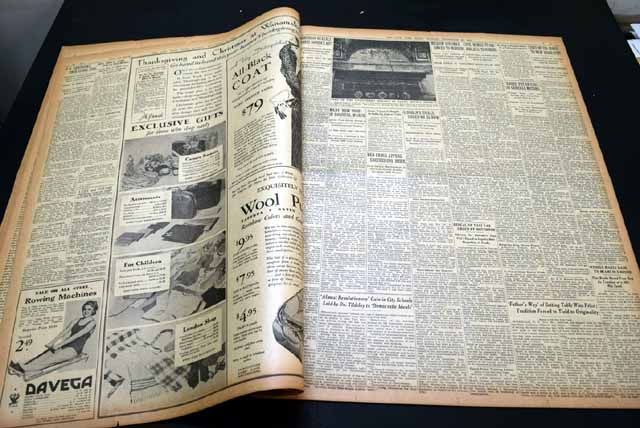
Complete with 34 pages, light toning and a little wear at the margins, generally nice.
Background: Published on November 20, 1933, this rare 34-page issue of The New York Times captures a monumental intersection of art history and global politics: the first public revelation of the breathtaking 9th- to 12th-century Byzantine Christian mosaics inside Istanbul’s Hagia Sophia. Hidden beneath centuries of Ottoman plaster and paint following the 1453 conversion of the cathedral into a mosque, these masterpieces were carefully uncovered by American scholar Thomas Whittemore and his Byzantine Institute team. The significance of this specific front-page coverage—complete with a rare, early photograph of the unfolding discovery—cannot be overstated; Whittemore’s high-profile conservation work acted as the direct catalyst for Mustafa Kemal Atatürk, the founder of the modern, secular Republic of Turkey, to officially decree exactly one year later in November 1934 that the building be transformed from an active mosque into a public museum. Because complete, multi-section daily newspapers from the Interwar period are highly susceptible to yellowing and degradation, finding an intact, 34-page copy of this exact Monday edition is an exceptional rarity. It stands as a vital, physical time capsule documenting the precise moment the Western world got its first glimpse of long-lost imperial treasures, cementing Hagia Sophia’s 20th-century legacy as a shared cultural bridge between East and West.
* Hagia Sophia Mosque
* Thomas Whittemore
* Christian mosaics discovery
The top of page has a one column heading: "AMERICAN REVEALS SANTA SOPHIA'S ART" with subheads and related photo (fuzzy). (see) Coverage on Thomas Whittemore uncovering christian mosaics inside the Hagia Sophia in Istanbul, Turkey.
Complete with 34 pages, light toning and a little wear at the margins, generally nice.
Background: Published on November 20, 1933, this rare 34-page issue of The New York Times captures a monumental intersection of art history and global politics: the first public revelation of the breathtaking 9th- to 12th-century Byzantine Christian mosaics inside Istanbul’s Hagia Sophia. Hidden beneath centuries of Ottoman plaster and paint following the 1453 conversion of the cathedral into a mosque, these masterpieces were carefully uncovered by American scholar Thomas Whittemore and his Byzantine Institute team. The significance of this specific front-page coverage—complete with a rare, early photograph of the unfolding discovery—cannot be overstated; Whittemore’s high-profile conservation work acted as the direct catalyst for Mustafa Kemal Atatürk, the founder of the modern, secular Republic of Turkey, to officially decree exactly one year later in November 1934 that the building be transformed from an active mosque into a public museum. Because complete, multi-section daily newspapers from the Interwar period are highly susceptible to yellowing and degradation, finding an intact, 34-page copy of this exact Monday edition is an exceptional rarity. It stands as a vital, physical time capsule documenting the precise moment the Western world got its first glimpse of long-lost imperial treasures, cementing Hagia Sophia’s 20th-century legacy as a shared cultural bridge between East and West.
Category: The 20th Century


