

Lea County, New Mexico oil well disaster...
Item # 727118
June 24, 1934
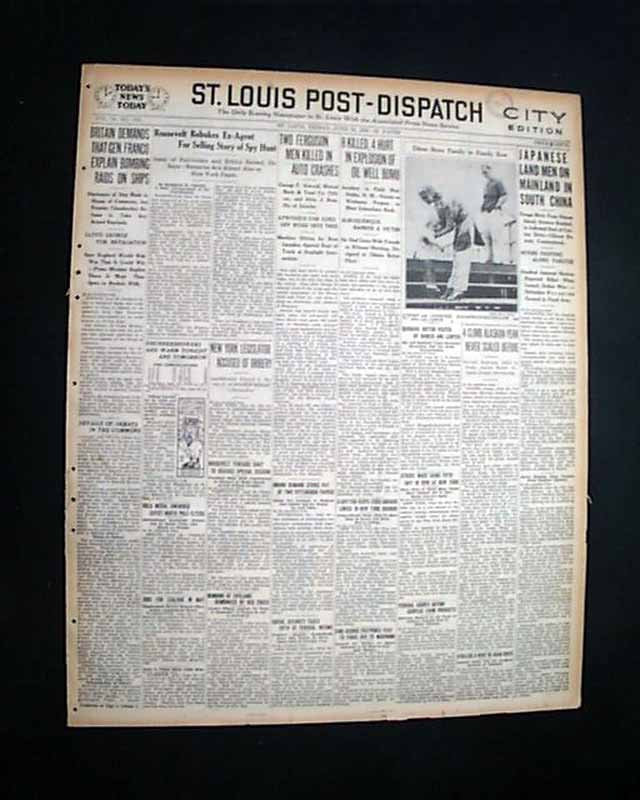
ST. LOUIS POST-DISPATCH, June 24, 1938
* Hobbs, Lea County, New Mexico explosion
* Eunice-Monument Field Oil Field disaster
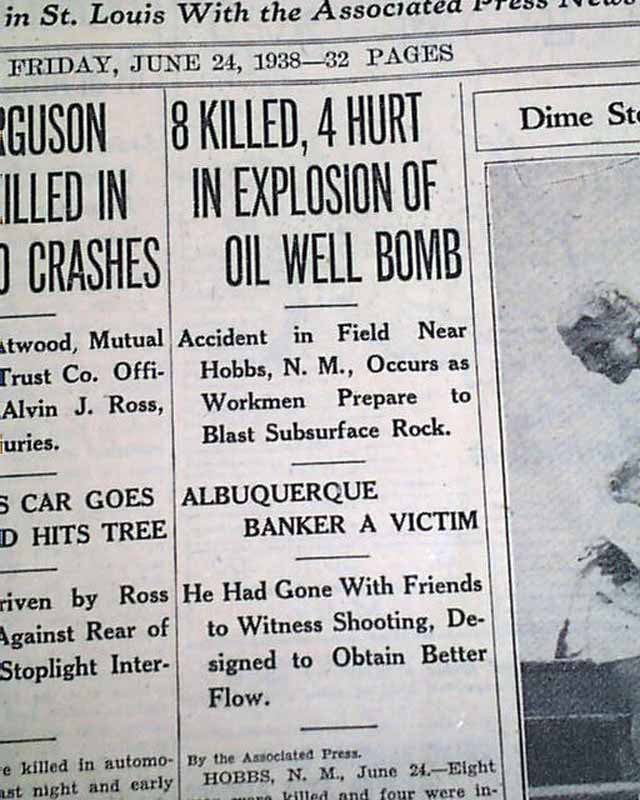
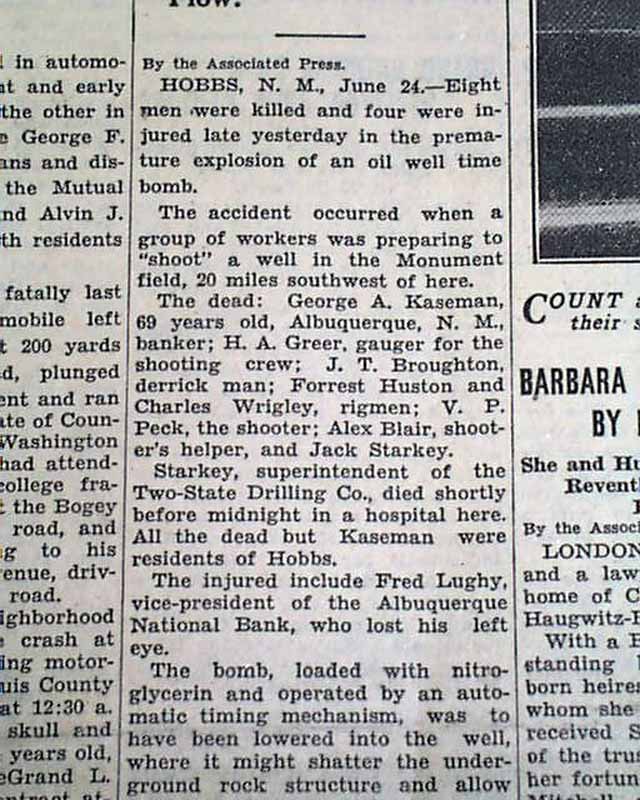
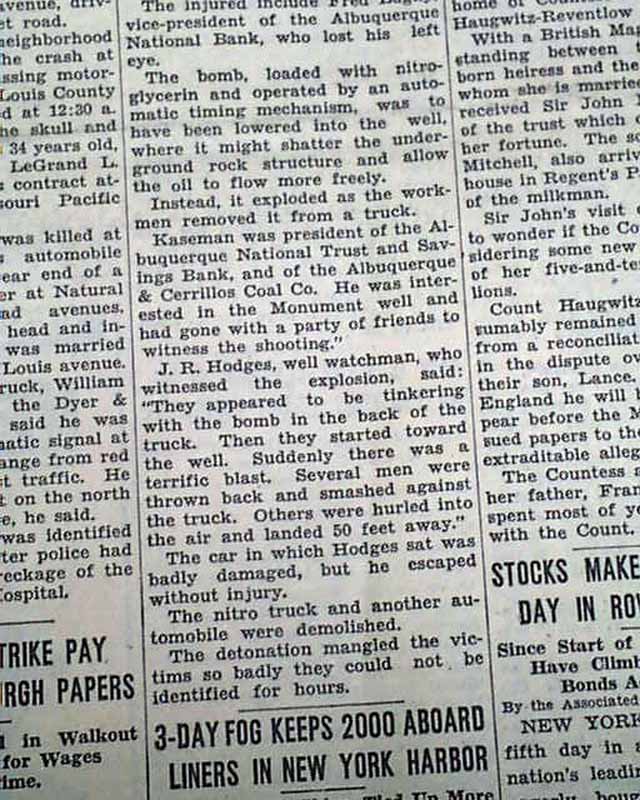
The top of the front page has a one column heading: "8 KILLED, 4 HURT IN EXPLOSION OF OIL WELL BOMB" with subheads. (see images)
Complete with all 30+ pages, light toning at the margins, small binding holes along the spine, generally very nice.
Background: The 1938 Monument Oil Field disaster holds significant historical importance as a tragic turning point that underscored the extreme volatility of early petroleum extraction methods and accelerated the industry's shift toward safer technologies. By claiming the lives of eight men—including George Kaseman, one of New Mexico's most prominent banking and industrial titans—the catastrophe commanded national media attention and intensified regulatory scrutiny on field safety. At the time, "shooting" wells with highly unstable liquid nitroglycerine was a standard but perilous practice used to stimulate oil flow. The absolute devastation of the Monument explosion served as a stark catalyst for the American petroleum industry to phase out liquid nitro in favor of safer, manufactured solid explosives and, ultimately, to pioneer non-explosive stimulation methods like hydraulic fracturing in the late 1940s. Consequently, the disaster remains a definitive marker in the evolution of industrial safety regulations and technological modernization within the Permian Basin and the wider global oil sector.
* Hobbs, Lea County, New Mexico explosion
* Eunice-Monument Field Oil Field disaster
The top of the front page has a one column heading: "8 KILLED, 4 HURT IN EXPLOSION OF OIL WELL BOMB" with subheads. (see images)
Complete with all 30+ pages, light toning at the margins, small binding holes along the spine, generally very nice.
Background: The 1938 Monument Oil Field disaster holds significant historical importance as a tragic turning point that underscored the extreme volatility of early petroleum extraction methods and accelerated the industry's shift toward safer technologies. By claiming the lives of eight men—including George Kaseman, one of New Mexico's most prominent banking and industrial titans—the catastrophe commanded national media attention and intensified regulatory scrutiny on field safety. At the time, "shooting" wells with highly unstable liquid nitroglycerine was a standard but perilous practice used to stimulate oil flow. The absolute devastation of the Monument explosion served as a stark catalyst for the American petroleum industry to phase out liquid nitro in favor of safer, manufactured solid explosives and, ultimately, to pioneer non-explosive stimulation methods like hydraulic fracturing in the late 1940s. Consequently, the disaster remains a definitive marker in the evolution of industrial safety regulations and technological modernization within the Permian Basin and the wider global oil sector.
Category: The 20th Century


