




1982 Michael Jackson...
Item # 726864
November 14, 1982
CALENDAR SECTION only of the Los Angeles Times, Nov. 14, 1982
* Michael Jackson "King of Pop"
* American singer, songwriter & dancer
* Epic and MCA Records dispute
* Deep emotional connection w/ E.T.
* 2 weeks prior to "Thriller" album release
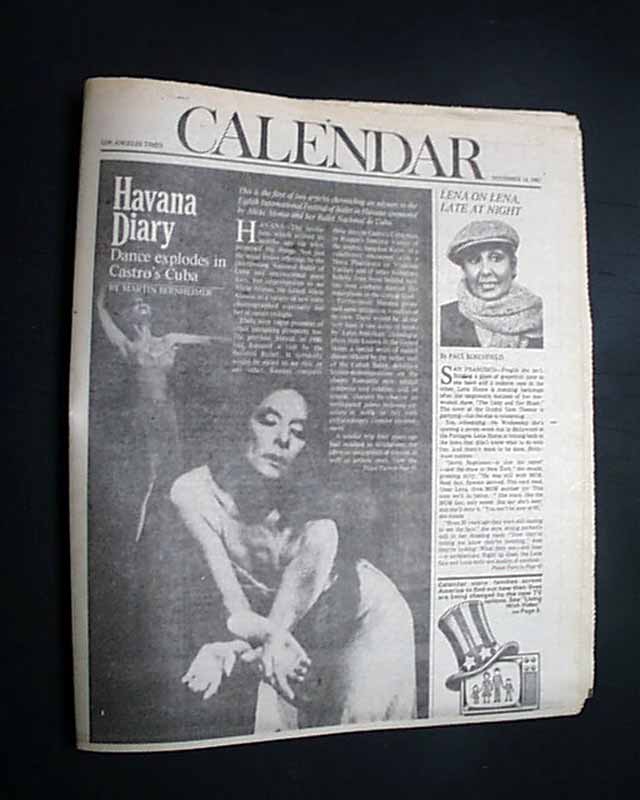
The Sunday "Calendar" sections of the Los Angeles Times in the early 1980s served as the definitive cultural barometer for the "entertainment capital of the world," transitioning from a standard arts supplement into a sophisticated trade-journal-meets-lifestyle-magazine.
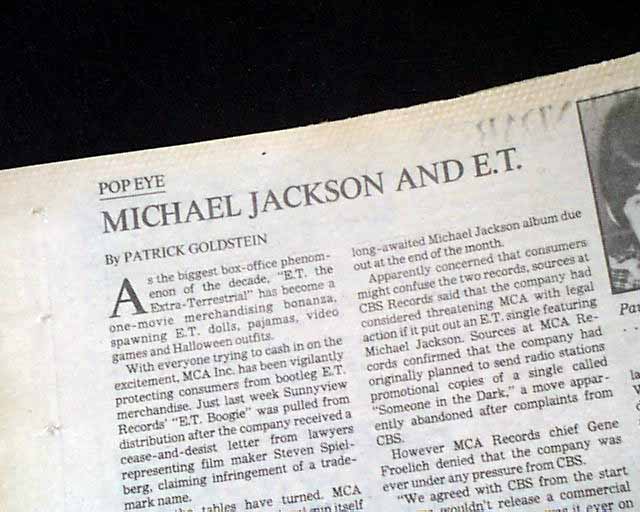
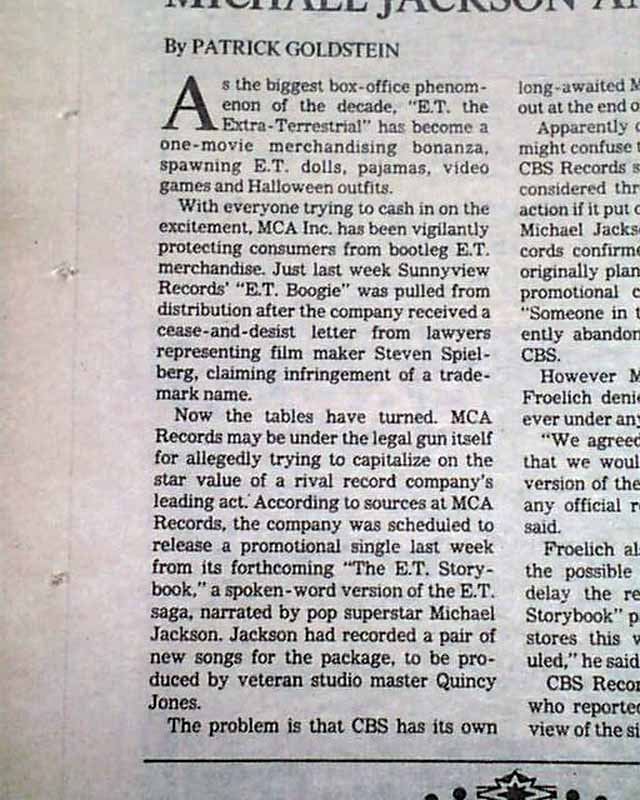
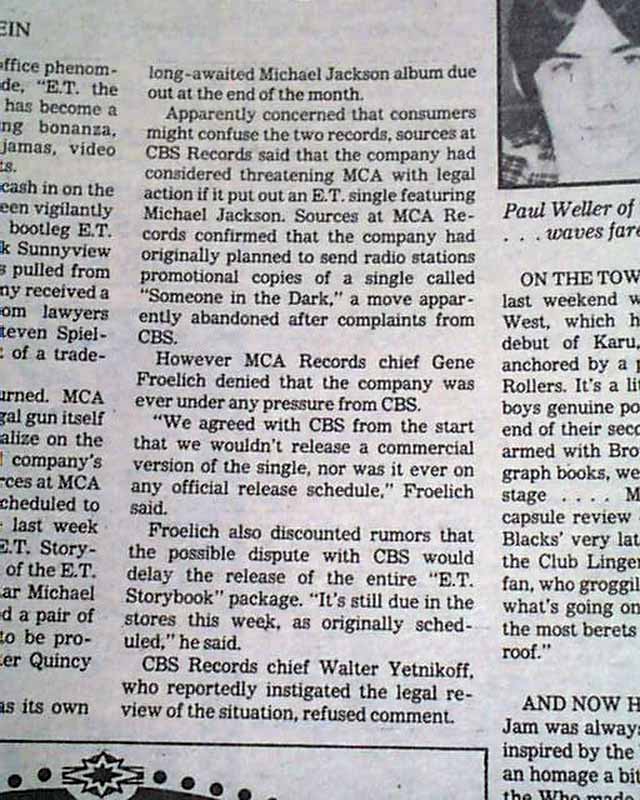
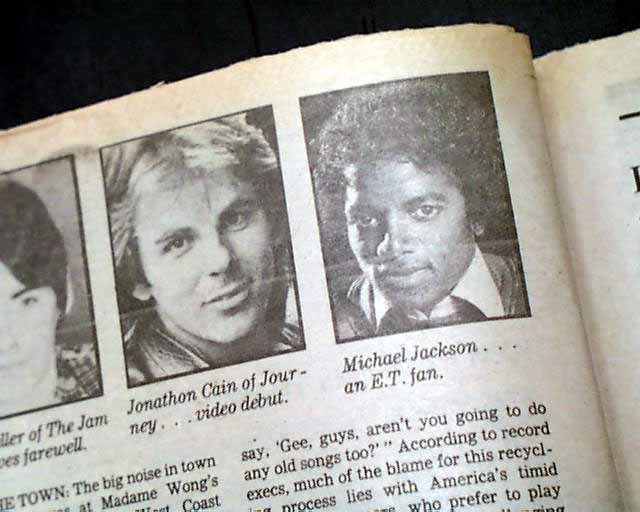
The top of page 82 has a heading: "MICHAEL JACKSON AND E.T." with lead-in: "Pop Eye" and small photo of Jackson. (see images)
I suspect this to be an extremely rare item because their was really no reason to save it at the time.
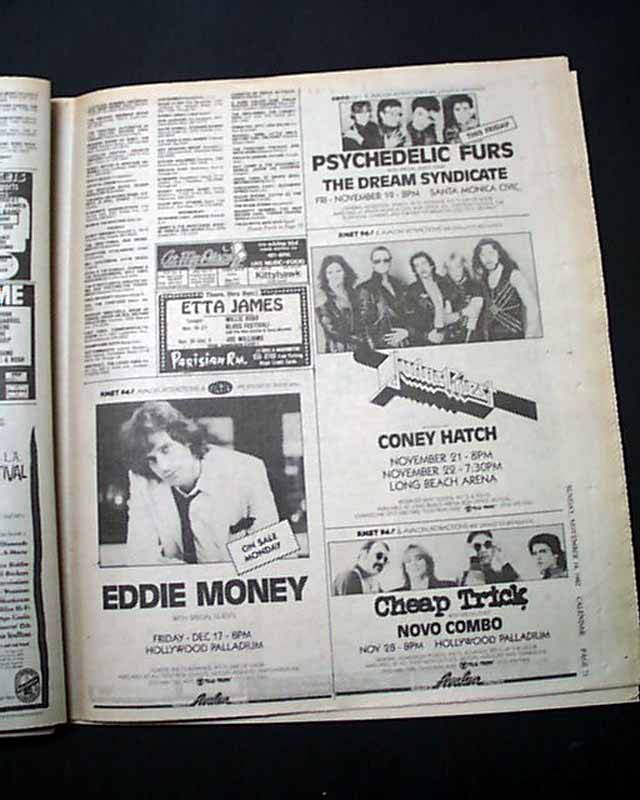
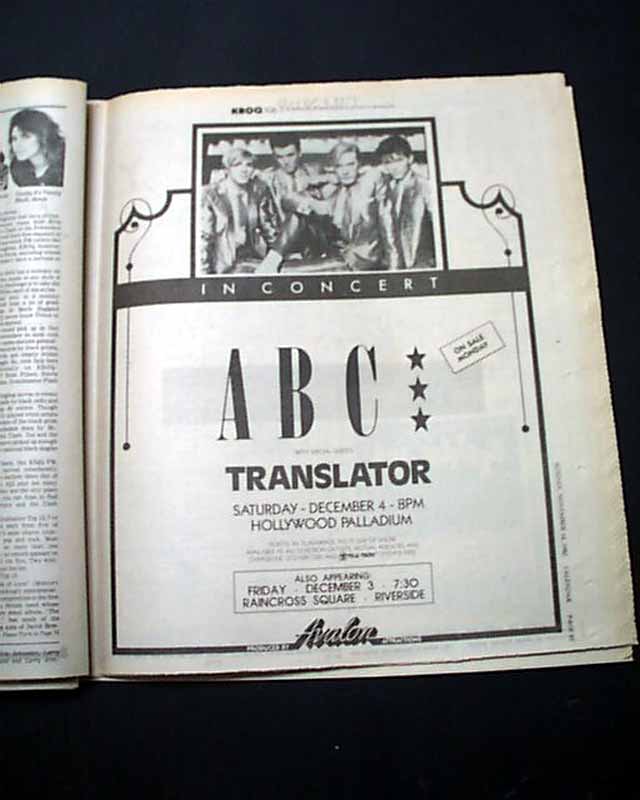
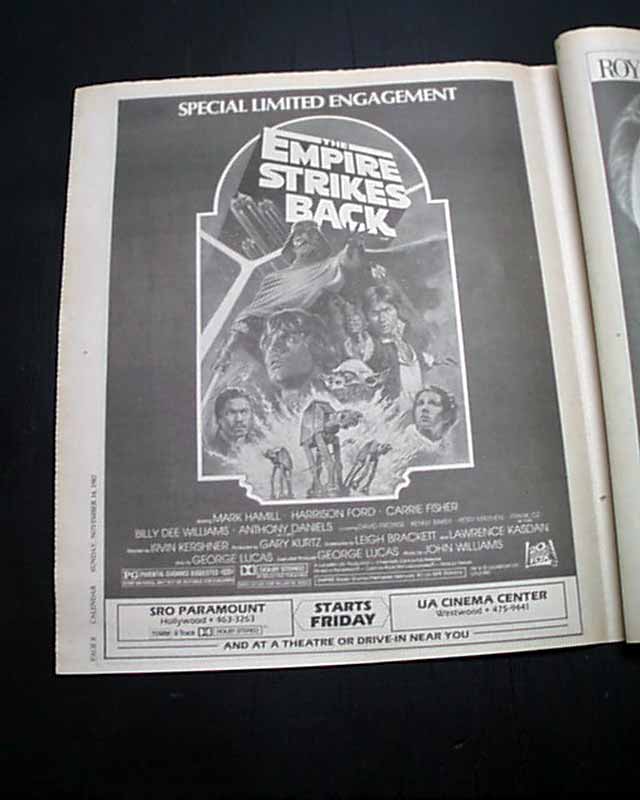
Complete with all 104 pages, tabloid size in very nice condition.
Background: The November 14, 1983, "Calendar" story by Patrick Goldstein serves as a landmark piece of cultural journalism that chronicled the unprecedented legal and creative collision between the world’s biggest pop star and its most successful film franchise. Titled "Michael Jackson and E.T.," the article detailed the high-stakes friction between Epic Records and MCA Records over the E.T. Storybook album, a project Jackson recorded out of a deep, personal identification with the "alienated" protagonist. The historical significance of this event lies in its exposure of the ruthless corporate warfare that governed the music industry; Epic, fearing that the storybook would cannibalize the sales of the record-breaking Thriller album, successfully sued to have the product withdrawn from the market. This forced a massive recall of the album, making it an instant "forbidden" relic and marking one of the first times a major artist’s extracurricular creative passion was stifled by the rigid machinery of multi-million dollar contract disputes. Goldstein’s reporting captured the exact moment when Jackson’s persona shifted from a mere musician to a transcendent, albeit legally entangled, global brand, while highlighting the emerging power of cross-media synergy that would eventually define the modern entertainment landscape.
* Michael Jackson "King of Pop"
* American singer, songwriter & dancer
* Epic and MCA Records dispute
* Deep emotional connection w/ E.T.
* 2 weeks prior to "Thriller" album release
The Sunday "Calendar" sections of the Los Angeles Times in the early 1980s served as the definitive cultural barometer for the "entertainment capital of the world," transitioning from a standard arts supplement into a sophisticated trade-journal-meets-lifestyle-magazine.
The top of page 82 has a heading: "MICHAEL JACKSON AND E.T." with lead-in: "Pop Eye" and small photo of Jackson. (see images)
I suspect this to be an extremely rare item because their was really no reason to save it at the time.
Complete with all 104 pages, tabloid size in very nice condition.
Background: The November 14, 1983, "Calendar" story by Patrick Goldstein serves as a landmark piece of cultural journalism that chronicled the unprecedented legal and creative collision between the world’s biggest pop star and its most successful film franchise. Titled "Michael Jackson and E.T.," the article detailed the high-stakes friction between Epic Records and MCA Records over the E.T. Storybook album, a project Jackson recorded out of a deep, personal identification with the "alienated" protagonist. The historical significance of this event lies in its exposure of the ruthless corporate warfare that governed the music industry; Epic, fearing that the storybook would cannibalize the sales of the record-breaking Thriller album, successfully sued to have the product withdrawn from the market. This forced a massive recall of the album, making it an instant "forbidden" relic and marking one of the first times a major artist’s extracurricular creative passion was stifled by the rigid machinery of multi-million dollar contract disputes. Goldstein’s reporting captured the exact moment when Jackson’s persona shifted from a mere musician to a transcendent, albeit legally entangled, global brand, while highlighting the emerging power of cross-media synergy that would eventually define the modern entertainment landscape.
Category: The 20th Century


