

From the Old West... Avalanche !...
Item # 726844
March 11, 1884
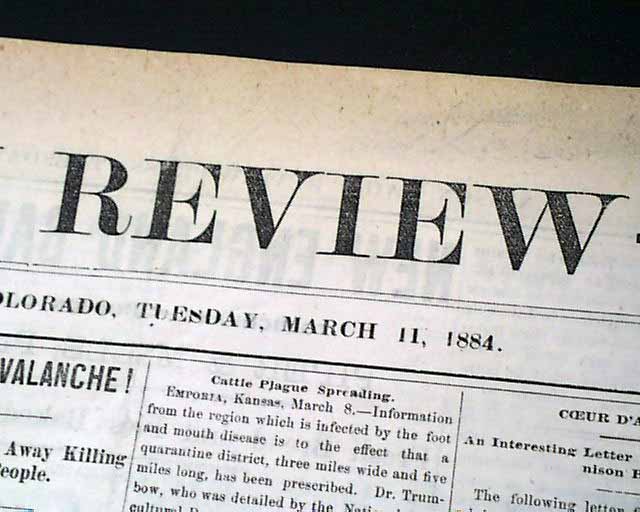
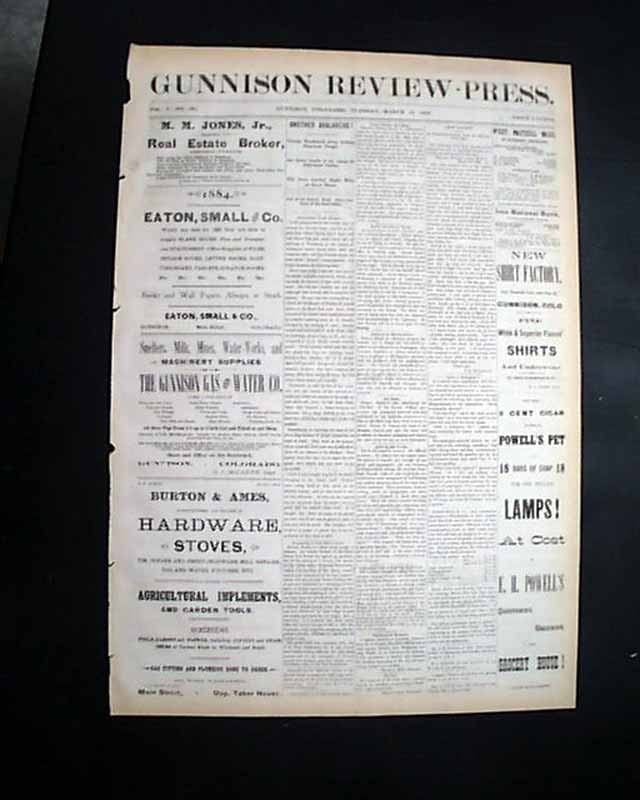
GUNNISON REVIEW-PRESS, Colorado, March 11, 1884
* Rare Old West publication
* Woodstock, Colorado avalanche
* Gunnison County ghost town
An uncommon title from this boom mining town in the southwestern quadrant of Colorado tucked in a valley amidst the Rocky Mountains. Gunnison boomed in the late 1870's and early 1880's and was once the home of Wyatt Earp and "Texas Jack". Today there are some 5500 residents of Gunnison.
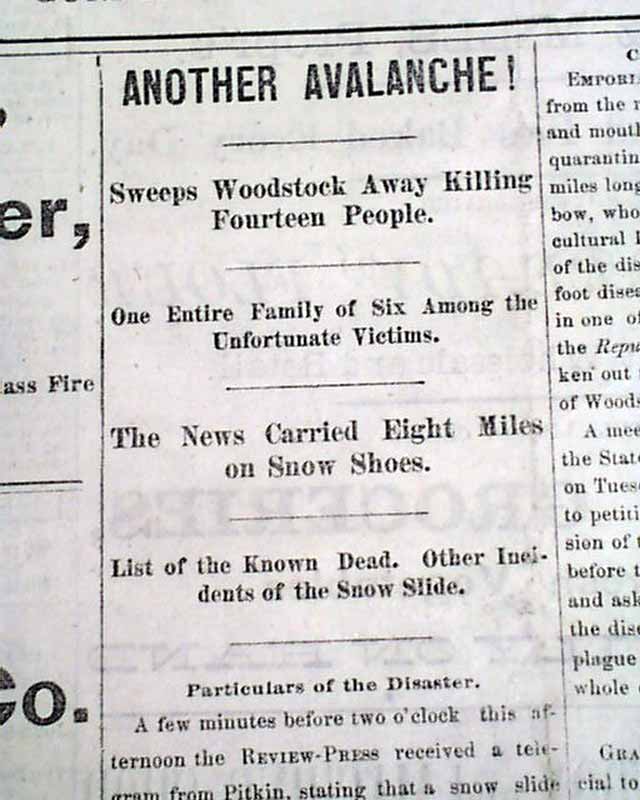
The top of the front page has a one column heading: "ANOTHER AVALANCHE !" with subheads. (see images)
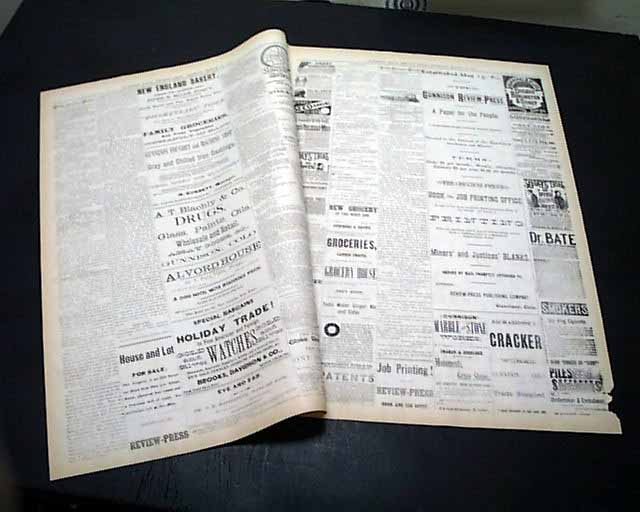
Four pages, good condition.
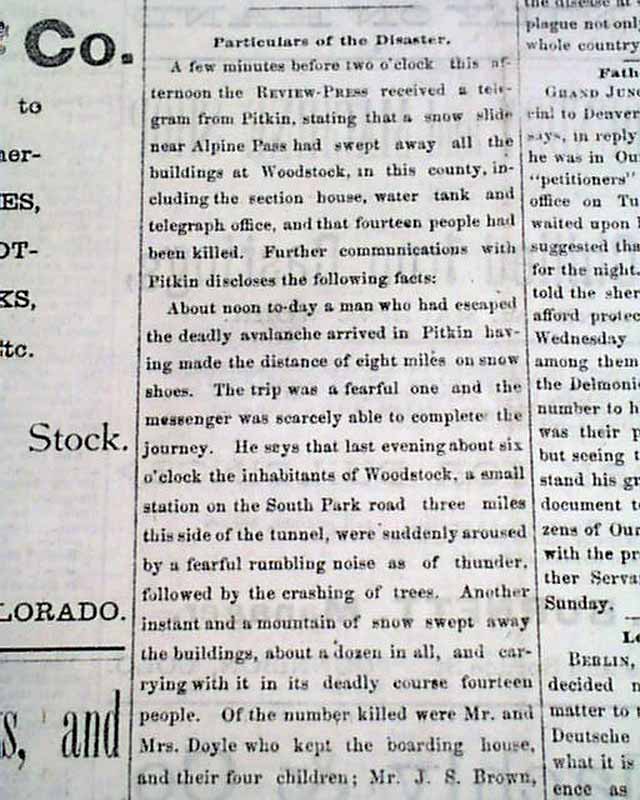
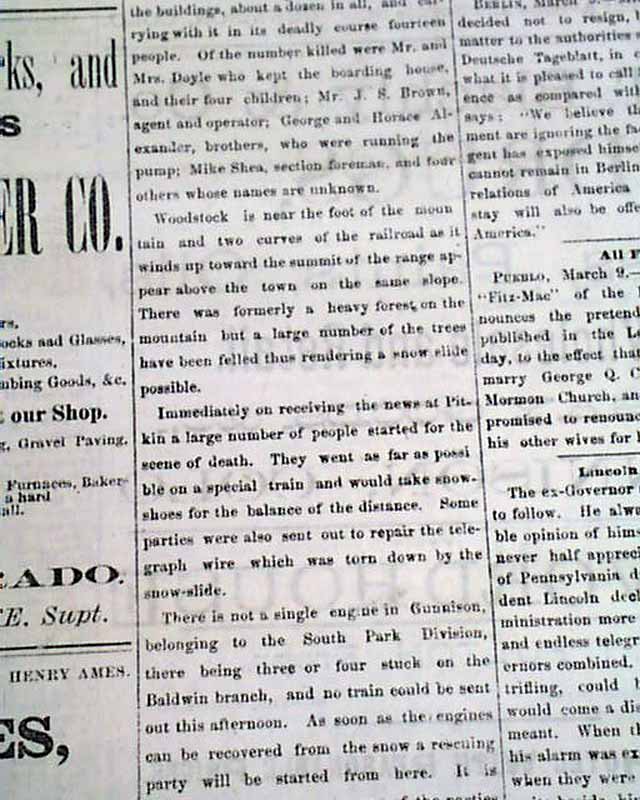
Background: The 1884 Woodstock avalanche stands as a harrowing testament to the environmental hazards of Colorado's mining and railroad booms, representing one of the deadliest snow disasters in the state’s history. Occurring on March 10, the slide obliterated the town of Woodstock—a critical support hub for the Denver, South Park & Pacific Railroad near the Alpine Tunnel—killing 13 people, including all six children of local boarding house owner Marcella Doyle. The catastrophe was exacerbated by the aggressive clear-cutting of timber for railroad use, which stripped the mountainside of natural snow anchors and left the settlement defenseless against the "White Death." Beyond the immediate loss of life, the event had a profound historical impact: it led to the permanent abandonment of the townsite, marked a rare 19th-century legal challenge against a railroad for environmental negligence, and served as a somber lesson in the dangers of prioritizing industrial convenience over topographical safety. Today, the site remains a haunting ghost town, serving as a memorial to the volatile intersection of human ambition and the unforgiving Rocky Mountain wilderness.
* Rare Old West publication
* Woodstock, Colorado avalanche
* Gunnison County ghost town
An uncommon title from this boom mining town in the southwestern quadrant of Colorado tucked in a valley amidst the Rocky Mountains. Gunnison boomed in the late 1870's and early 1880's and was once the home of Wyatt Earp and "Texas Jack". Today there are some 5500 residents of Gunnison.
The top of the front page has a one column heading: "ANOTHER AVALANCHE !" with subheads. (see images)
Four pages, good condition.
Background: The 1884 Woodstock avalanche stands as a harrowing testament to the environmental hazards of Colorado's mining and railroad booms, representing one of the deadliest snow disasters in the state’s history. Occurring on March 10, the slide obliterated the town of Woodstock—a critical support hub for the Denver, South Park & Pacific Railroad near the Alpine Tunnel—killing 13 people, including all six children of local boarding house owner Marcella Doyle. The catastrophe was exacerbated by the aggressive clear-cutting of timber for railroad use, which stripped the mountainside of natural snow anchors and left the settlement defenseless against the "White Death." Beyond the immediate loss of life, the event had a profound historical impact: it led to the permanent abandonment of the townsite, marked a rare 19th-century legal challenge against a railroad for environmental negligence, and served as a somber lesson in the dangers of prioritizing industrial convenience over topographical safety. Today, the site remains a haunting ghost town, serving as a memorial to the volatile intersection of human ambition and the unforgiving Rocky Mountain wilderness.
Category: The Old West


