


1873 yellow fever epidemic outbreak in the Mississippi Valley...
Item # 726837
October 25, 1873
THE NEW YORK HERALD, Oct. 25, 1873
* Yellow Fever epidemic of 1873
* Memphis, Tennessee & more
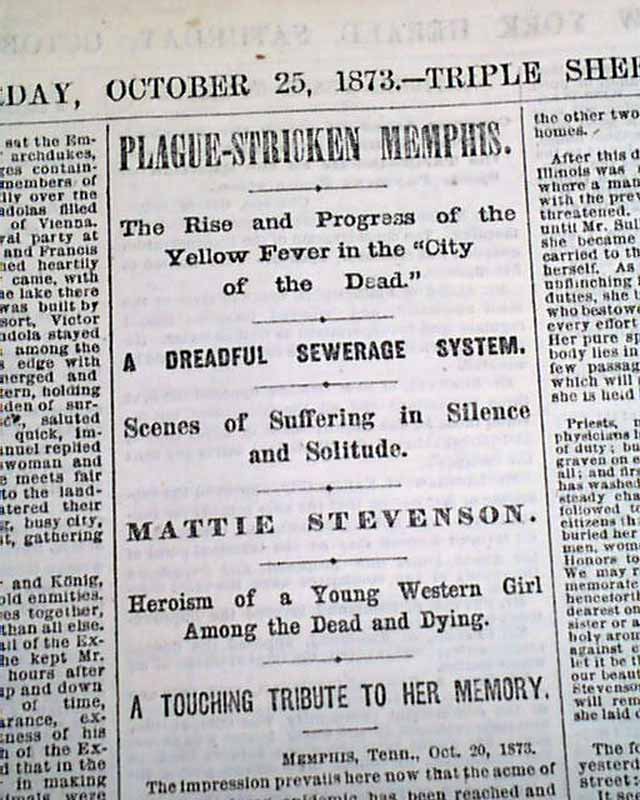
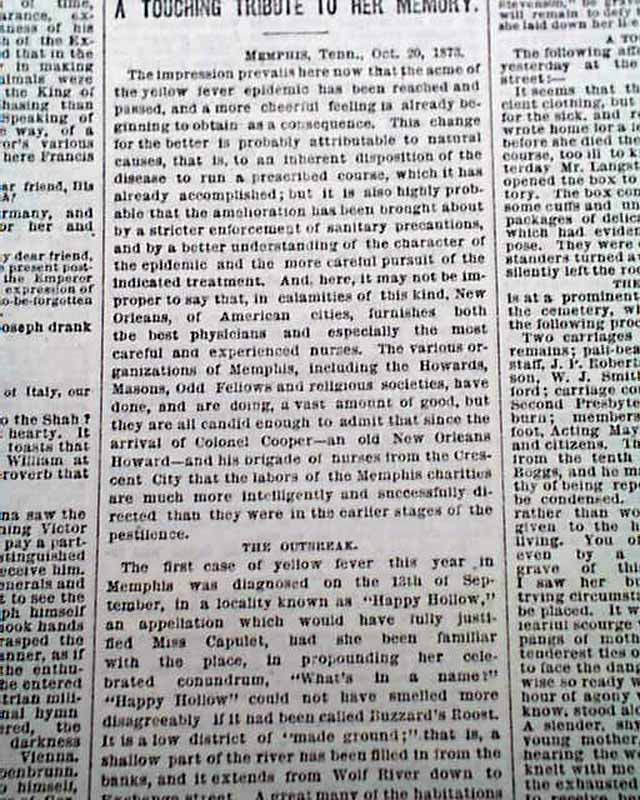
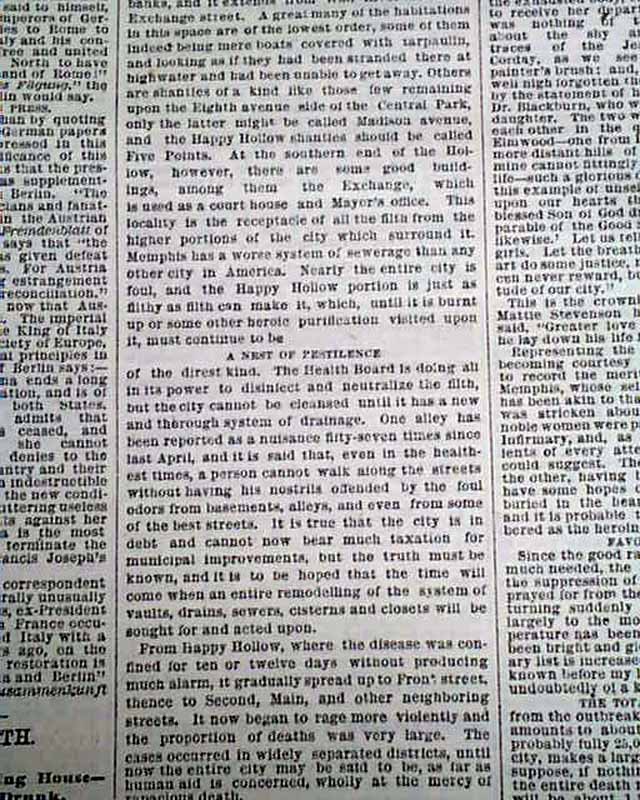
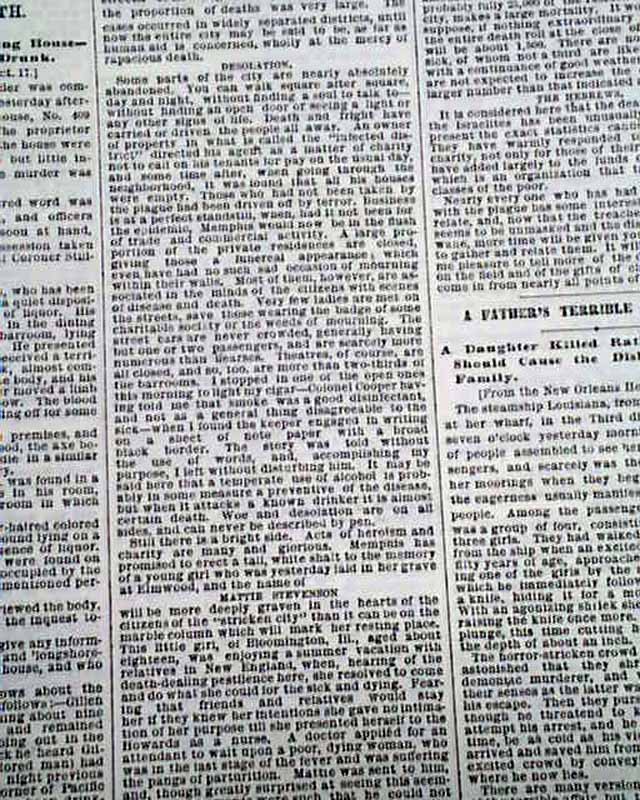
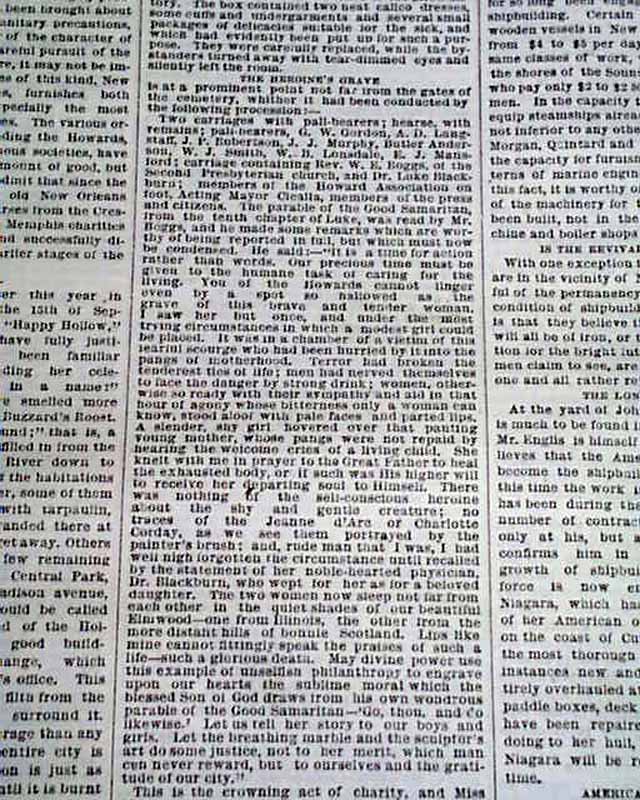
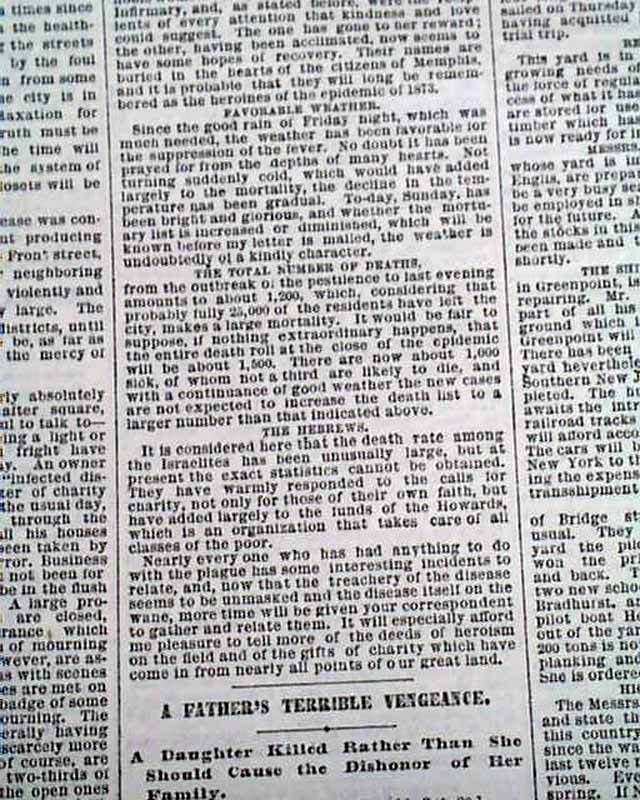
The top of page 4 has a one column heading: "PLAGUE-STRICKEN MEMPHIS" with subheads. (see images) Text takes up over 1 1/2 columns.
Complete with 12 pages, very minor margin wear, nice condition.
Background: The 1873 Mississippi Valley yellow fever epidemic was a devastating outbreak that primarily struck river cities such as Memphis, Vicksburg, and New Orleans, killing thousands and causing widespread panic. Yellow fever, a mosquito-borne viral disease, was not yet understood, so public health responses relied on quarantines, sanitation measures, and flight from affected areas, all of which had limited effectiveness. Memphis was particularly hard-hit, with death toll estimates ranging from 3,000 to 5,000, prompting mass evacuations that disrupted the local economy and river trade. The epidemic underscored the vulnerability of southern port and river cities to infectious disease, highlighted the inadequacies of 19th-century public health infrastructure, and contributed to the growing urgency for scientific investigation into the causes and transmission of yellow fever—a breakthrough that would come decades later with Walter Reed’s discovery of the mosquito vector.
* Yellow Fever epidemic of 1873
* Memphis, Tennessee & more
The top of page 4 has a one column heading: "PLAGUE-STRICKEN MEMPHIS" with subheads. (see images) Text takes up over 1 1/2 columns.
Complete with 12 pages, very minor margin wear, nice condition.
Background: The 1873 Mississippi Valley yellow fever epidemic was a devastating outbreak that primarily struck river cities such as Memphis, Vicksburg, and New Orleans, killing thousands and causing widespread panic. Yellow fever, a mosquito-borne viral disease, was not yet understood, so public health responses relied on quarantines, sanitation measures, and flight from affected areas, all of which had limited effectiveness. Memphis was particularly hard-hit, with death toll estimates ranging from 3,000 to 5,000, prompting mass evacuations that disrupted the local economy and river trade. The epidemic underscored the vulnerability of southern port and river cities to infectious disease, highlighted the inadequacies of 19th-century public health infrastructure, and contributed to the growing urgency for scientific investigation into the causes and transmission of yellow fever—a breakthrough that would come decades later with Walter Reed’s discovery of the mosquito vector.
Category: Post-Civil War


