


1964 "Dewey Lake Monster" in Michigan...
Item # 726768
June 12, 1964
THE DETROIT NEWS, June 12, 1964
* Sister Lakes, Michigan
* The Dewey Lake Monster
* Bigfoot - Sasquatch - Cryptid
* "Monster Town, U.S.A."
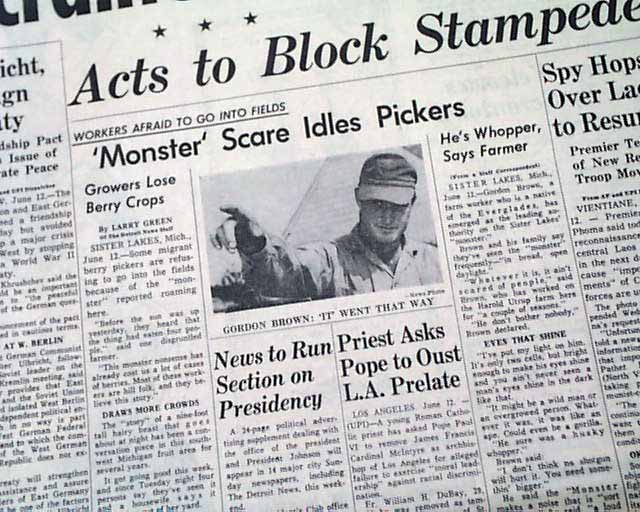
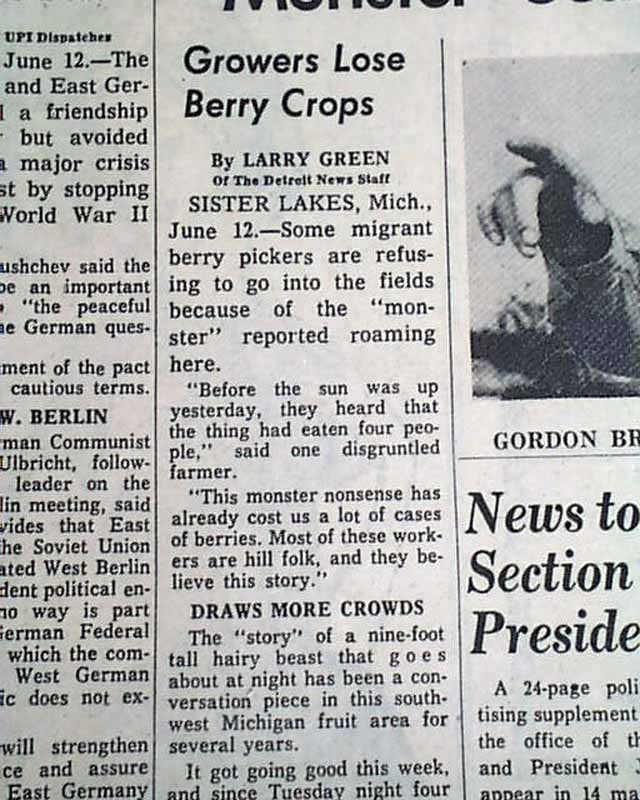
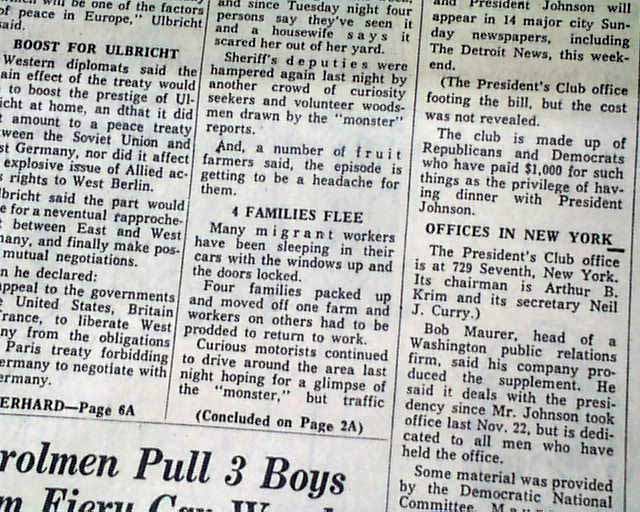
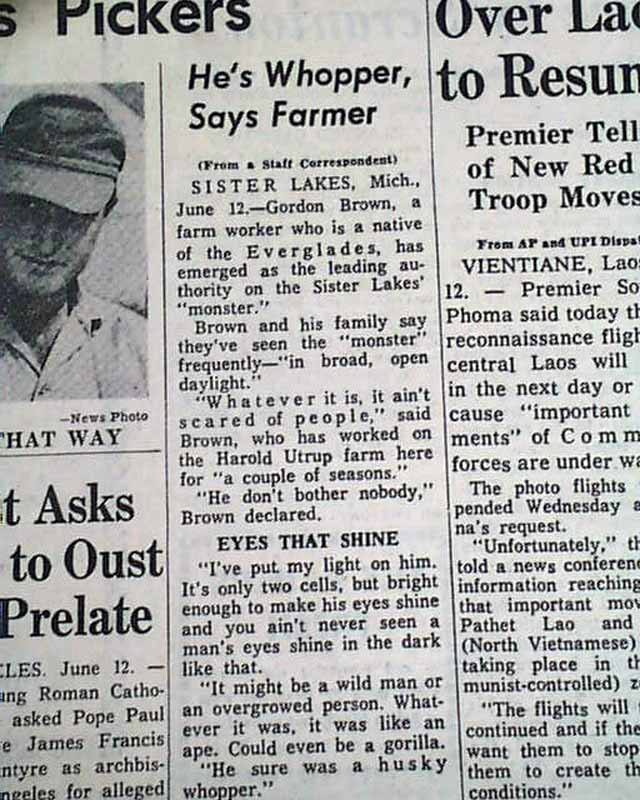
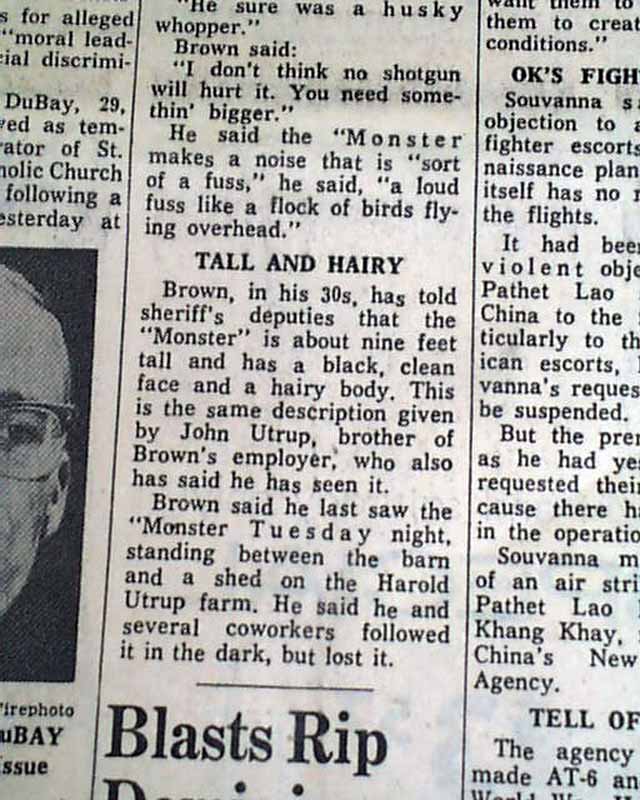
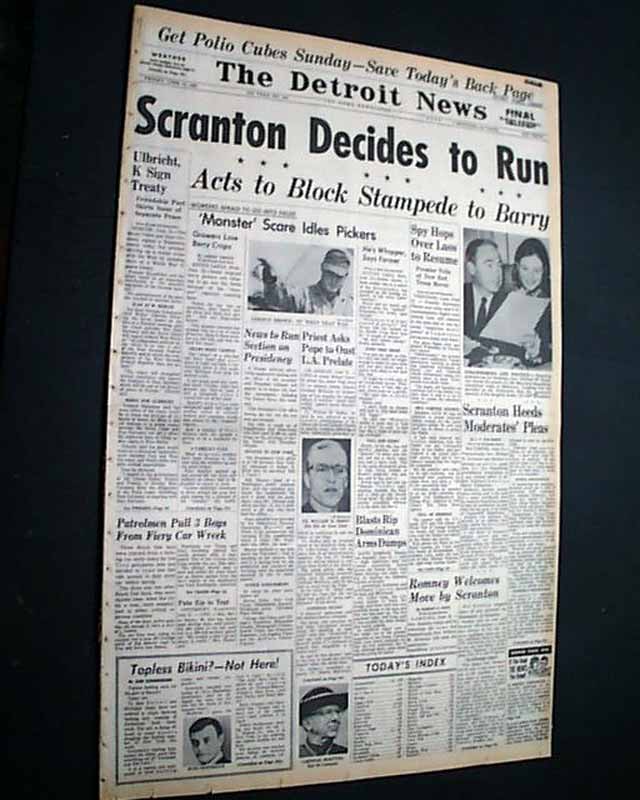
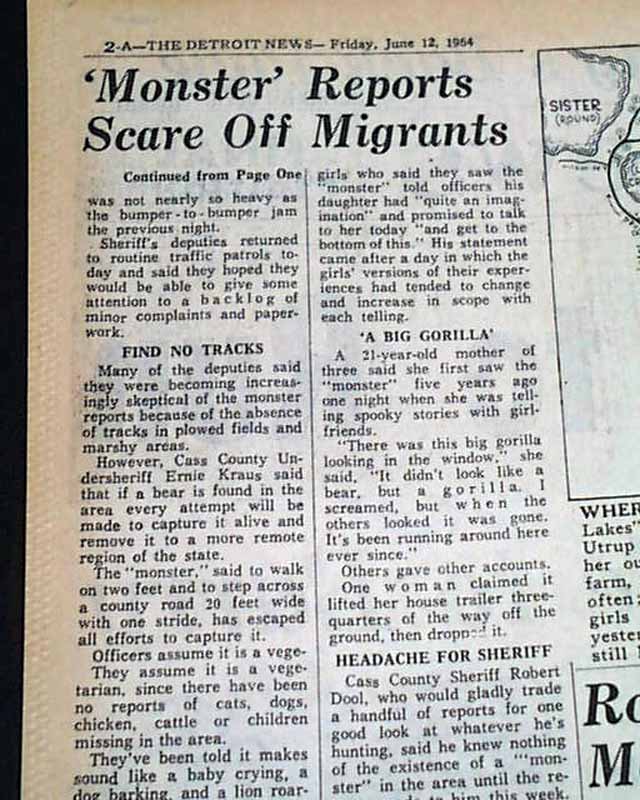
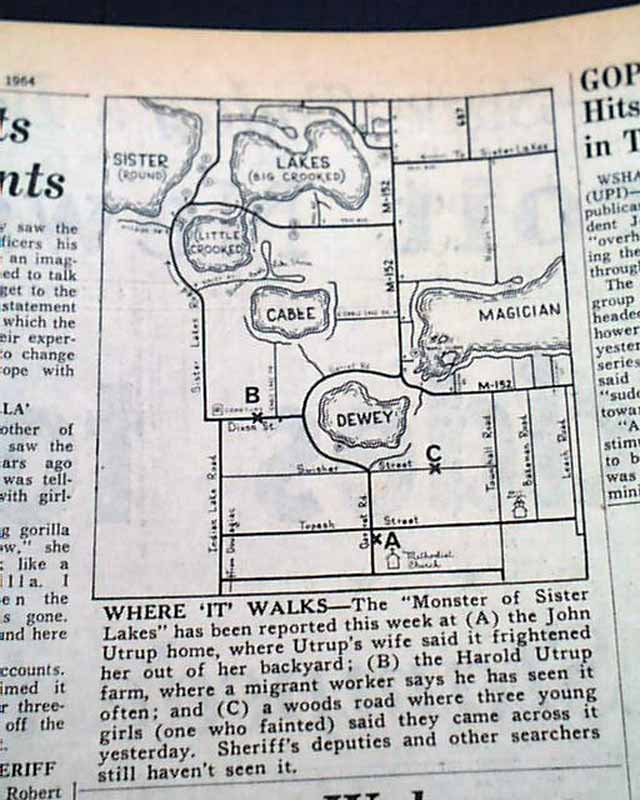
The front page has a four column heading: "'Monster' Scare Idles Pickers" with lead-in: "Workers Afraid To Go Into Fields" with subheads and related photo. (see images) Coverage continues inside with related map.
Complete with all 50+ pages, light toning at the margins, tiny binding holes along the spine, generally in very nice condition.
Background: The 1964 Sister Lakes Bigfoot scare serves as a landmark case study in American mid-century mass hysteria and the commercialization of folklore, marking a rare moment where a cryptid sighting caused a legitimate public safety crisis. Triggered by a June 9 encounter near Dewey Lake by Gordon Brown and his family—who described a nine-foot-tall, foul-smelling, hairy humanoid with glowing eyes—the event rapidly escalated into a national media circus that transformed the sleepy resort town into "Monster Town, U.S.A." Within a week, an estimated 3,000 to 5,000 "monster hunters" descended on Cass County, clogging rural roads and forcing Sheriff Paul Parrish to deploy extra patrols to prevent accidental shootings among the armed, beer-drinking vigilantes. This "flap" is historically significant for how quickly the local economy pivoted to capitalize on the panic, selling "Monster Kits" and themed food, and it remains a foundational chapter in Michigan’s regional identity, bridging the gap between genuine rural legend and the burgeoning 1960s fascination with the paranormal.
* Sister Lakes, Michigan
* The Dewey Lake Monster
* Bigfoot - Sasquatch - Cryptid
* "Monster Town, U.S.A."
The front page has a four column heading: "'Monster' Scare Idles Pickers" with lead-in: "Workers Afraid To Go Into Fields" with subheads and related photo. (see images) Coverage continues inside with related map.
Complete with all 50+ pages, light toning at the margins, tiny binding holes along the spine, generally in very nice condition.
Background: The 1964 Sister Lakes Bigfoot scare serves as a landmark case study in American mid-century mass hysteria and the commercialization of folklore, marking a rare moment where a cryptid sighting caused a legitimate public safety crisis. Triggered by a June 9 encounter near Dewey Lake by Gordon Brown and his family—who described a nine-foot-tall, foul-smelling, hairy humanoid with glowing eyes—the event rapidly escalated into a national media circus that transformed the sleepy resort town into "Monster Town, U.S.A." Within a week, an estimated 3,000 to 5,000 "monster hunters" descended on Cass County, clogging rural roads and forcing Sheriff Paul Parrish to deploy extra patrols to prevent accidental shootings among the armed, beer-drinking vigilantes. This "flap" is historically significant for how quickly the local economy pivoted to capitalize on the panic, selling "Monster Kits" and themed food, and it remains a foundational chapter in Michigan’s regional identity, bridging the gap between genuine rural legend and the burgeoning 1960s fascination with the paranormal.
Category: The 20th Century


