

Item # 726659
October 25, 1945
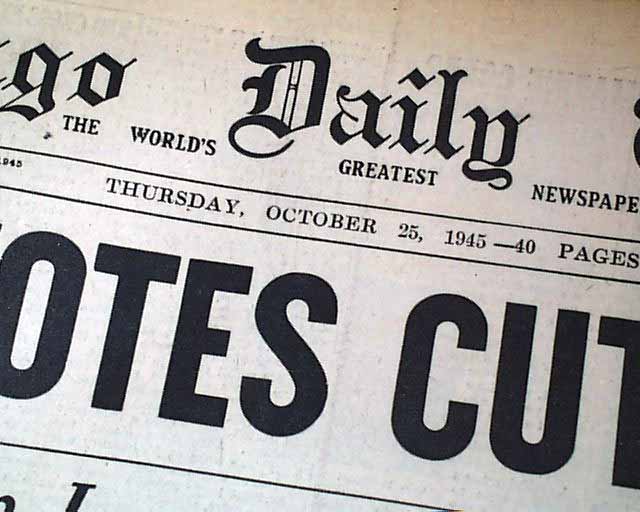
CHICAGO DAILY TRIBUNE, Oct. 25, 1945
* Creation of the United Nations - UN
* Collective security for global stability
* Post World War II universal human rights
* Institutionalized Humanitarianism
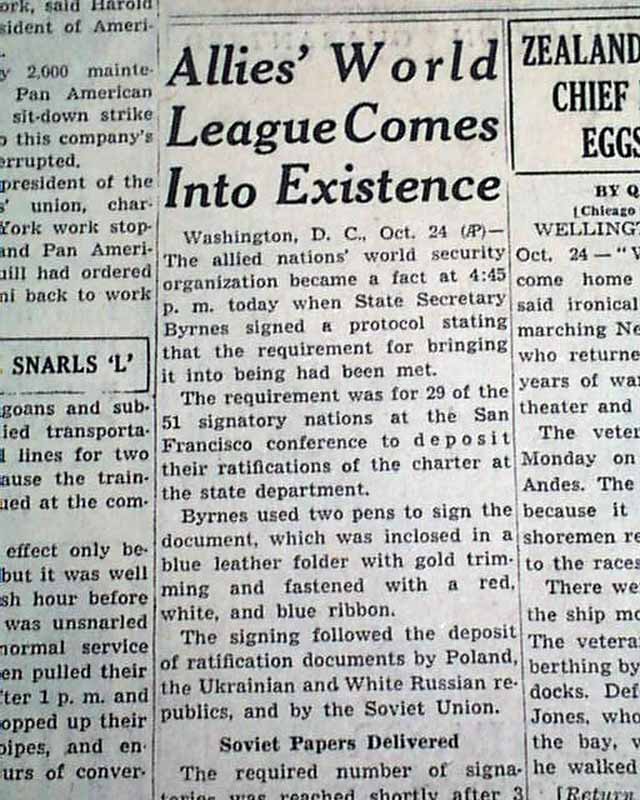
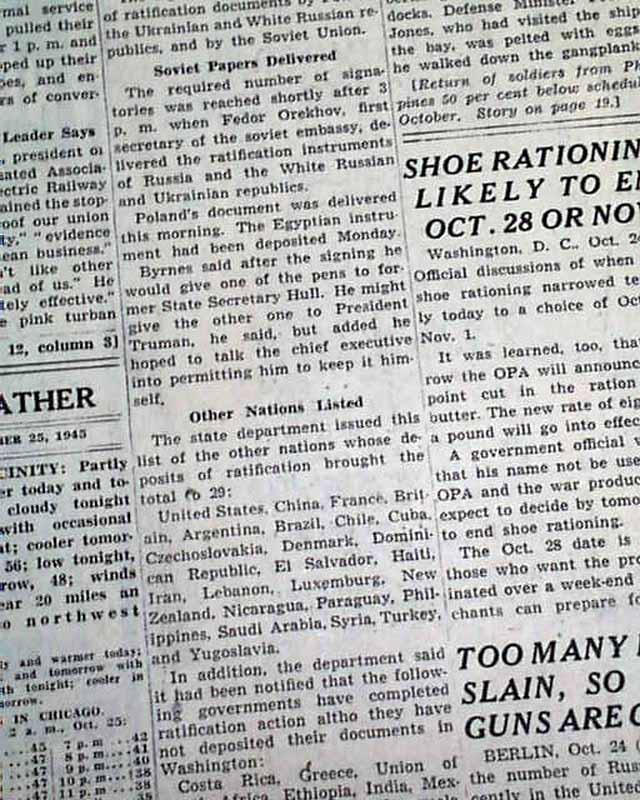
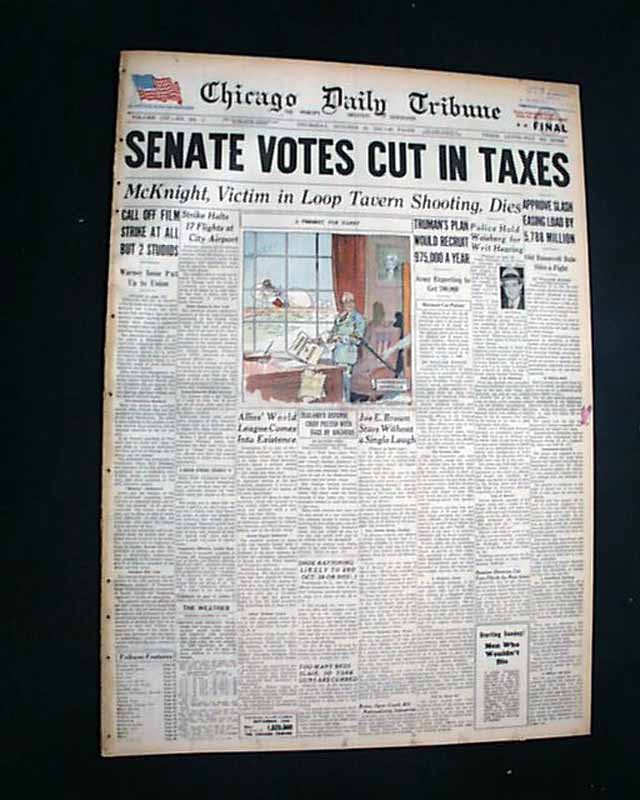
The front page has a one column heading: "Allies' World League Comes Into Existence" (see images)
Complete with all 40 pages, small binding holes along the spine, small address stamp within the masthead, generally nice.
Background: The establishment of the United Nations on October 24, 1945, stands as a monumental pivot point in modern history, marking the transition from a world defined by total war to one governed by a collective security framework. Emerging from the literal and metaphorical ashes of World War II, the UN represented a desperate yet hopeful second attempt at global governance following the collapse of the League of Nations. By ratifying the UN Charter, the founding 51 member states committed to a system designed to "save succeeding generations from the scourge of war" by institutionalizing diplomacy through the General Assembly and the Security Council. This event did more than just create a forum for talk; it established the legal foundations for modern international law, human rights protections, and organized humanitarian aid. Its significance lies in the radical shift toward multilateralism, where sovereignty was balanced against global responsibility, effectively shaping the geopolitical landscape of the Cold War and the decolonization era that followed.
* Creation of the United Nations - UN
* Collective security for global stability
* Post World War II universal human rights
* Institutionalized Humanitarianism
The front page has a one column heading: "Allies' World League Comes Into Existence" (see images)
Complete with all 40 pages, small binding holes along the spine, small address stamp within the masthead, generally nice.
Background: The establishment of the United Nations on October 24, 1945, stands as a monumental pivot point in modern history, marking the transition from a world defined by total war to one governed by a collective security framework. Emerging from the literal and metaphorical ashes of World War II, the UN represented a desperate yet hopeful second attempt at global governance following the collapse of the League of Nations. By ratifying the UN Charter, the founding 51 member states committed to a system designed to "save succeeding generations from the scourge of war" by institutionalizing diplomacy through the General Assembly and the Security Council. This event did more than just create a forum for talk; it established the legal foundations for modern international law, human rights protections, and organized humanitarian aid. Its significance lies in the radical shift toward multilateralism, where sovereignty was balanced against global responsibility, effectively shaping the geopolitical landscape of the Cold War and the decolonization era that followed.
Category: The 20th Century


