

1947 Pakistan Punjab massacres...
Item # 726586
September 05, 1947
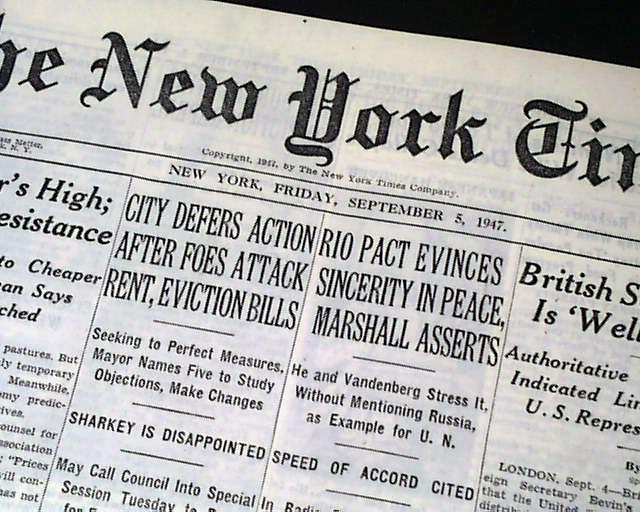
THE NEW YORK TIMES, Sept. 5, 1947
* The "Competitive Massacres"
* Dominion of Pakistan - India
* "Ghost Trains" of the Punjab
* Kafilas (Miles-Long Caravans)
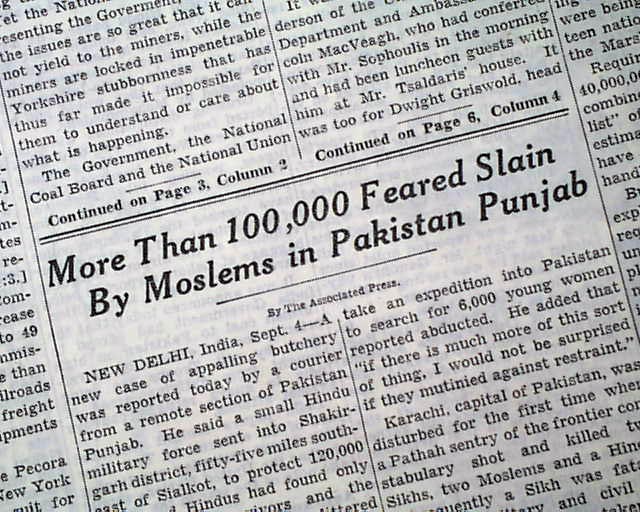
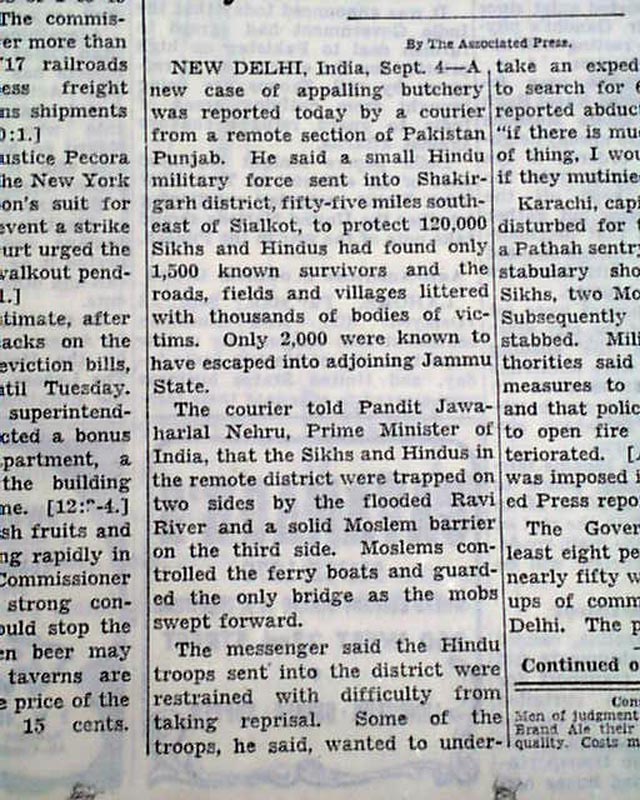
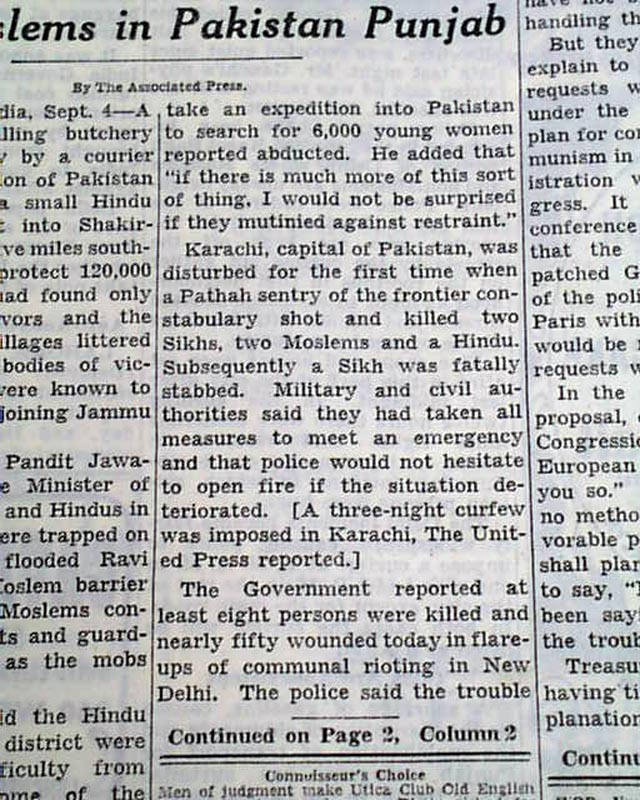
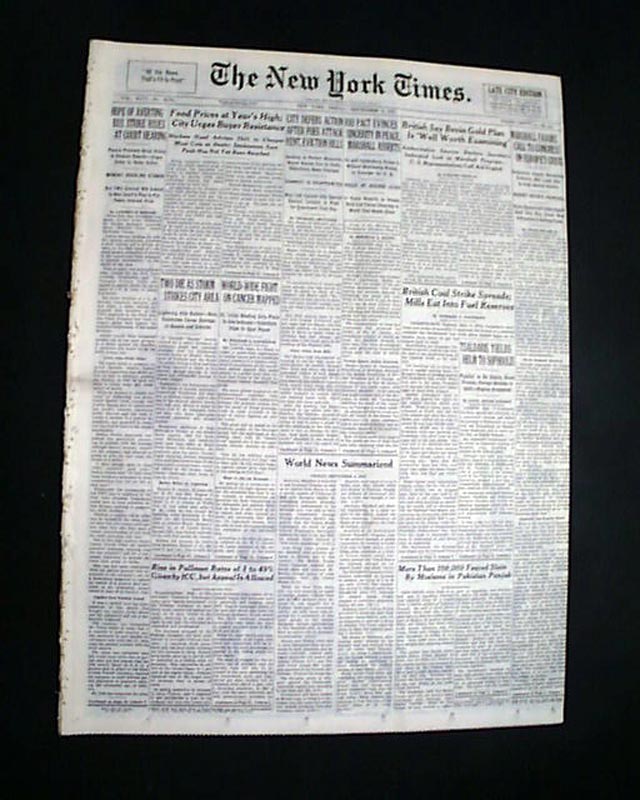
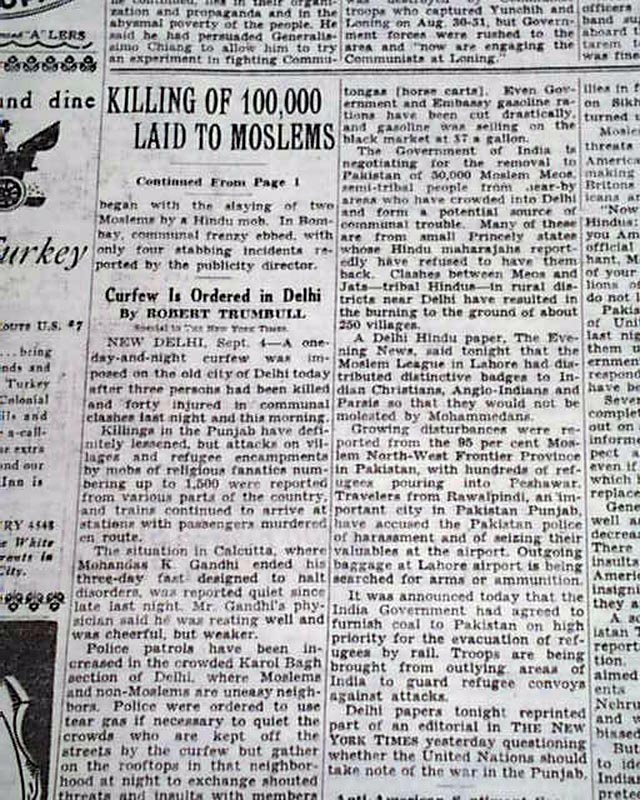
The front page has a two column heading: "More Than 100,000 Feared Slain By Moslems in Pakistan Punjab" (see images)
Complete with all 42 pages, rag edition in very nice condition.
Background: The historical significance of September 4, 1947, lies in its marking of the horrific zenith of the Great Punjab Migration, a period when the newly partitioned province collapsed into a "competitive massacre" that shocked the international community. By this date, the Punjab Boundary Force—the only neutral military entity—had been disbanded due to its own internal communal fractures, leaving millions of refugees in kafilas (caravans) and "ghost trains" completely vulnerable to organized militias. International headlines on this day broadcast the grim estimate of 100,000 feared slain, reflecting a tipping point where spontaneous rioting evolved into systematic ethnic cleansing across the Radcliffe Line. This date serves as a dark milestone in 20th-century history, representing the moment the Partition of India and Pakistan transformed from a political division into a humanitarian catastrophe that ultimately claimed between 200,000 and 2 million lives and displaced over 14 million people.
* The "Competitive Massacres"
* Dominion of Pakistan - India
* "Ghost Trains" of the Punjab
* Kafilas (Miles-Long Caravans)
The front page has a two column heading: "More Than 100,000 Feared Slain By Moslems in Pakistan Punjab" (see images)
Complete with all 42 pages, rag edition in very nice condition.
Background: The historical significance of September 4, 1947, lies in its marking of the horrific zenith of the Great Punjab Migration, a period when the newly partitioned province collapsed into a "competitive massacre" that shocked the international community. By this date, the Punjab Boundary Force—the only neutral military entity—had been disbanded due to its own internal communal fractures, leaving millions of refugees in kafilas (caravans) and "ghost trains" completely vulnerable to organized militias. International headlines on this day broadcast the grim estimate of 100,000 feared slain, reflecting a tipping point where spontaneous rioting evolved into systematic ethnic cleansing across the Radcliffe Line. This date serves as a dark milestone in 20th-century history, representing the moment the Partition of India and Pakistan transformed from a political division into a humanitarian catastrophe that ultimately claimed between 200,000 and 2 million lives and displaced over 14 million people.
Category: The 20th Century


