Item # 726581
·
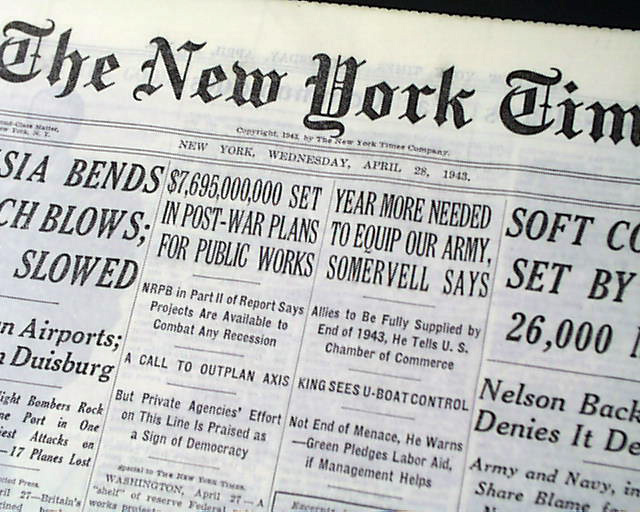
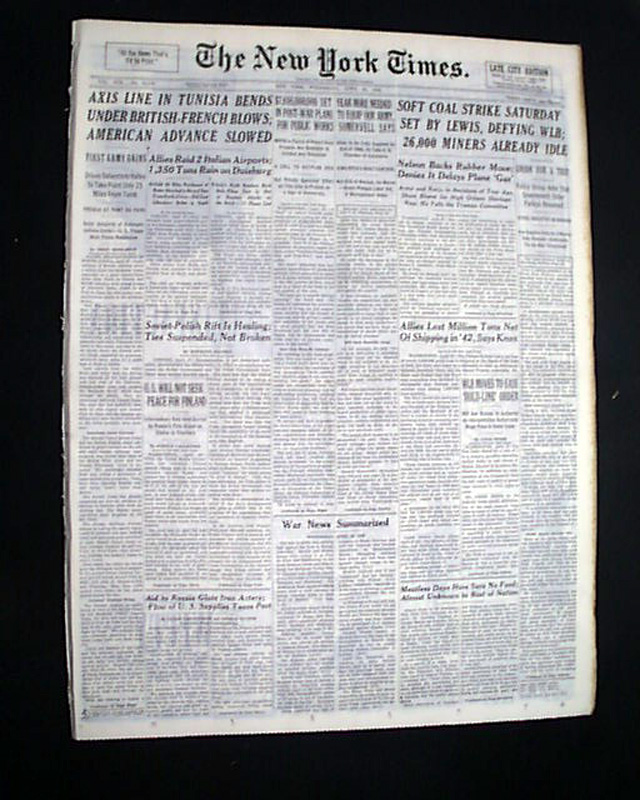
THE NEW YORK TIMES, April 28, 1943
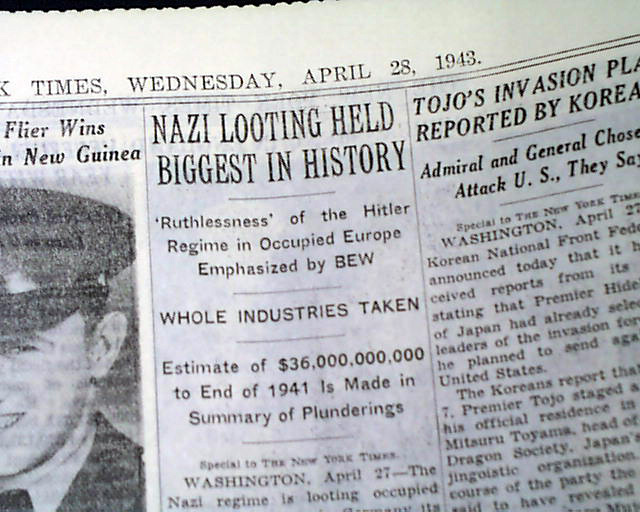
* "Rare of Europe" - Nazis looting - plundering
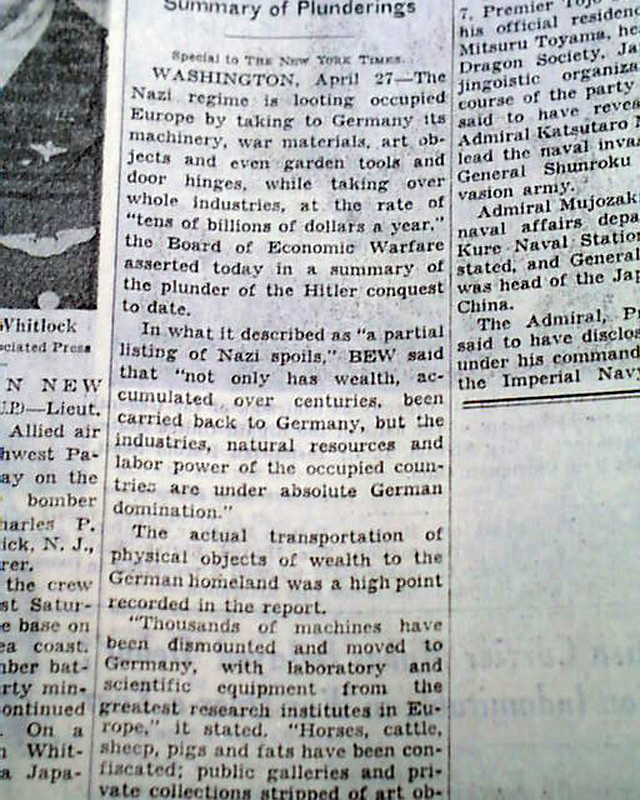
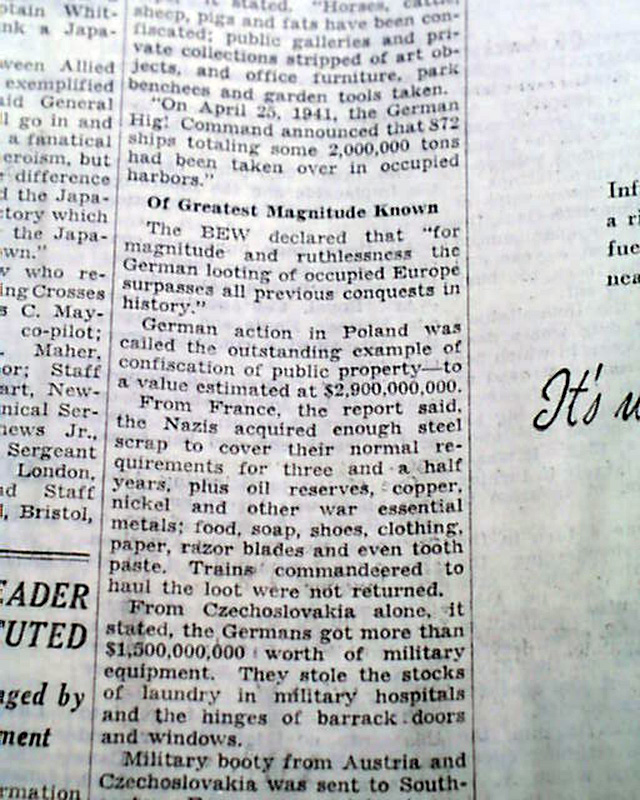
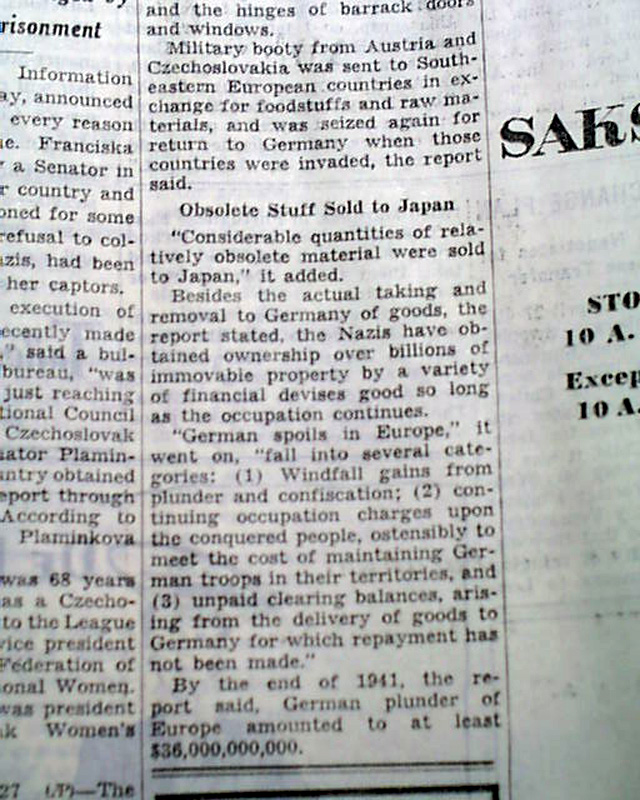
* Art, machinery, war materials & much more
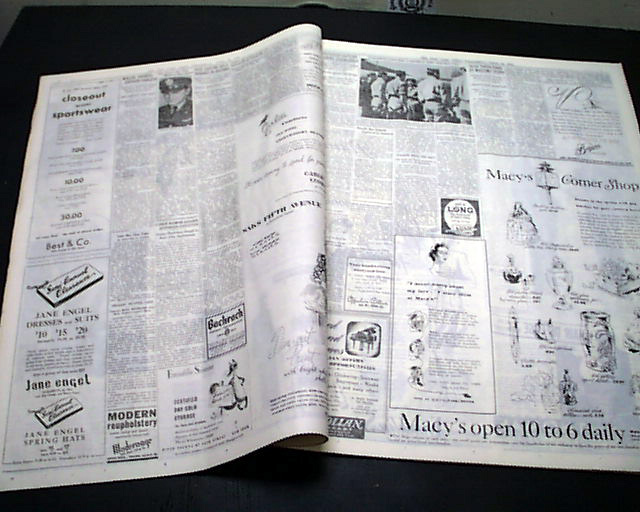
The top of the back page has a one column heading: "NAZI LOOTING HELD BIGGEST IN HISTORY" with subheads. (see images)
Complete with all 44 pages, rag edition in great condition.
Background: The April 28, 1943, New York Times report served as the public unveiling of a massive Allied investigation into Nazi spoliation, revealing that the "rape of Europe" had expanded far beyond fine art into a total economic stripping of occupied territories. This report was historically significant because it shattered the perception that Nazi looting was merely an elitist obsession with masterpieces, exposing instead a systematic "total plunder" that targeted industrial machinery, war materials, and even the mundane artifacts of daily life, such as garden tools, kitchenware, and linens seized from over 71,000 homes. By detailing the cold, bureaucratic efficiency of the Einsatzstab Reichsleiter Rosenberg (ERR) and the M-Aktion (Furniture Action), the article provided the moral and political justification needed to mobilize the Monuments, Fine Arts, and Archives (MFAA) section. It framed the Nazi theft not just as a loss of treasure, but as a deliberate attempt to cripple the industrial and domestic survival of entire nations, thereby establishing the urgent necessity for the Allied military to act as both liberators and restitution agents.
* "Rare of Europe" - Nazis looting - plundering
* Art, machinery, war materials & much more
The top of the back page has a one column heading: "NAZI LOOTING HELD BIGGEST IN HISTORY" with subheads. (see images)
Complete with all 44 pages, rag edition in great condition.
Background: The April 28, 1943, New York Times report served as the public unveiling of a massive Allied investigation into Nazi spoliation, revealing that the "rape of Europe" had expanded far beyond fine art into a total economic stripping of occupied territories. This report was historically significant because it shattered the perception that Nazi looting was merely an elitist obsession with masterpieces, exposing instead a systematic "total plunder" that targeted industrial machinery, war materials, and even the mundane artifacts of daily life, such as garden tools, kitchenware, and linens seized from over 71,000 homes. By detailing the cold, bureaucratic efficiency of the Einsatzstab Reichsleiter Rosenberg (ERR) and the M-Aktion (Furniture Action), the article provided the moral and political justification needed to mobilize the Monuments, Fine Arts, and Archives (MFAA) section. It framed the Nazi theft not just as a loss of treasure, but as a deliberate attempt to cripple the industrial and domestic survival of entire nations, thereby establishing the urgent necessity for the Allied military to act as both liberators and restitution agents.
Category: World War II
Price
$48
100% Authentic: Original printing, never a reproduction.
Other issues you may like
§ related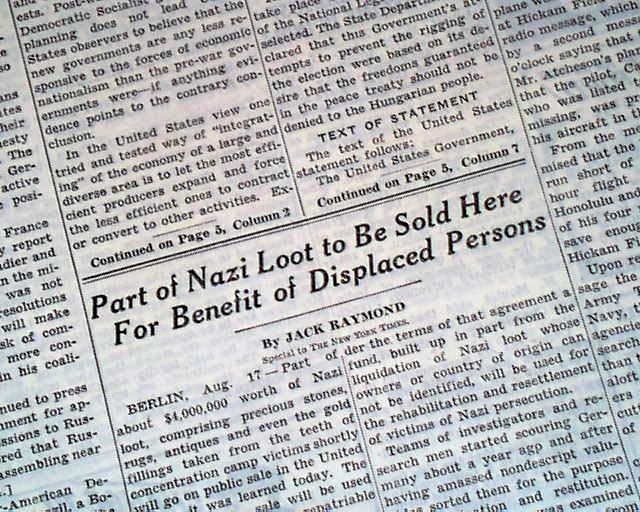
1947 Nazis treasure to be sold for benefit...
THE NEW YORK TIMES, Aug. 18, 1947
* Captured Nazi treasure - loot - antiques
* Gold from teeth of concentration camp victims
* To be sold in U.S. for...
* Captured Nazi treasure - loot - antiques
* Gold from teeth of concentration camp victims
* To be sold in U.S. for...
Aug 1947
$38
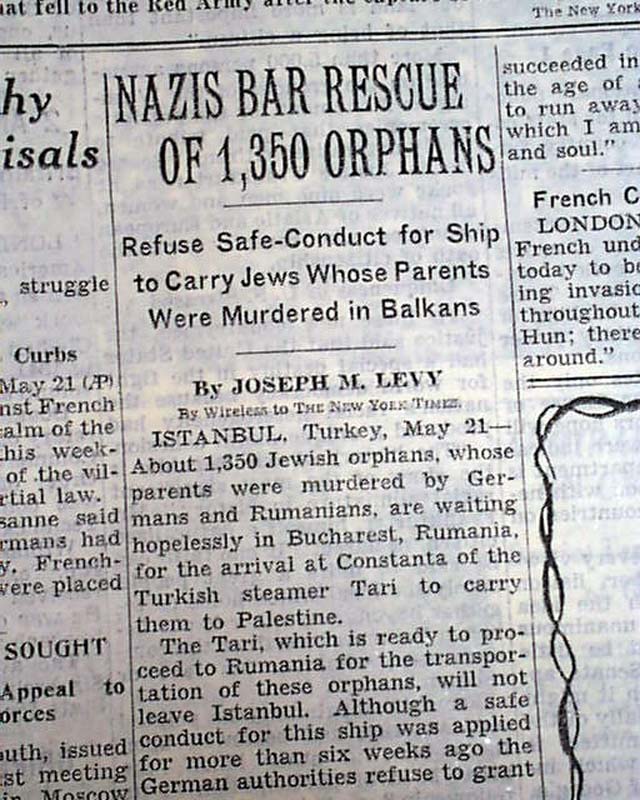
Jewish Holocaust... public reality... Nazi atrocities...
THE NEW YORK TIMES, May 22, 1944
* Jewish Holocaust being known for the 1st time
* Nazi-occupied Europe exterminations
Page 5 has one column...
* Jewish Holocaust being known for the 1st time
* Nazi-occupied Europe exterminations
Page 5 has one column...
May 1944
$52

Jewish Holocaust... public reality... Nazi atrocities...
THE NEW YORK TIMES, November 1, 1943
* Jewish Holocaust being known for the 1st time
* Nazi-occupied Europe exterminations
This 36 page newspaper has...
* Jewish Holocaust being known for the 1st time
* Nazi-occupied Europe exterminations
This 36 page newspaper has...
Nov 1943
$34
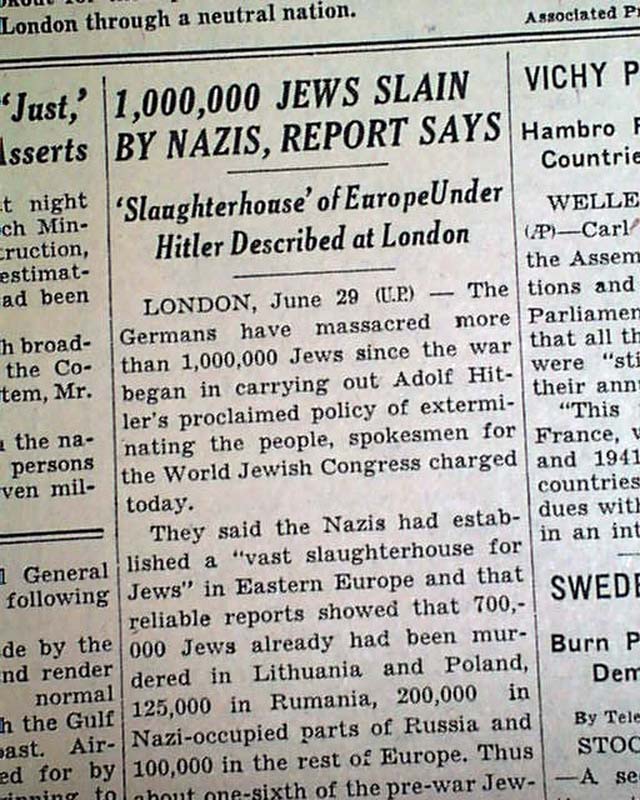
Jewish Holocaust... public reality... Nazi atrocities...
THE NEW YORK TIMES, June 30, 1942
* Jewish Holocaust being known for the 1st time
* Nazi-occupied Europe exterminations
Page 7 has small one column...
* Jewish Holocaust being known for the 1st time
* Nazi-occupied Europe exterminations
Page 7 has small one column...
Jun 1942
$67