Item # 726572
·
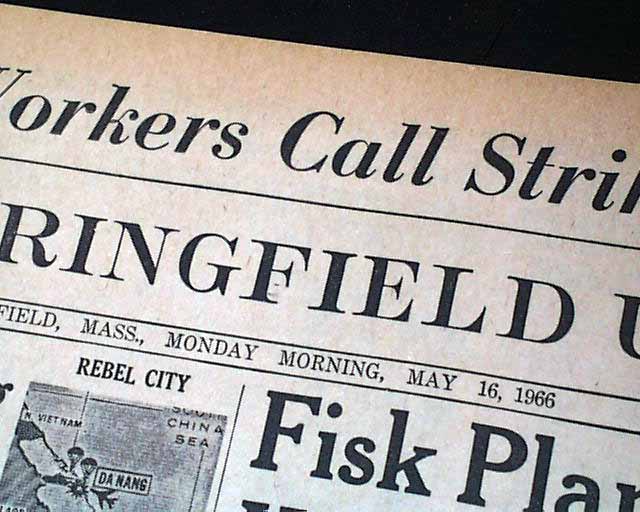
THE SPRINGFIELD UNION, Mass. May 16, 1966
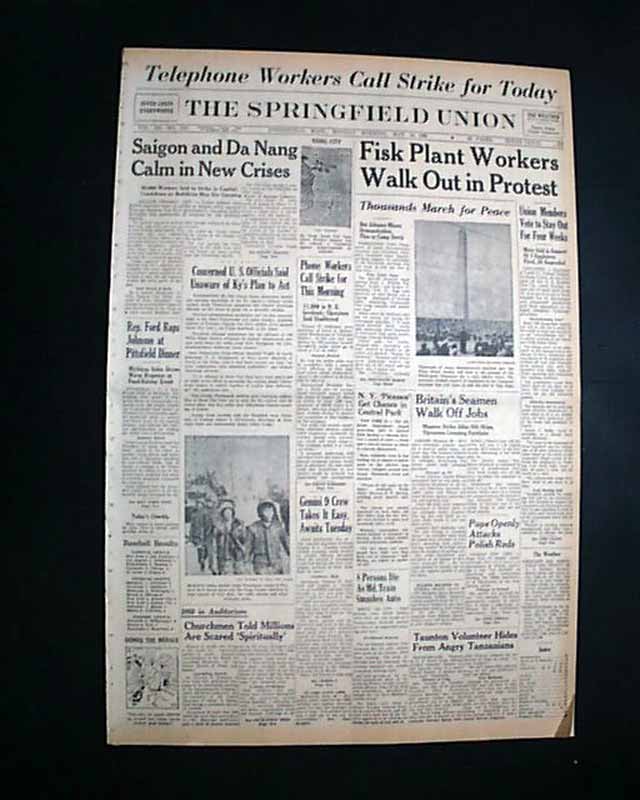
* Early anti-Vietnam War march on Washington D.C.
* Veterans for Peace - Pennsylvania Avenue
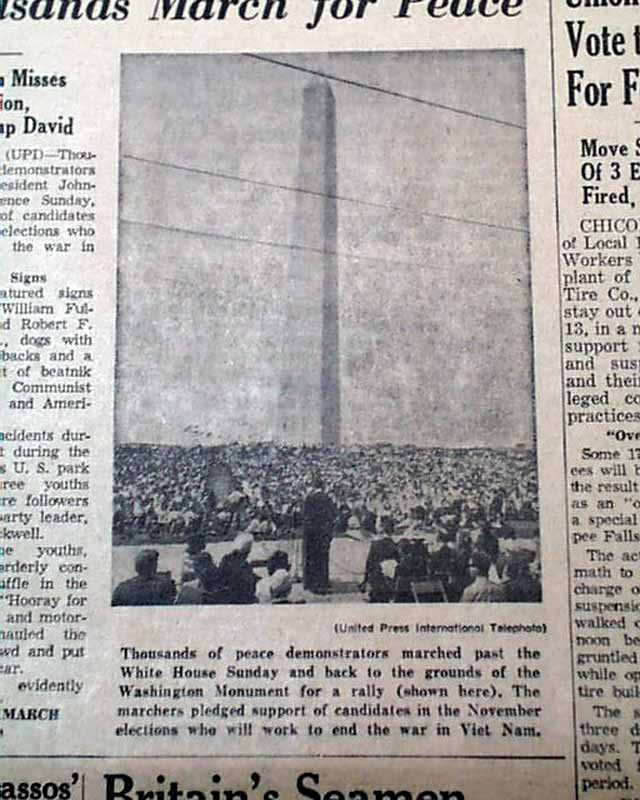
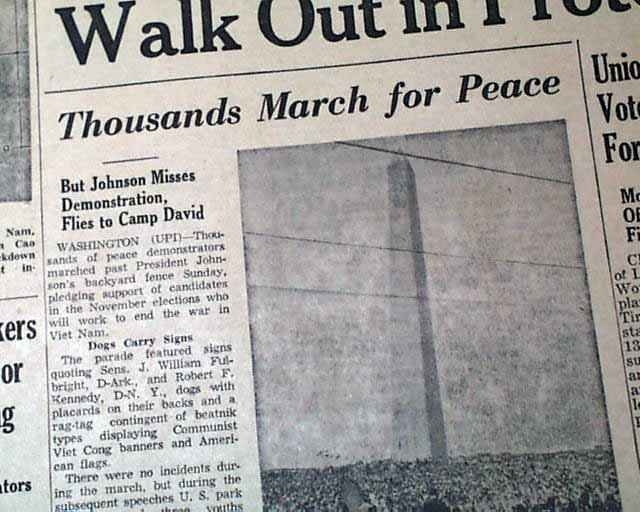
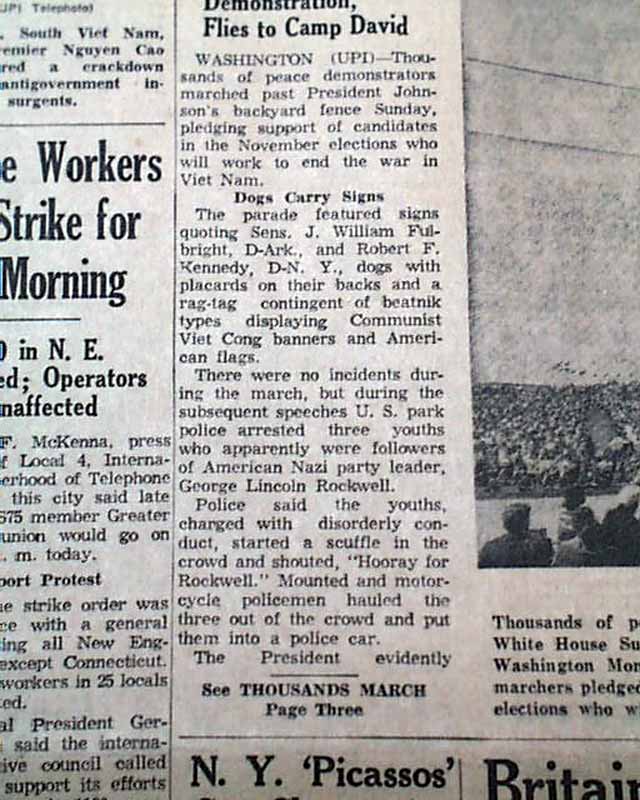
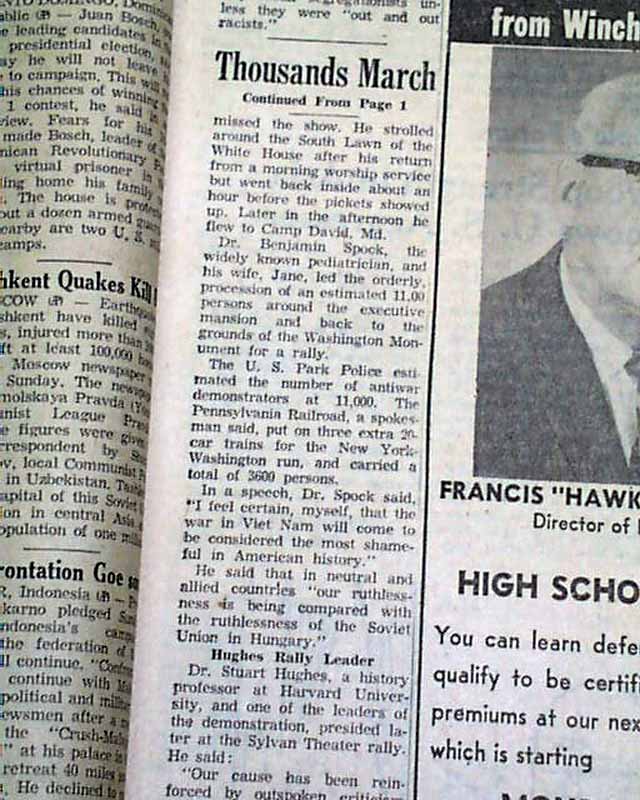
The front page has a three column heading: "Thousands March for Peace" with subhead and related photo. (see images)
Complete with all 26 pages, light toning at the margins, tiny binding holes along the spine, nice condition.
Background: The May 15, 1966, march on Washington D.C. represented a critical inflection point in American history, marking the moment the anti-Vietnam War movement transitioned from a fringe academic concern into a visible, mainstream political force led by disillusioned veterans. Organized largely by Veterans for Peace, this demonstration saw hundreds of former service members picketing the White House and marching down Pennsylvania Avenue to demand an immediate end to the escalation in Southeast Asia. This event was historically significant because it shattered the monolithic public support for President Lyndon B. Johnson’s military policies and highlighted a growing "credibility gap" between the administration’s optimistic reports and the reality of the war. By utilizing the symbolic weight of veterans—men who had served the country they were now protesting—the march forced the American public to confront the moral and political costs of the conflict, effectively merging the tactics of the Civil Rights Movement with a burgeoning anti-war sentiment that would eventually define the social landscape of the late 1960s.
* Early anti-Vietnam War march on Washington D.C.
* Veterans for Peace - Pennsylvania Avenue
The front page has a three column heading: "Thousands March for Peace" with subhead and related photo. (see images)
Complete with all 26 pages, light toning at the margins, tiny binding holes along the spine, nice condition.
Background: The May 15, 1966, march on Washington D.C. represented a critical inflection point in American history, marking the moment the anti-Vietnam War movement transitioned from a fringe academic concern into a visible, mainstream political force led by disillusioned veterans. Organized largely by Veterans for Peace, this demonstration saw hundreds of former service members picketing the White House and marching down Pennsylvania Avenue to demand an immediate end to the escalation in Southeast Asia. This event was historically significant because it shattered the monolithic public support for President Lyndon B. Johnson’s military policies and highlighted a growing "credibility gap" between the administration’s optimistic reports and the reality of the war. By utilizing the symbolic weight of veterans—men who had served the country they were now protesting—the march forced the American public to confront the moral and political costs of the conflict, effectively merging the tactics of the Civil Rights Movement with a burgeoning anti-war sentiment that would eventually define the social landscape of the late 1960s.
Category: The 20th Century
Price
$48
100% Authentic: Original printing, never a reproduction.
Other issues you may like
§ related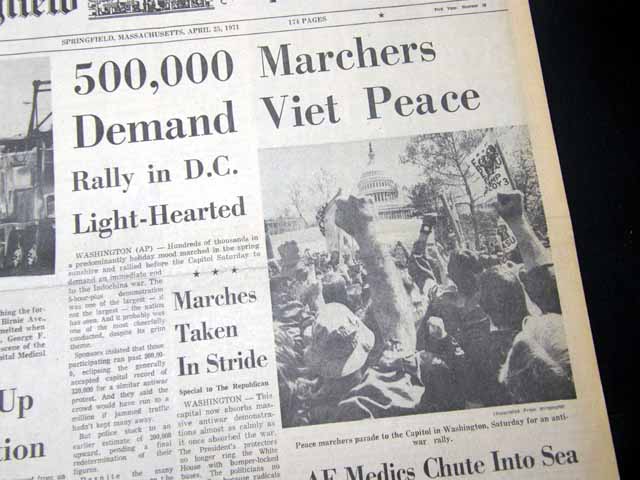
1969 Vietnam War Washington D.C. protest...
SPRINGFIELD SUNDAY REPUBLICAN, Mass., April 25, 1971
* Vietnam anti-war protest
* March on Washington D.C.
* Largest in U.S. history (500,000)
The...
* Vietnam anti-war protest
* March on Washington D.C.
* Largest in U.S. history (500,000)
The...
Apr 1971
$67
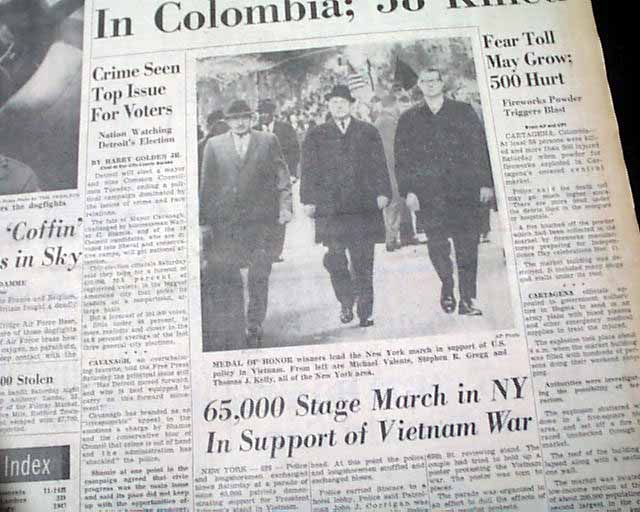
1965 Pro-Vietnam War march in NYC...
DETROIT FREE PRESS, Oct. 31, 1965
* Pro-Vietnam War march in NYC
* Support of American troops
During the Vietnam War, much had been reported on the...
* Pro-Vietnam War march in NYC
* Support of American troops
During the Vietnam War, much had been reported on the...
Oct 1965
$48
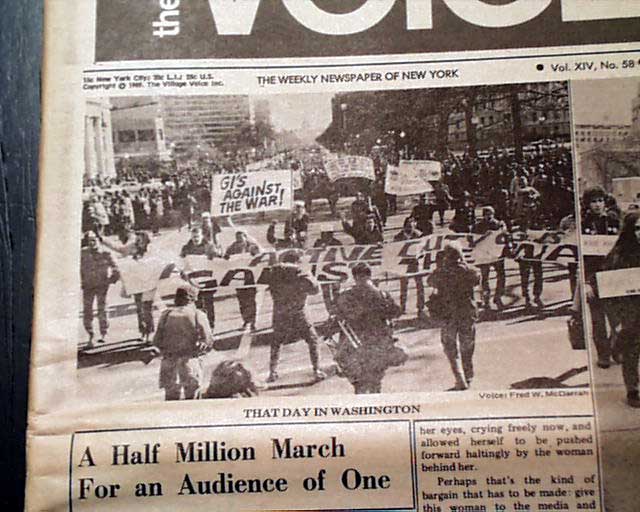
1969 anti-Vietnam War march on Washington D.C...
THE VILLAGE VOICE (weekly), Greenwich Village, New York, Nov. 20, 1969
* Moratorium to End the War in Vietnam
* March on Washington D.C.
* Massive...
* Moratorium to End the War in Vietnam
* March on Washington D.C.
* Massive...
Nov 1969
$57
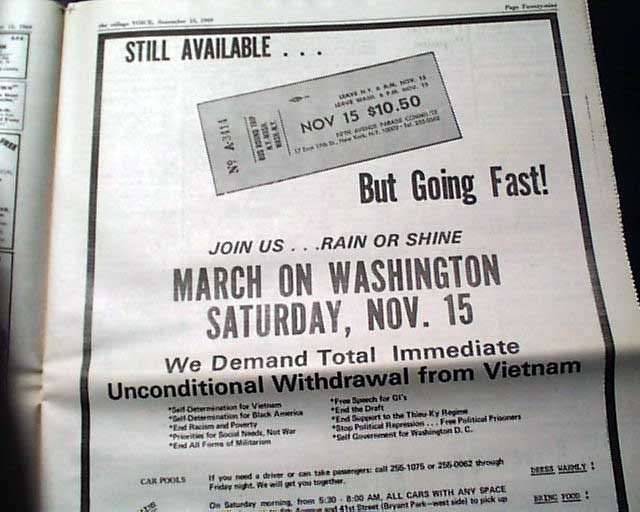
Rare advertisements for the antiwar march on Washington D.C...
THE VILLAGE VOICE, Greenwich Village, New York, Nov. 13, 1969
* Moratorium to End the War in Vietnam
* March on Washington D.C. advertisements
*...
* Moratorium to End the War in Vietnam
* March on Washington D.C. advertisements
*...
Nov 1969
$52