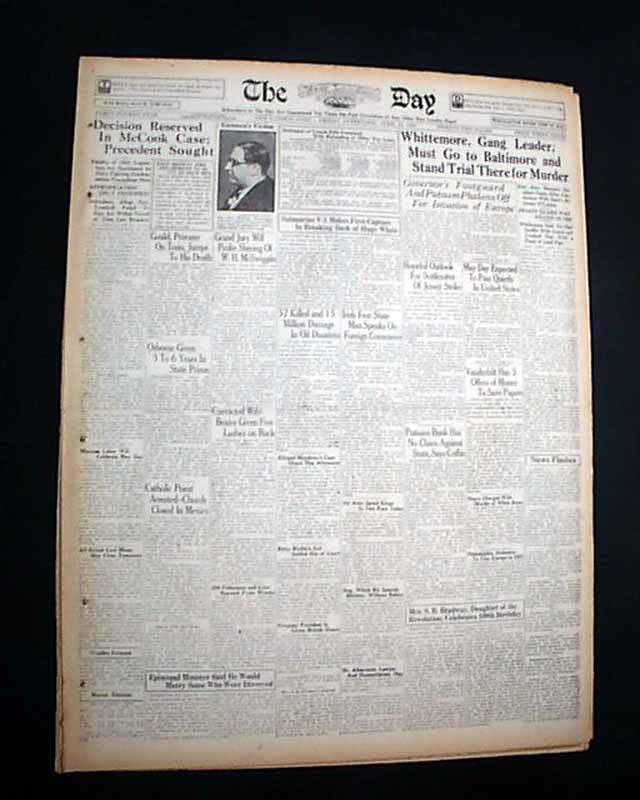
1926 Chicago gangland murder...
Item # 726476
·
THE NEW YORK TIMES, May 30, 1926.
* Early Al 'Scarface' Capone connection
* William H. McSwiggin's assassination
* Harry Madigan's Pony Inn - speakeasy
* Chicago's gangland war escalates
* Prohibition era underworld event
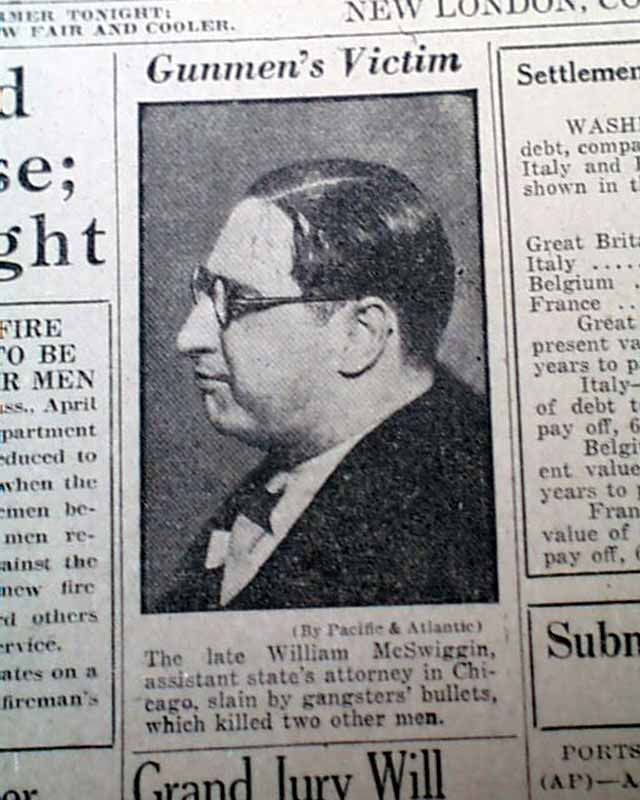
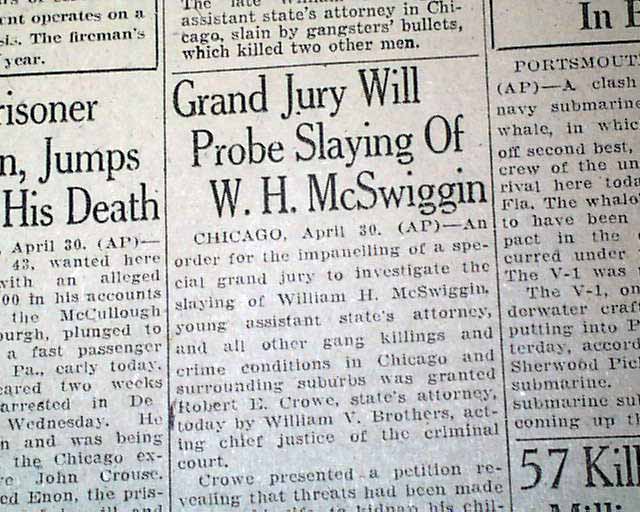
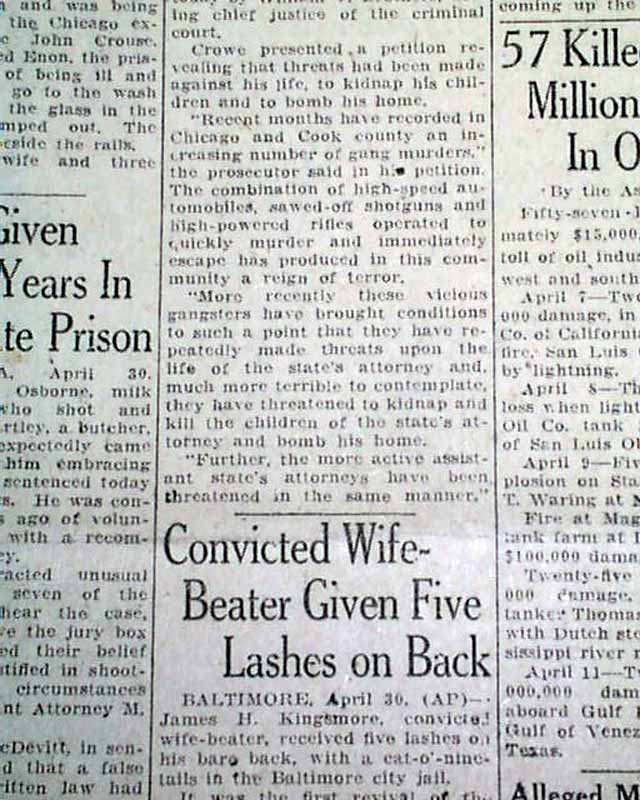
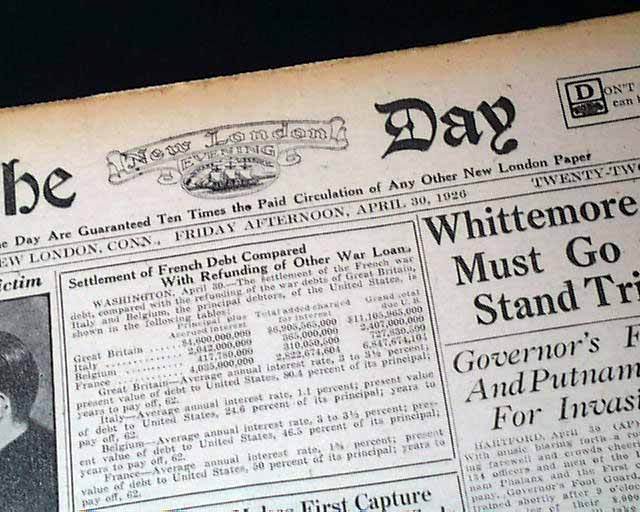
The top of the front page has a one column photo headed: "Gunman's Victim" Also a one column heading: "Grand Jury Will Probe Slaying Of W. H. McSwiggin" (see images) Though his name is not mentioned in the report, history shows that Al Capone had his hand in this murder.
Complete with all 22 pages, light toning at the margins, some tiny binding holes near the spine, generally in very nice condition"
Background: The assassination of William H. McSwiggin on April 27, 1926, remains a seminal moment in Prohibition history because it shattered the illusion of a clear boundary between the Chicago legal system and the criminal underworld, effectively stripping the "Hanging Prosecutor" of his pristine reputation and exposing the systemic reach of Al Capone’s influence. When McSwiggin was gunned down alongside O'Donnell gang members James Doherty and Thomas Duffy outside a Cicero speakeasy, the resulting public outcry centered on the "unholy alliance" revealed by his presence with known felons, prompting Al Capone to flee into hiding for months to avoid the heat of six separate, yet ultimately fruitless, grand jury investigations. The event was historically significant because it marked a shift in public and federal tolerance; the cold-blooded killing of a high-ranking state official—whether he was a corrupt associate or an incidental victim—proved that the "Beer Wars" were no longer just a matter of gangsters killing their own, but a direct assault on the state itself, eventually paving the way for the intensified federal intervention that would lead to the Outfit's downfall.
* Early Al 'Scarface' Capone connection
* William H. McSwiggin's assassination
* Harry Madigan's Pony Inn - speakeasy
* Chicago's gangland war escalates
* Prohibition era underworld event
The top of the front page has a one column photo headed: "Gunman's Victim" Also a one column heading: "Grand Jury Will Probe Slaying Of W. H. McSwiggin" (see images) Though his name is not mentioned in the report, history shows that Al Capone had his hand in this murder.
Complete with all 22 pages, light toning at the margins, some tiny binding holes near the spine, generally in very nice condition"
Background: The assassination of William H. McSwiggin on April 27, 1926, remains a seminal moment in Prohibition history because it shattered the illusion of a clear boundary between the Chicago legal system and the criminal underworld, effectively stripping the "Hanging Prosecutor" of his pristine reputation and exposing the systemic reach of Al Capone’s influence. When McSwiggin was gunned down alongside O'Donnell gang members James Doherty and Thomas Duffy outside a Cicero speakeasy, the resulting public outcry centered on the "unholy alliance" revealed by his presence with known felons, prompting Al Capone to flee into hiding for months to avoid the heat of six separate, yet ultimately fruitless, grand jury investigations. The event was historically significant because it marked a shift in public and federal tolerance; the cold-blooded killing of a high-ranking state official—whether he was a corrupt associate or an incidental victim—proved that the "Beer Wars" were no longer just a matter of gangsters killing their own, but a direct assault on the state itself, eventually paving the way for the intensified federal intervention that would lead to the Outfit's downfall.
Category: The 20th Century
Price
$48
100% Authentic: Original printing, never a reproduction.
Other issues you may like
§ related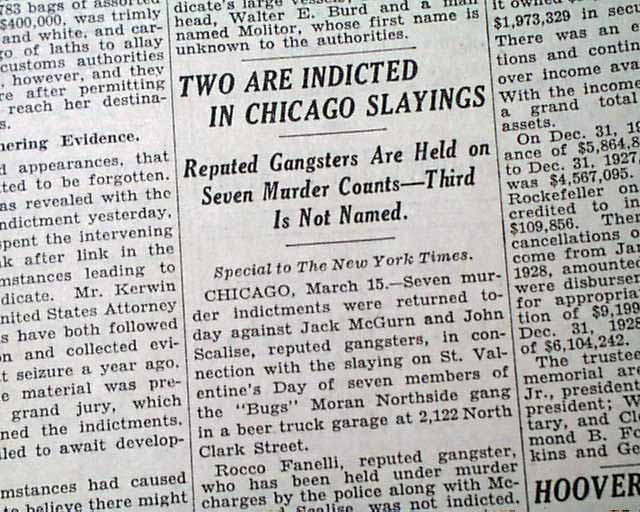
St. Valentine's Day Massacre investigation in a Chicago newspaper...
THE NEW YORK TIMES, March 16, 1929
* Jack "Machine Gun" McGurn & John Scalissi
* St. Valentine's Day Massacre investigations
* George 'Bugs' Moran & Al...
* Jack "Machine Gun" McGurn & John Scalissi
* St. Valentine's Day Massacre investigations
* George 'Bugs' Moran & Al...
Mar 1929
$48
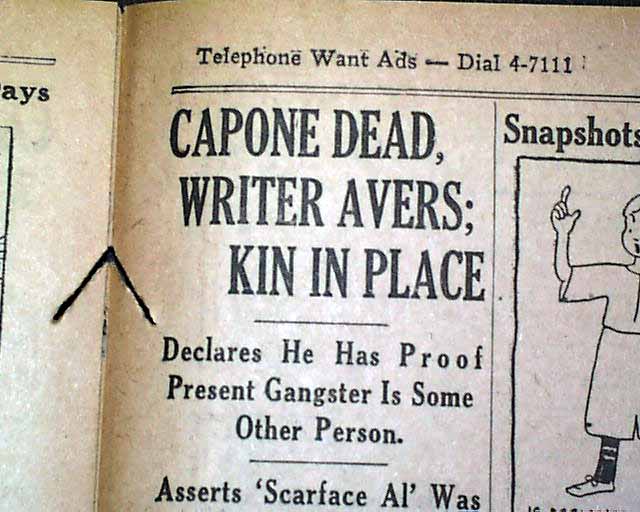
Al 'Scarface' Capone killed?...
ALBANY EVENING NEWS, Albany, New York, May 2, 1931
* Al 'Scarface' Capone killed?
* Chicago gangland
Page 13 has a bizarre report with one column...
* Al 'Scarface' Capone killed?
* Chicago gangland
Page 13 has a bizarre report with one column...
May 1931
$32
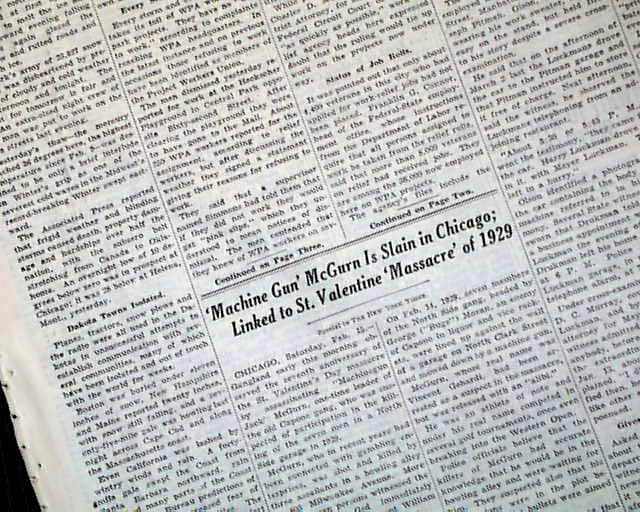
Jack 'Machine Gun' McGurn assassinated...
NEW YORK TIMES, Feb. 15, 1936
* Jack 'Machine Gun' McGurn assassination
* St. Valentine's Day Massacre fame
* Al 'Scarface' Capone hit man
Near the...
* Jack 'Machine Gun' McGurn assassination
* St. Valentine's Day Massacre fame
* Al 'Scarface' Capone hit man
Near the...
Feb 1936
$57
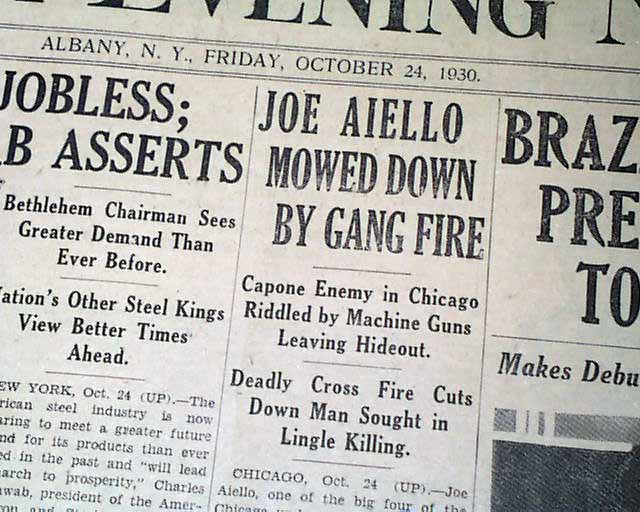
Joe Aiello assassination... Al "Scarface" Capone rival...
ALBANY EVENING NEWS, New York, October 24, 1930
* Gangster Joe Aiello assassination
* Sicilian Mafia leader - bootlegger
* Al 'Scarface' Capone rival
...
* Gangster Joe Aiello assassination
* Sicilian Mafia leader - bootlegger
* Al 'Scarface' Capone rival
...
Oct 1930
$52