

Civil War action in Missouri... Loyalists in Kentucky...
Item # 726418
September 21, 1861
NEW YORK HERALD, Sept. 21, 1861
* First Battle of Lexington
* Missouri State Guard victory
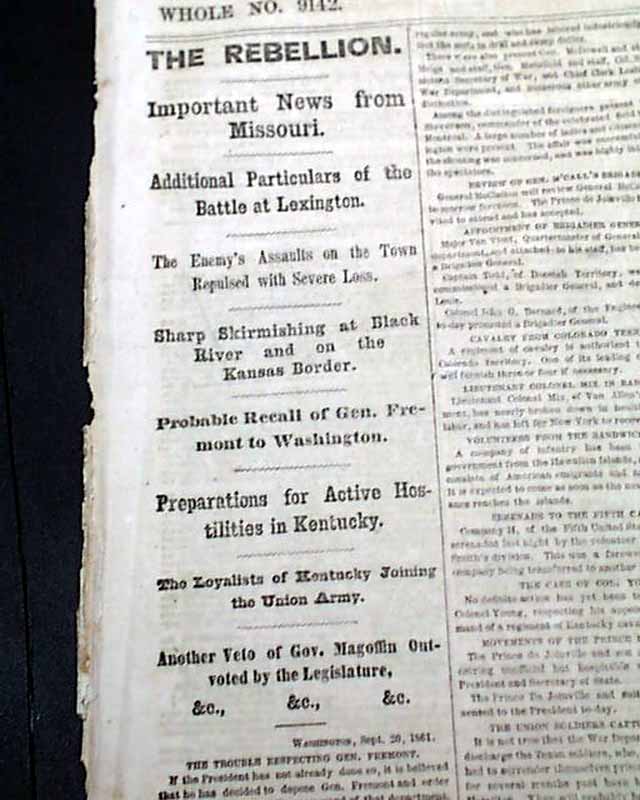
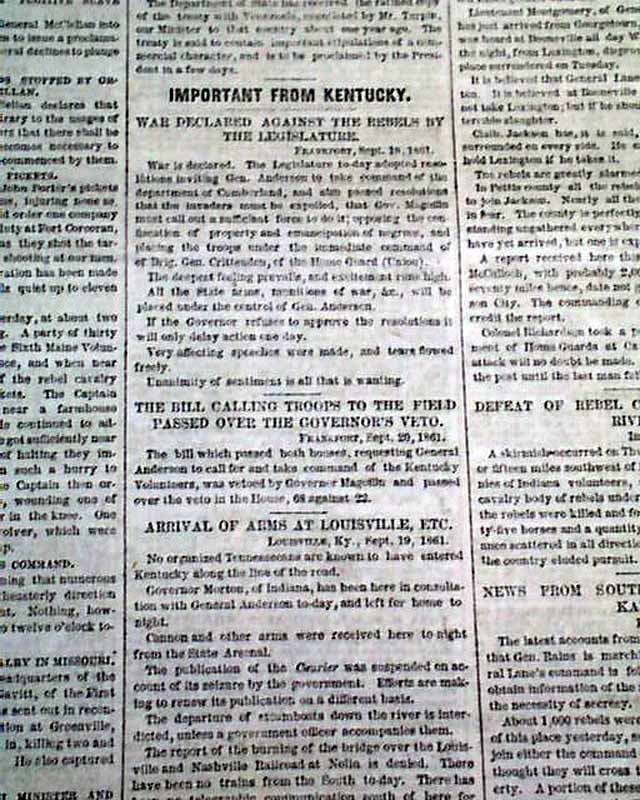
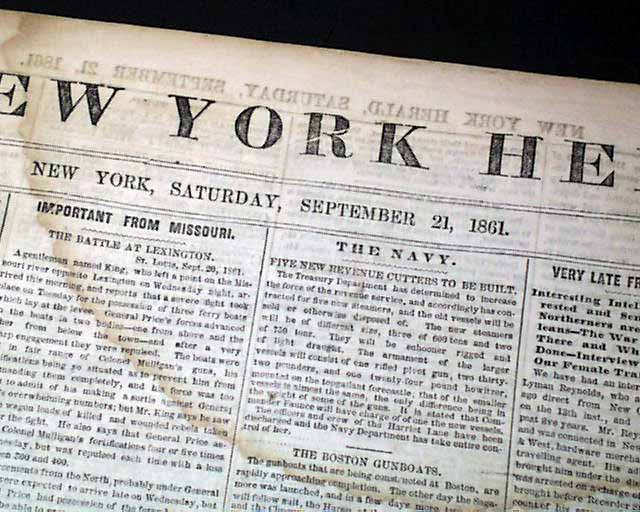
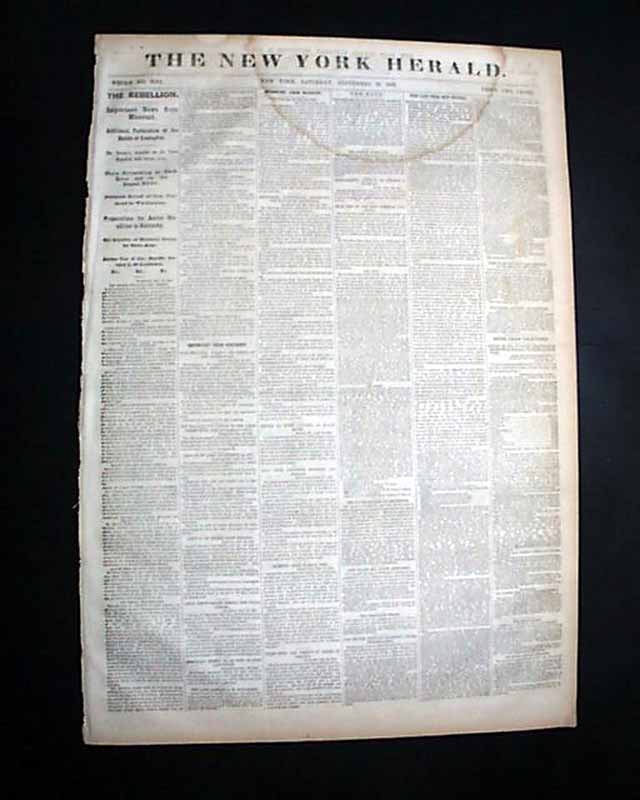
Among the front page column heads on the Civil War: "THE REEBELLION" "Important News From Missouri" "Additional Paraticulars of the Battle at Lexington" "The Enemy's Assaults on the Town Repulsed with Severe Loss" "Sharp Skirmishing at Black River & on the Kansas Border" "Preparations for Active Hostilities in Kentucky" "The Loyalists of Kentucky Joining the Union Army" and more.
Eight pages, some light damp staining near the top of the front page, good condition.
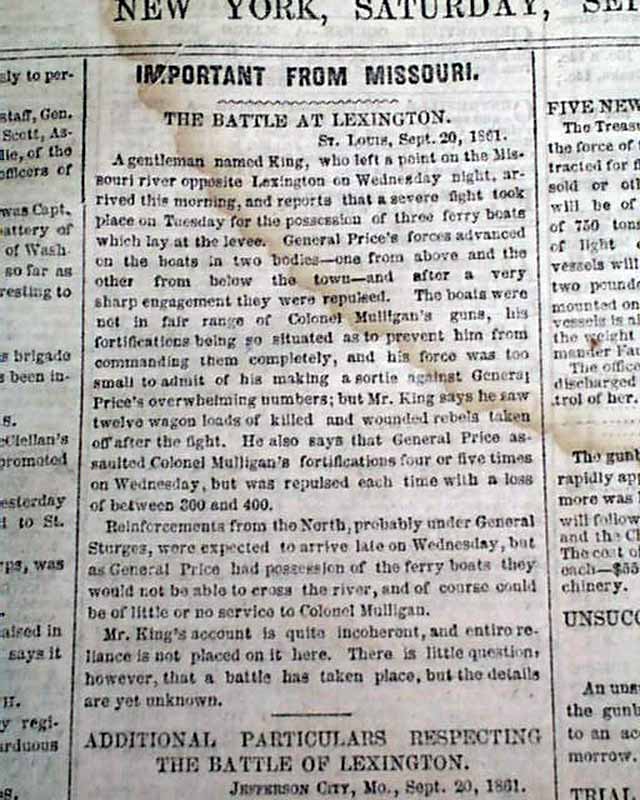
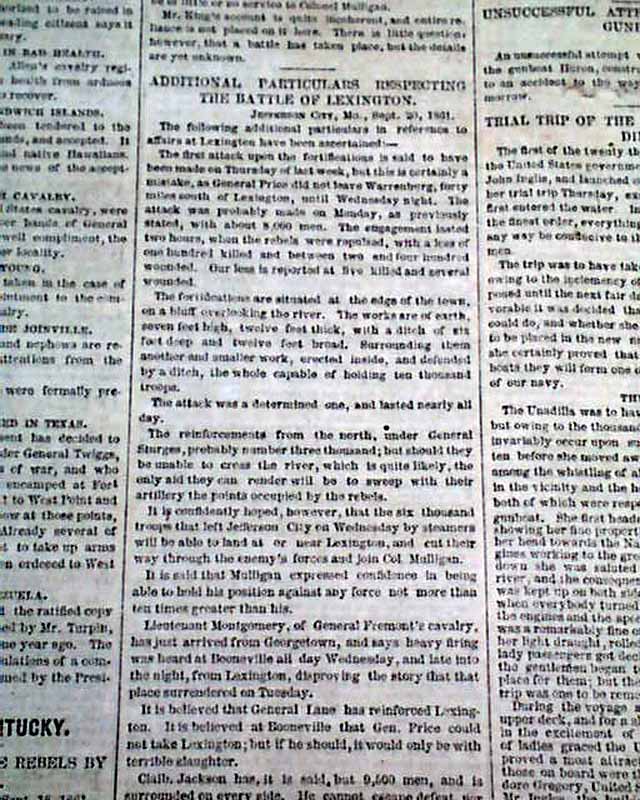
Background: The 1861 Siege of Lexington, also known as the Battle of the Hemp Bales, was a pivotal early conflict in the Civil War that took place from September 13 to 20 in Lexington, Missouri. Confederate-aligned Missouri State Guard forces under Major General Sterling Price laid siege to a well-fortified Union garrison commanded by Colonel James A. Mulligan. The Union troops had entrenched themselves in a makeshift fortification near the town, but Price’s forces ingeniously used large, water-soaked hemp bales as mobile breastworks to protect their advance against Union fire. After nearly a week of intense fighting and running dangerously low on ammunition and supplies, Mulligan was forced to surrender, marking a significant Confederate victory in Missouri. This battle not only bolstered Confederate morale and solidified Sterling Price’s military reputation but also demonstrated the resourcefulness of troops in using local materials to gain tactical advantages. Despite this victory, Missouri remained a deeply divided border state, with control swinging between Union and Confederate forces throughout the war.
* First Battle of Lexington
* Missouri State Guard victory
Among the front page column heads on the Civil War: "THE REEBELLION" "Important News From Missouri" "Additional Paraticulars of the Battle at Lexington" "The Enemy's Assaults on the Town Repulsed with Severe Loss" "Sharp Skirmishing at Black River & on the Kansas Border" "Preparations for Active Hostilities in Kentucky" "The Loyalists of Kentucky Joining the Union Army" and more.
Eight pages, some light damp staining near the top of the front page, good condition.
Background: The 1861 Siege of Lexington, also known as the Battle of the Hemp Bales, was a pivotal early conflict in the Civil War that took place from September 13 to 20 in Lexington, Missouri. Confederate-aligned Missouri State Guard forces under Major General Sterling Price laid siege to a well-fortified Union garrison commanded by Colonel James A. Mulligan. The Union troops had entrenched themselves in a makeshift fortification near the town, but Price’s forces ingeniously used large, water-soaked hemp bales as mobile breastworks to protect their advance against Union fire. After nearly a week of intense fighting and running dangerously low on ammunition and supplies, Mulligan was forced to surrender, marking a significant Confederate victory in Missouri. This battle not only bolstered Confederate morale and solidified Sterling Price’s military reputation but also demonstrated the resourcefulness of troops in using local materials to gain tactical advantages. Despite this victory, Missouri remained a deeply divided border state, with control swinging between Union and Confederate forces throughout the war.
Category: Yankee


