

1943 Great Lakes beats Notre Dame...
Item # 726411
November 29, 1943
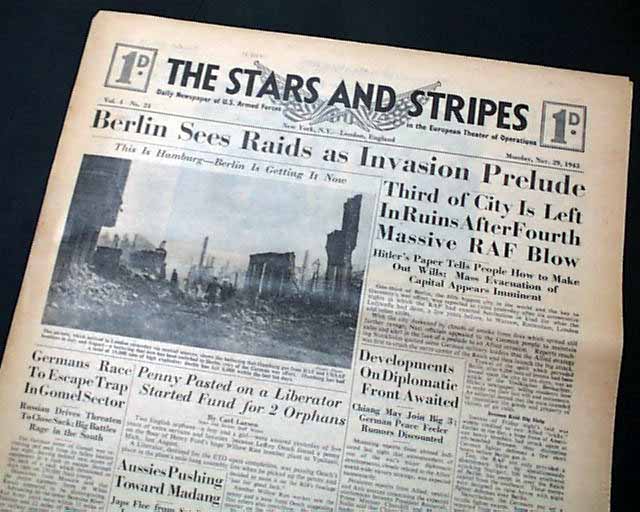
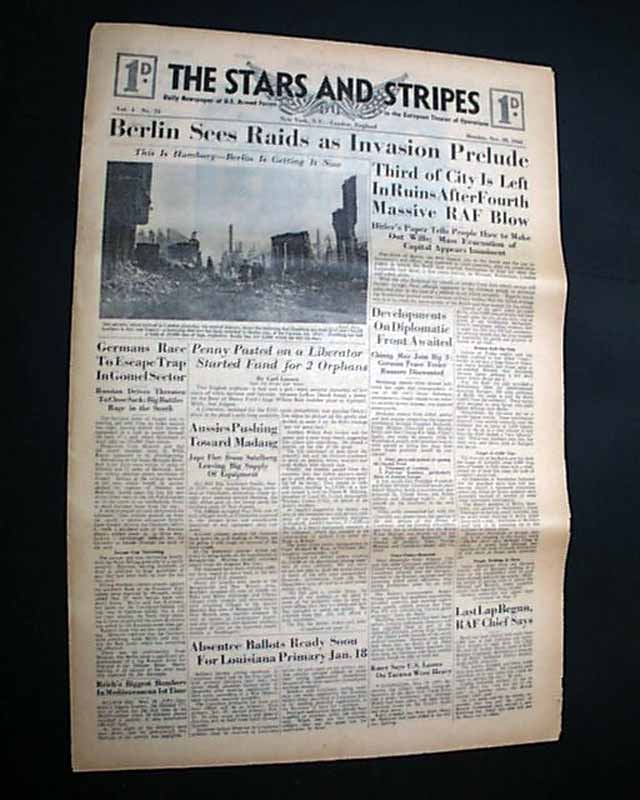
THE STARS & STRIPES, New York & London edition, Nov. 29, 1943
* Great Lakes Naval Training Station Bluejackets
* Beats Notre Dame Fighting Irish at Purdue's stadium
* Military pro vs. college football national champions
In the masthead is: "Daily Newspaper of U.S. Armed Forces in the European Theater of Operations".
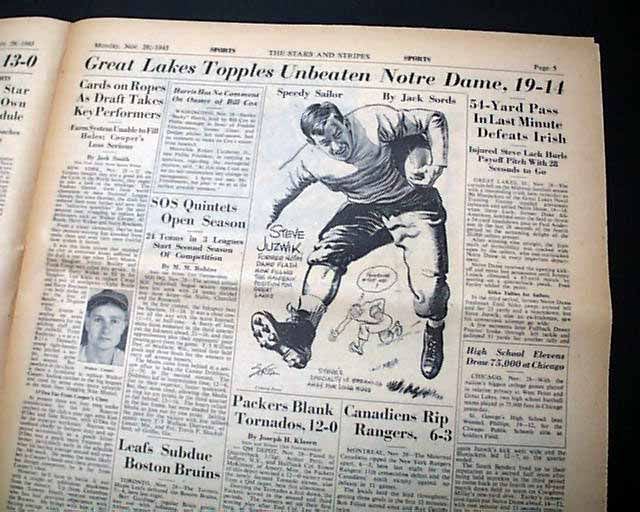
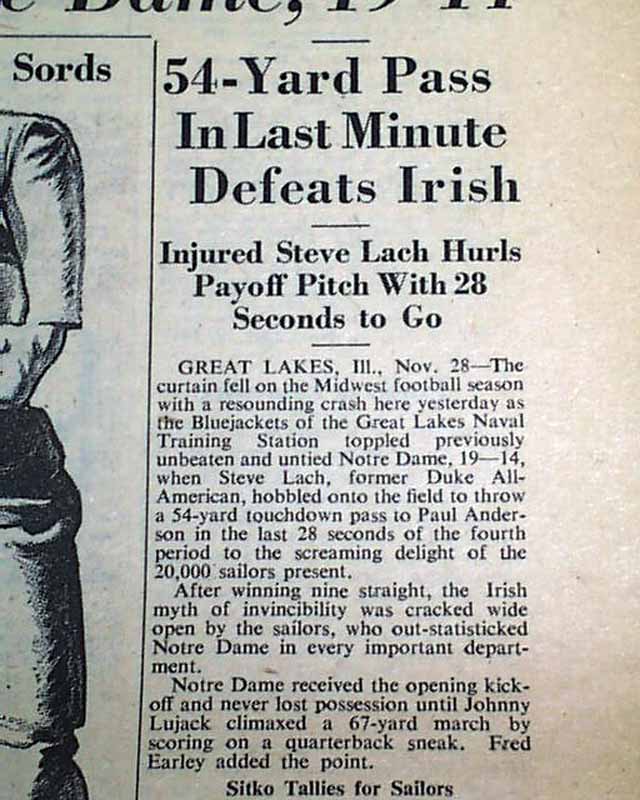
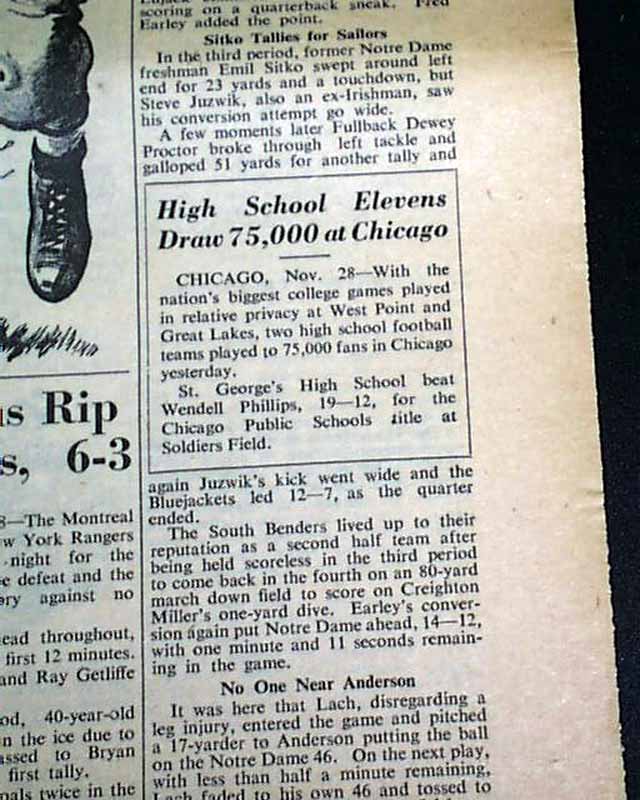
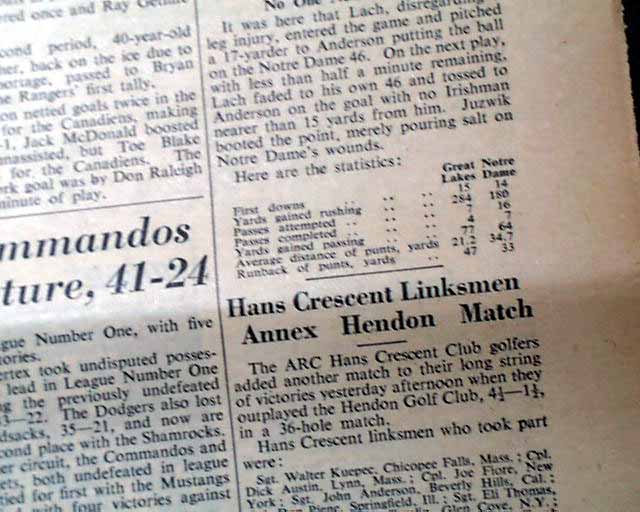
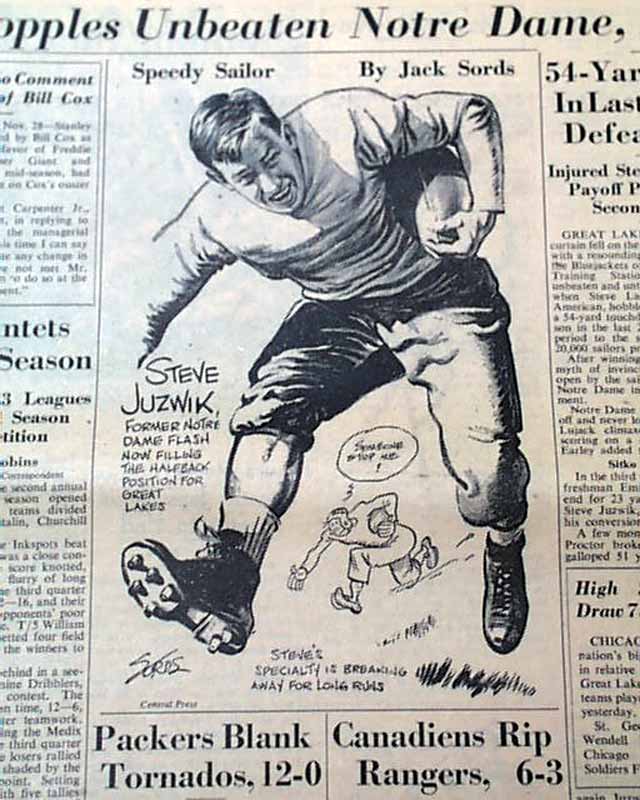
The top of page 5 has a banner heading: "Great Lakes Topples Unbeaten Notre Dame, 19-14" with subheads, stats and related illustration. (see images)
Of course there is World War II content as well. Complete with 8 pages, light toning at the
margins, nice condition.
Background: The 1943 upset of top-ranked Notre Dame by the Great Lakes Naval Training Station stands as a singular moment in college football history, symbolizing the total mobilization of American society during World War II. Occurring on November 27, the game featured a "super-team" of active-duty sailors and officers—including future legends like George Connor and coach Tony Hinkle—pitted against a Notre Dame squad that had already secured the AP National Championship earlier that week. The Bluejackets’ 19–14 victory, sealed by a dramatic 46-yard touchdown pass from Steve Lach to Paul Ebli with only 30 seconds remaining, remains one of the greatest "pro-versus-college" style matchups ever played on a campus field. This defeat not only handed the Fighting Irish their only loss of the season but also underscored the immense talent concentrated in military service teams during the war years, highlighting a brief era where the strongest programs in the country were often found at naval bases rather than traditional universities.
* Great Lakes Naval Training Station Bluejackets
* Beats Notre Dame Fighting Irish at Purdue's stadium
* Military pro vs. college football national champions
In the masthead is: "Daily Newspaper of U.S. Armed Forces in the European Theater of Operations".
The top of page 5 has a banner heading: "Great Lakes Topples Unbeaten Notre Dame, 19-14" with subheads, stats and related illustration. (see images)
Of course there is World War II content as well. Complete with 8 pages, light toning at the
margins, nice condition.
Background: The 1943 upset of top-ranked Notre Dame by the Great Lakes Naval Training Station stands as a singular moment in college football history, symbolizing the total mobilization of American society during World War II. Occurring on November 27, the game featured a "super-team" of active-duty sailors and officers—including future legends like George Connor and coach Tony Hinkle—pitted against a Notre Dame squad that had already secured the AP National Championship earlier that week. The Bluejackets’ 19–14 victory, sealed by a dramatic 46-yard touchdown pass from Steve Lach to Paul Ebli with only 30 seconds remaining, remains one of the greatest "pro-versus-college" style matchups ever played on a campus field. This defeat not only handed the Fighting Irish their only loss of the season but also underscored the immense talent concentrated in military service teams during the war years, highlighting a brief era where the strongest programs in the country were often found at naval bases rather than traditional universities.
Category: World War II


